
0%

China’s insulated-panel industry has become a major supply base for cold storage, industrial buildings, cleanrooms, and logistics facilities. PUR Wall Sandwich Panels are widely selected where thermal efficiency, installation speed, and controlled indoor temperatures matter. The International Energy Agency’s Buildings 2024 report states that buildings account for about 30% of global energy demand. Better envelope performance remains practical, not decorative.

Industry scale is only part of the story. The UNEP Global Status Report for Buildings and Construction 2023 reported that buildings and construction produced approximately 37% of global energy-related and process emissions. This pressure encourages manufacturers to improve core density, joint design, fire performance, and production consistency. China’s large manufacturing ecosystem offers competitive capacity, but quality can vary between factories. That detail deserves attention.

This guide examines leading Chinese manufacturers through evidence-based criteria. These include panel thickness accuracy, thermal conductivity, adhesive coverage, steel coating, dimensional tolerance, and documented testing. Buyers should request certificates, recent laboratory reports, production photographs, and project references. EN 14509, ISO 6946, and relevant Chinese GB standards can support technical comparisons, although certification scope must be checked carefully.

No ranking is permanently correct. Market positions change.

A factory may offer attractive pricing while lacking stable batch control. Another may provide stronger engineering support but longer delivery times. The most reliable evaluation combines factory experience, verified performance data, transparent warranty terms, and after-sales responsiveness. The following overview therefore focuses on manufacturers that demonstrate practical capability, rather than relying only on online popularity or promotional claims.
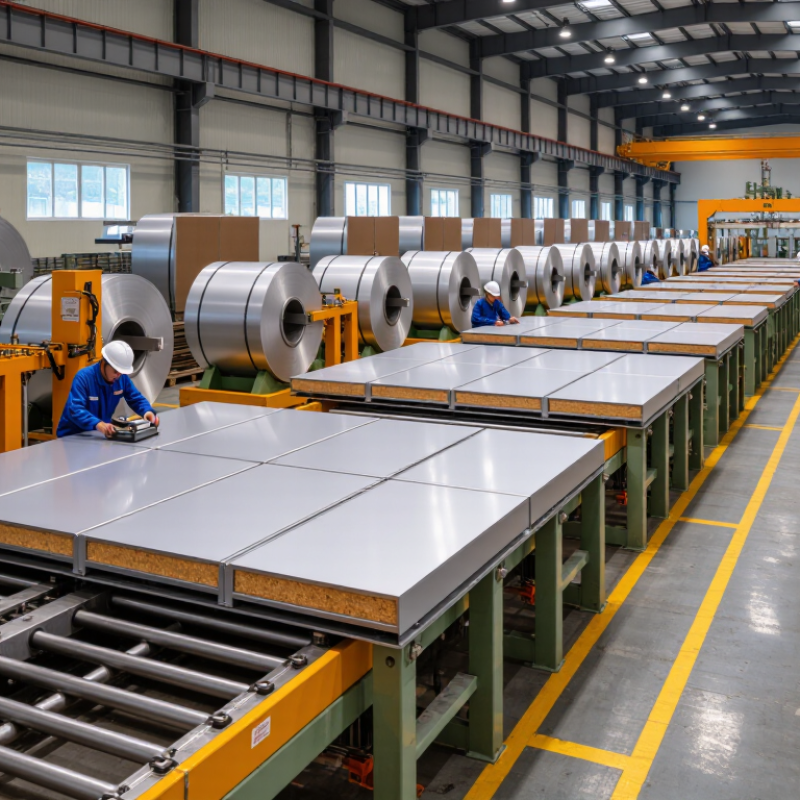
China Top PUR Wall Sandwich Panels Manufacturers?

What Are PUR Wall Sandwich Panels and How Are They Used?

PUR wall sandwich panels are insulated building panels with a rigid polyurethane foam core between two protective metal skins. The core reduces heat transfer, while the outer layers provide strength and weather resistance. Many panels use coated steel surfaces, concealed joints, and interlocking edges. These details help create a continuous wall envelope with fewer thermal gaps.

They are widely used in cold rooms, food-processing areas, warehouses, workshops, agricultural buildings, and modular structures. A 50–100 mm panel may suit many standard wall applications, but thickness depends on climate, indoor temperature, and energy targets. In a chilled room, poorly sealed joints can create condensation around the panel edges. Small details matter. Installers should check panel alignment, fastener pressure, sealant continuity, and openings around doors or pipes. Field inspections often reveal that installation quality affects performance more than product claims.

PUR PANELS are lightweight and quick to install, which can reduce structural loads and construction time. However, they are not a universal solution. Fire ratings, surface coatings, hygiene requirements, and local building codes must be reviewed before selection. Some projects also need stronger cores or more durable facings. I have found that comparing only the advertised thermal value can be misleading. A reliable specification should include tested performance, joint design, dimensional tolerance, production quality, and installation guidance from the manufacturer.

How to Evaluate China’s Leading PUR Wall Panel Manufacturers

Choosing a reliable PUR wall sandwich panel manufacturer requires more than comparing online prices. Evaluate production experience, engineering capability, and quality controls together. Ask how long the factory has produced insulated panels and which building applications it serves. A dependable manufacturer should explain core density, panel thickness, joint design, and thermal performance clearly. Vague answers deserve caution.

Request recent test reports for thermal conductivity, compressive strength, dimensional tolerance, and fire performance. Check whether an independent laboratory issued these documents. Sample panels can reveal practical details, such as uneven edges, weak locking joints, or inconsistent foam filling. Visit the production line when possible. Observe raw material storage, foaming equipment, curing time, and final inspection records. Factory visits are useful, but they are not perfect proof. I once found a clean workshop with incomplete traceability records. That changed the evaluation.

Tips: Compare samples under the same specifications. Confirm steel coating thickness with a written standard. Ask for batch numbers and inspection photos. Review warranty terms, replacement procedures, export packaging, and delivery history. Contact previous customers and ask about panel fit, moisture resistance, and after-sales response. A professional supplier should provide calculations for your climate and building use, not simply recommend the thickest panel. Keep every technical promise in the contract. Small omissions can become expensive corrections.

Which Manufacturing Standards and Certifications Matter Most?

When choosing China’s top PUR wall sandwich panel manufacturers, certifications deserve more attention than polished catalogs. EN 14509 is important for European projects because it evaluates factory-made, double-sided metal-faced panels. It covers thermal performance, mechanical strength, and durability. For North American work, ASTM-based testing may be more suitable. The required standard depends on the building location and approval system.

Check fire performance carefully. EN 13501-1 classifies reaction to fire, but a certificate alone is not enough. Ask for the tested panel thickness, core density, joint design, and installation method. These details can change the result. A valid report should come from a laboratory operating under ISO/IEC 17025. Test dates also matter. Old reports may not represent current production.

Quality management under ISO 9001 can show controlled manufacturing, while ISO 14001 and ISO 45001 indicate stronger environmental and safety systems. Still, certificates do not replace factory evidence. Request batch records, steel coating data, foam density results, and adhesive inspection records. A site audit can reveal uneven foam filling, damaged edges, or poor storage conditions. I have seen specifications look excellent on paper but fail during joint installation. That gap deserves honest attention. Ask whether the manufacturer can provide traceable samples and independent retesting before shipment.

What Product Features Should Buyers Compare Before Ordering?

China Top PUR Wall Sandwich Panels Manufacturers?

Before ordering PUR wall sandwich panels, buyers should compare measured performance, not only catalogue price. EN 14509 requires declared thermal values, dimensional tolerances, and load data for factory-made panels. Many PUR cores report thermal conductivity near 0.022–0.028 W/m·K at initial conditions. Aging can increase the effective value, so ask for design λ-values and U-values, not just impressive laboratory figures. The panel thickness should match the project’s climate and heating load.

Check the steel skins closely. Compare nominal thickness, coating mass, corrosion category, and surface finish. A thin skin may dent around forklift routes or busy loading areas. Joint design matters just as much. Examine tongue-and-groove engagement, gasket continuity, fastener spacing, and tested air leakage. Small gaps near corners can undermine otherwise strong insulation. It happens more often than product brochures suggest.

Fire evidence needs careful reading. Request the complete assembly classification under EN 13501-1 or a comparable national standard. Core reaction-to-fire data alone cannot prove wall-system performance. Also compare compressive strength, wind resistance, panel span tables, moisture behavior, and cold-room compatibility. The UNEP 2023 Global Status Report identifies buildings as responsible for about 30% of global energy demand, making insulation quality commercially important. Still, the lowest U-value is not automatically the best purchase. Ask for independent test reports, batch traceability, installation guidance, and warranty conditions. I would leave room for uncertainty: site workmanship can change real performance.

China Top PUR Wall Sandwich Panel Manufacturers? What Product Features Should Buyers Compare Before Ordering?

The chart shows indicative thermal transmittance values calculated from a typical PUR core thermal conductivity of 0.022 W/m·K using U ≈ λ/d. Actual results depend on panel joints, facings, fasteners, temperature, and tested assembly performance.

Before ordering, buyers should compare core thermal conductivity, panel thickness, fire classification and test reports, density, dimensional tolerances, joint design, facing thickness, corrosion resistance, load capacity, moisture control, and installation requirements. Fire performance must always be verified for the complete panel system rather than the PUR core alone.

How to Select a Reliable Chinese PUR Panel Supplier?

Selecting a reliable Chinese PUR wall sandwich panel supplier requires more than comparing prices. Start with the panel’s technical details. Confirm polyurethane core density, thermal conductivity, thickness tolerance, surface coating, and fire-performance documentation. Ask whether the stated values come from recent, traceable tests.

A dependable manufacturer should explain its production process clearly. Request photos or a live video of the forming line, foam injection area, curing space, and quality-control stations. Check how workers measure panel thickness and bonding strength. Sample panels matter. Cut one open and inspect the foam distribution, edge sealing, and steel adhesion. Small gaps can become serious insulation problems.

Communication also reveals experience. A capable supplier should provide drawings, packing details, loading plans, and realistic lead times. Ask for references from projects with similar climates and building uses. Verify certificates independently when possible. I once focused too heavily on a low quotation. The panels arrived with inconsistent edges, and installation took longer than planned. That mistake still influences my supplier checks.

Discuss tolerances before signing any purchase agreement. Confirm color, joint design, panel length, replacement procedures, and inspection responsibilities. Clarify who pays for damage found after delivery. A reliable supplier will accept reasonable inspections instead of avoiding them. You may need to ask uncomfortable questions. That is part of due diligence.

China Top PUR Wall Sandwich Panels Manufacturers? - How to Select a Reliable Chinese PUR Panel Supplier?
Evaluation Dimension Recommended Benchmark What to Verify from the Supplier Relevant Standard or Method
Core Material Rigid polyurethane foam (PUR) with a continuous, uniform core. Request the technical datasheet, raw-material declaration, production date, and batch traceability records. Product documentation and batch quality records
Panel Thickness Common wall-panel options include approximately 40–200 mm; the required thickness depends on climate, indoor temperature, and energy targets. Confirm nominal thickness, permitted tolerance, and whether the stated thickness includes the external metal facings. EN 14509 or the applicable national product specification
Thermal Conductivity A typical declared design value for PUR insulation is about 0.022–0.028 W/(m·K), subject to density, aging, temperature, and test method. Check the declared or design thermal conductivity, test temperature, aging condition, and laboratory report. EN 12667, ISO 8301, or ASTM C518
Thermal Transmittance For a 100 mm PUR core, the panel-only U-value is commonly around 0.22–0.30 W/(m²·K), excluding thermal bridges and installation effects. Ask for the calculated U-value for the exact thickness and joint profile rather than relying only on a generic brochure value. EN 14509 calculation procedures or local building-energy rules
Core Density Typical rigid PUR sandwich-panel core density is approximately 38–45 kg/m³, although the required value varies by product design. Verify density uniformity, sampling location, test results, and the tolerance allowed in the purchase specification. ISO 845 or ASTM D1622
Compressive Strength Many rigid PUR foams used in sandwich panels provide compressive strength of roughly 100–200 kPa at 10% deformation. Confirm strength at the stated density and test direction, especially where panels will be exposed to stacking or impact loads. ISO 844 or ASTM D1621
Facing Material Common facings include prepainted steel or aluminum; steel thickness is often selected within approximately 0.40–0.80 mm for wall applications. Verify base-metal thickness, coating type, coating mass, color, gloss, protective film, and corrosion-resistance requirements. EN 10169, ASTM A653/A755, or the agreed coating specification
Panel Width and Length Effective widths are commonly about 1,000–1,200 mm, while length is normally produced to the project requirement within transport and handling limits. Confirm effective cover width, maximum transportable length, dimensional tolerances, squareness, and joint alignment. EN 14509 or the approved manufacturing tolerance schedule
Joint and Interlocking Design A properly formed tongue-and-groove or cam-lock joint should provide continuous insulation and limit air and water leakage. Review joint drawings, gasket or sealant requirements, fastener placement, and installation details for corners, openings, and panel ends. Manufacturer installation drawings and project specifications
Fire Performance Fire classification depends on the complete panel construction, facings, joints, thickness, and test configuration; it must not be inferred from the PUR core alone. Request a valid report for the exact panel assembly, including reaction-to-fire classification, tested thickness, joint type, and mounting method. EN 13501-1, EN 13501-2, ASTM E84, or the project’s required fire test
Water and Air Tightness External wall panels should maintain weather resistance when joints, flashings, fasteners, and sealants are installed correctly. Check test evidence or project references for water penetration, air leakage, joint performance, and detailing around penetrations. EN 14509 or the applicable façade and building-envelope test method
Dimensional Quality Panels should have consistent thickness, flat facings, straight edges, stable camber, and accurately formed joints. Define inspection points for thickness, width, length, squareness, flatness, coating appearance, and surface defects before shipment. Approved inspection and test plan; EN 14509 tolerances where applicable
Production Capability A reliable supplier should be able to control foaming, lamination, curing, cutting, profiling, and final inspection in a documented process. Review factory records, calibration certificates, process-control procedures, equipment condition, and sample retention practices. ISO 9001 quality-management principles and documented process controls
Sample and Pre-Production Approval Samples should represent the final panel construction, including core, facings, coating, joint profile, and accessories. Approve a physical sample and signed technical submittal before mass production; record all agreed dimensions and finishes. Project quality plan and approved submittal procedure
Third-Party Testing Independent laboratory reports should match the ordered product and should be current enough for the project and destination market. Check laboratory identity, report number, test date, specimen construction, thickness, result validity, and whether the report is transferable to the production batch. ISO/IEC 17025 laboratory competence principles
Inspection Before Shipment Pre-shipment inspection should cover quantity, dimensions, appearance, packaging, labeling, and random product measurements. Use an agreed inspection checklist, acceptance level, photographic record, and signed inspection report before container loading. Purchase contract and agreed inspection plan
Packaging and Export Handling Panels should be protected from moisture, abrasion, edge damage, compression, and prolonged exposure to direct sunlight during transport and storage. Confirm pallet design, protective film, corner protection, lifting instructions, container loading method, and storage requirements. Supplier packaging specification and project logistics plan
Technical Support The supplier should provide installation drawings, accessory schedules, fixing recommendations, cutting guidance, and maintenance instructions. Evaluate response time, drawing quality, engineering support, language capability, and ability to resolve nonconformities. Project submittal and technical-support requirements
Commercial Comparison Compare the total delivered cost rather than the panel price alone, including accessories, packaging, freight, duties, testing, and replacement risk. Request a clearly itemized quotation with Incoterms, lead time, payment terms, warranty scope, spare quantities, and exclusions. Commercial quotation and purchase contract
Supplier Reliability Choose a supplier that can demonstrate consistent production, transparent documentation, stable quality, and verifiable project experience. Check legal registration, production location, export records where available, references, complaint handling, and continuity of after-sales support. Supplier due-diligence checklist and contract review

Note: The numerical values above are commonly used technical reference ranges for PUR sandwich panels, not guaranteed values for every product. Final acceptance should be based on the exact panel construction, verified test reports, approved drawings, and the building regulations applicable to the project location.

FAQS

What should I check before choosing a PUR wall panel manufacturer?

Check production experience, engineering ability, and quality controls together. Ask how long the factory has made insulated panels. Request details about core density, thickness, joints, and thermal performance. Vague answers are a warning sign.

Which technical documents should a supplier provide?

Request recent reports for thermal conductivity, compressive strength, dimensional tolerance, and fire performance. Confirm that an independent laboratory issued them. Check test dates, sample details, and traceable report numbers. Old paperwork can mislead.

Why are physical samples important?

Samples show details online photos often hide. Cut one panel open. Inspect foam distribution, edge sealing, steel adhesion, and joint locking. Uneven edges or small foam gaps can cause installation and insulation problems.

What should I observe during a factory visit?

Watch raw material storage, foam injection, forming equipment, curing time, and final inspection. Ask to see inspection records and batch numbers. A clean workshop helps, but it proves little alone.

How can I evaluate production traceability?

Ask for batch numbers, inspection photos, and material records. Check whether each panel links to a production date. I once saw an orderly factory with incomplete records. That changed my evaluation.

What should be included in the purchase agreement?

Record panel thickness, color, coating standard, length, tolerances, joint design, and packaging. Define inspection responsibilities and replacement procedures. Clarify who pays for delivery damage. Small omissions become expensive corrections.

How can I judge communication and engineering support?

Ask for drawings, loading plans, packing details, and realistic lead times. A capable supplier should provide calculations for your climate and building use. Recommending the thickest panel is not always engineering.

What questions should I ask previous customers?

Ask about panel fit, moisture resistance, delivery condition, installation time, and after-sales response. Choose projects with similar climates and building uses. Their experience may reveal problems hidden by a low quotation.

Conclusion

This guide explains what PUR Wall Sandwich Panels are, how their rigid polyurethane core and protective facings support thermal insulation, weather resistance, and efficient building installation, and where they are commonly used in industrial, commercial, agricultural, and cold-storage projects. It also outlines the main factors buyers should consider when comparing manufacturers in China, including production capacity, material consistency, engineering support, quality-control procedures, delivery performance, and communication.

The article highlights important manufacturing standards and certifications that can help verify product reliability, while also identifying key features to compare before ordering, such as panel thickness, insulation performance, fire behavior, surface coatings, joint design, dimensional accuracy, and customization options. Finally, it provides a practical approach to selecting a dependable Chinese supplier by reviewing factory capability, testing documentation, sample quality, contract terms, after-sales service, and long-term supply stability.

Ethan

Ethan

Ethan is a professional marketing specialist dedicated to helping businesses understand how innovative products and practical solutions can create measurable value. With a strong knowledge of the company’s product portfolio, industry applications, and customer needs, he develops clear, informative......