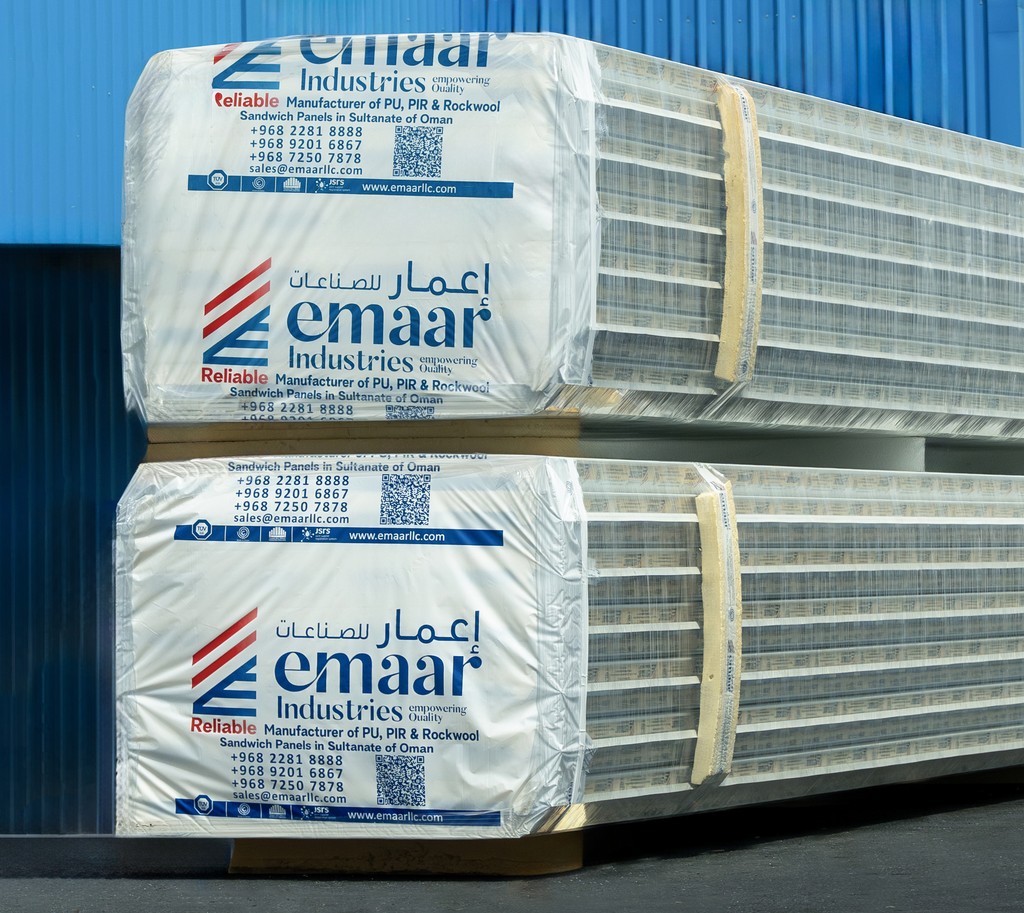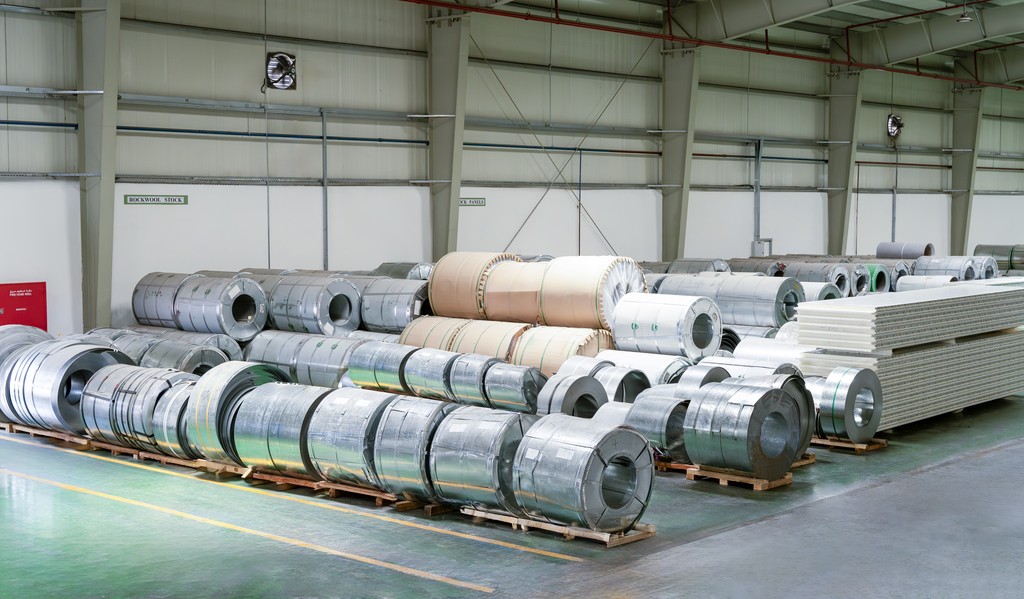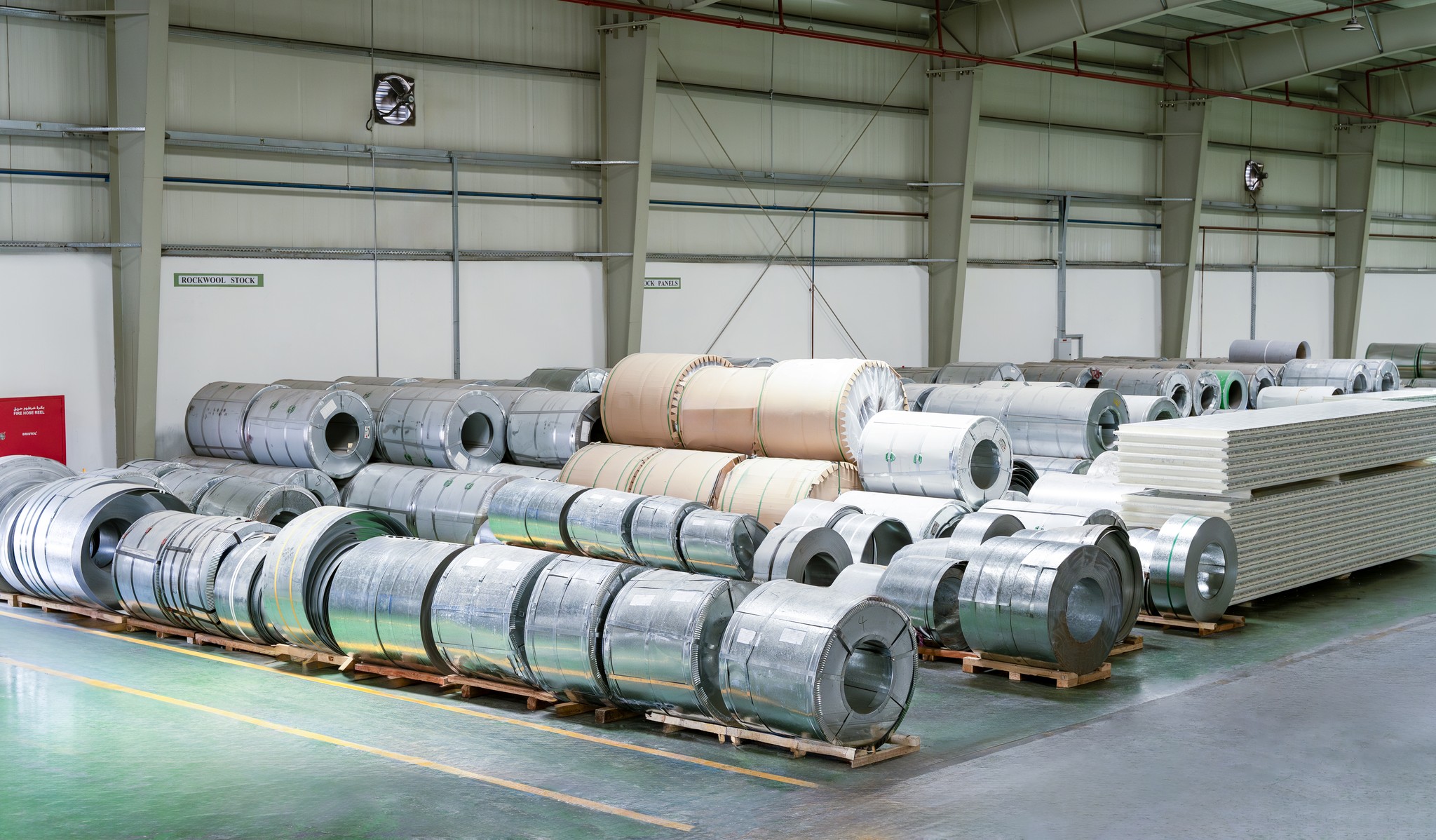
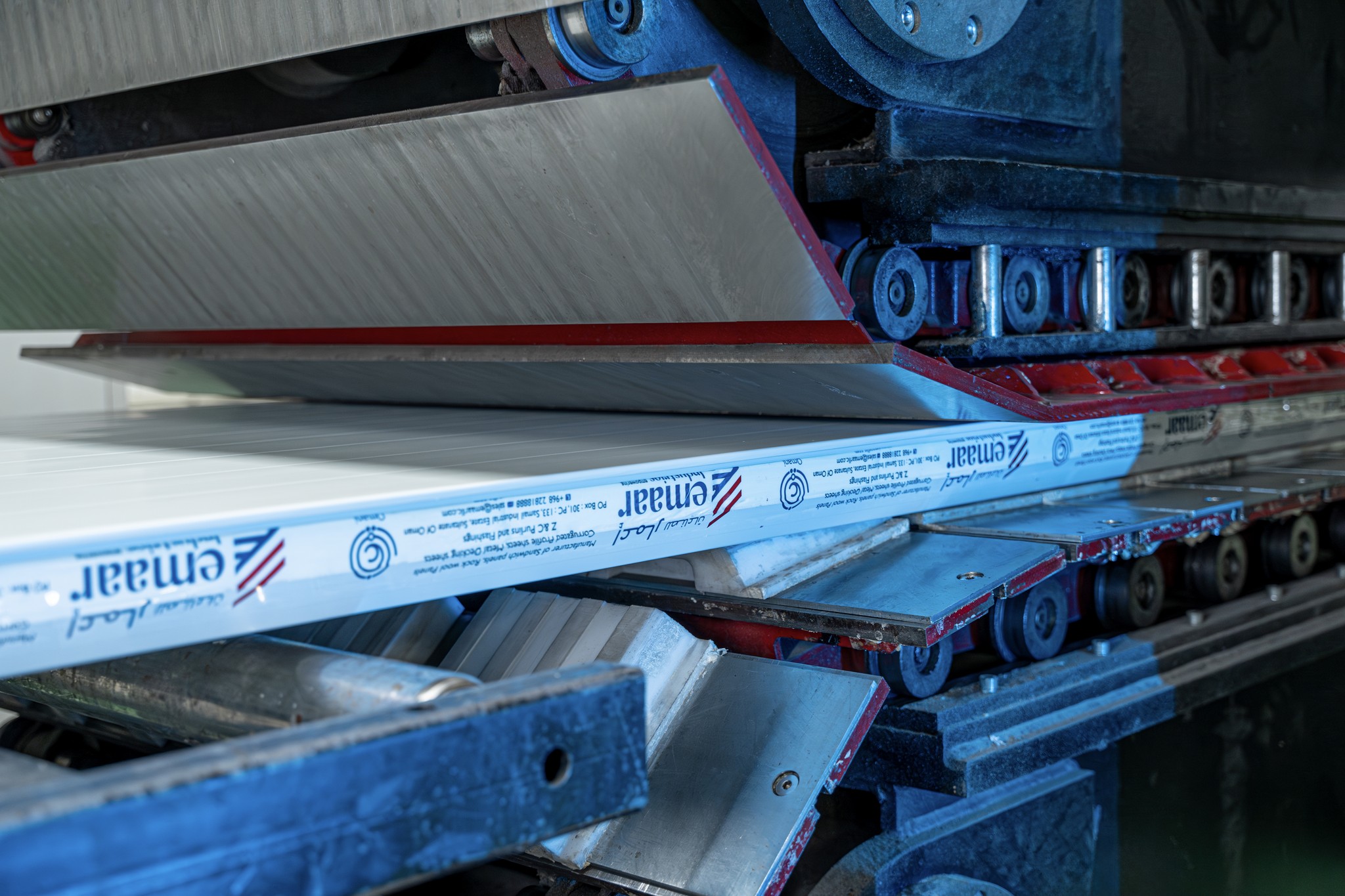
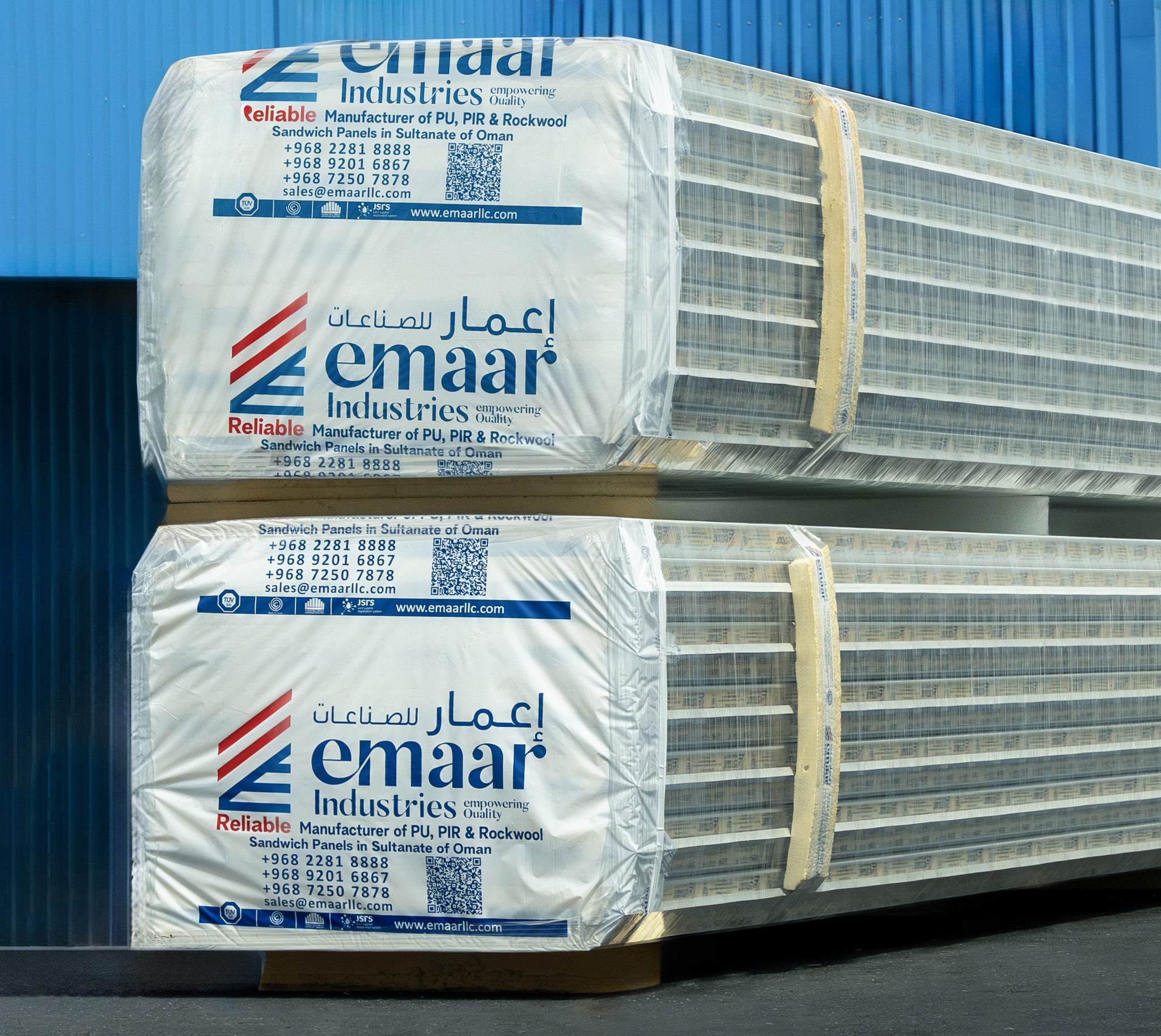
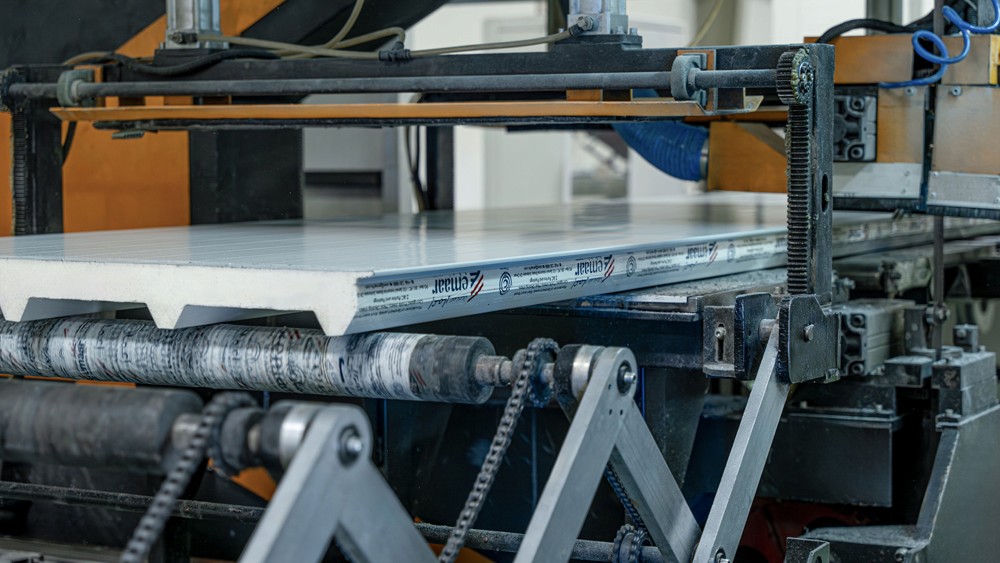
Emaar Industries industrial cladding panels manufacturing facility in Muscat, Oman
Industrial building envelope clad with Emaar insulated roof and wall panels
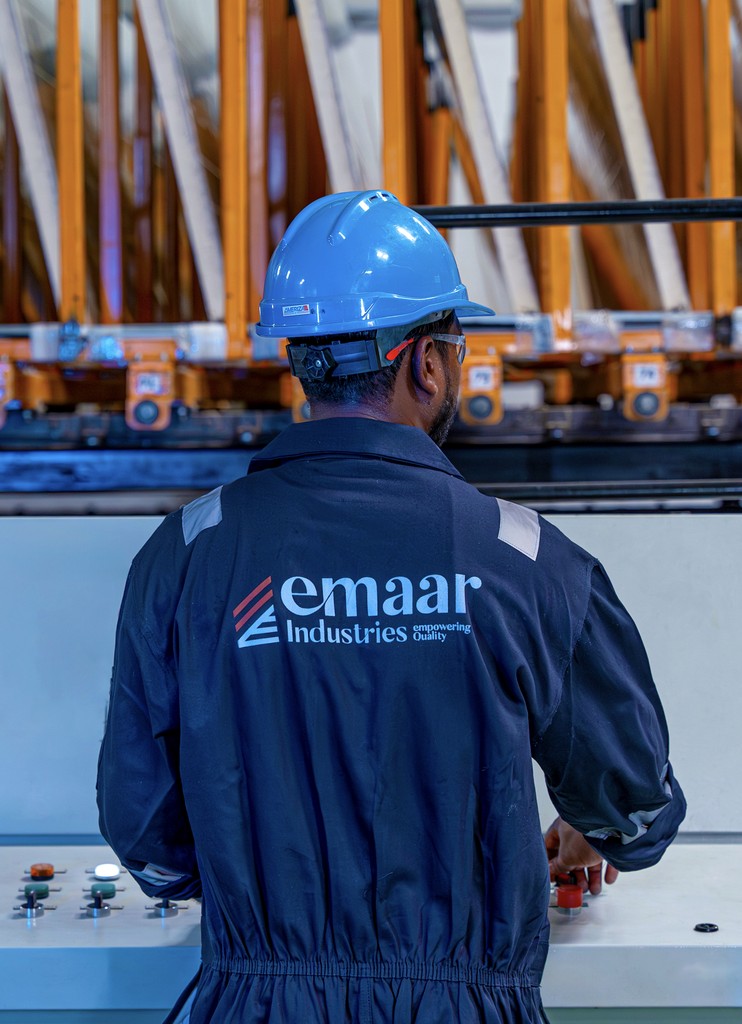
Quality inspection of high-performance industrial cladding panels
GCC industrial complex engineered with Emaar industrial cladding panels
0
Daily Production Capacity
0
Tier-1 Projects Delivered
0
Global & Regional Markets
0
Core Chemistry Options: PIR, PUR, Rockwool
Technical Cladding Authority · Oman Manufacturer

Industrial Cladding Panels: Thermal, Structural, & Fire Engineering Guide for Global Procurement

In modern industrial facility construction—ranging from logistics hubs and automated cold chains to oil & gas infrastructure—the building envelope represents the critical barrier against thermal loss, moisture ingress, fire hazards, and structural fatigue. Selecting the appropriate Industrial Cladding Panels is no longer just a visual preference; it is a vital engineering decision that determines operational energy expenditures (OPEX), carbon compliance, and long-term asset durability.

Manufactured in our state-of-the-art facility in Muscat, Oman, Emaar Industries delivers advanced insulated sandwich cladding systems engineered specifically for severe environmental exposures, including ambient temperatures exceeding 45°C, extreme ultraviolet radiation, and C4/C5 marine atmospheric corrosion across the GCC and international markets.

Product System Portfolio

High-Performance Industrial Cladding Panels & Systems

Engineered to exact project specifications. Select your core insulation chemistry, structural steel skin profile, protective coating, and joint architecture to fulfill thermal, fire, and structural requirements.

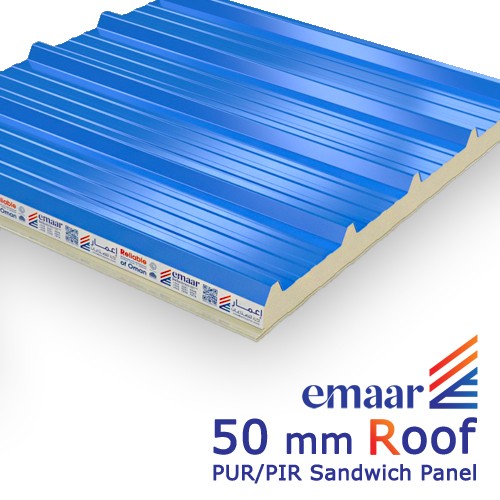
PIR / PUR50mm PIR roof industrial cladding panel cross-section

PIR Roof Cladding Panels

Trapezoidal-profile roofing panels engineered with polyisocyanurate (PIR) cores (λ ≈ 0.022 W/m·K). Features lap-joint sealing and high load-bearing rib profiles for wide purlin spacing in industrial facilities.

View Specifications
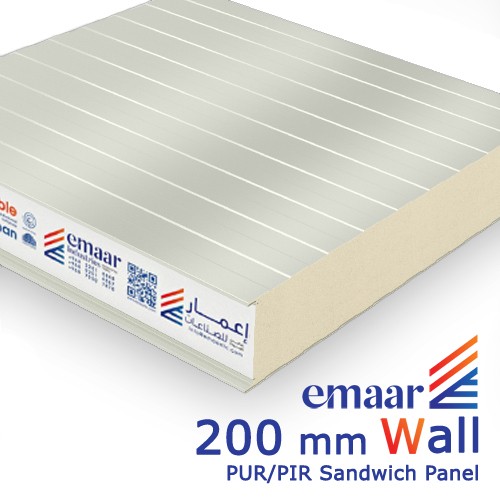
PIR / PURPIR wall industrial cladding panel

PIR/PUR Wall Cladding Panels

Architectural and industrial vertical cladding panels available in concealed (secret fix) or through-fix double tongue-and-groove jointing. Eliminates thermal bridging while maintaining exceptional air-tightness.

View Specifications
Fire RatedRockwool non-combustible industrial cladding panel

Rockwool Fire-Rated Panels

Inherent non-combustible stone wool mineral core (EN 13501-1 Class A1). Specifically designed for fire compartment walls, high-occupancy industrial spaces, dangerous goods storage, and acoustic sound reduction (up to 32 dB).

View Specifications
Cold Chain200mm high density cold storage industrial cladding panel

Cold Room Cladding Panels

High-density PIR/PUR core insulated panels up to 200 mm thickness. Equipped with hygienic stainless or food-safe PVC skins and continuous vapour-tight gasket seals for low-temperature food and pharma logistics.

View Specifications
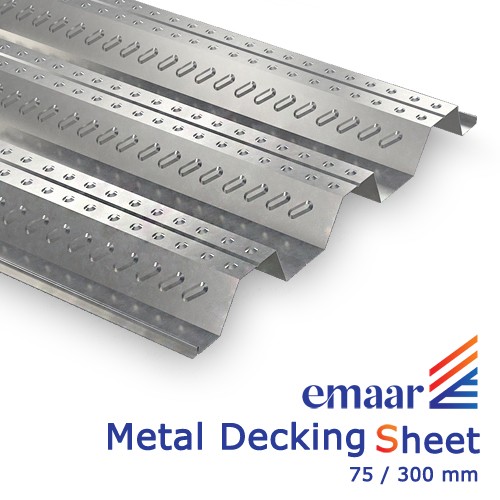
StructuralGalvanized steel metal decking profile sheet

Composite Metal Decking

High-tensile galvanized steel floor decking profile providing structural formwork and positive reinforcement for multi-story industrial mezzanine slabs and industrial buildings.

View Specifications
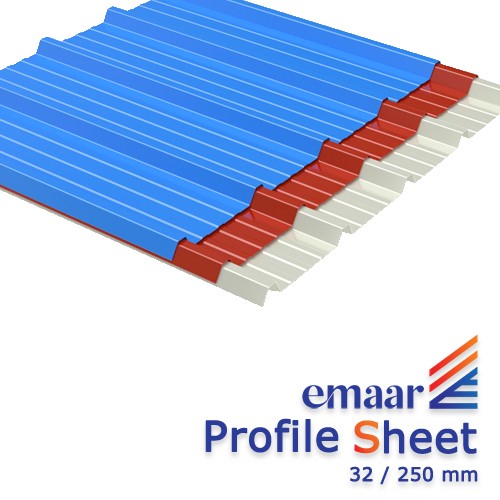
Single SkinTrapezoidal profile cladding steel sheet

Single-Skin Profile Sheets

Precision cold-rolled trapezoidal and corrugated steel profiles for single-skin cladding, canopy coverings, interior liner trays, and structural wall screen enclosures.

View Specifications
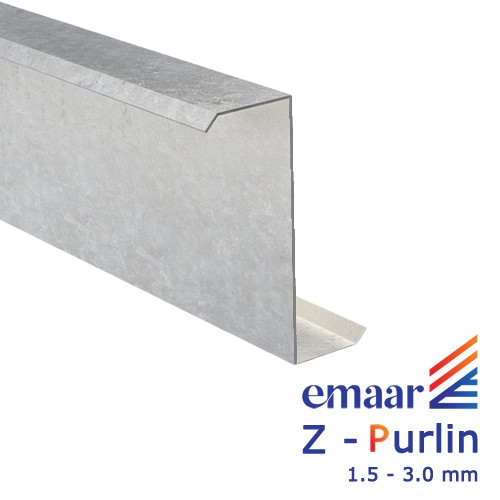
FramingGalvanized cold rolled Z purlin section

Cold-Rolled Z Purlins

High-yield S350GD structural steel Z-purlins engineered for continuous lap nesting. Provides efficient secondary framing support for roof industrial cladding systems.

View Specifications
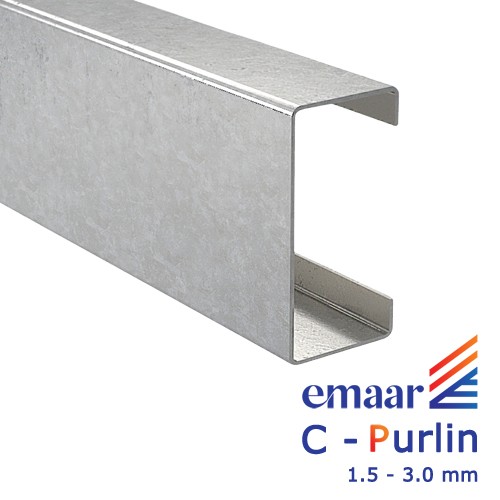
FramingCold formed steel C purlins and girt sections

Cold-Rolled C Purlins

Cold-formed structural C-sections for side-wall girts, door headers, window trimmers, and modular steel framework matched to wall cladding panel spacing.

View Specifications
Engineering Insight & Material Science

Technological Evolution of Industrial Cladding Panels

Understanding the micro-structure, polyisocyanurate trimerization, and surface metallurgy that define modern high-efficiency building envelopes.

Polymer Chemistry & Thermal Physics

Modern industrial cladding panels rely heavily on advanced Polyisocyanurate (PIR) formulations. Unlike legacy Polyurethane (PUR), PIR is manufactured by reacting polyol and isocyanate at high index ratios (>250), forming highly stable ring-shaped isocyanurate chemical bonds. This yields exceptional dimensional stability, a reduced thermal conductivity coefficient (λ as low as 0.022 W/m·K), and superior char-forming self-extinguishing fire behavior.

Metallurgical Protection & Coating Systems

Industrial facilities operating near marine shorelines or chemical processing units require robust atmospheric corrosion protection. Emaar utilizes high-grade hot-dip galvanized (Z275) and Aluzinc (AZ150) structural steel substrates. Outer face options include Polyvinylidene Fluoride (PVDF) for UV-resistance, High-Durable Polyester (HDP), and anti-static food-safe Plastisol films designed to withstand severe C4 and C5 environmental categories according to ISO 12944.

Air-Tightness & Thermal Bridge Elimination

Heat transmission through building envelopes often occurs at panel joints. Emaar’s cladding panels incorporate precision-engineered tongue-and-groove profiles featuring factory-applied elastomeric butyl gaskets and anti-capillary drainage grooves. This geometry blocks convective thermal transfer, prevents vapor condensation under interior air-conditioning conditions, and guarantees tight building envelope pressure test compliance.

Global Technological Trends Shaping Industrial Cladding

1. Fourth-Generation Eco-Blowing Agents: Transitioning from HCFCs to zero-ODP (Ozone Depletion Potential) and ultra-low GWP (Global Warming Potential) blowing agents such as Cyclopentane and Hydrofluoroolefins (HFOs). This enables strict compliance with global environmental mandates (Kigali Amendment, LEED v4, BREEAM) without sacrificing thermal resistance.

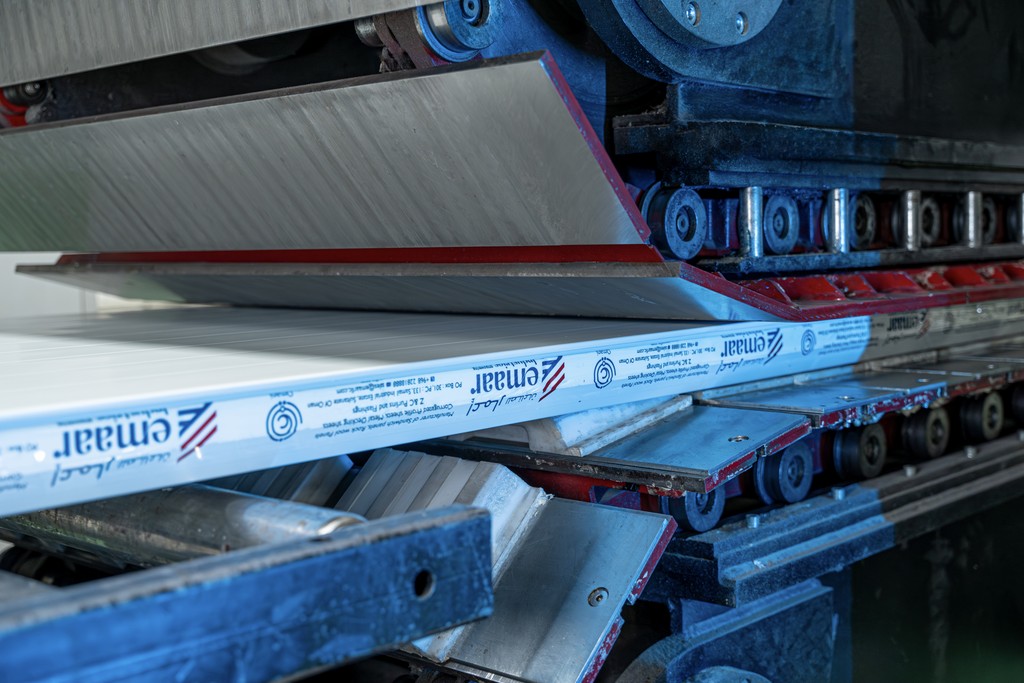
2. Continuous Double-Belt High-Speed Foaming: Moving away from discontinuous block-molding to automated continuous double-conveyor press lines operating under strict temperature and pressure controls. This guarantees uniform foam core density distribution ($40 \pm 2\text{ kg/m}^3$), eliminating structural void formation and delamination risks.

3. Advanced Acoustic-Thermal Hybrid Cores: Integrating perforated interior steel facings with mineral wool or dual-density core combinations to simultaneously fulfill thermal insulation ($U\text{-value} < 0.20\text{ W/m}^2\text{K}$) and acoustic noise attenuation requirements in heavy power generation facilities, compressor houses, and manufacturing plants.

Technical Selection Guide

Matching Cladding Cores to Project Performance Profiles

Comparative technical analysis for engineering consultants, structural engineers, and EPC procurement managers.

Panel Core Chemistry Density & Thermal Conductivity (λ) Fire Reaction Standard Primary Engineering Fit Technical Specs
High-Index PIR (Polyisocyanurate) 40 kg/m³ | ≈ 0.022 W/m·K ASTM E84 Class A | EN 13501-1 B-s1,d0 High-temperature industrial roofs, logistics centers, hypermarkets requiring maximum thermal resistance per mm. View Details
Standard PUR (Polyurethane) 38–40 kg/m³ | ≈ 0.024 W/m·K DIN 4102 B2 / EN 13501-1 Class C Cost-efficient commercial distribution warehouses and agricultural storage with baseline insulation targets. View Details
Structural Rockwool (Mineral Fiber) 100–120 kg/m³ | ≈ 0.038–0.040 W/m·K EN 13501-1 Class A1 (Non-Combustible) | EI120/EI240 Fire compartment boundary walls, transformer bays, high-occupancy manufacturing zones, and sound insulation enclosures. View Details
High-Density PIR Cold Chain Core 42–45 kg/m³ | ≈ 0.021 W/m·K FM Approved / Civil Defence Certified Blast freezers (-35°C), cold storage hubs, pharmaceutical cleanrooms needing continuous vapour barrier locks. View Details

* Note: Lambda (λ) values and fire classification ratings are derived from standardized third-party laboratory test submittals. Project-specific engineering datasheets are provided upon design review.

Procurement Checklist

Parameters Required for Rapid Technical RFQ Review

To receive an accurate thermal calculation, structural span table verification, and cost estimate, provide the following parameters to our technical engineering department:

Required U-Value TargetSpecifies core thickness (e.g., 50mm, 75mm, 100mm, 150mm)
Purlin / Girt SpacingDetermines structural wind load resistance and panel skin gauge
Fire Resistance RatingEI rating requirements (30, 60, 90, 120, or 240 minutes)
Atmospheric Exposure ZoneCoastal distance and chemical air pollution severity for coating selection
Internal Hygiene RequirementsFood-grade PVC, stainless steel, or standard polyester interior skin
Project Delivery ScheduleTotal surface area (m²), phase breakdown, and destination port/site location
Strategic Sourcing Insights

Future Procurement Trends in Industrial Cladding

How global EPC contractors and industrial developers are optimizing building envelope procurement strategies for the next decade.

1. Nearshoring & Regional Manufacturing

Global supply chain disruptions have driven project procurement teams away from long-lead, overseas freight imports. Sourcing industrial cladding panels from local regional hubs like Muscat, Oman eliminates shipping delays, guarantees rapid site delivery, and drastically reduces transit damage risks.

2. Decarbonization & Life-Cycle Assessment

Industrial developers are under increasing pressure to meet Net Zero commitments. Procurement decision-making now prioritizes cladding systems backed by Environmental Product Declarations (EPDs). High thermal efficiency panels lower HVAC power consumption over a 30-year lifecycle, directly shrinking building operational carbon footprints.

3. Design for Demountability (DfD)

Modern industrial design increasingly incorporates circular economy principles. Fastener-concealed modular cladding panels allow future facility expansion, re-configuration, or end-of-life disassembly without structural destruction, preserving steel coil value and enabling core material recycling.

4. Integrated BIM & Modular Framing

Procurement is no longer transactional; it is digitally integrated. Supply partners must provide custom-length panels pre-cut according to Building Information Modeling (BIM) data alongside cold-rolled structural purlins and flashing accessories to eliminate on-site cutting waste and maximize erection speed.

Need Technical Specifications or Bidding Documentation?

Download our complete product catalog, structural load span tables, and certified material test reports.

Get Catalog
Search Intent & Engineering FAQ

Questions Global Buyers Ask About Industrial Cladding Panels

In-depth technical answers addressing procurement, thermal calculations, fire safety compliance, and structural installation queries frequently queried across search engines and AI assistants.

Get Catalog

Thermal Transmittance ($U$-value) is calculated using the inverse of total thermal resistance ($U = 1 / R_{total}$). Total resistance combines external/internal surface film resistances ($R_{se} + R_{si}$) and core layer resistance ($R = d / \lambda$, where $d$ is core thickness in meters and $\lambda$ is thermal conductivity). For high-ambient desert environments (e.g., GCC ambient summer temperatures exceeding 45°C), target wall $U$-values typically range from 0.18 to 0.22 W/m²K. Achieving a 0.20 W/m²K target with high-index PIR ($\lambda \approx 0.022\text{ W/m}\cdot\text{K}$) requires a core thickness of approximately 100 mm. Using Rockwool ($\lambda \approx 0.039\text{ W/m}\cdot\text{K}$) requires roughly 180 mm to achieve the identical thermal insulation performance.

Polyisocyanurate (PIR) is an organic polymer foam that undergoes chemical charring when exposed to flame, resisting flame spread and achieving ASTM E84 Class A and EN 13501-1 B-s1,d0 ratings. It offers superior thermal resistance per millimetre, making it lighter and thinner for thermal insulation. Rockwool is an inorganic stone wool core classified as EN 13501-1 Class A1 (Non-Combustible). Under severe fire exposure, Rockwool retains its structural integrity without emitting smoke or toxic gases, offering up to 240 minutes of fire resistance (EI240). Rockwool is specified for critical fire-barrier walls and plant enclosures, whereas PIR is preferred for primary facility wall/roof cladding where energy efficiency and reduced dead load dominate.

Standard Polyester (SP 25μm) is suitable for moderate inland industrial environments (C2/C3 categories). High-Durable Polyester (HDP 25–35μm) provides enhanced UV protection and gloss retention in high-solar zones. Polyvinylidene Fluoride (PVDF 25–35μm, 70/30 fluoropolymer) offers chemical inertness and extreme resistance to chalking and UV degradation, essential for coastal desert regions within 1 to 5 km of the sea. For severe industrial marine microclimates (C5-I/C5-M categories within 1 km of saltwater or active chemical processing plants), Emaar recommends 200μm Plastisol coating or Aluzinc AZ150 substrates with PVDF facings to prevent premature edge creep and delamination.

Yes. Industrial sandwich panels function as composite structural plates where the outer steel skins withstand tension/compression and the foam/wool core resists shear forces. By increasing panel thickness (e.g., from 50 mm to 100 mm) or increasing steel skin gauge from 0.45 mm to 0.60/0.70 mm, maximum allowable purlin or wall girt spacing can be expanded from 1.5 meters up to 3.5 or 4.0 meters under standard 1.0 kN/m² wind pressure. This structural optimization significantly reduces overall cold-rolled Z/C purlin tonnage and total project erection time.

Roof cladding panels must withstand positive downward loads (snow/dust accumulation, foot traffic during maintenance) and negative wind uplift suction forces, particularly at building eaves and corners. Trapezoidal rib profiles are essential on roofs to add section modulus and carry water runoff. Wall panels primarily handle positive and negative wind pressure. Furthermore, dark-colored external steel skins in high-solar climates can reach surface temperatures of 80°C while internal spaces are conditioned at 22°C. This steep thermal delta ($ΔT \approx 58^\circ\text{C}$) induces bow effects (thermal deflections). Multi-span panel layout, hidden clip systems, and calculated fastener slotted holes are engineered into Emaar panel specifications to absorb thermal expansion without oil-canning or fastener shear.

Discontinuous panel molding often suffers from localized core density variations, voids, and skin thickness fluctuations. Emaar’s continuous double-belt manufacturing line injects liquid PIR chemical components under high-pressure metering onto moving steel skins. The foam expands inside a 30-meter heated continuous caterpillar press, curing under controlled temperature and compression. This continuous process guarantees consistent core density ($40 \pm 2\text{ kg/m}^3$), uniform adhesion strength (>0.12 MPa), zero thermal voids, and tight joint profile tolerances (±0.5 mm), ensuring rapid, seamless panel interlocking during site erection.

Civil Defence authorities across Oman, UAE, Saudi Arabia, and Qatar require comprehensive fire reaction and resistance testing submittals performed by accredited third-party laboratories (e.g., Intertek, Thomas Bell-Wright, Exova Warringtonfire). Documentation includes reaction to fire tests (EN 13501-1 / ASTM E84), fire resistance ratings (EN 1364-1 / UL 263 for walls, EN 1365-2 for roofs), Factory Production Control (FPC) ISO 9001 certificates, and physical material safety data sheets (MSDS). Emaar Industries maintains complete certified technical dossiers ready for instant consultant submittal.

Direct Regional Contacts

Global Supply Chain & Support Network

Connect directly with technical sales engineers in your target installation region for technical submittals, samples, and quote requests.