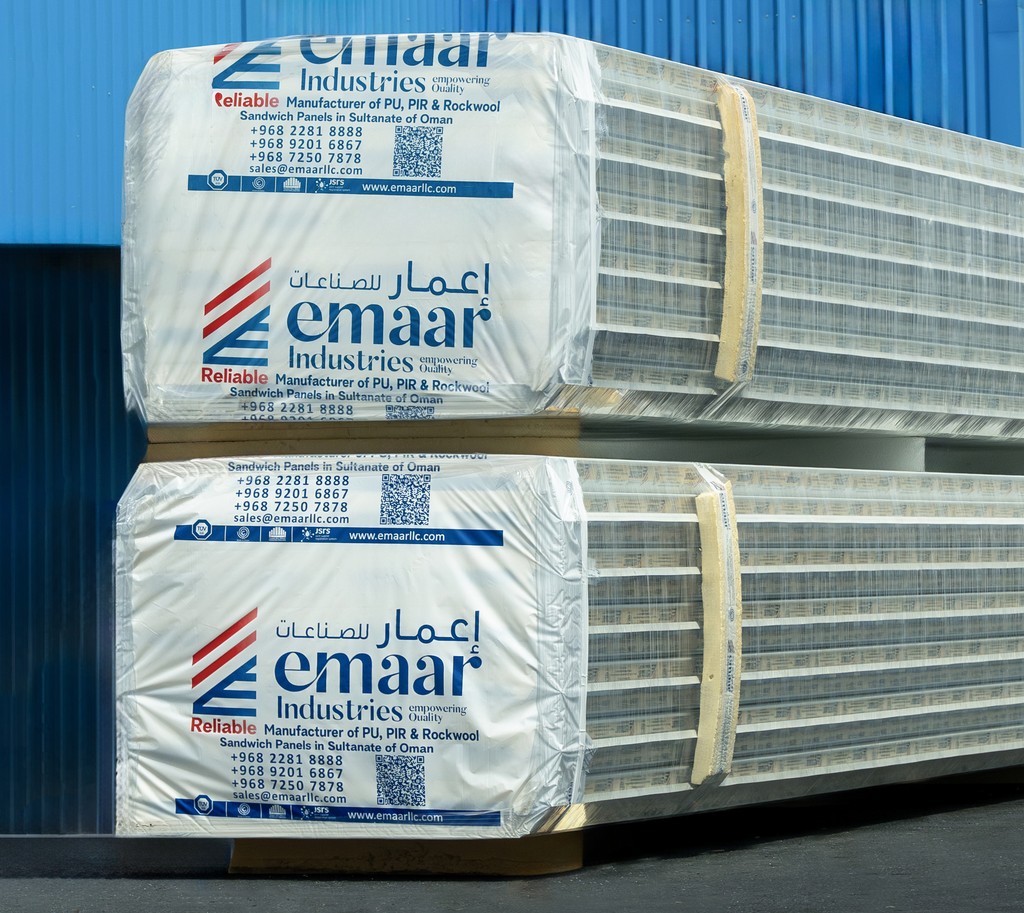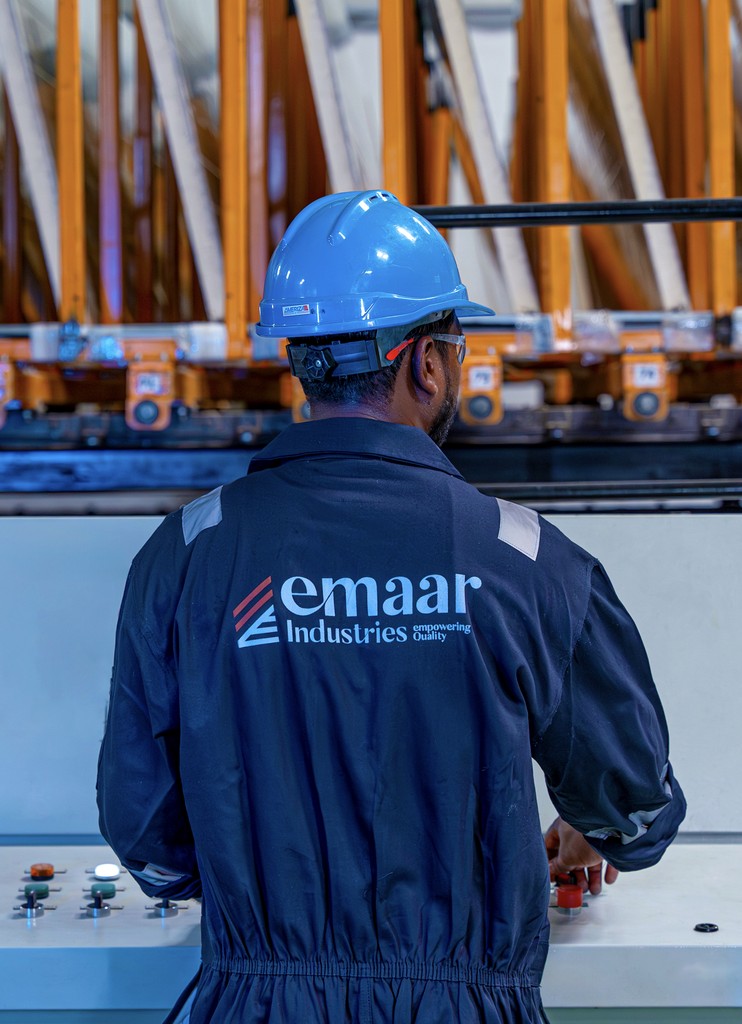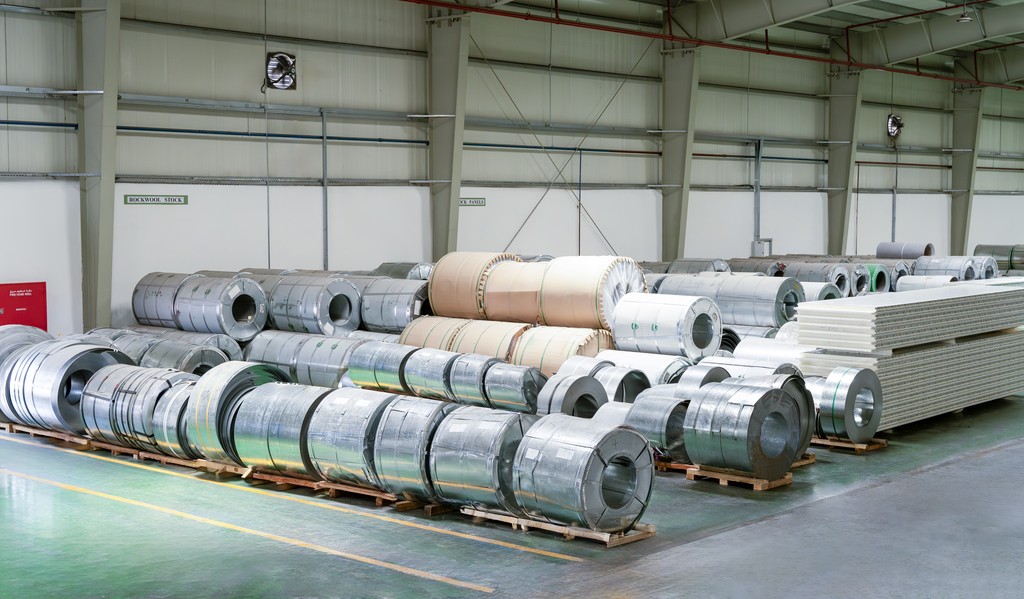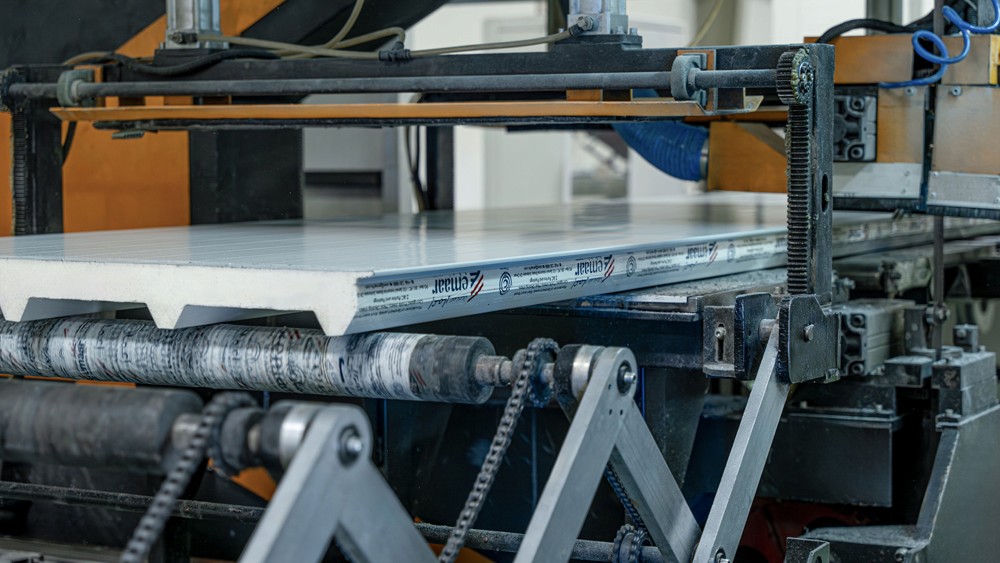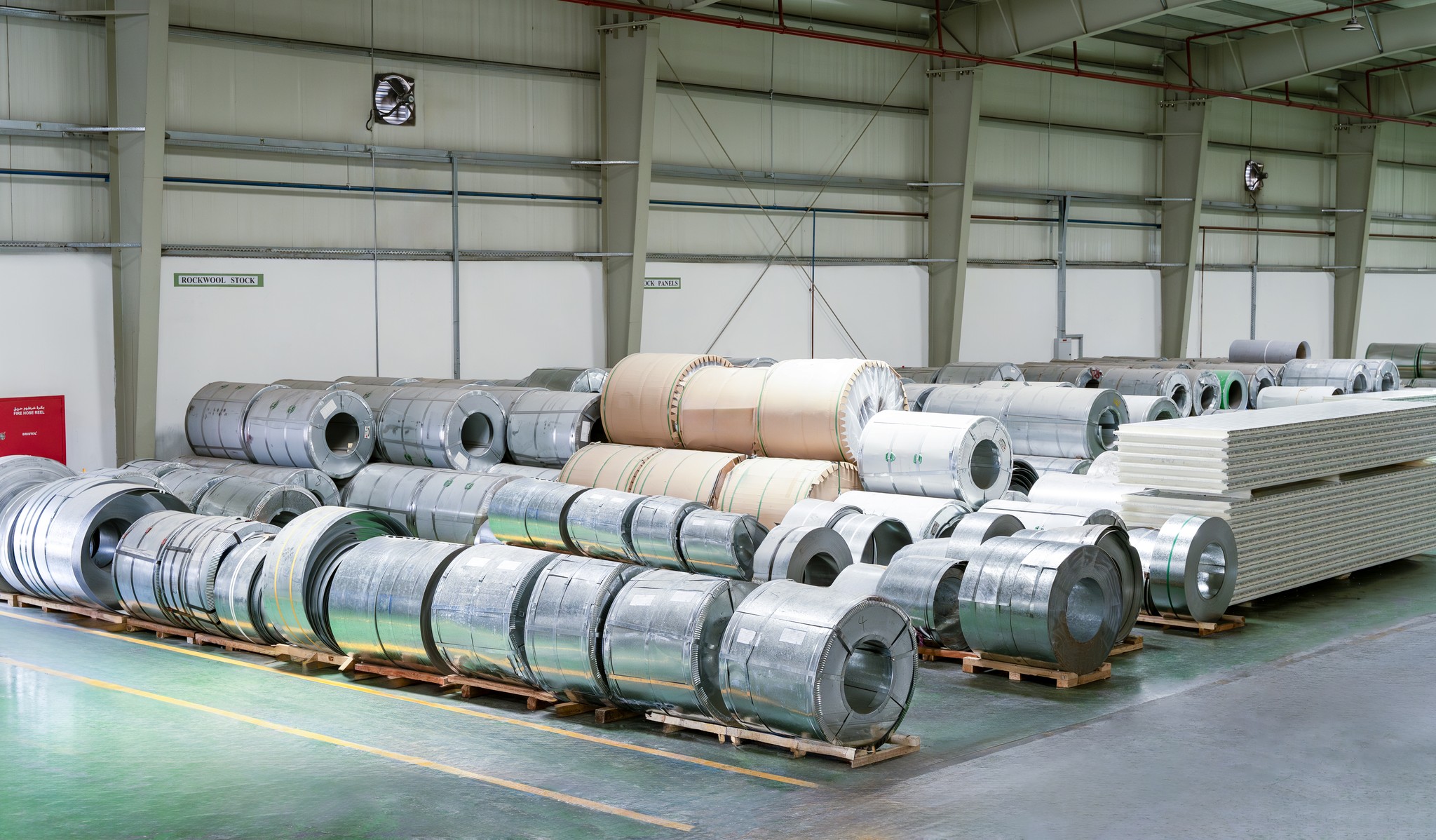
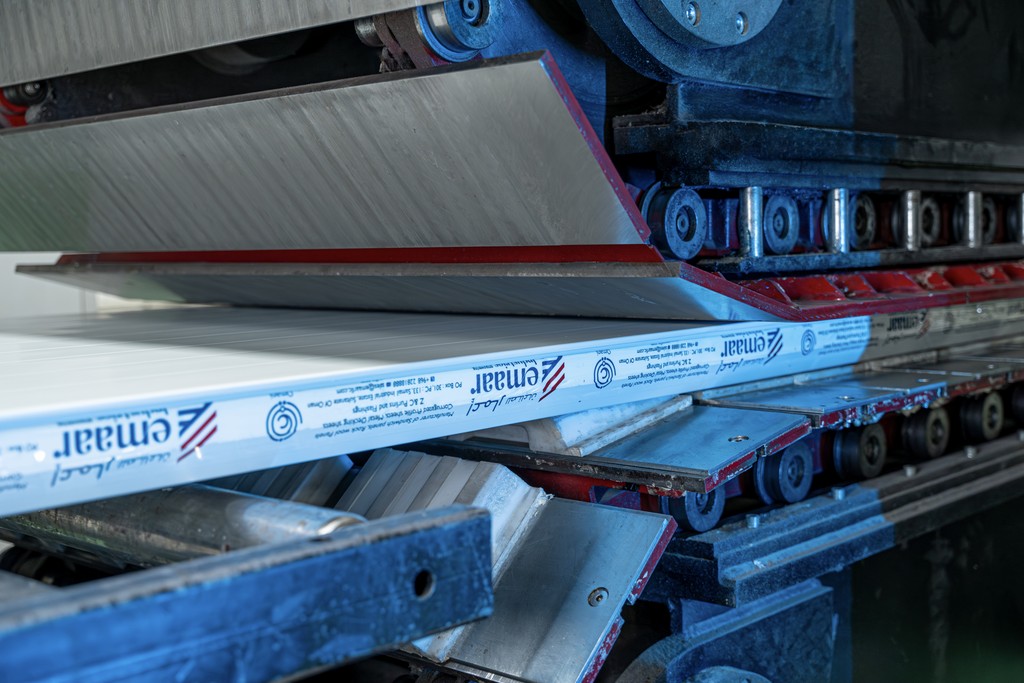
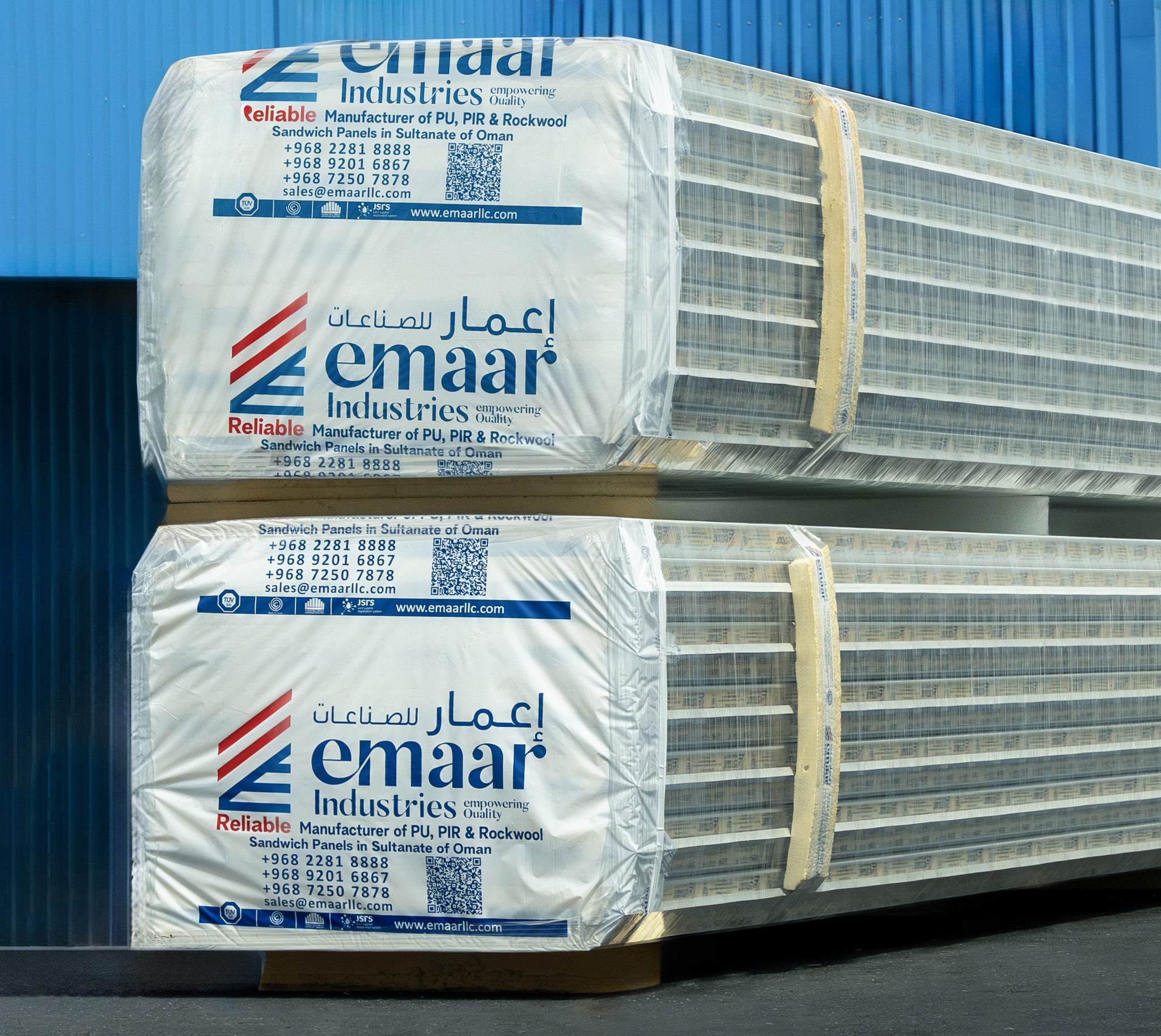
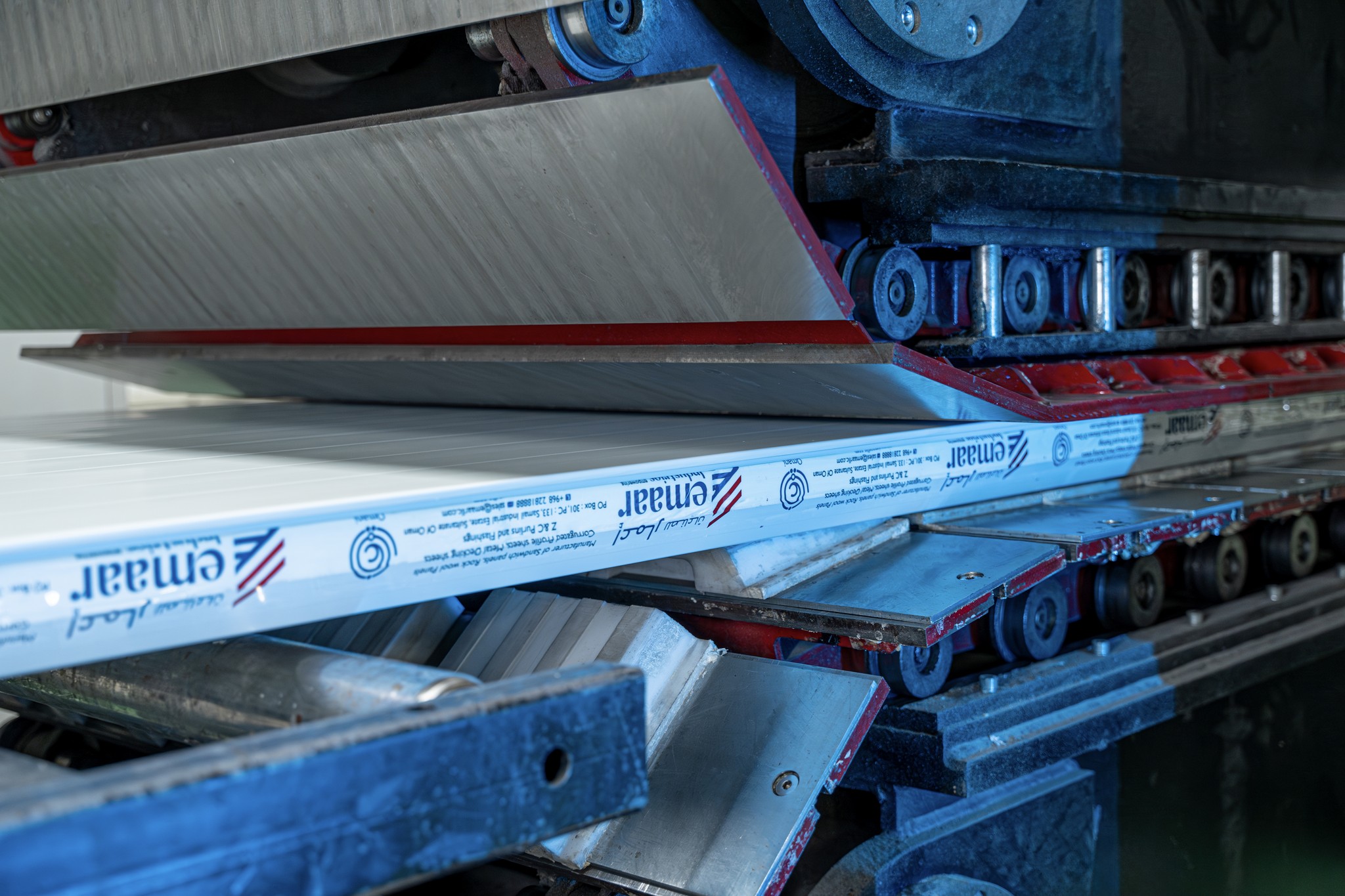
State-of-the-art continuous PIR roof sandwich panel production facility at Emaar Industries Muscat
PIR roof sandwich panel installation on a major industrial logistics center
Quality control and thermal testing of high-density PIR roof sandwich panels
Large span commercial facility completed with trapezoidal PIR insulated roof systems
0
Daily Continuous Panel Output
0
Industrial Projects Handed Over
0
Ultra-Low PIR Lambda Rating (λ)
0
Civil Defence & ISO Compliance
Engineering Excellence · Gulf Verified

High-Performance PIR Roof Sandwich Panels: The Definitive Engineering, Procurement & Lifecycle Specification Guide

In modern industrial civil engineering and commercial construction, the building envelope represents the critical barrier against thermal infiltration, structural fatigue, and atmospheric corrosion. As international environmental targets accelerate toward Net-Zero and national building codes mandate rigorous fire behavior, PIR Roof Sandwich Panels (Polyisocyanurate Insulated Panels) have emerged as the premier structural composite roofing system globally.

Manufactured by Emaar Industries in Muscat, Oman, our high-density PIR trapezoidal roofing panels combine pre-painted high-tensile structural steel skins with a rigid closed-cell thermoset isocyanurate core. Operating on a continuous double-belt laminating line delivering up to 10,000 m² daily, we engineer roofing profiles capable of maintaining peak thermal efficiency ($\lambda = 0.022\ \text{W/m}\cdot\text{K}$), class-leading reaction to fire (EN 13501-1 B-s1,d0), and continuous purlin spans that radically reduce framing steel tonnage across the GCC, Africa, and international markets.

Engineered Recommendations

Tailored PIR Roof Sandwich Panel Configurations

Every commercial development or cold-chain distribution center possesses distinct thermodynamic, aerodynamic, and structural constraints. Discover our standard and heavy-duty PIR roof panel configurations configured for optimal load-bearing and energy performance.

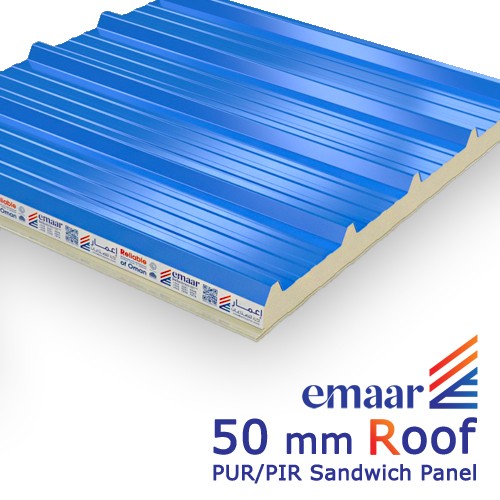
Standard 3-Rib 50mm to 75mm PIR Roof Sandwich Panel 3-Rib profile

PIR-R50 / R75 Industrial Roof

Optimized for standard distribution warehouses and light manufacturing hangars requiring reliable U-values (0.41–0.28 W/m²·K) with wide purlin spacing up to 2.2 meters.

Inquire Now
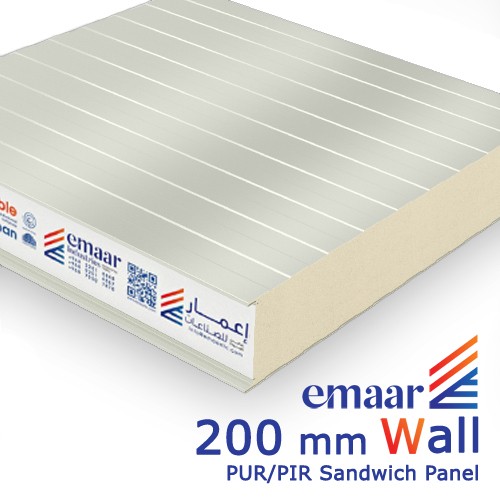
Heavy-Duty 4-Rib 100mm heavy duty PIR roof sandwich panel cross section

PIR-R100 High-Efficiency Roof

The engineering benchmark for temperature-sensitive production facilities and automated logistics hubs. Achieves U-values as low as 0.21 W/m²·K with superior diaphragm action.

Inquire Now
Cold Chain Cladding 120mm to 150mm heavy insulated PIR cold storage roof panel

PIR-R120 / R150 Controlled Environment

Formulated for food processing centers, pharmaceutical warehouses, and sub-zero blast freezers requiring severe vapor seal integrity and U-values below 0.15 W/m²·K.

Inquire Now
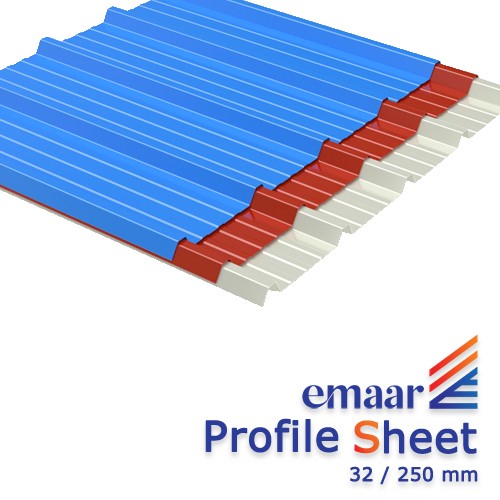
Solar-Ready Reinforced trapezoidal profile panel for rooftop solar mounting

Solar-Integrated BIPV Ready Roof

Reinforced high-crown trapezoidal ribs designed to accept penetration-free standing clamps for solar PV arrays, minimizing leak risk while bearing high localized dead loads.

Inquire Now
Engineering Datasheet

Thermal & Structural Load-Bearing Matrix

Calculated in accordance with EN 14509 structural design standards for double-skin metal faced insulating panels (Core density: 40 kg/m³ ±2, 0.5 mm exterior / 0.4 mm interior steel facing).

Nominal Core (mm) Overall Weight (kg/m²) U-Value (W/m²·K) R-Value (m²·K/W) Max Single Span (m)* Max Multi Span (m)* Fire Reaction Class
50 mm 10.35 0.412 2.43 2.20 2.60 B-s1, d0 (EN 13501-1)
75 mm 11.35 0.284 3.52 2.65 3.10 B-s1, d0 (EN 13501-1)
100 mm 12.35 0.215 4.65 3.05 3.50 B-s1, d0 (ASTM E84 Class A)
120 mm 13.15 0.180 5.55 3.40 3.90 B-s1, d0 (ASTM E84 Class A)
150 mm 14.35 0.144 6.94 3.80 4.40 B-s1, d0 (Classified)

*Span capacities are calculated based on a characteristic design pressure load of 1.25 kN/m² and a serviceability deflection criterion of L/200. Project-specific wind uplift calculations must be verified by structural engineers using Emaar's certified submittal packs.

Procurement Intelligence

Future Global Procurement Trends in PIR Roof Panels

Procurement directors and commercial developers are navigating heightened regulatory oversight, supply chain volatility, and carbon scrutiny. Understanding these four macro procurement trends guarantees long-term compliance and project profitability.

Trend 01

Decarbonization & EPD Audits

International tenders increasingly require verified third-party Environmental Product Declarations (EPDs) evaluating embodied carbon from cradle-to-gate. Next-generation PIR formulations prioritize bio-attributed polyols and circular raw materials to reduce Whole Life Carbon (WLC) without sacrificing thermal resistance.

Trend 02

Nearshoring vs Shipping Fragility

Global logistics disruptions across marine chokepoints have demonstrated the fragility of importing bulky panels overseas. Regional manufacturing in Muscat enables bonded overland road delivery across Oman, the UAE, KSA, Qatar, and Bahrain, compressing lead times from 14 weeks to under 10 days.

Trend 03

Rigorous Civil Defence Accreditations

Municipal Civil Defence authorities across the Middle East and worldwide now demand strict pre-qualification based on large-scale room corner and envelope tests (such as NFPA 285, FM 4880/4881, and EN 13501-1). Uncertified panels face immediate site rejection during municipal inspection.

Trend 04

BIM Integration & Precision Offsite

Contractors are transitioning from manual field modifications to fully detailed Building Information Modeling (BIM Level 2/3). PIR roof panels are ordered pre-notched, factory-cut to millimeter-exact eaves lengths, and supplied with matching C/Z purlins and trims to slash site labor overhead.

Trend 05

PV-Ready Lifecycle Engineering

Rooftops are no longer passive weather shields; they are active clean-energy power plants. Procurement contracts prioritize panels tested specifically for concentrated mechanical clamp loading and prolonged hot-spot resistance under photovoltaic panel arrays.

Trend 06

Coating Durability Under Extreme UV

With UV index ratings regularly exceeding 11 in desert and equatorial latitudes, standard polyester coatings degrade rapidly, chalking within 5 to 7 years. Procurement policies now insist on High-Durability Polyester (HDP) or Polyvinylidene Fluoride (PVDF) offering 25+ year warranties.

Technological Innovations

Advancements in Continuous PIR Foaming Chemistry

The manufacturing of high-performance PIR panels has advanced dramatically beyond legacy batch methods. Today, Emaar Industries leverages ultra-precise, computer-monitored high-pressure continuous foaming technology that guarantees isotropic density and thermal continuity across thousands of linear meters.

1. 4th Generation HFO Blowing Agents

We utilize advanced hydrofluoroolefin (HFO) blowing agents that exhibit an Ozone Depletion Potential (ODP) of zero and a Global Warming Potential (GWP) < 1, surpassing all international Montreal and Kigali amendment environmental directives.

2. High-Index Isocyanurate Trimerization

By maintaining an isocyanate reaction index exceeding 250, our panels feature tight heterocyclic ring structures that carbonize upon flame impingement, effectively arresting thermal degradation at up to 200°C.

3. Capillary-Break Joint Geometry

Our roof profiles integrate dual anti-siphon capillary grooves and factory-injected elastomeric weather seals, ensuring 100% moisture impermeability even under torrential storm events and wind-driven rain.

Continuous computerized PIR sandwich panel production line at Emaar Industries
Fully automated continuous laminating press monitoring micro-cell consistency and steel adhesion.

Factory Tolerances & Control

Continuous laser scanning measures panel thickness down to ±1 mm, core adhesion shear strength exceeds 0.11 MPa, and skin delamination testing complies with stringent EN 14509 manufacturing protocols.

Engineering FAQ

Common AI Queries Regarding PIR Roof Panels

Architects, facade engineers, and international procurement leaders frequently query generative AI search tools on technical specifications, fire certifications, and installation physics. Here are direct, authoritative answers backed by factory engineering data.

Inquire Now

The primary differentiator lies in the chemical formulation and molecular ring structure. PUR (Polyurethane) is synthesized at an isocyanate-to-polyol index close to 100:100. In contrast, PIR (Polyisocyanurate) is produced at an isocyanate index typically exceeding 250, causing excess isocyanate molecules to react with themselves via trimerization to form rigid, thermally stable isocyanurate ring structures. Under fire exposure, PIR forms an endothermic, insulating carbonaceous char that resists flame penetration and limits smoke generation, meeting European Class B-s1,d0 standards and ASTM E84 Class A criteria.

In extreme arid and Gulf environments where roof surface temperatures fluctuate from 15°C at night to over 85°C at midday, PIR panels excel due to their ultra-low linear thermal expansion coefficient and closed-cell microcellular matrix (>95% closed-cell content). High solar reflectance index (SRI ≥ 78) exterior coatings like PVDF or High-Durability Polyester (HDP) reflect solar heat, while the rigid PIR core prevents thermal bowing and delamination across extensive thermal cycles.

For a standard 100 mm PIR trapezoidal roof panel (with 0.5 mm exterior steel and 0.4 mm interior liner), maximum allowable purlin spans typically range between 2.4 m and 3.2 m under design wind and live loads of 1.2 to 1.5 kN/m² with a deflection limit of L/200. The trapezoidal ribs serve as external structural flanges that dramatically enhance moment of inertia and flexural rigidity compared to flat panels.

Modern PIR roof sandwich panels incorporate engineered overlapping crowns with built-in anti-siphon capillary grooves. The panel joint integrates continuous factory-applied elastomeric butyl seals or closed-cell EPDM gaskets along the longitudinal overlap. This ensures an airtight, vapour-impermeable joint that completely eliminates moisture migration, condensation formation, and wind-driven rain penetration even at roof pitches down to 4°.

Yes. Engineered trapezoidal PIR roof panels are designed to accommodate clamp-based, non-penetrating solar mounting systems. Specialized aluminum seam clamps fasten directly onto the raised trapezoidal ribs, eliminating through-fastening penetrations that could cause leaks. The high compressive strength of PIR core foam (typically ≥ 140-160 kPa at 10% deformation) safely supports static solar racking loads and dynamic wind uplift forces.

For installations within 5 km of coastlines or within harsh industrial environments subject to high salinity and sulfur dioxide, panels should be specified with heavy metallic coatings (Aluzinc AZ150/AZ200 or Hot-Dip Galvanized Z275) topped with Polyvinylidene Fluoride (PVDF 2-coat, 25-30 µm) or thick polyurethane-polyamide plastisols compliant with ISO 12944 corrosivity category C4, C5-I, or C5-M.

The Emaar Industries Advantage

Unmatched Manufacturing Scale & Supply Security

With an established manufacturing footprint in Muscat, Oman, and over 550 industrial and infrastructure contracts completed across the Middle East and Africa, Emaar Industries delivers an agile, certified building envelope manufacturing hub.

10,000 m² Daily Capacity

High-speed continuous laminators deliver massive panel volumes on tight schedules, eliminating the project delays commonly associated with regional distributor backlogs.

Complete Envelope Synergies

We roll-form matching secondary structural steel in-house—including Z-purlins, C-sections, metal decking, ridge flashings, and custom color trims—ensuring single-source design coordination.

Extreme Heat Engineering

Coating polymers and high-index PIR cores engineered specifically for 50°C summer conditions, zero degradation from intense sand abrasion, and long-term cyclic UV exposure.

Cross-Border Transit

Seamless customs clearance and rapid flatbed transport across the Sultanate of Oman, UAE, Saudi Arabia, Qatar, and major maritime container shipping hubs to Africa.

Audited Rigor

Certified Quality Ready for Immediate Consultant Submittal

Every PIR production run undergoes laboratory testing for density, compressive modulus, thermal resistance, and flame propagation. Our technical compliance documentation is trusted by ministries, consultants, and developers across the region.

Emaar Industries ISO and civil defence technical certifications
Enterprise Trust

Supplying Top Tier Contractors & Developers

Our PIR roof sandwich panels and cold-rolled secondary steel members have been selected for flagship infrastructure, defense, aviation, logistics, and mega-commercial schemes across the Middle East.

Emaar Industries strategic client logo
Contractor client logo
Enterprise partner logo
Commercial developer partner logo
Industrial client partner logo
Corporate engineering client logo
Civil engineering developer logo
Infrastructure authority logo
Middle East infrastructure client logo
Commercial logistics partner logo
Engineering contracting client logo
Consultancy client logo
Regional Engineering Offices

Connect with Our Technical Estimation Desk

Direct project coordination across Oman, the UAE, Saudi Arabia, Qatar, and international export channels.