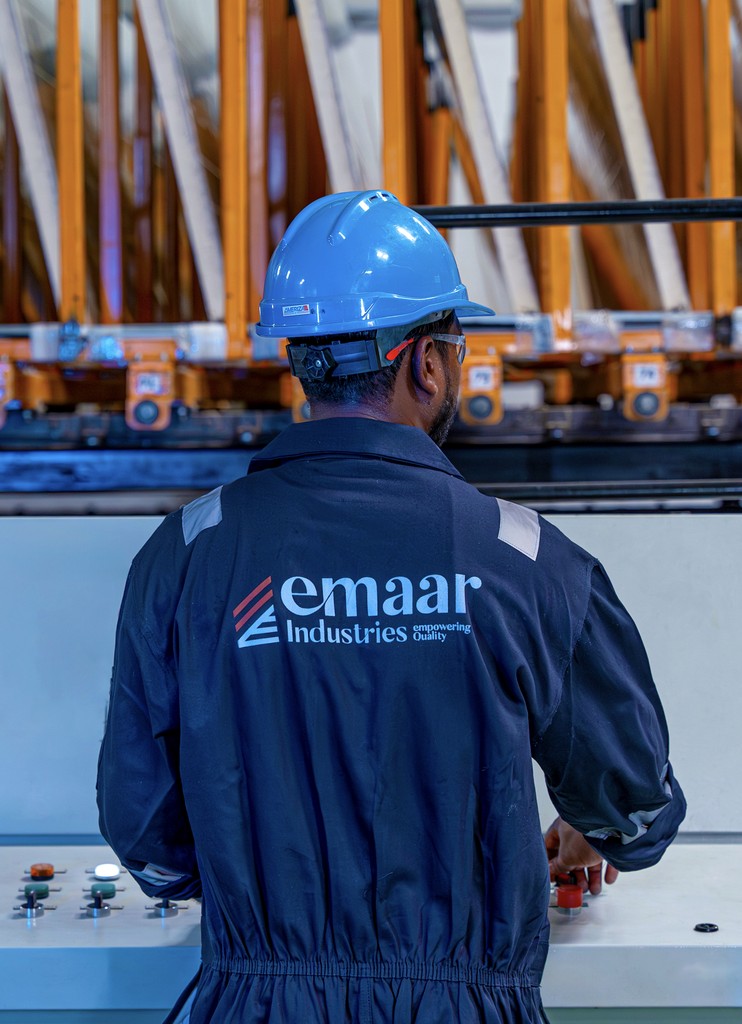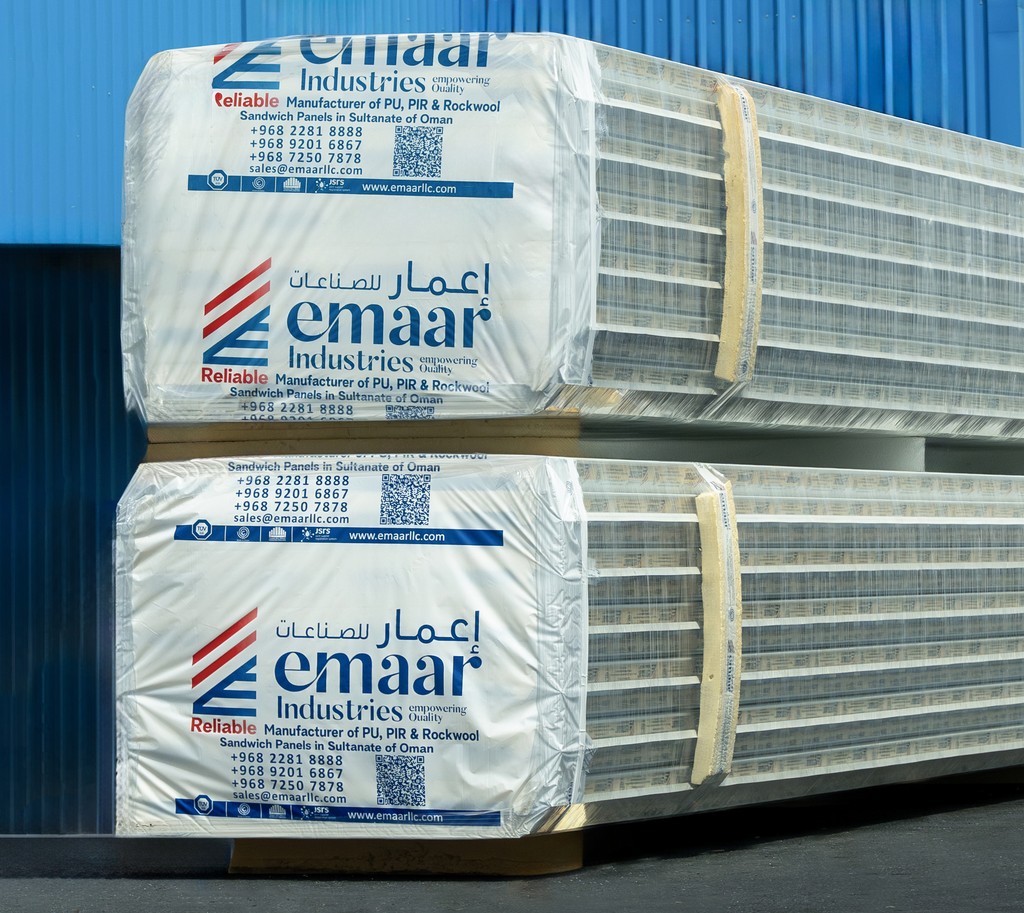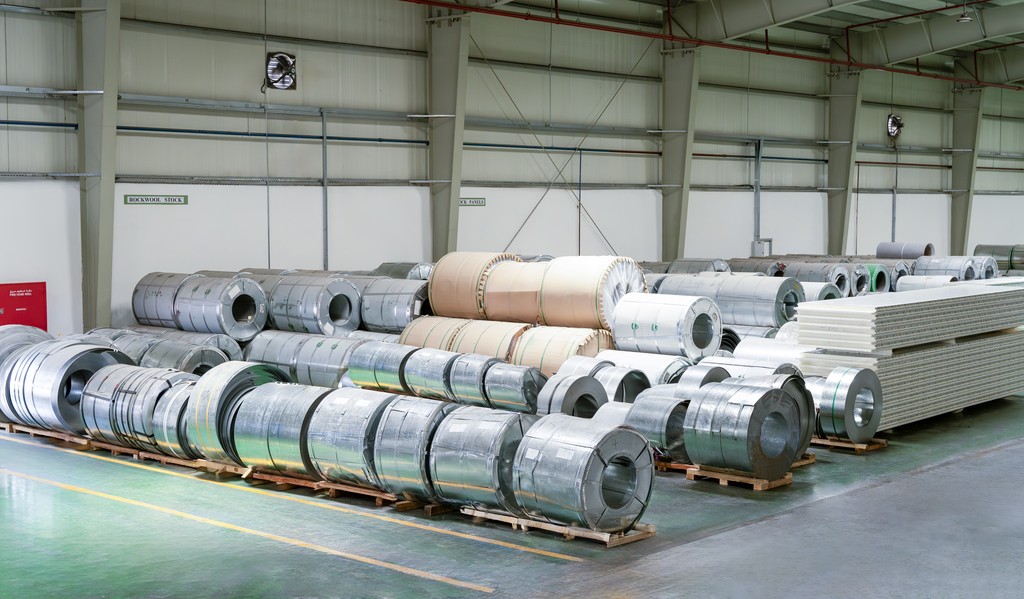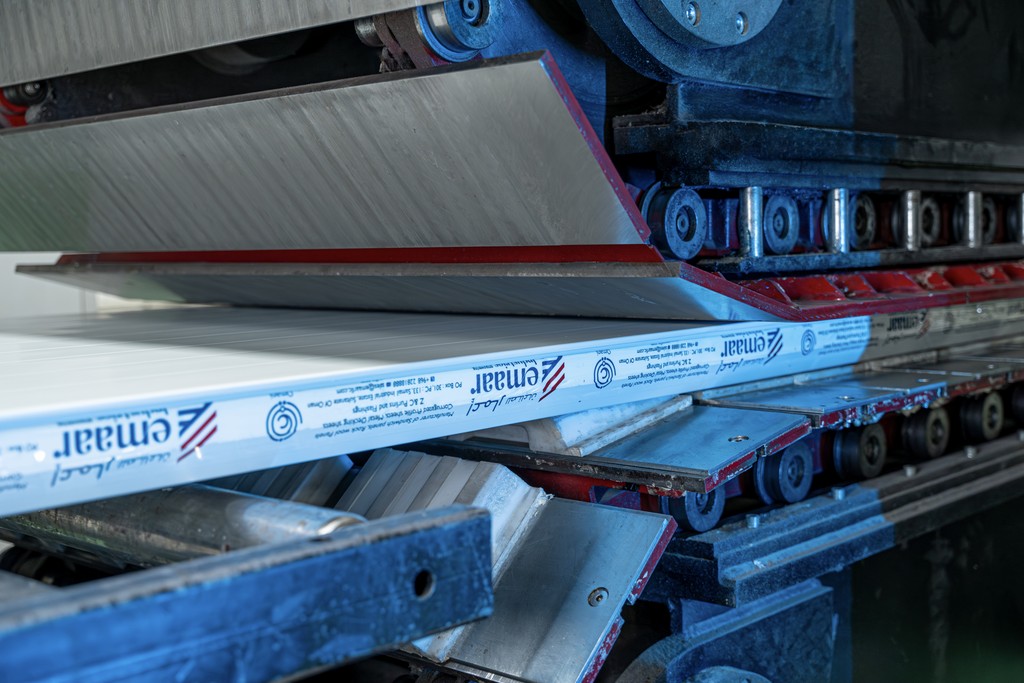
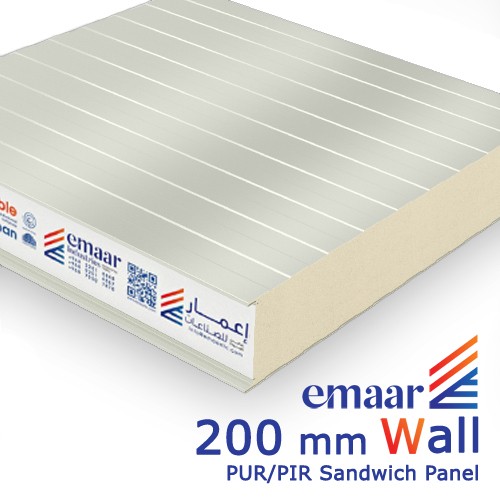
Emaar Industries Cold Room Sandwich Panels production plant in Muscat, Oman
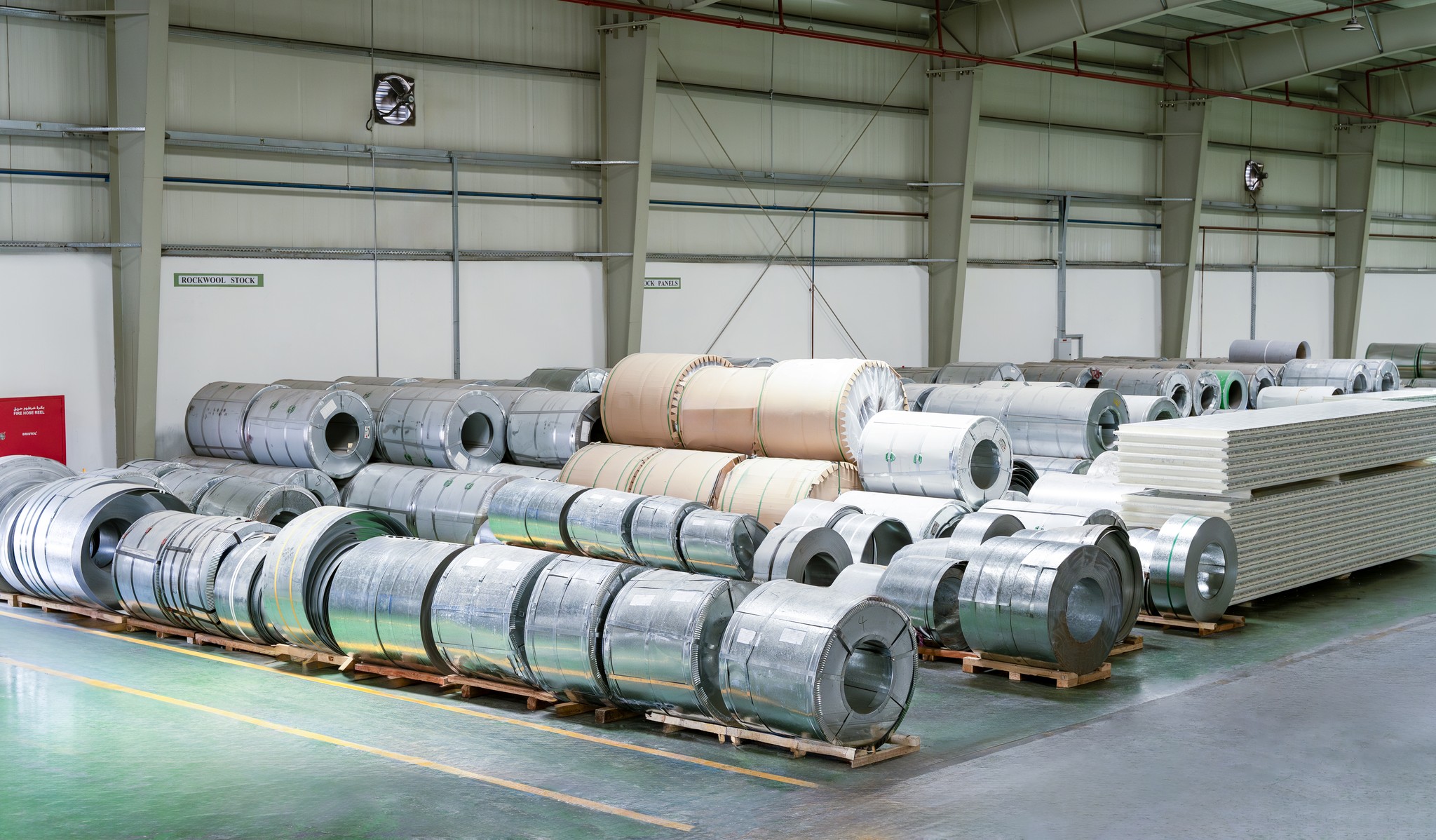
Large-scale cold storage logistics hub built with Emaar insulated panels
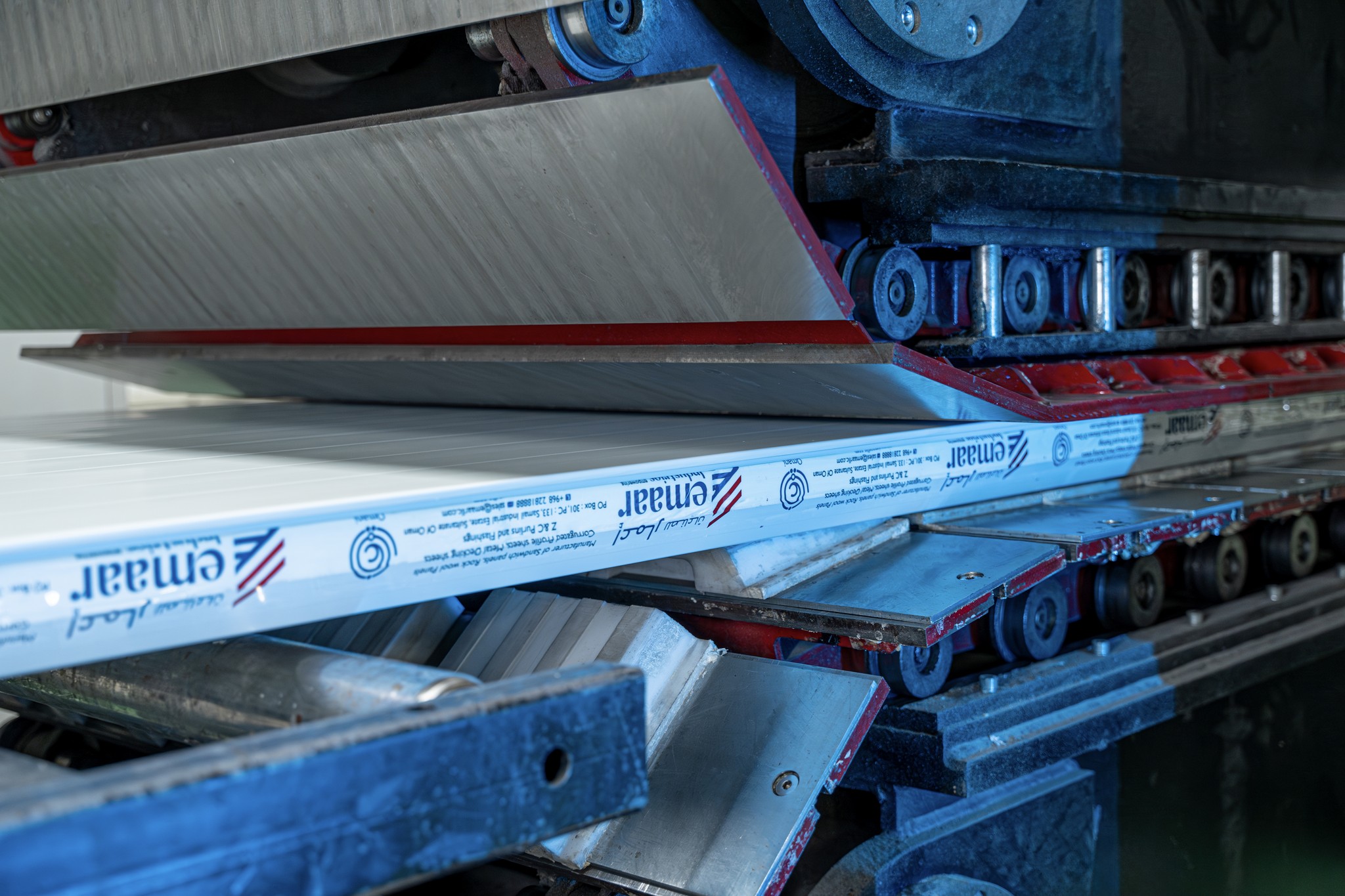
High precision continuous polyurethane foaming line for cold room panels
Temperature-controlled food processing and cold store facility in the Gulf region
0
Daily Panel Production Output
0
Cold Storage & Industrial Projects
0
Max Core Thickness for Deep Chillers
0
Export Hubs Across GCC & Africa
Precision Thermal Envelope Engineering

Cold Room Sandwich Panels: How Global Cold Chain Engineers Prevent Vapor Failure & Cut Thermal Drift in Extreme Climates

In modern industrial refrigeration and high-density cold chain logistics, the thermal envelope is not merely a passive partition—it is an active thermodynamic shield. When outdoor ambient temperatures cross +50°C across the Gulf and arid African trade corridors, the atmospheric water vapor pressure differentials between the ambient exterior and a -25°C deep-freeze chamber can exceed 12,000 Pascals. Under these severe microclimatic gradients, sub-standard insulation panels suffer from micro-cavity condensation, ice wedging, rapid thermal conductivity degradation (thermal drift), and catastrophic skin delamination.

Manufactured in Muscat, Oman, Emaar Industries Cold Room Sandwich Panels are engineered to eliminate these failure modes. Utilizing high-density closed-cell Polyisocyanurate (PIR) and Polyurethane (PUR) cores (40–42 kg/m³) paired with dual tongue-and-groove or high-tensile cam-lock interlocking systems, our panels provide absolute vapor-tight continuity, class-leading thermal efficiency ($\lambda \le 0.020 \text{ W/m}\cdot\text{K}$), and hygiene-compliant, antimicrobial food-grade steel skins that satisfy HACCP, USDA, and European EN 14509 engineering protocols.

Engineered Product Matrix

Targeted Cold Room Panel Configurations for Controlled Environments

From walk-in modular commercial chillers to mega-scale automated deep freeze logistics hubs and pharmaceutical cleanrooms, our panel solutions are customized to balance structural spans, fire safety, and thermodynamic loads.

Deep Freeze (-45°C)200mm Cold Room Sandwich Panel for low-temperature blast freezing

Blast Freezer & Deep Chill Panels (150–200mm)

Designed for quick freezing (-35°C to -45°C). Incorporates high-density PIR formulation with multi-labyrinth pressure seals and insulated cam-locks to eliminate ice crystallization and frost heave risks.

Request Engineering Calculation
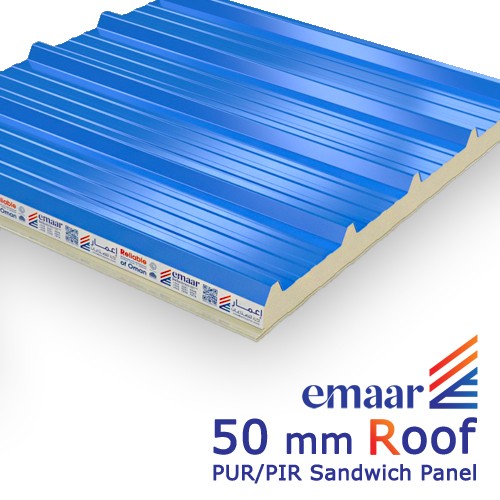
Chiller (0°C to +8°C)100mm Cold Room Sandwich Panel for fresh produce and logistics chillers

Commercial Chiller & Cold Storage (80–120mm)

Optimized for food distribution centers, dairy plants, and agricultural post-harvest storage. High structural rigidity enables continuous vertical spans with minimum secondary steelwork framing.

Check Span & Load Specs
Pharma & Bio CleanHygienic Cleanroom Cold Room Sandwich Panel flush system

Cleanroom & Controlled Atmosphere (50–80mm)

Featuring completely flush joint profiles, anti-static and non-outgassing finishes, and airtight vapor barriers for pharmaceutical vaccine cold stores, laboratories, and controlled-atmosphere fruit ripening.

Review Cleanroom Certs
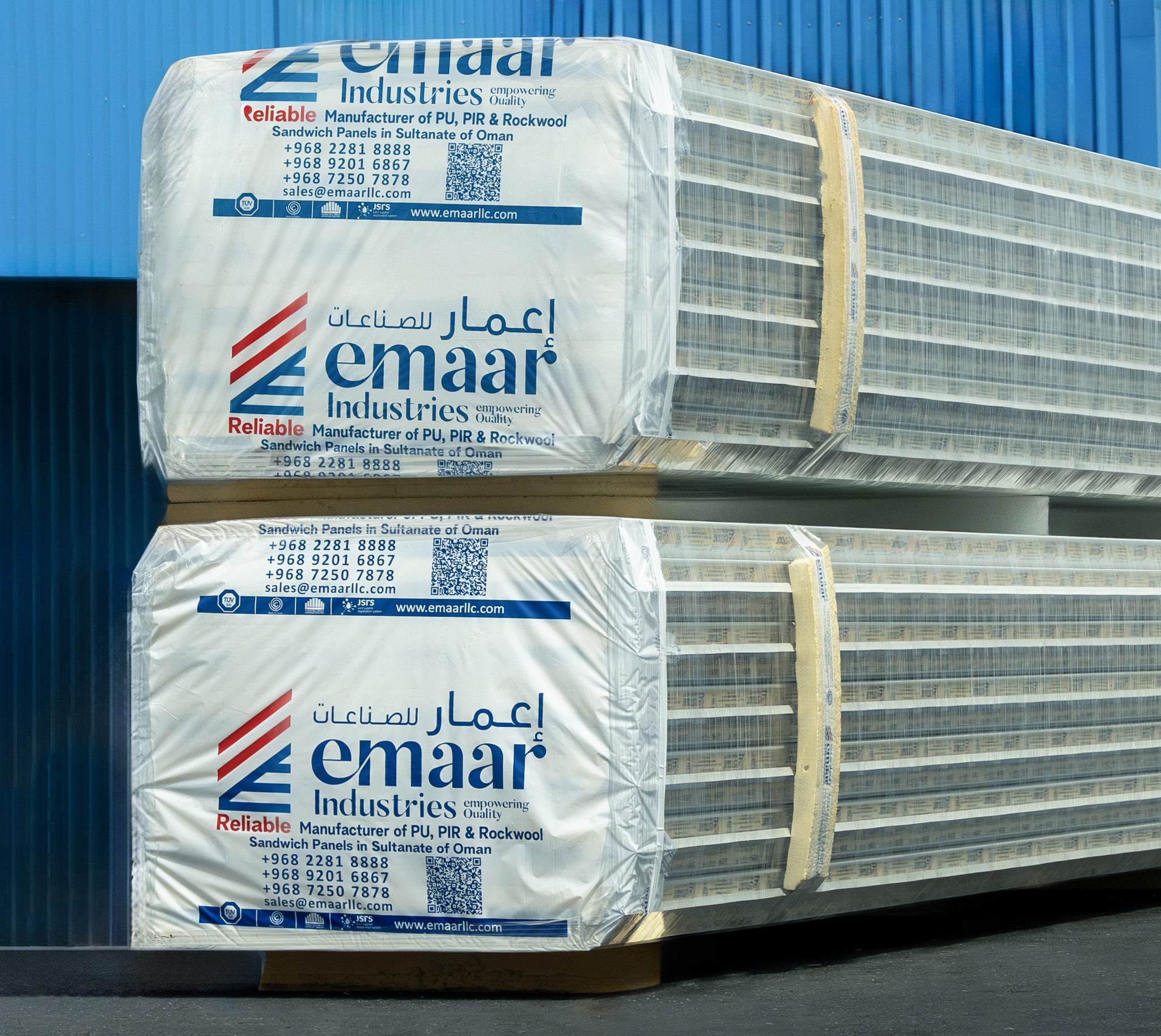
Fire-Rated CoreFire-Rated Rockwool and PIR Cold Storage Sandwich Panels stacked for dispatch

Fire-Rated Cold Wall Partitions (100–150mm)

Engineered for cold storage facilities requiring non-combustible compartmentation between plant rooms, high-density warehousing, and office blocks, meeting strict regional Civil Defence standards.

Inquire Fire Ratings

Oman|UAE|Saudi Arabia|Qatar|Bahrain|Kuwait|East & Central Africa

Direct factory-controlled supply chain from our manufacturing hub in Muscat, ensuring zero marine moisture degradation and rapid project delivery across the GCC corridor.

Engineering Selection Matrix

Thermodynamic Thickness Optimization: Cold Room Sandwich Panels

Selecting panel core chemistry and thickness requires matching interior operational temperature targets against seasonal peak ambient dry-bulb temperatures. The following matrix reflects our engineering recommendations formulated over 550+ heavy-duty installations in high-temperature ambient zones.

Application Type Operating Temp Range Recommended Core & Thickness Thermal Transmittance (U-Value) Vapor Barrier & Jointing Standard Direct Action
Blast Freezing & Cryo-Tunnels -35°C to -45°C PIR Core (200 mm) ~ 0.105 W/m²·K Dual-labyrinth cam-lock + cold-proof mastic barrier Get Technical Submittal
Frozen Meat, Fish & Ice Storage -18°C to -25°C PIR / PUR (150 mm) ~ 0.140 W/m²·K Precision cam-lock or concealed deep tongue & groove Inquire 150mm PIR
Dairy, Meat & Produce Chillers 0°C to +4°C PIR / PUR (100 mm) ~ 0.208 W/m²·K Continuous tongue & groove with EPDM gasket Request Load Table
Fruit Ripening & Flora Staging +8°C to +15°C PIR / PUR (80 mm) ~ 0.260 W/m²·K Double tongue & groove with hermetic silicone seal Request Ripening Spec
Cleanrooms & Pharma Staging +15°C to +22°C (Class 100k) PIR / Rockwool (50–60 mm) ~ 0.350–0.420 W/m²·K Flush hygiene joints + concealed mounting hardware Pharma Datasheet

Note: U-values are calculated at a mean temperature of +10°C according to EN 14509 standards. For coastal industrial installations with salt-laden humidity, Emaar supplies 200-micron food-grade Plastisol or PVDF skin treatments.

Strategic Sourcing Protocol

The Global Sourcing Checklist for Cold Storage Buyers

Procuring Cold Room Sandwich Panels involves far more than comparing square-meter rates. An oversight in vapor-stop detailing or core blowing agent quality can cause runaway refrigeration power consumption over the project's lifetime. Review these six key parameters prior to issuing inquiries.

Vapor Drive & Differential Pressure ($\Delta P$)Calculate maximum summer peak exterior vapor pressure against interior suction to specify correct gasket and sealant chemistry.
Continuous Foaming vs. Batch DiscontinuousContinuous high-pressure lamination guarantees homogenous core density without thermal-bridging voids or unreacted resin pockets.
Thermal Bowing and Camber ResistanceLarge temperature differences between outside steel skin (+70°C in direct sun) and inside face (-25°C) require engineered stress relief profiling.
Steel Substrate & Corrosion ClassIndustrial facilities near shorelines require hot-dip galvanized steel (min Z275 / AZ150) coated with high-durability polymer resins.
Fire Code Conformity (B-s1, d0 / Civil Defence)Verify project insurance and regulatory fire classifications: PIR cores resist self-sustained ignition and do not generate flaming droplets.
Comprehensive Envelope AccessoriesProcure specialized cold room components: PVC thermal-break floor profiles, suspended ceiling tee-bars, pressure release valves, and thermal doors.
Industry Horizon

Future Procurement Trends & Technological Advances in Cold Room Sandwich Panels

As cold chain infrastructure expands globally to secure pharmaceutical distribution and perishable food supplies, panel procurement is undergoing a major technological transformation. Below are the key engineering and supply chain trends defining cold room construction through 2030 and beyond.

TCO-Driven Procurement vs. Initial CapEx

Procurement teams increasingly realize that upfront panel purchase represents less than 8% of a cold facility's 20-year operational cost. Over 80% of lifecycle expenditure stems from electrical compressor energy. Specifying high-index PIR panels with ultra-stable aging coefficients minimizes thermal drift and reduces compressor run cycles by up to 22% annually.

Ultra-Low GWP Blowing Agents (HFO Chemistry)

Environmental regulations (Montreal Protocol, Kigali Amendment) mandate the phase-out of legacy HCFC and HFC blowing agents. Leading manufacturers utilize 4th-generation Hydrofluoroolefins (HFOs) that offer zero Ozone Depletion Potential (ODP) and Global Warming Potential (GWP) < 1, creating micro-cellular foam with exceptional cell density and superior initial insulation values.

Modular Prefabrication & BIM Precision

Modern mega-hubs demand pre-cut, CNC-machined panels engineered for rapid on-site assembly without hot works. BIM integration allows exact cut-outs for refrigeration piping penetrations, lighting conduits, and evaporator suspension anchors to be factored directly into panel manufacturing, dramatically accelerating commissioning schedules.

Supply Chain Resilience

Nearshoring and Direct Regional Logistics

Long-distance maritime shipping of large cold room panels introduces steep container freight costs, handling damages, and humidity exposure during extended transit. Emaar Industries' direct overland logistics corridor across Oman, UAE, Saudi Arabia, Qatar, and rapid feeder maritime access to Africa delivers fresh, undamaged, dimensionally stable panels straight to project sites.

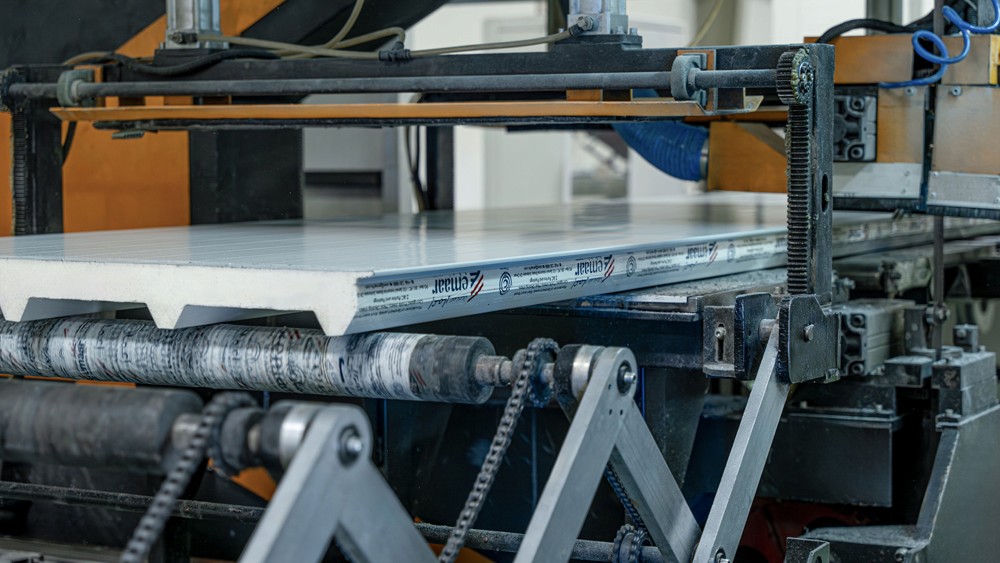
Automated continuous production lines at Emaar Industries Oman
The Emaar Manufacturing Edge

Why Cold Chain EPC Contractors & Facility Owners Choose Emaar

We combine advanced European continuous foaming line technology with regional manufacturing agility, delivering engineered building envelope systems that thrive in the world's most unforgiving ambient climates.

10,000 m² Daily Continuous Capacity

Our fully automated continuous production lines in Muscat ensure high foam homogeneity, millimeter tolerances, and rapid order turnarounds for large cold logistics centers.

Engineered for High-Ambient Resilience

Tailored formulations designed to resist +50°C solar radiation and marine coastal humidity, ensuring zero joint condensation or skin bubbling across decades of operation.

550+ Proven Regional Installations

With more than 550 industrial and cold storage projects delivered, our technical solutions are field-tested across hypermarkets, seafood processing plants, and vaccine cold chains.

Complete Envelope Single-Source Delivery

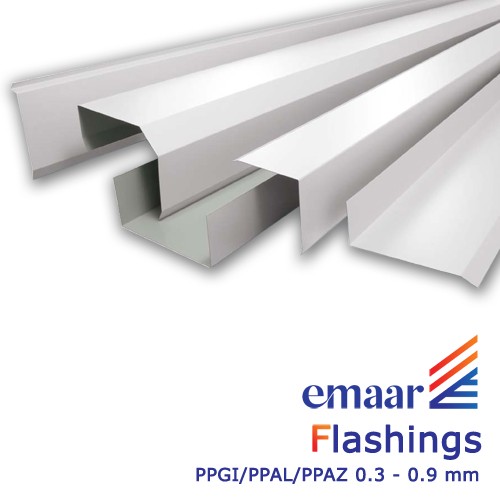
Alongside cold room panels, we manufacture flashings, insulated ceiling suspension systems, cold room hinged/sliding doors, floor insulation slabs, and structural purlins.

Technical Knowledge Hub

Cold Room Panels: Global Procurement FAQ

In-depth engineering answers to the critical technical and specification questions most frequently asked by global procurement directors, consulting engineers, and cold room contractors.

Contact Us

Panel thickness calculation is determined by the temperature gradient ($\Delta T = T_{ambient} - T_{coldroom}$), maximum allowable heat flux (typically standard practice targets $8 \text{ to } 10 \text{ W/m}^2$), and thermal conductivity ($\lambda$) of the core insulation. For instance, in a Gulf location with peak summer design conditions of +50°C and 80% relative humidity containing a -25°C deep freeze chamber ($\Delta T = 75\text{K}$), using standard 100mm panels yields a heat gain exceeding $16 \text{ W/m}^2$, triggering surface condensation and excessive compressor electrical loads. In this scenario, engineering standards dictate a minimum of 150mm to 200mm high-density PIR core ($\le 0.020 \text{ W/m}\cdot\text{K}$) to reduce heat ingress below $8 \text{ W/m}^2$, preserving system longevity and preventing frost buildup.

Cam-Lock systems incorporate high-tensile eccentric steel locking mechanisms foamed into opposite sides of the panel edges during factory manufacture. During field assembly, an operator turns a hex wrench, pulling adjacent panels into mechanical compression against integrated soft PVC or EPDM perimeter gaskets. This creates an airtight, vapor-proof joint ideal for small-to-medium walk-in freezers, cleanrooms, and facilities requiring modular relocation. Conversely, continuous Tongue-and-Groove (slip-joint) panels are manufactured continuously on double-belt lines, utilized for expansive logistics warehouses and high-bay facilities. They use field-applied low-temperature expanding mastic or dual silicone sealant beads in the internal joint interlock to stop vapor drive across wide spans.

In cold storage environments, continuous atmospheric vapor drive forces water molecules from the warm outside air through any permeable barrier toward the low-vapor-pressure interior. If insulation contains open cells or micro-porosities (closed-cell content below 90–92%), water vapor permeates the core, condenses into liquid water, and eventually freezes into microscopic ice crystals. Because water has a thermal conductivity 25 times greater than PIR foam (and ice roughly 100 times greater), internal freezing causes severe thermal drift, structural weight increase, and delamination of the external steel skins. High-pressure continuous foamed PIR with >95% closed cells ensures an impenetrable barrier against vapor migration.

Internal skins in food processing, butchery, dairy, and pharmaceutical spaces must resist corrosive sanitizing chemicals, biological growth, and steam-wash cycles. Emaar offers several specialized finishes: (1) Food-Safe PVC Film Laminate (120–150 microns): An inert, non-toxic, anti-microbial surface certified for direct food contact; (2) Plastisol Coating (200 microns): Highly impact- and chemical-resistant with a textured finish; and (3) PVDF (70/30 resin): Ideal for harsh chemical and cleanroom environments. All finishes are applied over hot-dipped zinc (min Z275) or Aluzinc steel substrates, preventing under-film rust creep.

While both Polyurethane (PUR) and Polyisocyanurate (PIR) provide exceptional thermal insulation, their chemical cross-linking differs fundamentally. PIR is produced with a significantly higher isocyanate index (typically 200–350%) reacted with polyester polyols, forming stable ring structures (isocyanurate rings). When exposed to direct flame, PIR forms a protective, non-combustible carbonaceous char layer on its surface, which starves the flame of oxygen, prevents self-sustained burning, and emits zero flaming droplets. This allows PIR Cold Room Sandwich Panels to meet stringent EN 13501-1 B-s1, d0 reaction-to-fire standards and regional civil defence compliance without toxic halogen additives.

Thermal bowing occurs when the exterior steel skin expands under blistering solar exposure (+70°C exterior surface) while the interior skin remains contracted at -25°C. This extreme thermal differential can generate deflection, joint opening, and fastener shearing. Emaar prevents thermal bowing through: (1) Engineered skin profiling (ribbed or micro-ribbed finishes) that absorb thermal expansion; (2) Precision panel span calculation to determine proper support purlin spacing; (3) Slotted suspension clips on cold room ceilings that permit longitudinal thermal expansion without stressing joint gaskets; and (4) Light-colored exterior steel finishes (RAL 9002 / RAL 9010) with high solar reflectance.

For chillers (+2°C to +4°C), panels can sit in an extruded PVC sanitary U-profile directly anchored to an insulated concrete curb. However, for deep freezers (-18°C to -25°C), the sub-floor must feature an engineered under-slab heating system (electric heating cables or glycol warming pipes) to prevent subsoil freezing and destructive frost heave. Panels are set into reinforced floor recesses, and continuous high-density PIR floor panels are laid under the wear slab, forming a completely enclosed, continuous thermal envelope with staggered, vapor-sealed joints.

Sourcing cold room sandwich panels from overseas markets often entails 6–10 weeks of maritime transit, high container freight costs, container stuffing limitations (panels longer than 11.8m cannot fit inside 40ft containers), and ocean moisture condensation hazards. Emaar Industries, based in Muscat, manufactures panels up to 15+ meters in continuous length and delivers overland via flatbed trucks directly to job sites throughout Oman, UAE, Saudi Arabia, and Qatar within 24 to 72 hours. Furthermore, our coastal location enables streamlined containerized and breakbulk shipping to African ports without intermediary shipping delays.

Certified Reliability

Industrial & Cold Chain Clients Who Rely on Emaar

Over 550 industrial and cold chain projects engineered and delivered across the GCC and African markets.

Client partner 1
Client partner 2
Client partner 3
Client partner 4
Client partner 5
Client partner 6
Client partner 7
Client partner 8
Client partner 9
Client partner 10
Client partner 11
Client partner 12
Documented Rigor

Certified Cold Storage Engineering Approvals

Our quality control processes conform to ISO 9001:2015, ISO 14001, and ISO 45001. All panel types undergo rigorous third-party testing for thermal resistance, compressive strength, airtightness, and reaction to fire to ensure fast consultant approvals.

Contact Us
Emaar Industries quality and performance certification marks
Regional Presence

Connect with Emaar's Cold Chain Engineering Desk

Connect with technical sales teams positioned in key regional centers for prompt engineering consultations, estimation, and custom production runs.