
0%

Choosing the right Rockwool Insulated Panels requires more than comparing prices and thicknesses. Global buyers must examine thermal performance, fire resistance, acoustic control, durability, and installation conditions. A panel that performs well in a dry warehouse may disappoint in a humid coastal facility. Real projects reveal these differences quickly.

This guide evaluates leading panel options through practical purchasing criteria. It considers core density, steel coating quality, joint design, declared U-values, and tested fire classifications. Reliable manufacturers should provide traceable technical data, factory quality procedures, and documentation aligned with recognized regional standards. Buyers should also confirm load requirements, temperature ranges, delivery terms, and after-sales support before placing an order.

Details matter. A poorly sealed joint can undermine excellent insulation. A damaged coating may create maintenance problems earlier than expected. No panel is perfect. Performance depends on design, handling, installation, and local climate. This is where supplier transparency becomes important. Ask for current test reports, installation guidance, product samples, and references from comparable buildings. Independent verification is wiser than relying on attractive brochures alone.

The “top” choice is therefore not identical for every market. Cold storage, industrial workshops, cleanrooms, agricultural buildings, and commercial facilities demand different priorities. Cost remains important, but lifecycle value deserves equal attention. This introduction sets a practical foundation for comparing Rockwool Insulated Panels with greater confidence, while recognizing that specifications should always be checked against project-specific engineering requirements.
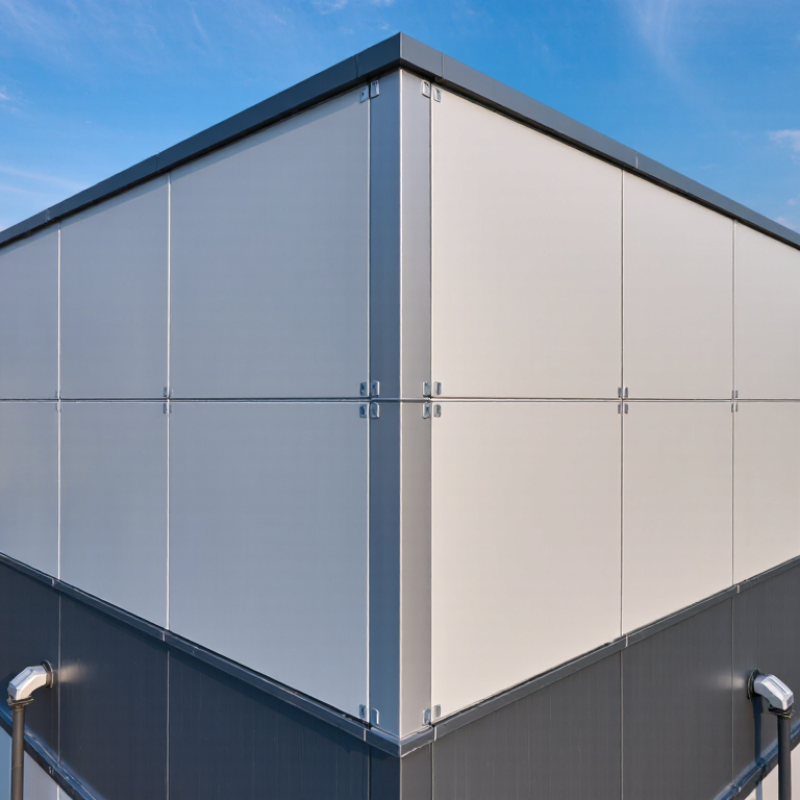
Top Rockwool Insulated Panels for Global Buyers

Rockwool Panel Fundamentals: 0.035–0.040 W/m·K Thermal Conductivity

Top Rockwool Insulated Panels for Global Buyers

Rockwool panel fundamentals begin with thermal conductivity. A declared value of 0.035–0.040 W/m·K indicates strong insulation performance. Lower conductivity usually means better resistance to heat flow.

At 100 mm thickness, these values provide an approximate thermal resistance of 2.50–2.86 m²·K/W. Actual results depend on temperature, density, moisture, and installation quality. Small gaps matter.

Global buyers should request complete technical data, not only a headline number. Check the declared conductivity temperature, testing method, panel thickness, density, and tolerance range. Independent laboratory reports improve confidence.

Local building rules may also require specific fire, acoustic, or moisture performance. Thermal conductivity alone cannot describe the whole panel.

On site, tightly fitted joints and correctly sealed fasteners often influence performance more than expected. Compression, wet insulation, or uneven framing can create thermal bridges.

Measure twice. I have seen attractive specifications lose value through careless handling and open seams.

Buyers should compare tested system performance, delivery conditions, and installation guidance before choosing panels. The 0.035 W/m·K figure looks impressive, but it is not a guarantee of identical performance in every building.

Fire Performance: A1 Classification Under EN 13501-1

Top Rockwool Insulated Panels for Global Buyers

For buyers comparing insulated panels, A1 classification under EN 13501-1 is a critical fire-performance reference. It indicates that the tested product makes no significant contribution to fire. This is not the same as fire resistance. A1 describes reaction to fire, while fire resistance concerns how long an assembly maintains integrity and insulation.

In practical projects, mineral wool panels can perform strongly when their full construction matches the tested design. Core density, panel thickness, facings, joints, sealants, and fixings all matter. A 100-millimeter panel may carry different documentation from a similar-looking panel with another coating. Check the classification report, not only the sales description. Small details can change the result.

Reliable suppliers should provide traceable test evidence, technical datasheets, installation guidance, and factory quality records. Ask whether the A1 rating applies to the complete panel or only to an individual core. Also confirm the intended use under local building regulations.

This step is easy to skip. That can be costly. In my experience, installation errors often appear around open joints, damaged edges, and poorly fitted penetrations. Regular site checks help, but they do not replace certified testing. Some project conditions remain difficult to predict, especially where several materials meet.

Core Specifications: 80–150 kg/m³ Density and 50–200 mm Thickness

Top Rockwool Insulated Panels for Global Buyers

For many projects, density between 80 and 150 kg/m³ offers a practical balance. It supports thermal control, fire resistance, and acoustic performance. However, higher density does not automatically mean better insulation. A 100 mm panel at 100 kg/m³ may suit a warehouse wall, while a 150 mm panel can reduce heat transfer in colder regions. Climate data matters more than simple thickness comparisons.

Thickness usually ranges from 50 to 200 mm. Panels near 50 mm can work for partitions or moderate indoor conditions. Panels from 100 to 150 mm are more common for external walls and industrial enclosures. In demanding climates, 200 mm may provide stronger thermal protection, but it also increases weight and installation demands. Check panel tolerances, joint design, and fastener capacity before ordering. Small gaps can undermine impressive laboratory values.

On real sites, edge damage and compressed joints appear surprisingly often. Handle panels carefully. Confirm the declared density, core thickness, fire test method, and water-repellent treatment through independent documentation. Acoustic ratings can change after installation because of framing, openings, and interior linings. One detail is easy to miss: actual performance depends on the complete wall assembly, not the mineral wool core alone. Procurement teams should compare tested systems, delivery packaging, and replacement availability across borders. A specification may look complete, yet still leave installers guessing.

Top Rockwool Insulated Panels for Global Buyers

Core specifications: 80–150 kg/m³ density and 50–200 mm thickness

The chart compares common panel thicknesses within the 50–200 mm range and shows the corresponding calculated thermal resistance. Values are based on an indicative thermal conductivity of 0.040 W/m·K, while actual performance may vary according to product composition, density, moisture, and testing standards.

Global Compliance: EN 13162, ASTM C612, and ISO 834 Standards

Top Rockwool Insulated Panels for Global Buyers

Global buyers should treat compliance as a specification, not a marketing phrase. EN 13162 applies to factory-made mineral wool thermal insulation products. It helps assess declared thermal conductivity, thickness, density, and dimensional stability. ASTM C612 covers mineral fiber block and board insulation, commonly used in industrial and building applications. These standards support comparison, but they do not automatically approve every panel assembly.

ISO 834 focuses on fire-resistance testing for building elements under a standard time-temperature curve. A panel may contain non-combustible mineral wool, yet the complete wall or ceiling system still needs suitable testing. Check the tested thickness, joints, fixings, facings, and installation method. Small changes matter. Site reviews often reveal gaps around doors, fasteners, or service penetrations. Those details can weaken real performance. A certificate alone is not enough.

Tips: Request current test reports, product data sheets, and batch traceability. Confirm whether values are declared or measured. Compare λ-values at the same temperature. Ask for fire-test evidence matching your exact assembly. Also verify local building requirements, because EN, ASTM, and ISO documents serve different purposes. One weakness remains common: buyers sometimes compare labels instead of complete systems. Do not repeat that mistake.

Buyer Selection: U-Value Targets, Acoustic Ratings, and Service Life

Top Rockwool Insulated Panels for Global Buyers

Buyer selection should begin with the project’s climate, not the panel catalogue. The IEA reported that buildings consumed about 30% of global final energy in 2022. For many industrial envelopes, buyers often screen wall panels around 0.20–0.30 W/m²K. Colder sites may demand lower values. However, joints, fasteners, and ageing can weaken the designed result. A low U-value can still disappoint.

Acoustic performance needs equal attention. Ask for laboratory results tested under ISO 10140, then compare the declared Rw or STC rating. A panel rated near 35–45 dB may suit workshops or warehouses, but machinery rooms require a complete wall assembly review. The World Health Organization recommends less than 40 dB Lnight outside bedrooms. That figure is not a panel rating, but it shows why site noise matters. Service life also needs evidence. EN 13162 supports declared product performance, yet it does not guarantee one universal lifespan. Check corrosion resistance, coating durability, moisture exposure, and replacement access.

Tips: Request tested U-values, not calculated core values alone. Review thermal bridges at every joint. Ask for acoustic test conditions and frequency ranges. For service life, compare ISO 15686-style maintenance assumptions with local weather data. I would also record installation quality with photographs. It feels basic, but rushed installation remains an uncomfortable weakness in many projects.

FAQS

What does an A1 classification under EN 13501-1 mean?

It means the tested product makes no significant contribution to fire. It describes reaction to fire, not fire resistance.

Is an A1-rated panel automatically fire-resistant?

No. Fire resistance measures how long an assembly maintains integrity and insulation. A1 classification measures material reaction to fire.

Which panel details can affect fire performance?

Core density, thickness, facings, joints, sealants, and fixings can change the result. Small details matter.

Should buyers trust a product description alone?

No. Request the classification report, technical datasheet, installation guidance, and factory quality records.

Does the A1 rating apply to the complete panel?

Not always. Confirm whether testing covers the complete panel or only the mineral wool core.

What density range suits many insulated panel projects?

Density between 80 and 150 kg/m³ often balances thermal, acoustic, and fire performance. Higher density is not automatically better.

How should buyers choose panel thickness?

Panels from 50 to 200 millimeters serve different conditions. Use climate data, wall design, joint details, and fastener capacity.

What common installation problems reduce performance?

Open joints, damaged edges, compressed joints, and poorly fitted penetrations can weaken the tested performance. Site checks help.

Does the mineral wool core determine the whole wall’s performance?

No. Framing, openings, interior linings, coatings, and joints also matter. The complete assembly should match tested construction.

What should international buyers check before ordering?

Check declared density, thickness, test methods, water-repellent treatment, packaging, tolerances, and replacement availability. Specifications can still leave installers guessing.

Conclusion

Rockwool Insulated Panels provide a reliable solution for thermal efficiency, fire protection, and acoustic control in industrial, commercial, and infrastructure projects. With typical thermal conductivity ranging from 0.035 to 0.040 W/m·K, they can support effective insulation and help improve building energy performance. Their non-combustible mineral wool core may achieve an A1 classification under EN 13501-1, offering strong fire resistance when the complete panel system is properly designed and tested.

For global buyers, key specifications include a core density of approximately 80–150 kg/m³ and thicknesses from 50–200 mm. Product documentation should demonstrate alignment with relevant requirements such as EN 13162, ASTM C612, and ISO 834, depending on the project location and application. Selection should begin with the desired U-value, followed by acoustic performance, moisture considerations, installation conditions, and expected service life. Comparing tested data, certifications, and long-term maintenance needs helps buyers choose panels that balance safety, comfort, durability, and overall project value.

Evelyn

Evelyn

Evelyn is a dedicated marketing professional with extensive knowledge of the company’s products, services, and evolving market landscape. As a regular contributor to the company website, Evelyn creates clear, practical, and insightful blog articles that help readers understand product features,......