
Explore certified insulated composite systems, walk-in freezer doors, structural sub-framing, and heavy-duty architectural drip flashing trims manufactured to stringent European standard EN 14509 and GCC building codes.
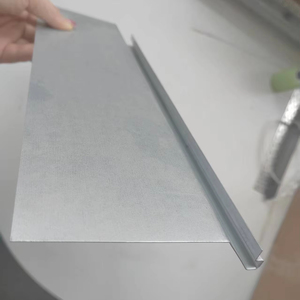
Hot-dipped Z275 galvanized steel parapet and corner flashing designed to eliminate water intrusion, capillary action, and micro-crack delamination on exterior thermal stucco systems.
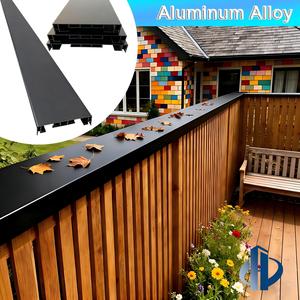
Precision-bent marine-grade aluminum flashing profiles with PVDF fluorocarbon coatings, delivering maximum ultraviolet resistance and thermal movement accommodation for modular panel joints.
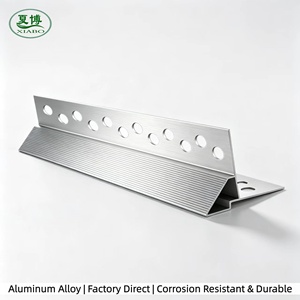
Aerated CNC-perforated lower eave drip profile combining controlled cavity ventilation with high-performance rainwater shedding to stop moisture accumulation behind rainscreen envelopes.
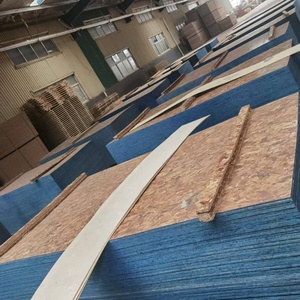
Engineered phenolic-resin bonded OSB/3 structural substrate offering dimensional stability, superior racking strength, and exceptional load-bearing performance for composite roofing assemblies.
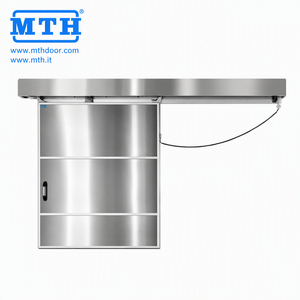
Heavy-duty food-grade stainless steel sliding door incorporating multi-tier perimeter heating cables, heavy-load eccentric roller tracks, and seamless high-density injected polyurethane thermal barrier core.
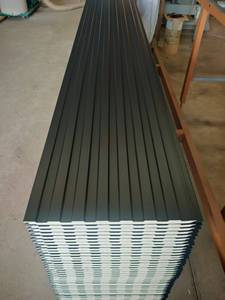
Continuous line double-belt laminated PUR/PIR sandwich panels featuring micro-ribbed pre-painted steel facings, hidden fixing tongue-and-groove jointing, and certified $\lambda = 0.022\text{ W/m}\cdot\text{K}$ thermal efficiency.
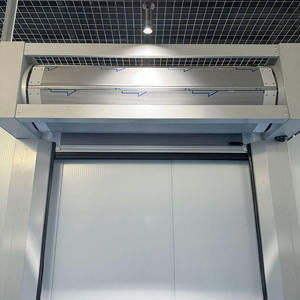
Airtight hinged walk-in cold room door system engineered with internal escape release mechanisms, dual-lip magnetic EPDM perimeter gaskets, and rigid 42 kg/m³ high-density cyclopentane-blown PUR core.
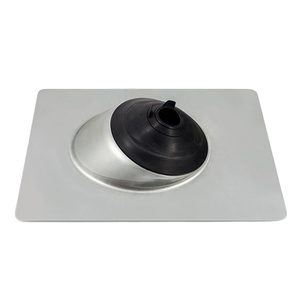
Engineered penetration sealing boot boot-base flashing accommodating industrial stack pipes from 38mm to 100mm, preventing differential expansion stress leaks on trapezoidal insulated sandwich roofs.
In high-performance industrial construction, modern building envelopes must satisfy two uncompromising criteria: relentless thermal efficiency under extreme environmental temperature swings and unquestioned structural fire resistance. Operating from our state-of-the-art continuous manufacturing facility in Muscat, Oman, Emaar Industries LLC engineers and exports high-density Polyisocyanurate (PIR), Polyurethane (PUR), and non-combustible Structural Rockwool sandwich panels. Backed by full CE certification according to EN 14509:2013 (Self-supporting double skin metal faced insulating panels), our systems serve international developers, cold-chain operators, EPC contractors, and MEP consultants across the GCC, Africa, and Central Asia.
With an automated production throughput exceeding 10,000 square meters per day, our facility integrates computer-controlled continuous high-pressure polyurethane injection lines, multi-roll forming profiles, and automated adhesive laminators. Every panel batch undergoes rigorous in-house mechanical testing—including shear strength, tensile bond modulus, long-term creep, and aging lambda verification—ensuring our export clients receive envelope solutions that significantly reduce HVAC energy loads in extreme ambient environments exceeding +50°C.
Strategic sourcing managers and industrial developers are moving away from commodity purchasing toward life-cycle carbon valuation, airtightness benchmarks, and localized supply chain stability.
Tier-1 commercial contracts increasingly mandate Type III Environmental Product Declarations (EPD) reflecting verified cradle-to-gate Life Cycle Assessments (LCA). Sourcing panels blown with non-ozone-depleting, ultra-low GWP blowing agents (such as advanced Cyclopentane isomers) is becoming a strict prerequisite for LEED v4.1 and BREEAM certifications.
Long-distance maritime container shipping volatility has forced general contractors in the Middle East and East Africa to switch from East Asian imports to regional manufacturing hubs. Direct overland containerized transit from our Muscat facility guarantees short 3 to 7-day site delivery windows, mitigating costly demurrage and site stoppage.
Procuring structural sandwich panels from one supplier while buying drip flashings, cold rolled Z/C purlins, structural OSB decking, and cold storage doors from separate vendors introduces interface liability risks. Procurement directors now prioritize integrated envelope packages with unified warranty coverage across all joint components.
Compare mechanical, thermal, and acoustic properties across our core systems to match structural spans and authority fire approvals.
| Performance Metric | Rigid Polyisocyanurate (PIR) | Polyurethane (PUR) | Structural Rockwool (RW) | Heavy Composite Cold Room |
|---|---|---|---|---|
| Thermal Conductivity (λ) | 0.022 W/m·K (Aged Value) | 0.025 – 0.028 W/m·K | 0.038 – 0.042 W/m·K | 0.020 – 0.022 W/m·K |
| Core Density Range | 40 – 42 kg/m³ | 38 – 40 kg/m³ | 100 – 140 kg/m³ | 42 – 45 kg/m³ |
| EN 13501-1 Fire Rating | B-s1, d0 (Self-extinguishing char) | B-s2, d0 / B3 | A1 / A2-s1, d0 (Non-combustible) | B-s1, d0 |
| Continuous Temperature Span | -40°C to +100°C | -30°C to +80°C | -50°C to +750°C | -45°C to +60°C |
| Water Vapor Permeability | Impermeable (Closed cell >95%) | Impermeable (>90% Closed) | Vapor Open (Requires intact facing) | Airtight Cam-Lock / EPDM Gasket |
| Acoustic Weighted Index (Rw) | ~26 – 28 dB | ~25 – 27 dB | ~32 – 35 dB (High absorption) | ~28 – 30 dB |
| Recommended Structural Use | High-bay warehouses, FMCG distribution | General agricultural & shed roofing | Firewalls, oil & gas, power substations | Pharmaceutical chillers, blast freezers |
The thermal insulation panel manufacturing industry is undergoing a structural paradigm shift driven by stringent thermal regulations, higher net-zero targets, and evolving fire safety standards (including FM Global approvals 4880 and 4881). As standard foam formulations reach physical transmission limits, manufacturers must refine raw polymer molecular architecture and sheet metallurgy to maintain performance across multi-decade service lives.
Traditional polyurethanes (PUR) rely on an equimolar ratio of isocyanate to polyol, which produces urethane bonds prone to thermal breakdown at approximately 200°C. Modern Polyisocyanurate (PIR) technology, by contrast, operates at high index ratios (>250%). Under catalytic activation on continuous heated conveyors, excess isocyanate reacts with itself to form stable, six-membered isocyanurate ring structures. When exposed to flame, our high-index PIR panels form an insulative vitreous carbonaceous char layer that insulates the core, suppresses toxic smoke generation, and halts flame spread without molten droplet formation.
Over 90% of heat transfer across closed-cell foam cores takes place through radiative emission across cell walls and gaseous conduction within the cell voids. Through microcellular foaming technology, cell diameters are reduced from conventional 250 microns down to under 100 microns. This smaller cell geometry suppresses convective currents and reduces infrared radiative transfer. Formulated using fourth-generation hydrofluoroolefin (HFO) or pure cyclopentane blowing agents with Zero Ozone Depletion Potential (ODP=0) and Global Warming Potential (GWP < 1), these panels retain low design lambda values ($\lambda \le 0.022\text{ W/m}\cdot\text{K}$) even after 25-year simulated accelerated thermal aging.
Panel thermal performance cannot be separated from structural skin integrity. In harsh desert environments with high coastal salinity (such as coastal areas across Oman, the UAE, and Saudi Arabia), standard galvanized steel facings (Z275) risk cut-edge corrosion. We apply next-generation Zn-Al-Mg (Zinc-Aluminum-Magnesium) alloy coatings (ZM 310) paired with 25-micron High-Durability Polyester (HDP) or Polyvinylidene Fluoride (PVDF) topcoats. The magnesium addition promotes self-healing corrosion resistance at screw penetration points and trimmed eaves, guaranteeing facade integrity in severe C4 and C5 industrial environments.
From engineering submittals to fast-track regional delivery, our Muscat manufacturing operation delivers the speed, documented quality, and precision demanded by major infrastructure projects.
Unlike manual or discontinuous press setups that suffer from irregular foam density and surface delamination, our European continuous lamination line guarantees uniform 40–42 kg/m³ core density across panels up to 16 meters long, delivering reliable joint tolerances and flat surfaces.
We provide complete technical submittal packages for municipal authorities, civil defence departments, and engineering consultants. Every shipment is accompanied by accredited factory production control (FPC) certificates, factory test records, and comprehensive structural span calculation sheets.
Eliminate detailing mismatches on site. We roll-form matched galvanized and aluminum flashing systems, fabricate industrial PU sliding cold-storage doors, provide structural OSB roof decks, and supply cold-rolled Z/C secondary steel purlins directly alongside your insulated panel shipment.
Detailed, engineering-backed answers addressing the practical, technical, and regulatory concerns raised during thermal envelope procurement.
Download comprehensive load-span capacity tables, acoustic test reports, CE Declarations of Performance (DoP), and CAD/BIM facade detailing sets for your next project.
Get CatalogOur sales engineers respond to project questions during working hours (GST+4).