China Best Glass Wool Panels Factories & Factory: Architectural Thermal & Acoustic Engineering

Global B2B Sourcing Authority · Class A1 Non-Combustible Sandwich Panels, Specialized Cleanroom Enclosures, and Continuous Lamination Engineering

Precision Envelope Systems

Certified Building Envelope & Cold-Chain Solutions

Factory-direct structural sandwich systems, specialized thermal barrier access assemblies, cold storage enclosures, and solar structural sub-framing engineered to international civil defense, EN 13501-1, and ASTM E84 safety standards.
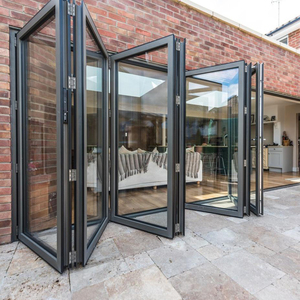
Thermal Break Modern Aluminum Alloy Bi-Fold Patio Doors
Modern Aluminum Alloy Bi-Fold Patio Doors
Precision thermal-break polyamide extrusions with dual-sealed Low-E double glazing for minimal U-value thermal loss and commercial facade integration.
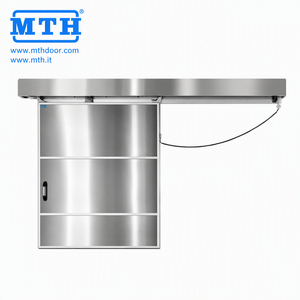
SUS304 Inox Industrial Cold Storage Sliding Door SUS304
Industrial Cold Storage Sliding Door SUS304
Heavy-duty food-grade SUS304 stainless steel with automated perimeter anti-freeze heating ribbons and hermetic track drops for blast freezing rooms.
100mm Cam-Lock Cold Storage Room Cooling Panels with Cam Lock
Cold Storage Room Cooling Panels with Cam Lock
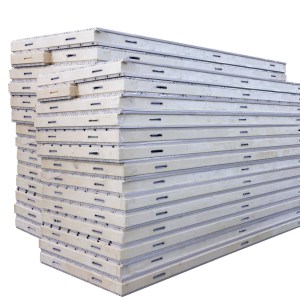
High-density expanded rigid cores with integrated eccentric cam-lock interlocking tongues, ensuring airtight sub-zero thermal retention and zero vapor transmission.
Waterproof Seal Aluminum Wall Capping and Z-Flashing
Aluminum Wall Capping Profile & Z-Flashing
Architectural extruded parapet trims and multi-bend drip caps designed to eliminate moisture penetration at panel-to-foundation and roof interface joints.
50-Yr Durability Stone Coated Alu-Zinc Steel Roofing Tile
Stone Coated Alu-Zinc Steel Roofing Tile
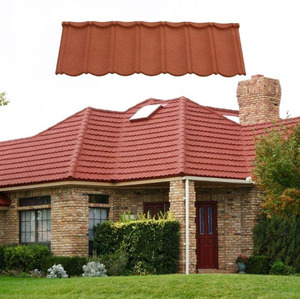
Alu-zinc alloy Galvalume base sheet enveloped in sintered ceramic basalt granules, delivering maximum hurricane uplift defense and acoustic dampening.
Solar Support Solar PV Mounting C-Channel Rails
Ground & Roof Solar PV Mounting C-Channel Rails
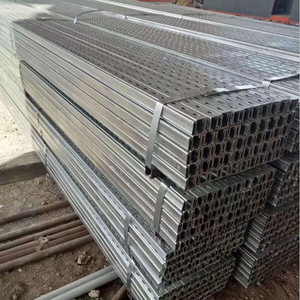
Continuous cold-rolled high-tensile galvanized purlins custom CNC-punched for fast, bracket-less anchoring to industrial insulated sandwich roof panels.
Hygienic Core Customized Cold Storage PU Hinged Door
Customized Cold Storage PU Hinged Door
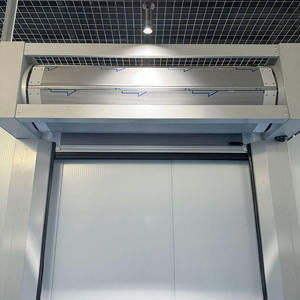
Microbiologically clean color-coated steel or stainless composite leaves insulated with high-pressure cyclopentane PUR foam for food processing lines.
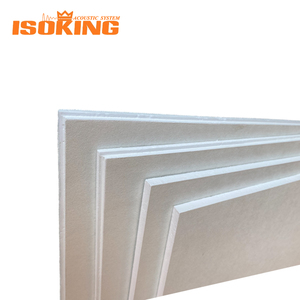
Class A1 Fire High STC Acoustic Mineral Wool Panels
ISOKING High STC Acoustic Mineral Wool Panels
Incombustible high-density basalt and borosilicate spun core panels delivering STC 48+ sound isolation ratings and up to 4-hour certified fire barrier performance.
10,000m²
Daily Automated Capacity
550+
Global Mega Projects
Class A1
Fire Incombustibility Rating
0.031W/mK
Ultra-Low Thermal Core λ
Industry Whitepaper & Technical Analysis

Engineering Excellence in China Glass Wool Panel Manufacturing

In contemporary commercial architecture, large-scale logistics hub development, and high-performance cleanroom engineering, selecting an envelope wall and roofing system represents a multi-variable optimization between thermal efficiency ($\lambda$-value), structural span capability, sound transmission loss (STC), and combustibility class. The modern sourcing landscape for non-combustible sandwich panels has decisively shifted toward tier-1 automated manufacturers in China. Through immense capital investments in continuous double-belt track laminators, automated high-density slitting arrays, and bio-based resin binders, leading Chinese glass wool panel factories now produce structural composites that exceed the technical tolerances specified by Western and Middle Eastern engineering consultants alike.

Centrifugal glass wool, manufactured by melting silica sand, dolomite, and borax at temperatures exceeding 1,350°C followed by high-speed fiberization, exhibits an interlocking microstructure that is fundamentally distinct from cellular foams or slag stone wool. The microscopic glass filaments—averaging 4 to 6 microns in diameter—trap still air within millions of minute cells. When mechanically oriented with fibers perpendicular to the metal facing sheets during continuous sandwich panel fabrication, the resulting panel attains extraordinary compressive strength, excellent flexural modulus, and non-settling dimensional permanence without adding excessive dead weight to steel superstructure purlins.

Key Engineering Fact: Modern double-belt glass wool continuous sandwich panel lines in China employ staggered, 90-degree turned fiber orientation (lamella blocks) bonded under 0.4 MPa uniform hydraulic pressure. This process converts low-density flexible wool into a rigid composite panel with perpendicular tensile strength exceeding 0.12 MPa, effectively eliminating core shearing during high positive wind loads or extreme thermal solar racking.

International engineering firms operating in regions with severe ambient conditions—such as the hyper-arid, high-UV climate of the GCC (Gulf Cooperation Council), the saline-heavy maritime coasts of Southeast Asia, and the strict zero-emission architectural regions of the European Union—increasingly demand factory certifications that verify envelope integrity over a 30 to 50-year design life. This whitepaper systematically evaluates the metallurgical facing options, core microstructural chemistry, fire test compliance metrics, and acoustic damping mechanisms that distinguish premium Chinese glass wool panel manufacturing from commercial-grade market alternatives.

Technical Benchmarking

Comparative Matrix: Glass Wool vs. Alternate Cores

A direct multi-parametric comparison of sandwich panel core insulations under identical testing baselines, highlighting fire resistance, acoustic isolation, and weight-to-span structural efficiency.

Performance Characteristic High-Density Glass Wool Basalt Rockwool PIR (Polyisocyanurate) PUR (Polyurethane)
Thermal Conductivity ($\lambda$ @ 25°C) 0.031 – 0.036 W/m·K 0.038 – 0.044 W/m·K 0.020 – 0.023 W/m·K 0.024 – 0.028 W/m·K
Combustibility Class (EN 13501-1) Class A1 / A2-s1,d0 Class A1 Non-Combustible Class B-s1,d0 / B-s2,d0 Class B3 / B2
Smoke & Toxicity Generation Zero Toxic Gases, Zero Smoke Zero Toxic Gases, Zero Smoke Dense Smoke under pyrolysis High smoke; toxic isocyanates
Core Density Range 48 – 80 kg/m³ 100 – 140 kg/m³ 38 – 42 kg/m³ 38 – 40 kg/m³
Acoustic Damping (NRC / STC) NRC 0.90 / STC 34–42 dB NRC 0.85 / STC 32–38 dB NRC 0.15 / STC 24–27 dB NRC 0.12 / STC 23–26 dB
Moisture Absorption & Hydrophobicity Silicone Hydrophobic >98% Hydrophobic agent added Closed-cell structure <2% Closed-cell structure <2.5%
Dead Load on Secondary Steel Low to Moderate (Optimal) High (Requires heavy purlins) Very Low Very Low
Maximum Working Temperature Up to 350°C (Fibers stable) Up to 750°C 120°C (Char breakdown) 100°C (Rapid degradation)

As demonstrated in the empirical data above, while polyisocyanurate (PIR) exhibits lower initial thermal conductivity per millimeter of thickness, it poses combustibility liabilities and produces dense smoke containing hydrogen cyanide during building fires. Conversely, traditional rockwool provides immense fire resistance but penalizes the project with high dead load—frequently exceeding 18 to 24 kg per square meter for 100mm assemblies—which significantly inflates structural steel procurement costs. Glass wool sandwich panels occupy the ideal engineering balance: delivering genuine Class A fire incombustibility, superior noise reduction coefficients (NRC 0.90), and a lightweight physical profile that reduces purlin consumption by up to 22% compared with rockwool installations.

Enterprise Manufacturing Advantages

State-of-the-Art Factory Infrastructure & QA Traceability

Integrated engineering from metallurgy decoiling to robotic stacking, driven by zero-tolerance quality inspection protocols and certified compliance frameworks.

Double-Belt Continuous Lamination
Our continuous production lines feature 42-meter-long heated double-track caterpillar presses. Uniform temperature and continuous hydraulic pressure guarantee absolute flat panel surfaces, flawless polyolefin bonding, and zero delamination across long spans.
PIR Polyurethane Edge Sealing
To combat moisture capillary migration and edge air filtration, our flagship glass wool architectural panels feature co-extruded high-density PIR tongue-and-groove side seals. This delivers complete joint water-tightness and eliminates thermal bridging.
Metallurgical Substrate Excellence
We partner exclusively with Baosteel, BlueScope, and premium zinc-aluminum-magnesium alloy coil mills. Surface finishes incorporate 25-micron PVDF, super polyester (SMP), or anti-static plastisol coatings engineered to endure C4/C5 maritime industrial corrosiveness.
Formaldehyde-Free Thermoset Binder
Environmental sustainability is prioritized using pure acrylic bio-based water-soluble resins. This completely eliminates off-gassing of free formaldehyde, phenol, and ammonia, satisfying LEED v4.1, BREEAM, and WELL building indoor environmental air quality prerequisites.
Certified Global Compliance
Batch production conforms to stringent ISO 9001 and ISO 14001 standards. Every product run is backed by independent test reports matching ASTM E84 Class A flame spread, EN 13501-1 fire reaction, and regional civil defense approvals for GCC, EU, and Australasia.
Laser-Guided Optical Profilometry
In-line laser scanning gauges monitor panel squareness, core density uniformity, and rib profile precision at 0.1mm increments. Defective panels are automatically marked and ejected, ensuring that 100% of dispatched inventory integrates seamlessly on site.
Procurement Strategy & Market Dynamics

Future Sourcing Trends for Glass Wool Panels

Navigating global supply chains, green building taxonomies, carbon footprint tracking, and total landed cost efficiency in mega-facility procurement.

The procurement methodologies for architectural sandwich panels have evolved rapidly over the past three years. Leading general engineering contractors (EPCs) and multinational asset owners no longer evaluate panel suppliers based solely on initial FOB factory price per square meter. Instead, procurement strategies in 2025 and beyond are structured around Total Cost of Ownership (TCO), which integrates logistics packaging efficiency, installation cycle speed, embodied carbon taxation, and long-term envelope energy containment.

Below are the four transformative procurement vectors currently dictating B2B sourcing decisions from tier-1 Chinese manufacturers:

01
Embodied Carbon & EPD Transparency
Institutional investors require Environmental Product Declarations (EPDs). By utilizing up to 80% recycled post-consumer cullet glass and clean electric melting furnaces, modern Chinese glass wool factories achieve significantly lower Global Warming Potential (GWP) metrics than traditional blast-furnace rockwool producers.
02
Container Cube Optimization
Glass wool's balanced mechanical rigidity combined with elastomeric compressibility allows automated vacuum pre-packing and custom nesting within 40ft High-Cube shipping containers. This achieves up to 35% higher container volumetric loading density compared with rigid cellular foams, dramatically slashing trans-ocean freight overhead.
03
Factory-Integrated Secondary Purlins
To eliminate site cutting and mismatched sub-frames, procurement contracts increasingly bundle insulated wall and roof panels with matching galvanized Z and C-section purlins, CNC-notched window flashings, and aluminum corner trims, accelerating structural erection schedules by up to 40%.
04
Stringent Fire Defense Standardization
Following international commercial warehouse catastrophes involving combustible combustible cores, regional authorities—most notably across the GCC (UAE, Saudi Civil Defense) and Western Europe—strictly reject combustible plastics in high-occupancy and cleanroom facilities, mandating certified Class A non-combustible panels.

By establishing long-term procurement agreements with audited Chinese factories, international buyers secure stable steel coil pricing hedges, predictable manufacturing line allocations, and direct access to customized panel profiling—such as micro-rib, flat architectural, wave-corrugated, and concealed fastener systems that align with modern architectural design languages.

Engineering Knowledge Base

Frequently Asked Technical & Procurement Questions

Exhaustive technical clarifications addressing moisture migration, structural spans, joint mechanics, acoustic sound attenuation, and factory verification protocols.

How do glass wool panels resist moisture ingress and vapor condensation over multi-decade cycles?

Moisture & Vapor
High-grade architectural glass wool panels manufactured in top Chinese facilities undergo a multi-stage hydrophobing treatment during fiber spinning, in which silicone hydrophobic emulsions are atomized directly onto the hot glass fibers. This imparts a water-repellent rating exceeding 98% under ASTM C1104 testing. Furthermore, when combined with rigid PIR edge-sealing and pressurized tongue-and-groove joints incorporating factory-applied butyl vapor gaskets, external atmospheric moisture and driven rains cannot breach the panel core, completely preventing waterlogging, mold development, or degradation of thermal insulating performance.

What is the difference between standard glass wool batts and sandwich panel lamella core?

Structural Lamella
Standard residential glass wool batts are low-density (10 to 24 kg/m³) materials with horizontally oriented fibers designed purely for uncompressed cavity infill. In contrast, sandwich panel glass wool cores use high-density (48 to 80 kg/m³) spun fibers cut into longitudinal strips (lamellas) and rotated 90 degrees so that the fibers stand perpendicular to the steel facings. This perpendicular alignment maximizes compressive strength (≥0.10 MPa) and tensile adhesion strength, transforming the panel into a high-load-bearing composite capable of supporting purlin spans of 3 to 6 meters under substantial wind and service loads.

What fire certifications are required to approve Chinese glass wool panels on international projects?

Fire Certification
International consultants generally require three foundational test dossiers: 1) EN 13501-1 Reaction to Fire testing confirming Euroclass A1 or A2-s1,d0 performance (non-combustible, zero smoke generation, zero flaming droplets); 2) ASTM E84 Standard Test Method for Surface Burning Characteristics yielding a Flame Spread Index ≤ 25 and Smoke Developed Index ≤ 50 (Class A rating); and 3) ASTM E119 or EN 1365-2 full-scale furnace fire resistance tests verifying wall or ceiling compartmentation ratings from 60 to 180 minutes. Premier Chinese factories maintain continuous certification with testing bodies such as SGS, TÜV, Intertek, and Warringtonfire.

How do glass wool sandwich panels perform in high-noise industrial environments (Acoustic STC/NRC)?

Acoustic Damping
The open, interconnected fiber web of glass wool provides outstanding sound absorption. Unlike closed-cell PIR/PUR foams which bounce sound waves and produce interior reverberation, glass wool causes acoustic energy to dissipate into heat via viscous friction within the tortuous fiber pathways. Standard 100mm solid-faced glass wool panels achieve a Sound Transmission Class (STC) rating of 34 to 38 dB. When configured as micro-perforated acoustic panels (with internal steel facings perforated at 20-30% open area backed by an acoustic non-woven fleece), the Noise Reduction Coefficient (NRC) reaches 0.90 to 0.95, making them the industry standard for generator rooms, chiller enclosures, compressor stations, and concert halls.

What coil metallurgy and coating thickness are recommended for corrosive maritime environments?

Metallurgy & Coatings
For projects within 5 kilometers of the coastline or in heavy chemical processing zones (corrosion category C4 or C5 according to ISO 12944), standard commercial PE (polyester) coatings on 0.4mm galvanized steel are inadequate. We recommend: 1) Substrate: Hot-dip Galvalume (55% Al-Zn AZ150) or Zinc-Aluminum-Magnesium (ZM275) with yield strengths ≥ S350GD; 2) Primer: High-build polyurethane or epoxy primer (min. 10 microns); 3) Topcoat: Fluoropolymer PVDF (70% Kynar 500 / Hylar 5000, 20-25 microns) or thick PVC Plastisol (100-200 microns). This specification protects against blistering, chalking, and coastal galvanic corrosion for 25 to 30 years.

How does the thermal expansion coefficient of glass wool panels affect structural framing design?

Thermal Expansion
The thermal expansion of the sandwich panel is governed by the thermal coefficient of its external steel skins ($\approx 12 \times 10^{-6}\text{ K}^{-1}$). In regions with extreme temperature swings—such as desert areas where surface steel temperatures can reach 80°C in direct sunlight and drop to 5°C at night—panels can undergo thermal bow. Because glass wool fibers have high flexibility and resilience, the core absorbs internal shear stress much better than rigid, brittle foams that tend to fracture or crease the steel skin. We engineer concealed fastener slotted clips and sliding joints to allow controlled longitudinal movement over panel lengths exceeding 10 meters.

What is the minimum recommended roof slope for glass wool trapezoidal roof sandwich panels?

Roof Engineering
For continuous single-panel lengths without end laps, the recommended minimum roof slope is 5% (approximately 3 degrees). When end laps are unavoidable on extended roof slopes exceeding 15 meters, the minimum slope should be 7% to 10% (approximately 4 to 6 degrees). End-lap joints must incorporate a minimum 200mm overlap, dual continuous lines of non-curing butyl mastic tape, and self-tapping stitching screws located at the crowns of the trapezoidal ribs to completely eliminate back-water capillary siphonage during severe rainstorms.

What protocols should international engineering inspectors follow during a factory audit in China?

Factory Audit Protocols
A comprehensive factory audit should inspect: 1) Incoming steel raw material mills (verifying mill test certificates, zinc mass testing via X-ray fluorescence, and reverse impact flexibility); 2) Glass wool binder cure verification (loss on ignition testing according to ASTM C356 to ensure complete thermoset cure); 3) Continuous lamination line speed and temperature profiling across the double caterpillar track; 4) In-line 180-degree peel adhesive tests evaluating core-to-steel bond strength; 5) Packaging lines to ensure automated stretch wrapping, EPS edge-corner cushions, and heavy pallet skids engineered for side-crane container unloading.

Engineered Precision For Your Next Mega-Facility

Whether you are engineering a high-hazard chemical store, a massive logistics distribution terminal, an architectural cleanroom, or an acoustic enclosure, our technical sales engineers provide full calculation submittals, span load tables, BIM models, and project-specific quotations.