
Direct from our continuous roll-forming lines: factory-warranted EPS panels, companion weatherproofing flashing tapes, polyurethane cold room interfaces, and heavy-duty structural floor deck systems.
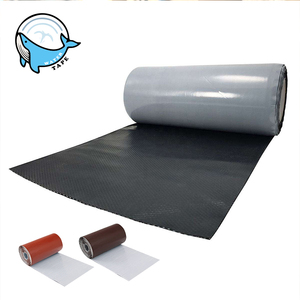
ANTI lead-free EPDM aluminum mesh butyl seal roll engineered for chimney, skylight, and EPS panel apex ridge joint sealing.
View Technical Details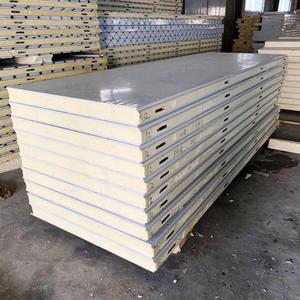
High-density polyurethane/polyisocyanurate thermal break core with tongue-and-groove cam-lock systems for chilled warehouses.
View Technical Details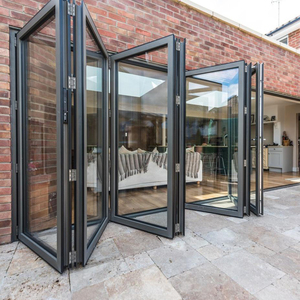
Double-glazed low-E architectural patio door solutions designed to integrate flush with insulated prefabricated facade walls.
View Technical Details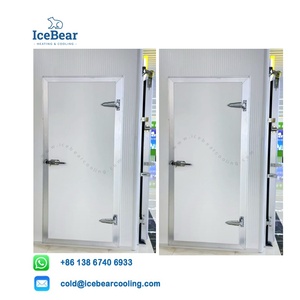
Precision-milled insulated transport closures equipped with multi-point EPDM perimeter gaskets for refrigerated vehicles.
View Technical Details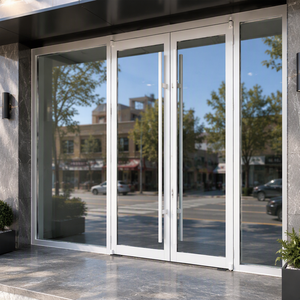
Commercial spring-hinge double doors designed for structural integration into steel framework buildings and cleanroom lobbies.
View Technical Details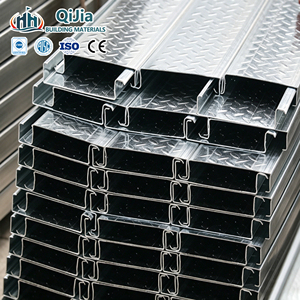
ASTM-certified roll-formed structural metal deck serving as permanent tensile reinforcement for multi-story mezzanine concrete slabs.
View Technical Details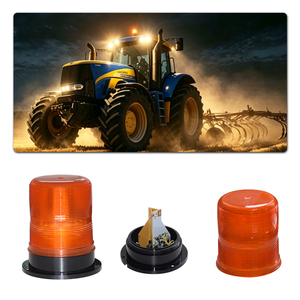
DC12V/24V heavy-duty roof-mounted emergency strobe light systems for material transport vehicles and construction sites.
View Technical Details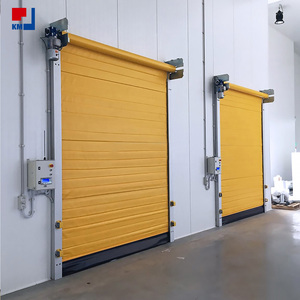
SUS304 hygienic insulated swing/sliding access assemblies with internal safety releases for industrial food distribution hubs.
View Technical DetailsA comprehensive examination of density gradients, compressive modulus, flexural yield strength, and flame-retardant B1 chemistry in modern industrial building envelopes.
EPS comprises approximately 98% trapped air within a 2% spherical polystyrene matrix. Our computerized continuous block foaming monitors pentane expansion to achieve ultra-fine cell walls, minimizing convection heat transfer and providing long-term thermal resistance (R-values) without cellular breakdown or hydrofluorocarbon outgassing.
By thermosetting high-tensile structural adhesive (two-part polyurethane) under uniform continuous pressure, the outer galvanized/pre-painted steel skins act as tensile flanges while the EPS core resists vertical shear stress. This composite dynamic yields a rigid beam effect with remarkable span-to-weight ratios compared to site-built assemblies.
EPS delivers the lowest cost-per-R-unit among commercial rigid insulation cores. For non-combustible exterior cladding, agricultural buildings, logistics warehouses, and temporary cleanrooms, wholesale Chinese EPS sandwich panels offer unmatched capital expenditure efficiency while significantly slashing structural framing dead-loads.
Comparative mechanical and thermal benchmarks verified through accredited ISO 9001 and ASTM testing standards for industrial building procurement.
| Insulation Core Type | Nominal Density (kg/m³) | Thermal Cond. (W/m·K) | Compressive Strength | Fire Classification | Primary Application Focus |
|---|---|---|---|---|---|
| Standard Grade EPS | 12 – 16 kg/m³ | 0.038 – 0.041 | ≥ 70 kPa | Class B2 / UL 94 HB | Temporary structures, site hoardings, internal partitions |
| High-Density Flame-Retardant EPS | 18 – 24 kg/m³ | 0.033 – 0.035 | ≥ 110 kPa | DIN 4102 B1 / ASTM E84 | Industrial PEB warehouses, factory roofs, agri-halls |
| Graphite EPS (SEPS / Neopor) | 18 – 25 kg/m³ | 0.030 – 0.032 | ≥ 100 kPa | Class B1 / Self-extinguishing | Energy-plus cold envelopes, passive structures, sub-zero chillers |
| Polyurethane Rigid Foam (PUR) | 38 – 42 kg/m³ | 0.022 – 0.024 | ≥ 150 kPa | Class B2 / B3 | Medium to heavy cold storage, refrigerated blast freezers |
| Polyisocyanurate (PIR) | 40 – 45 kg/m³ | 0.020 – 0.022 | ≥ 160 kPa | B-s1, d0 / FM 4880 Class 1 | High-fire-risk facilities, pharmaceutical cleanrooms, GCC specs |
| High-Density Structural Rockwool | 100 – 140 kg/m³ | 0.039 – 0.043 | ≥ 90 kPa | EN 13501-1 Class A1 / A2 | Fire barrier firewalls, acoustic generator housings, oil & gas |
Under uniformly distributed design wind loads (0.75 kN/m² to 1.25 kN/m² suction/pressure), panel deflection must be constrained to L/200 for roof claddings and L/150 for vertical wall envelopes. For a typical 100 mm B1-grade EPS roof sandwich panel (0.5 mm outer steel / 0.4 mm inner steel), maximum recommended purlin centers range from 2.80 m to 3.20 m under continuous double-span configurations. For precise design loadings, request our complete finite-element loading tables.
Get CatalogHow international EPC contractors, developers, and steel building fabricators are adapting purchasing models to navigate carbon boundaries, trade logistics, and automated building assembly.
Global procurement is rapidly pivoting away from baseline standard polyester (PE) coatings toward High-Durable Polyester (HDP), Silicone Modified Polyester (SMP), and Polyvinylidene Fluoride (PVDF). In tropical zones and Middle Eastern deserts, buyers specify solar-reflective Cool Roof coatings that reject up to 70% of infrared solar radiation, drastically preventing surface steel blistering and delamination.
As international energy codes (e.g., ASHRAE 90.1, EU EPBD) enforce lower overall envelope U-values, traditional EPS is being upgraded with high-purity graphite nanoplatelets (SEPS). Graphite particles scatter infrared heat radiant energy, dropping thermal conductivity down to 0.031 W/m·K. This enables engineers to specify thinner panels (saving shipping volume) while hitting stringent insulation targets.
Ocean freight economics dictate factory export competitiveness. Progressive manufacturers deploy automated protective film wrapping, high-density edge capping, and specialized interlocked stacking routines designed precisely for 40-foot High-Cube (40HQ) containers. By combining structural floor decking nested beneath EPS bundles, importers maximize container tonnage and cubic volume concurrently.
Transitioning from labor-intensive manual press tables to state-of-the-art continuous laminating double-belt presses with real-time laser monitoring.
Multi-stage precision cold-rolling stations profile galvanized/galvalume coils into rigid corrugated trapezoids or micro-ribbed architectural wall facings without fracturing zinc coatings.
Online high-frequency electrical discharge removes microscopic oil films on metal coils, vastly multiplying surface surface tension for an unbreakable covalent bond with polyurethane adhesives.
A heated 24-meter caterpillar conveyor maintains uniform heat and isobaric pressure during glue curing, ensuring precise thickness tolerances (±0.5 mm) across continuous 100-meter panel runs.
Automated traveling circular saws trim custom lengths up to 13.5 meters at high line speeds, ensuring perfectly squared 90-degree edges that align seamlessly during jobsite assembly.
Backing major industrial infrastructure across GCC nations, Southeast Asia, Australia, and Africa with guaranteed volume output and end-to-end building envelope fabrication.
Multiple synchronized automated production lines guarantee prompt delivery for massive logistics facilities, reducing lead times compared to domestic regional producers.
Proven track record furnishing complete warehouse cladding, cold storage units, pharmaceutical partitions, and temporary modular compounds internationally.
Beyond EPS panels: we manufacture structural secondary C/Z purlins, composite floor decking, perimeter flashings, and insulated cleanroom doors within one consolidated order.
Full factory mill test reports (MTR), ASTM E84 flame spread certifications, ISO 9001:2015 traceability, and pre-shipment SGS / BV third-party inspection readiness.
Authoritative technical guidance addressing density selections, fire rating validations, thermal bridging, joint sealing, and maritime container delivery.
For permanent exterior cladding subject to dynamic wind pressures, we specify high-density EPS ranging from 18 to 22 kg/m³. This density ensures compressive strength exceeding 100 kPa and high flexural shear rigidity, preventing permanent face buckling. For temporary construction offices, boundary site hoardings, or internal partition drywall substitutes, economical 12 to 14 kg/m³ density cores are frequently selected to reduce initial purchase costs.
B1 flame-retardant EPS is synthesized with environmentally safe polymeric flame retardants (such as brominated macromolecular compounds). When exposed directly to open flame, B1 EPS shrinks and carbonizes, achieving immediate self-extinguishing behavior once the ignition source is removed. Standard B3 grade supports combustion. Our export panels conform to DIN 4102-B1 and ASTM E84 Class A flame spread parameters.
Yes, provided appropriate steel coatings and color pigments are engineered. Under intense solar irradiance (>45°C ambient), dark-colored steel skins can reach 80°C. Since standard EPS begins softening at approximately 85°C, we mandate AZ150 Galvalume substrates paired with PVDF or high-durable solar-reflective coatings (RAL 9002 / RAL 9003). For critical desert applications, we recommend tongue-and-groove joint venting to mitigate micro-delamination.
For roof panels, we utilize deep 3-rib or 5-rib trapezoidal profiles incorporating a pre-engineered capillary groove along the overlapping female crest. During installation, applying butyl sealing cord (such as our waterproof butyl flashing tape) ensures an airtight, vapor-impermeable seal that completely eliminates wind-driven rain penetration and condensation dripping along purlin lines.
In a standard 40-foot High-Cube (40HQ) marine shipping container, the internal usable height is 2.69 m and usable length is 11.8 m. For 50 mm thickness wall panels (1,150 mm effective cover width), a single 40HQ typically holds approximately 1,150 to 1,250 m². For 100 mm thickness panels, loading capacity averages 580 to 650 m², depending on packaging skids and corner guards.
For coastal atmospheres classified as ISO 12944 C4 or C5-M (within 5 km of seawater), we recommend minimum 0.50 mm or 0.60 mm outer steel thickness with a zinc-aluminum substrate of at least AZ150 (150 g/m² 55% Al-Zn) or heavy galvanization of Z275. Finishing coats should be 25-micron PVDF (polyvinylidene fluoride) or 50-micron polyurethaned plastisol to resist marine salt aerosol pitting.
Every panel is surfaced with a peelable 50-micron UV-stabilized polyethylene protective film. Bundles are enclosed in thick waterproof shrink wrap, supported along the base by high-density expanded foam cushioning blocks at 1.2 m intervals. Rigid corner protectors and reinforced strapping prevent forklift fork crushing and sea swell chafing during multi-modal freight handoffs.
We supply comprehensive technical submittal dossiers: certified Mill Test Certificates (MTC) according to EN 10204 3.1, DIN 4102 / ASTM E84 reaction-to-fire laboratory test certificates, thermal conductivity declarations, structural span/deflection calculation sheets, factory ISO 9001:2015 certificates, and bespoke installation joint CAD shop drawings.
Connect with our technical sales engineering division to review your project structural drawings, calculate wind load span tables, and receive complete CIF / FOB container quotations.
Our sales engineers respond to project questions during working hours (GST+4).