Engineered to eliminate thermal bridges, resist severe climatic humidity, and guarantee airtight perimeter sealing for ambient, chiller, and blast-freezing environments.
A technical audit comparing operational capacity, thermal break innovation, airtightness classifications (EN 12426), and international export reliability across leading cold storage doorway manufacturers.
Dominating cold chain infrastructure across the GCC and East Africa, Emaar Industries operates state-of-the-art continuous polyurethane (PUR) and polyisocyanurate (PIR) lamination lines. Specializing in heavy-duty automated sliding cold room doors, insulated walk-in freezer doors, and structural cladding, their systems are engineered specifically for extreme ambient heat (+50°C) with zero condensation and unbroken thermal frame profiles.
Renowned for gastight, medical, and specialized cold storage doors. Metaflex utilizes high-pressure molded polyurethane leaves combined with proprietary airtight sealing tracks that drop and press simultaneously into the door rebate upon closure. Excellent compliance with HACCP and pharmaceutical GMP standards.
A North American benchmark in heavy commercial and industrial cold storage doors. Frank Door produces sliding, swing, and vertical lift doors utilizing robust internal framing, fiberglass reinforced polyester (FRP) face panels, and high-wattage perimeter heating strips to stop threshold icing down to -40°C.
Specializes in seamless, void-free Glass Reinforced Polyester (GRP) cold room doors. Dortek designs do not harbor bacterial micro-colonies and are completely immune to chemical washdowns, rust, or swelling, making them an undisputed choice for meat packing plants and sterile vaccine cold storage facilities.
Global leader in automated dynamic cold store access. ASSA ABLOY excels in rapid roll-up insulated freezer doors featuring insulated fabric or composite laths that open and close at up to 2.5 m/s, radically cutting refrigeration run hours in high-throughput distribution centers.
Operating since 1906, Jamison manufactures specialized industrial freezer doors, blast freezer entrance panels, and acoustic cold enclosures. Their patented Power-Tron drive systems and specialized air curtain integrated cold portals set the industry benchmark for heavy distribution facilities.
Pioneering the FasTrax and Barrier Glider cold storage models. Known for self-re-inserting door curtains that pop back into guide tracks upon accidental forklift collision, drastically cutting maintenance callouts and eliminating continuous thermal leakage.
A powerhouse exporter across Europe, Latin America, and North Africa. CoolSafe specializes in anodized aluminum and stainless steel finished sliding cold room doors for walk-in chillers, featuring high density PIR insulation and hermetic sealing gaskets tested to 100,000 continuous cycles.
Capitalizing on their proprietary QuadCore and high-efficiency PIR insulants, Kingspan delivers cold store doors with market-leading U-values. Highly respected by international consultants for LEED and BREEAM green building thermal verification.
With half a century of cold engineering excellence, Isocab supplies automated horizontal sliding and hinged agro-food doors. Their modular door kits with pre-assembled heater cables and click-in sub-frames save up to 40% on installation labor on international project jobsites.
Specification parameters required by refrigeration consultants, MEP engineers, and industrial procurement directors when selecting door blade geometry, core thickness, and heating cables.
| Storage Type | Operating Temp | Door Leaf Core & Thickness | Thermal U-Value (W/m²·K) | Perimeter Heating Cable | Recommended Drive & Sealing |
|---|---|---|---|---|---|
| Controlled Atmosphere Chiller | +2°C to +8°C | PIR / PUR Core: 80 mm – 100 mm | 0.24 – 0.28 | Not required (ambient threshold) | Manual or Microprocessor Sliding; Double EPDM Lip |
| Commercial Walk-in Cooler | 0°C to +4°C | PIR Core: 75 mm – 100 mm | 0.26 – 0.30 | Optional frame trace heating (25 W/m) | Hinged with Cam-Lift Self-Raising Hinges |
| Low-Temp Storage Freezer | -18°C to -25°C | High-Density PIR: 120 mm – 150 mm | 0.16 – 0.20 | Required: Frame & Sill PTC Cable (35 W/m) | Electric Automated Bi-Parting or Single Slide; Incline Track |
| Blast Freezing & Deep Cold | -35°C to -45°C | Polyurethane Core: 150 mm – 200 mm | 0.11 – 0.14 | Heavy-Duty Dual-Circuit Defrost (50 W/m) | Counterbalanced Vertical Lift or Extreme Slide with In-Floor Heater |
| High-Traffic Logistics Portal | -20°C to +5°C | Multi-Layer Insulated Flexible Curtain | 0.65 – 1.10 | Heated Side Columns & Blower Air Defrost | High-Speed Spiral / Roll-Up (> 1.8 m/s) with Crash Recovery |
A deep engineering look into how precision thermal break profiles, closed-cell polyisocyanurate foam, and smart compression tracks conquer structural sweating and cold loss.
Standard aluminum frames conduct cold rapidly, creating condensation and frost halos on exterior warehouse walls. Modern cold room door architecture embeds twin PA66 fiberglass-reinforced polyamide thermal insulation strips within the anodized 6063-T5 aluminum perimeter. This completely severs thermal transfer between inner refrigerated steel and the outer ambient envelope.
Traditional sliding doors rub gaskets continuously against floor thresholds, wearing out seals within months. Advanced cold doors utilize an engineered gravity incline track. During the final 50 millimeters of closing stroke, the track guides the heavy door leaf downwards and inward simultaneously by 8 mm, compressing the EPDM seals hermetically without friction during travel.
Sub-zero freezers demand anti-condensation perimeter heating. Leading factories integrate self-regulating Positive Temperature Coefficient (PTC) heating tapes directly behind stainless steel leaf caps and below aluminum floor thresholds. PTC resistance automatically surges as local temperatures drop, delivering high heat at cold spots without danger of overheating or burning out the rubber seal.
Market forecasts identify 5 critical technical vectors shaping cold storage doorway tenders and facility engineering specifications over the next five years.
Modern supply chain operators cannot tolerate unexpected door failures in automated high-bay freezers. Next-generation cold room doors come equipped with integrated edge controllers measuring motor amp draw spikes, seal pressure deviations, thermal delta leakage, and door open durations. This data feeds into central SCADA systems, alerting maintenance teams before frost bridges form or drive belts fail.
International environmental regulations (Kigali Amendment, European F-Gas) are phasing out traditional HFCs used in polyurethane foaming. Global cold door leaders are retrofitting batch injection heads to run with 4th-generation Hydrofluoroolefins (HFOs) and cyclopentane blowing chemistries, reducing core Global Warming Potential (GWP) to less than 1 while sustaining closed-cell percentages above 95%.
While heated air curtains have been common on chiller thresholds, their continuous electrical consumption and turbulent mixing in high-humidity climates cause massive refrigeration losses. Procurement engineers are replacing air blowers with ultra-fast insulated roll-up doors (opening speed > 2.0 m/s) with self-repairing zipper guides, saving up to 35% in active warehouse cooling energy.
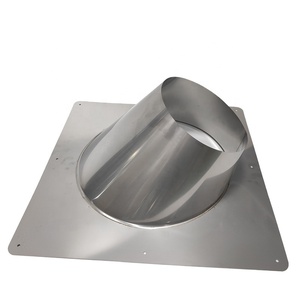
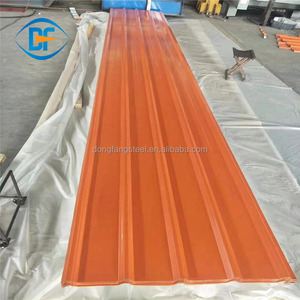
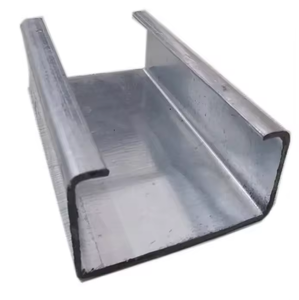
Project developers and general contractors are shifting away from fragmented subcontracting. Sourcing cold room doors, continuous PIR wall panels, roof decking, secondary cold-rolled C/Z purlins, and aluminum flashing accessories from a single certified manufacturing group eliminates dimensional clashes, aligns warranty periods, and significantly simplifies shipping logistics.
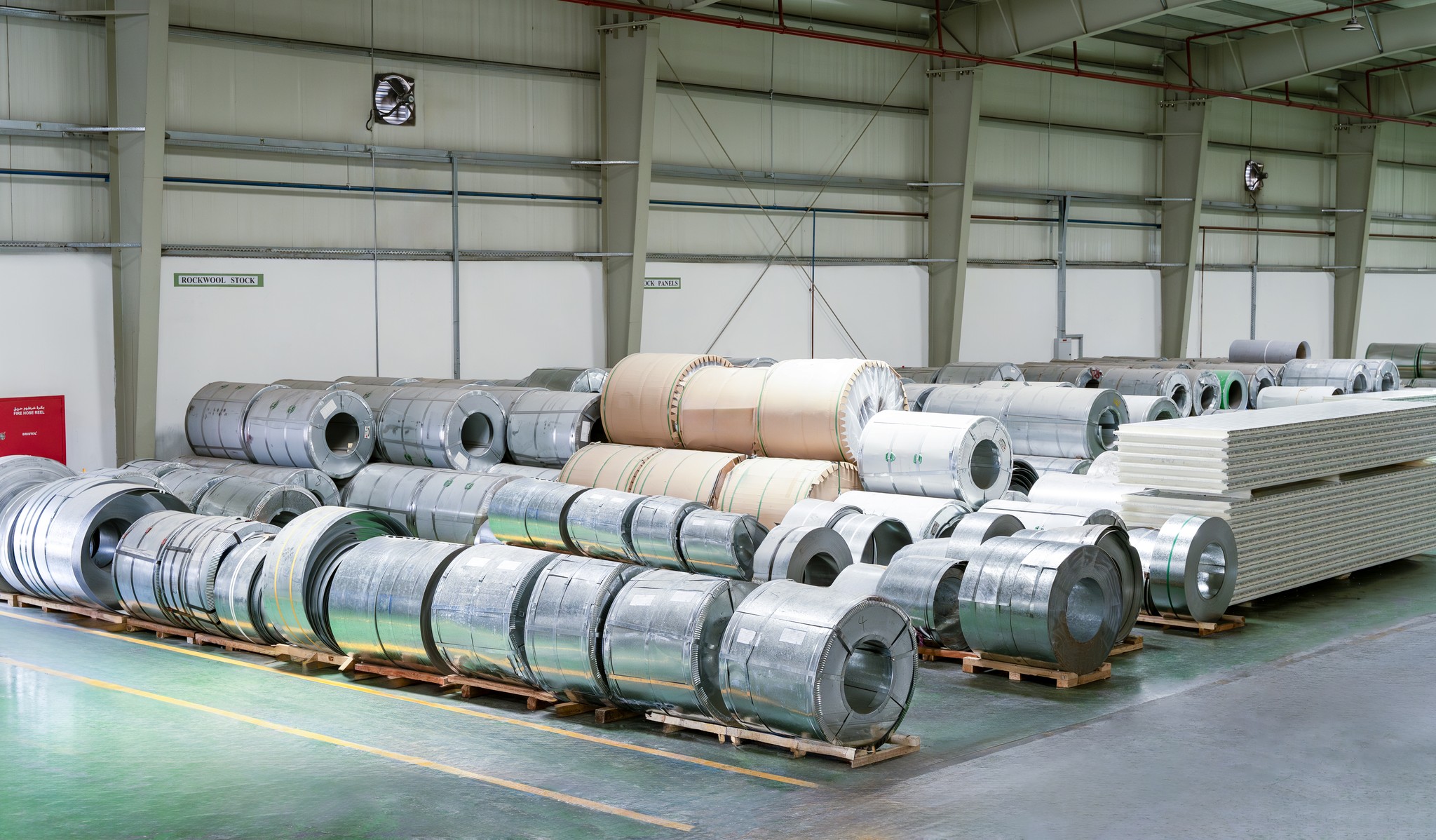
Founded on rigorous industrial standards, Emaar Industries LLC operates Oman's leading continuous sandwich panel, cold room system, and secondary steel manufacturing facilities. With over 550 industrial and cold storage projects delivered across the GCC and Africa, our engineered cold room envelopes are tested against summer ambient temperatures exceeding +50°C and coastal salinity (C5-M exposure).
Our complete manufacturing ecosystem encompasses high-pressure PIR/PUR continuous injection lines, computerized sheet roll-forming, specialized cold room door assembly jigs, and custom CNC flashing benders. Buyers receive a turn-key building envelope solution with verified laboratory testing, eliminating costly imported supply chain delays.

Submitting an accurate Request for Quotation (RFQ) prevents costly design revisions and site re-engineering. Provide these 6 core parameters when consulting our sales engineers:
Specify Width (W) × Height (H) in millimeters of the clear masonry or insulated panel opening. Account for forklift mast heights, overhead crane clearances, or pallet jack widths.
State both the internal room temperature (e.g., -25°C) and the external ambient conditions (e.g., +45°C with 85% RH) to determine exact PIR core thickness and heater wire wattage.
Indicate whether the frame mounts to modular sandwich panels, reinforced concrete, or structural steel tubing. This defines the required sub-frame reinforcement and through-bolt lengths.
Select skin material based on hygiene standards: Pre-painted Galvanized Steel (standard food store), AISI 304 Stainless Steel (dairy/meat), or AISI 316L (seafood/marine salt atmospheres).
Manual lever handle, pull-cord switch, microwave radar, magnetic induction floor loop, or automated PLC integration. Ensure internal luminous safety escape release handles are specified.
Estimate openings per hour. High frequency (> 60 cycles/hour) mandates brushless AC servo automated motors rather than manual operation to protect refrigeration efficiency.
Authoritative answers to the most critical structural, thermal, and regulatory questions faced by industrial cold chain project planners and procurement managers.
Door leaf thickness is determined by balancing internal holding temperatures against external ambient design conditions to keep the surface temperature above the atmospheric dew point. As an engineering standard: Positive chiller rooms (+2°C to +8°C) require 75 mm to 100 mm of rigid polyurethane (PUR) or polyisocyanurate (PIR) foam. Low-temperature freezers (-18°C to -25°C) require 120 mm to 150 mm. Blast freezers (-35°C to -45°C) require 150 mm to 200 mm of high-density closed-cell core foam combined with multi-circuit frame heating to maintain an exterior face within 2°C of ambient temperature.
Without an engineered thermal break, the high thermal conductivity of aluminum (approx. 205 W/m·K) creates an unrestricted energy conduit from warm exterior rooms into cold refrigerated space. This thermal bridge cools the outer frame below the dew point of the surrounding air, creating heavy sweat, condensation puddles, mold growth, and eventually thick perimeter ice dams that destroy door gaskets. A mechanical polyamide PA66 thermal barrier arrests this heat path completely.
For medium-temperature chillers (0°C to +4°C), heating is usually unnecessary unless relative ambient humidity exceeds 70%. For commercial freezers (-18°C to -22°C), self-regulating cables delivering 30 to 40 Watts per linear meter embedded in the frame perimeter and threshold channel are standard. For deep blast freezers operating down to -40°C, dual heating circuits (operating at 50 W/m) are specified, allowing a secondary backup circuit to engage instantly if the primary cable suffers a mechanical failure.
Traditional sliding systems drag perimeter rubber seals across floor thresholds and side jambs during lateral travel, leading to rapid friction wear and seal degradation. Decline tracks feature precision notches along the overhead rail. As the door reaches its closed position, heavy-duty rollers drop down and angle inwards simultaneously, compressing the tubular EPDM rubber gaskets 8 mm against the sub-frame rebate without dynamic sliding friction, delivering an EN 12426 Class 4 airtight seal.
In food processing, meat packing, and dairy logistics, doorways must withstand aggressive cleaning chemicals, high-pressure hot water sanitization, and biological contamination. Hardware must be fabricated from AISI 304 or marine-grade AISI 316 stainless steel. Fastener screws must be concealed or flush-mounted with food-safe gaskets. Leaf panels must be free of horizontal crevices or exposed organic glues that could harbor Listeria or Salmonella bacteria.
When doorway cycle frequency exceeds 30 passages per hour, heavy horizontal sliding doors stay open too long, allowing warm ambient air infiltration that overburdens refrigeration compressors and causes evaporator coil icing. Installing high-speed insulated fabric or spiral doors (operating at speeds up to 2.4 m/s) with radar or induction loops minimizes open duration to 3-5 seconds per forklift cycle, reducing active thermal refrigeration losses by up to 40%.
To eliminate entrapment risks, all international building codes (including OSHA, EN 13241, and GCC Civil Defence) require a mechanical luminous internal emergency release handle. This push-button or internal lever must function 100% mechanically, allowing an operator trapped inside a locked freezer to force open the latch from within even if exterior key locks or padlocks are engaged and electrical power to the automated drive is dead.
In coastal logistics hubs (such as Gulf and Red Sea ports), high humidity combined with airborne chlorides rapidly corrodes standard galvanized steel tracks, cast zinc rollers, and electroplated hardware. In these environments, procurement specifications must explicitly mandate minimum 20-micron anodized aluminum rails, POM self-lubricating synthetic rollers, and 316-grade stainless steel brackets to prevent binding and system failure.
Our sales engineers respond to project questions during working hours (GST+4).