
Industrial building envelopes across the GCC, Africa, and Western Asia endure some of the most aggressive environmental stressors on the planet: relentless UV irradiation exceeding 200 kWh/m² annually, ambient temperatures surpassing 50°C, and severe coastal chloride salinity. Sourcing from a top 10 color-coated sheets manufacturer demands rigorous due diligence beyond nominal thickness and baseline polyester paints.
World-class fabricators prioritize hot-dip galvanized (HDG Z180–Z275) or 55% Aluminum-Zinc alloy coated steel (Galvalume / Aluzinc AZ150). The aluminum component provides microscopic barrier passivation, while the active zinc delivers sacrificial galvanic protection at slit edges and penetrations, preventing under-film creep corrosion.
Top-tier exporters provide precision coil coating lines operating under ASTM A755 and EN 10169 protocols. Coating options transition from standard Polyvinylidene Fluoride (PVDF 70/30 Kynar 500) and Super Durable Polyester (SMP/HDP) to thick-film Plastisol (200µm), ensuring 25- to 40-year colorfastness and chalk resistance under severe solar conditions.
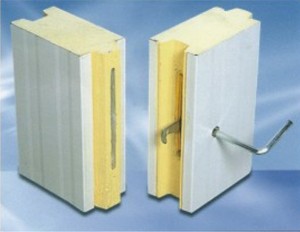
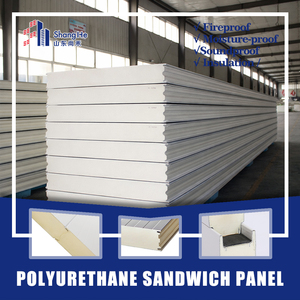
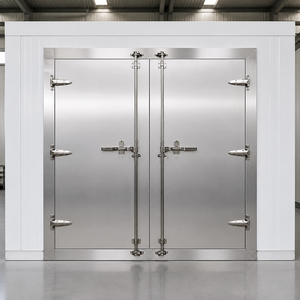
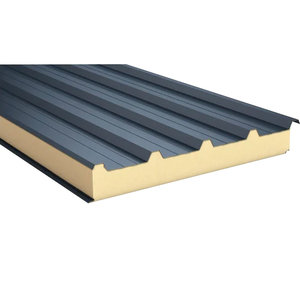
Export leaders integrate continuous double-belt laminators for composite panel assembly. Unlike batch presses, continuous high-pressure injection ensures homogenous core density, microcellular polyurethane/polyisocyanurate (PIR) matrix formation, zero delamination voids, and precise joint geometry for airtight cold chains.
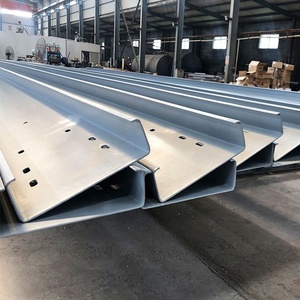
Engineered with pre-painted steel facings, polyurethane cores, and cold-formed structural steel, our systems deliver turn-key structural integrity, fire compartmentation, and thermal performance for mission-critical logistics facilities.
A specifier’s guide to matching metal substrates, zinc weights, and topcoat polymers to site microclimates, preventing premature chalking, blistering, and cut-edge corrosion.
| Coating System | Base Chemistry | DFT (Primer + Top) | UV Resistance (QUV) | Corrosion Class (ISO 12944) | Recommended Geographic Zone |
|---|---|---|---|---|---|
| Regular Polyester (PE) | Thermosetting Polyester Resin | 5µm + 20µm | RUV2 / Class B | C2 - C3 (Urban Inland) | Low-UV temperate zones, interior dry warehouses |
| High-Durable Polyester (HDP) | High Molecular Weight Polyester | 7µm + 20µm | RUV3 / Class A | C3 - C4 (Industrial Suburbs) | High sun-exposure, moderate industrial emissions |
| Silicone Modified Polyester (SMP) | Polyester blended with Silicone | 5µm + 20µm | RUV3 / Low Chalking | C3 - C4 (Agricultural / Arid) | Arid desert environments with abrasive windborne sand |
| PVDF 70/30 (Kynar 500) | Polyvinylidene Fluoride Fluoropolymer | 5µm + 20µm | RUV4 / Superior | C4 - C5 (Extreme Marine / Chemical) | Coastal GCC areas within 1 km of shoreline, heavy UV |
| Plastisol (PVC) | High-Build Thermoplastic Dispersion | 5µm + 195µm | RUV3 / High Impact | C5-I / C5-M (Aggressive Marine) | Marine splash zones, chemical fertilizer packaging |
Strategically situated in Muscat, Oman, Emaar Industries bridges advanced European continuous profiling engineering with rapid maritime logistics, delivering unmatched supply chain resilience across the GCC, Africa, and overseas markets.
High-speed continuous lamination lines produce up to 10,000 m² per day. Large structural envelope projects are batched without schedule slippage, ensuring project deadlines are met consistently.
Single-source capability covering Polyurethane (PUR), fire-retardant Polyisocyanurate (PIR-B1), and non-combustible Stone Rockwool (A1 fire rating) cores tailored precisely to structural and insurance mandates.
Direct deep-water port access at Sohar and Salalah, coupled with multi-lane GCC overland trucking routes, allows overnight dispatch to the UAE, Saudi Arabia, Qatar, and rapid charter shipping to East Africa.
All production lots ship with factory Mill Test Certificates (MTC 3.1), third-party acoustic attenuation tests, FM-approvals compatibility data, and specific ASTM fire test assessments for rapid consultant approval.
Procurement directors and EPC executives are redefining envelope specifications to mitigate lifecycle carbon emissions, address raw material price volatility, and enhance thermal efficiency.
Global architectural standards (LEED v4.1, BREEAM) now mandate verified Environmental Product Declarations (EPDs). Specifiers favor manufacturers using Electric Arc Furnace (EAF) scrap steel coils and bio-based polyol formulations to lower the embodied carbon footprint of clad structures by up to 28%.
To curb the Urban Heat Island effect and cut HVAC cooling energy loads by up to 18%, developers require pre-painted coils with Solar Reflectance Index (SRI) values > 82. Modern inorganic infrared-reflective pigments reflect near-infrared wavelengths while maintaining rich architectural dark hues.
Procurement teams increasingly eliminate job-site scrap through cut-to-length factory customization guided by Building Information Modeling (BIM). Barcode-level batch tracking allows every sheet to be verified back to mother coil heat numbers and continuous line foaming parameters.
Continuous innovation in substrate passivation and polymer nanotechnology is unlocking unprecedented lifespans for color-coated steel panels under high thermal and chemical duress.
ZAM represents the next frontier in metallic sacrificial coatings. By doping molten 55% Al-Zn baths with 1.5–3% Magnesium, corrosion resistance increases up to three-fold compared to standard HDG. When cut or scratched, magnesium hydroxide forms a self-healing film across exposed bare steel edges.
Wind-blown sand and industrial particulate deposition can degrade aesthetic finishes and accelerate galvanic degradation. Hydrophilic nano-silica ceramic topcoats create a super-smooth, low-surface-energy face where dew and rainwater sheet off naturally, washing away airborne dirt without mechanical washing.
Polyisocyanurate chemistry has evolved from classic PUR through trimerization technology. Modern PIR molecular structures form tightly cross-linked aromatic isocyanurate rings that self-char under flame contact, preventing smoke generation and eliminating CFC/HCFC blowing agents in compliance with the Montreal Protocol.
In-depth responses to the critical technical and contract compliance questions raised by project engineers, procurement directors, and civil defense consultants.
While Z275 steel offers active sacrificial protection through rapid zinc oxidation, it can deplete prematurely in warm, marine chloride microclimates. Galvalume AZ150 combines 55% aluminum, 43.4% zinc, and 1.6% silicon. The microscopic dendrite structure of aluminum acts as a physical barrier, slowing surface erosion up to four times longer than hot-dip zinc in high-salinity atmospheres.
Polyisocyanurate (PIR) combines the low thermal conductivity of closed-cell polyurethane (λ = 0.022 W/m·K) with superior fire-retardant chemistry. Under direct flame, PIR forms a protective carbonaceous char that resists burn-through (B-s1, d0 under EN 13501-1). Rockwool is non-combustible (A1/A2), but its higher thermal conductivity (λ = 0.040 W/m·K) requires nearly twice the panel thickness to achieve equivalent insulation.
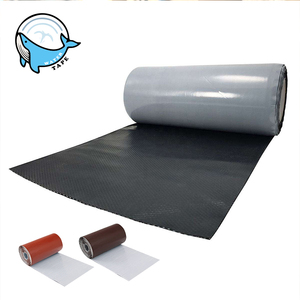
Cut-edge corrosion occurs when sheared coil edges expose raw iron to ambient moisture and salt. Mitigating factors include: specifying high-mass sacrificial zinc coatings (Z275/AZ150), applying industrial edge-sealing sealants, utilizing EPDM-sleeved flashing tapes, and detailing drip bends to prevent capillary water retention along eave overlaps.
For locations with extreme solar radiation (annual UV index > 9), standard polyester (PE) typically experiences chalking and color fade (ΔE > 5) within 4 to 6 years. The recommended specification is Polyvinylidene Fluoride (PVDF) 70/30 (Kynar 500) or Super Durable Polyester (HDP) applied at a minimum Dry Film Thickness (DFT) of 25–28 microns (comprising a 5–7µm epoxy/polyurethane primer and a 20–22µm topcoat).
Export packaging must prevent transport micro-abrasion, moisture staining, and salt fog infiltration. Bundles are protected with peelable 50-micron UV-inhibited polyolefin protective films, waterproof kraft barrier wrapping, corner metal angle guards, desiccants to control moisture, and heat-treated wooden dunnage designed for direct forklift and containerized break-bulk handling.
Quality assurance includes continuous inline testing for density consistency (40–42 kg/m³ for PUR/PIR), tensile bond adhesion (ASTM D1623), compressive strength at 10% deformation, thermal conductivity according to ASTM C518 / EN 12667, and peel strength testing to verify core-to-steel adhesion integrity.
Our sales engineers respond to project questions during working hours (GST+4).