Engineered to exceed ASTM E1592, BS EN 14509, and Gulf extreme atmospheric durability requirements. Export-ready modular envelope solutions manufactured in Muscat, Oman.
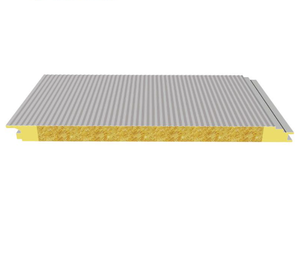
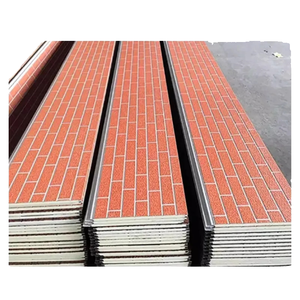
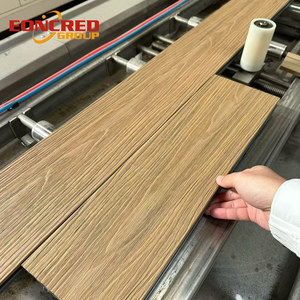
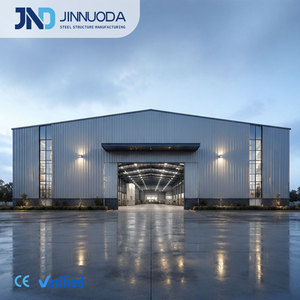
In modern structural engineering, industrial roofing is no longer treated as a passive weather canopy; it is a critical, stressed-skin structural diaphragm and thermodynamic control membrane. The global supply landscape for trapezoidal roof sheets has transitioned from regional roll-forming shops into sophisticated international conglomerates operating continuous automated lines. Specifiers, structural engineers, and EPC procurement leads evaluate suppliers against strict criteria: metallurgic purity, cold-forming precision, substrate alloy mass, and certified fire performance.
Tier-1 suppliers are distinguished by their vertical integration—from coil uncoiling and tension levelling to multi-stage roll-forming cassettes that eliminate oil canning and residual material stress. Leading producers across the Middle East, Europe, and Asia maintain strict adherence to international standards including ASTM A792/A792M (for 55% Al-Zn alloy coated steel), ASTM A653 (galvanized steel), EN 10346, and BS EN 14509 for self-supporting composite insulated panels.
Tier-1 manufacturers employ Aluzinc (AZ150/AZ200) and Zinc-Aluminum-Magnesium (ZAM) alloys providing sacrificial galvanic protection plus cathodic passivation, outperforming standard galvanized steel by 400% in salt-spray test environments (ASTM B117).
Export-grade trapezoidal profiles utilize structural steels from G300 to G550 (yield stress 550 MPa). This high tensile capacity maximizes purlin spacings up to 2.4 meters without secondary support deflection, drastically reducing building frame tonnages.
Top global exporters incorporate high trapezoidal major ribs (35mm to 45mm height) with integrated double-drainage anti-capillary capillary grooves on the overlapping under-rib, ensuring 100% leak-proof performance under tropical storm downpours and low-pitch roof designs (down to 3°).
Match your facility envelope load requirements, fire boundary classifications, and climate zone exposure against our engineering grade options.
| Profile & Material Class | Core / Base Substrate | Coating / Metallurgical Mass | Thermal Resistance (U-Value) | Fire Behavior Rating | Typical Engineering Applications |
|---|---|---|---|---|---|
| PIR Trapezoidal Roof Panel | Polyisocyanurate (40 kg/m³) Closed Cell > 93% |
55% Al-Zn (AZ150) / HDG Z275 25μm PVDF / Super Polyester |
0.18 – 0.38 W/m²·K (50mm – 120mm) |
B-s1, d0 / FM 4880 | Automated Logistics Hubs, Chemical Plants, Coastal Warehouses |
| Rock Wool Trapezoidal Panel | Basalt Stone Fibre Density 100–120 kg/m³ |
Galvalume AZ150 / Hot-dip Zinc 25μm Polyester / Plastisol |
0.32 – 0.72 W/m²·K (50mm – 150mm) |
Class A1 Non-combustible | Power Stations, High-Occupancy Industrial, Aircraft Hangars |
| Single-Skin 35/200 Trapezoidal | High-Tensile Steel Coil Yield Stress: G550 (550 MPa) |
AZ150 / AZ200 Aluminum-Zinc Top: 20μm + Primer: 5μm |
Uninsulated (Skin only) R-value: N/A |
Incombustible Steel | Agricultural Shelters, Mine Site Sheds, Industrial Canopies |
| PIR Cam-Lock Cold Chain Panel | Rigid PIR Cyclopentane High Compressive (200 kPa) |
Food-grade Anti-microbial Skin SUS304 Stainless / 0.6mm PPGI |
0.10 – 0.22 W/m²·K (100mm – 200mm) |
Self-Extinguishing B1 | Pharmaceutical Blast Freezers, Meat Processing, Controlled Atmospheres |
| Structural Composite Decking (54/200) | Cold-Rolled Galvanized Coil Yield Stress: 350 to 550 MPa |
Hot-Dip Zinc Z275 / Z350 (ASTM A653 / EN 10346) |
Integral Structural Slab Composite Membrane |
2-Hour Fire Integrity | Commercial High-Rises, Multi-Story Distribution Centers |
Operating from Muscat, Sultanate of Oman, our modern manufacturing facility stands at the epicenter of maritime and overland global trade routes. With over 550+ landmark projects successfully delivered across Oman, the UAE, Saudi Arabia, Qatar, Bahrain, Kuwait, and East Africa, we provide structural engineers and main contractors with rapid access to high-specification building envelope components.
Continuous automated double-belt laminating lines deliver uninterrupted output, guaranteeing contracted delivery milestones for multi-million-square-meter megaprojects without supply bottlenecking.
Direct oceanic container departures from Muscat and Sohar bypass high-risk choke points, ensuring shortened 12 to 18-day sea-transit windows to African, South Asian, and Mediterranean deep-water ports.
Specifically engineered for ambient summer conditions exceeding +50°C, 98% relative humidity, and harsh UV radiational indexes. Panels incorporate premium PVDF systems resilient to thermal shock.
Comprehensive third-party audit submittals for ISO 9001:2015, ISO 14001, civil defense fire approval ratings, and project-specific laboratory mechanical test reports ready for immediate consultant clearance.
B2B industrial procurement teams are actively adapting to new sustainability mandates, digital twin engineering protocols, and total life-cycle cost modeling.
With the European Union’s Carbon Border Adjustment Mechanism (CBAM) and global Scope 3 emissions disclosure rules taking full legal effect, procurement directors must source from mills running Scrap-to-EAF (Electric Arc Furnace) green steel lines. Exporters supplying verified Environmental Product Declarations (EPDs) with documented cradle-to-gate embodied carbon have become the sole contenders for Tier-1 corporate tenders.
The global rush toward net-zero industrial parks has made roof cladding the primary solar foundation. Future procurement contracts explicitly demand trapezoidal major ribs engineered with reinforced crown gauges and precision standing profiles that accommodate non-penetrating solar module brackets. This design eliminates puncture-driven leak risks and protects 25-year watertight warranties.
Procuring single-skin sheets from one vendor, cold-rolled Z purlins from another, and flashings from a local fabricator creates massive jobsite delay risks. Major EPC contracts now mandate comprehensive single-source building envelopes—including engineered pre-punched cold-rolled purlins, factory-notched sandwich panels, custom die-formed flashings, and EPDM fasteners delivered in synchronized container lots.
Manufacturing technology is advancing rapidly to solve two historically conflicting challenges: maximizing structural span-to-weight ratios while simultaneously providing 40+ years of maintenance-free service under corrosive industrial microclimates.
Traditional hot-dip galvanizing relies purely on zinc consumption. Next-generation Zinc-Aluminum-Magnesium (ZAM / Zn-Al-Mg) bath chemistry causes the magnesium ions to form a tightly adhering, insoluble basic zinc-magnesium chloride film over cut edges and fastener punctures, arresting red rust creep even in aggressive marine (ISO 12944 C5-M) zones.
Discontinuous PUR foaming has been superseded by continuous high-pressure injection lines running polyisocyanurate formulations with an isocyanate-to-polyol index exceeding 250. Under extreme flame attack, the panel surface carbonizes into an insulating ceramic char layer, achieving self-extinguishing ratings and minimal smoke development without toxic halogenated blowing agents.
Modern 32-stand roll-forming cassettes utilize servo-driven variable profile rolls that monitor steel tensile variance in real time. This guarantees that major rib angles, crown flat width, and overlap undercuts stay strictly within ±0.3mm tolerances, eliminating installation skew and fastener stripping across massive 100-meter roof spans.
Direct technical answers to critical questions encountered by consulting structural engineers, facade consultants, and commercial procurement directors.
Trapezoidal profiles offer significantly higher section modulus ($Z_x$) and moment of inertia ($I_x$) per linear meter of sheet width compared to sinusoidal (wavy) profiles of identical steel gauge. The deep flat-top major ribs and stiffened valley sections allow trapezoidal sheets to support substantially greater live loads, maintenance foot traffic, and negative wind uplift suction while spanning larger purlin centers (1.8m to 2.4m vs. 1.0m to 1.2m for sinusoidal).
For installations within 3 kilometers of open sea or aggressive marine atmospheric zones, a minimum coating of Aluzinc AZ150 (150 g/m² 55% Al-Zn alloy) or Hot-Dip Galvanized Z275 (275 g/m² zinc) is required as the bare metal base. This must be combined with a high-durability primer and a topcoat consisting of either Polyvinylidene Fluoride (PVDF 70/30) at 25–28 microns dry film thickness (DFT) or a thick Plastisol / PVC coating (100–200 microns) to prevent premature white/red corrosion creep.
Choose PIR (Polyisocyanurate) when maximum thermal efficiency, low dead load, and airtight vapor control are paramount (e.g., refrigerated logistics, food processing, commercial warehouses in high ambient heat). Choose Rockwool (Stone Mineral Wool) when local building codes or insurance underwriting (e.g., FM Global) require strictly non-combustible construction (Class A1), high-decibel acoustic dampening (Rw > 32 dB), or designated fire separation compartment walls with up to 4-hour fire ratings.
On low-pitch roofs (between 3° and 7°), wind-driven rain can be drawn upward through the overlapping sheet joints by capillary attraction. High-grade trapezoidal profiles incorporate a roll-formed break or anti-capillary siphon groove along the overlapping under-rib. This breaks the surface tension of water, allowing any moisture that bypasses the side-lap to drain downward freely into the internal valley rather than infiltrating the interior envelope.
Export bundles must feature continuous strippable low-tack protective polyethylene films on every profile, separated by desiccated cardboard interleavers or expanded polystyrene spacers. Bundles are wrapped in water-resistant heavy-duty plastic shrouds, strapped to wooden or steel skids with polymer edge protectors, and secured inside ocean containers using dynamic nylon load lashing belts to eliminate vibration-induced abrasion during open-sea transit.
In single-skin roofs with exposed structural fasteners, each screw acts as a thermal conductor, transferring heat directly into the facility structure and precipitating interior underside condensation. Pre-insulated trapezoidal sandwich panels utilize factory-foamed PIR/Rockwool cores that completely isolate the exterior metal skin from the interior ceiling liner, achieving uniform thermal transmittance (U-values as low as 0.16 W/m²·K) and drastically lowering HVAC chilling loads.
Whether configuring a 100,000 m² distribution logistics hub in the Middle East, an agricultural complex in East Africa, or a specialized refrigerated warehouse, our Muscat engineering headquarters provides fast-turnaround submittal packages, CAD details, and CIF port pricing.
Our sales engineers respond to project questions during working hours (GST+4).