Global Tier-1 Structural Envelope Engineering

Top China Cold Formed Steel Manufacturers & Supplier

Pioneering High-Tensile Thin-Walled Roll Forming, Zn-Al-Mg Anti-Corrosion Technologies, and Modular Commercial Envelope Solutions for Megaprojects Worldwide.

10,000+ m²
Daily Composite Output
550+ Delivered
Global EPC Projects
G550 / S550GD
High-Strength Steel Grade
50+ Years
ZAM® Durability Rating
Engineered Structural Envelope Portfolio

Precision Cold Formed Steel & Cladding Assemblies

Explore our export-certified cold-formed profiles, energy-efficient building panels, solar purlin assemblies, and architectural components manufactured under tight tolerances and stringent international quality standards.

Authoritative Whitepaper

Cold Formed Steel Metallurgy & Roll-Forming Mechanics

A rigorous examination of material selection, post-yield capacity, buckling behavior, and protective metallurgy for civil engineers and global procurement managers.

Cold Formed Steel (CFS) sections, colloquially known as light-gauge steel framing (LGSF), are manufactured by passing structural strip steel through consecutive roller dies at ambient room temperature. Unlike hot-rolled structural steel shapes ($W$-beams, $H$-columns), which undergo plastic deformation under heat above recrystallization thresholds, cold roll-forming induces significant strain hardening (work hardening). This process yields substantial gains in the steel’s yield strength ($f_y$) and ultimate tensile strength ($f_u$), specifically around the bend radii and flanged corners where cross-sectional residual stresses concentrate.

For international civil consultants, structural engineers, and EPC contractors sourcing from China, understanding the distinction between standard commercial grades and certified structural framing grades is paramount. Primary structural members (such as load-bearing studs, floor joists, heavy-duty $Z$-purlins, and solar mounting channels) must conform strictly to ASTM A1003/A1003M, EN 10346 (grades S350GD, S450GD, S550GD), or AS/NZS 4600 standards. High-tensile steel coils with nominal yields up to $550\text{ MPa}$ ($G550$) facilitate ultra-lightweight structural configurations, reducing the total foundation dead load by up to 60% compared to traditional masonry or heavy hot-rolled steel structures.

Buckling Analysis & Section Optimization

Thin-walled open cold-formed cross-sections exhibit three distinct limit states under compression and bending: local buckling (plate micro-rippling), distortional buckling (cross-section rotation along fold lines), and global buckling (Euler flexural-torsional collapse). Leading Chinese roll-formers incorporate the Direct Strength Method (DSM) with complex intermediate stiffener lips to raise critical buckling bifurcation limits without unnecessary deadweight increases.

High-Performance Zinc-Aluminum-Magnesium

Moving beyond conventional hot-dip galvanizing ($Z275$), advanced Chinese mills utilize Zinc-Aluminum-Magnesium ternary alloys (Zn-Al-Mg / ZAM® / SuperDyma coatings with $3.0\%\text{ Mg}$ and $6.0\%\text{ Al}$). The inclusion of magnesium creates a dense, insoluble simonkolleite patina that chemically migrates over sheared slit edges and punched holes, offering self-healing cathodic protection that withstands over 4,000 hours in neutral salt spray testing.

Continuous CNC Roll-Forming Tolerances

Utilizing 18-to-28 station computer-controlled tandem roll-forming mills ensures dimensional conformity within $\pm0.5\text{ mm}$ for member lengths up to $16\text{ meters}$. Integrated fly-shearing and inline hydraulic punch systems punch bolt holes, service passage grommets, and swage ends directly from CAD/CAM model coordinates, eliminating costly secondary modifications on job sites.

Profile Category Common Steel Grades Nominal Yield Strength ($f_y$) Protective Coating Options Target Structural Application
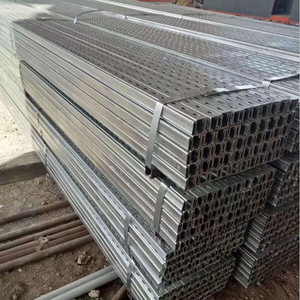
C-Channel Purlins / Girts Q235B, S350GD, ASTM A653 Gr. 50 235 – 355 MPa HDG Z180 - Z275, PosMAC ZM180 Secondary roof Framing, curtain wall backbones, solar PV brackets
Z-Purlins (Continuous Nesting) S350GD, S450GD, G450 350 – 450 MPa Galvalume AZ150, ZAM ZM275 Multi-bay warehouse roofing, continuous over-support moment optimization
Light Gauge Stud Framing (LGSF) S550GD, ASTM A1003 Grade 80 550 MPa Z275, AZ150, Anti-fingerprint Acrylic Load-bearing residential pods, commercial interior partition drywall framing
Composite Floor Decking Q355B, S350GD+Z 355 MPa Hot-Dip Galvanized Z275 (0.8 - 1.5mm) Multi-story high-rise floor slabs, permanent concrete formwork with embossments
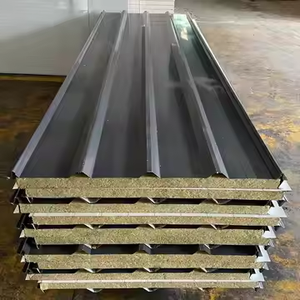
Insulated Envelope Facings DX51D+Z, DX52D+AZ 280 – 320 MPa PVDF, HDP (High Durability Polyester), SMP Exterior skins for Rockwool/PIR/PUR cold room panels and sound barrier envelopes

Note: Custom steel coil grades (including Corten weathering steel and SUS304/SUS316 stainless cold-formed channels) can be rolled upon engineering requisition.

Strategic Market Intelligence

Future Procurement & Technological Trends (2025–2035)

Key technological disruptions, carbon tariff compliance shifts, and automated fabrication pipelines transforming global steel procurement.

1. Decarbonization & CBAM Sourcing

With the European Union’s Carbon Border Adjustment Mechanism (CBAM) entering full fiscal enforcement, procurement directors are aggressively filtering suppliers by Scope 1, 2, and 3 emissions. Leading Chinese cold-formed steel mills are switching to Electric Arc Furnace (EAF) scrap steel melting driven by green energy, providing verified Environmental Product Declarations (EPDs) to prevent cross-border border tariff penalties.

2. BIM-to-Machine Integration

The standard supply paradigm of shipping raw stock profile lengths for manual field processing is rapidly disappearing. Modern engineering procurement requires native BIM (Tekla, Revit, Vertex BD) integration directly communicating with CNC roll-formers via NC1 and CSV files. Studs, joists, and purlins are pre-notched, punched, dimpled, and color-coded with automated dot-matrix labeling, reducing on-site erection schedules by up to 45%.

3. ZAM® Coated Structural Replacements

Procurement specifications for coastal and extreme-UV desert environments (such as GCC logistic corridors) are shifting away from traditional post-dip batch galvanizing toward continuous roll-forming of mill-coated Zinc-Aluminum-Magnesium alloy coil. Eliminating bath dipping reduces dimensional thermal distortion and warping in light sections, while providing superior barrier protection across pre-slit structural margins.

4. Factory-Fitted Composite Sub-Assemblies

Labor shortages and surging on-site crane costs in target import destinations are forcing the envelope industry toward complete volumetric or panelized systems. Cold-formed steel secondary framing is now routinely married with non-combustible Rockwool or PIR thermal panels, exterior weather membranes, and architectural decorative flashings prior to export container loading, turning assembly jobs into precision mechanical erection.

Enterprise Value Proposition

Why Tier-1 Contractors Rely on Our Manufacturing Ecosystem

Combining primary coil processing, precision roll forming, and turnkey building envelope panelization under a unified quality assurance framework.

Integrated Envelope Supply Chain

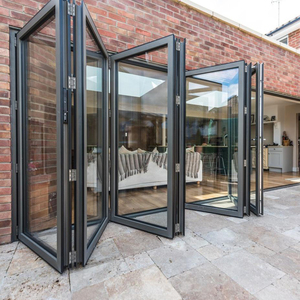
We eliminate friction between structural purlin contractors, cladding suppliers, and window/door vendors. As single-source manufacturers of CFS secondary steel, insulated sandwich panels, composite decking, and precision drip flashings, we ensure that every profile, seal, and fastener coordinates precisely on site.

Massive Scale & Fast-Track Delivery

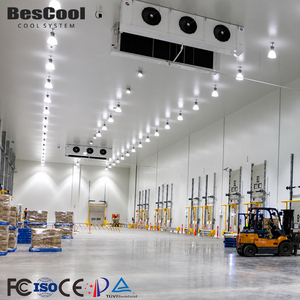
With an operational production capacity exceeding 10,000 square meters of composite panels daily alongside over 150 metric tons of roll-formed C/Z purlins and framing profiles, our plants reliably support tight project schedules across large logistics hubs, cold storage distribution centers, and industrial facilities.

Engineered for Hostile Microclimates

Our building components are engineered specifically to endure thermal shocks exceeding 50°C, extreme UV radiant degradation, coastal atmospheric salinity (ISO 12944 C4/C5 marine environments), and sandstorm abrasion, backed by comprehensive regional testing protocols.

Certified Mechanical & Metallurgical QA

Every coil undergoes rigorous raw material verification: spectrometry for chemical composition, universal tensile testing for yield, elongation, and ultimate tensile capacity, alongside electronic magnetic induction coating thickness testing. EN 10204 Type 3.1 Mill Test Certificates accompany all dispatches.

Custom CNC Geometry & Tooling Flexibility

Equipped with in-house precision roller die machining centers, our engineering team can fabricate proprietary cross-sectional geometries, custom returns, reinforced web ribs, and variable flanged purlins with zero reliance on outsourced re-tooling shops, slashing sample turnaround times.

Dedicated Global Project Management

Our bilingual structural engineers coordinate container nesting optimization, seaworthy moisture-proof packaging, breakbulk chartering, and technical approval submittals directly with international consulting firms, providing full support from structural design through commissioning.

Engineering Clarifications

Frequently Asked Questions on Cold Formed Steel Procurement

Direct answers to critical questions raised by structural consultants, project procurement heads, and quality inspectors.

Q1 How do you guarantee compliance with ASTM A1003, EN 10346, or AS/NZS 4600 structural standards?
We procure primary steel coils exclusively from premier state-owned and international blast furnace/EAF mills. Every heat number is verified through an automated laboratory protocol: chemical analysis (Carbon, Manganese, Phosphorus, Sulfur, and Silicon content), mechanical testing (0.2% offset yield stress, tensile strength, elongation percentage according to ASTM A370), and coating weight validation via triple spot testing. Full EN 10204 3.1 Mill Test Certificates (MTCs) and third-party inspection dossiers (SGS, TÜV, Bureau Veritas) are supplied prior to sea dispatch.
Q2 When should buyers specify Zinc-Aluminum-Magnesium (ZAM) versus traditional hot-dip galvanizing (Z275)?
Conventional hot-dip galvanizing ($Z275$, $275\text{ g/m}^2$ total both sides) is sufficient for indoor dry conditions and benign non-saline atmospheres (ISO 12944 C1 to C2). However, for coastal zones within 5 kilometers of the shoreline, agricultural chemical facilities, solar farms, or high-humidity tropical zones (C3 to C5 classifications), Zinc-Aluminum-Magnesium alloy coatings (such as PosMAC or SuperDyma with $ZM275$ or $ZM310$) are strongly recommended. ZAM offers 5 to 10 times higher corrosion resistance and features self-healing edge corrosion passivity over cut ends, completely preventing premature structural rust.
Q3 What are the practical span limitations and deflection criteria for cold-formed Z vs. C purlins?
$C$-purlins are typically applied in simply supported single-bay structures with purlin spacings spanning 4.5 to 6.0 meters. Because $C$-sections have unsymmetrical shear centers and cannot nest over supports, they must be spliced using separate sleeve plates. In contrast, $Z$-purlins are configured with asymmetric flange widths, allowing continuous lap nesting over intermediate structural rafters. This continuous structural action creates rigid negative moments at supports, substantially reducing mid-span deflection and allowing safe spans of 7.0 to 9.0 meters under typical wind uplift and dead load limits ($L/180$ to $L/240$).
Q4 How does the factory prevent "white rust" (wet storage stain) during multi-week ocean transport?
Zinc coatings are highly susceptible to galvanic moisture entrapment when bundled without ventilation. We implement a multi-barrier defense strategy: (1) Application of synthetic passivating chemical sealers or anti-corrosion light vanishing oils (oiled to 1000-1500 mg/m²); (2) Tight wrapping with multi-layer waterproof VCI (Volatile Corrosion Inhibitor) plastic membranes; (3) External protective corner steel protectors and galvanized metal strap banding; (4) Heavy desiccants inside shipping containers and timber skids elevated off container floorboards to prevent condensation pooling.
Q5 Can cold-formed steel framing achieve a certified 2-hour or 4-hour fire resistance rating?
Because light-gauge cold-formed steel sections have high surface-area-to-volume ratios, they lose 50% of their structural yield strength at temperatures around 550°C. To achieve certified 1-hour to 4-hour fire-resistance ratings under ASTM E119 or EN 1365-1, the steel frame must be encased in a non-combustible protective envelope. We achieve this by pairing structural CFS frames with our high-density Rockwool insulated sandwich panels or multiple layers of Type X gypsum/calcium silicate fire boards, combined with internal intumescent draft stops and mineral fiber cavity insulation.
Q6 What dimensional manufacturing tolerances are applied during high-speed cold roll forming?
Our fabrication follows the exacting limits defined in EN 10162 and the AISI North American Specification for the Design of Cold-Formed Steel Structural Members: Web depth ($H$) within $\pm0.8\text{ mm}$, flange width ($B$) within $\pm1.0\text{ mm}$, lip fold depth ($C$) within $\pm1.2\text{ mm}$, angular bend accuracy within $\pm1.5^\circ$, longitudinal camber/bow within $L/1000$ (max $5\text{ mm}$ over standard runs), and total overall length variation held strictly within $\pm1.5\text{ mm}$ via computer-controlled flying cut-off hydraulic shears.
Q7 What are the minimum order quantities (MOQ) and production lead times for custom profiles?
For standard profiles produced from stock structural steel coils (e.g., Q235B, S350GD, Z275 in gauges from 1.0 mm to 3.0 mm), the minimum order quantity is 5 metric tons per profile geometry. For bespoke custom widths, proprietary punch patterns, or specific coating specifications (e.g., PosMAC 350g or PVDF-coated coils), the typical master coil MOQ is 20 to 25 metric tons. Production lead times range from 10 to 18 working days from engineering shop drawing approval to port staging in Shanghai or Tianjin.
Q8 How are thermal bridge losses resolved when using cold-formed framing in low-temperature cold rooms?
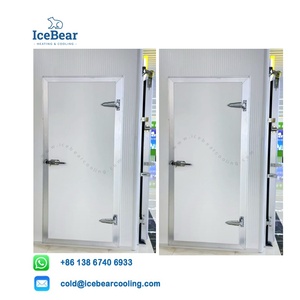
Unmitigated steel framing creates severe thermal pathways resulting in exterior condensation and refrigeration energy loss. We resolve this by integrating engineered high-density PVC or continuous high-load extruded polystyrene (XPS) thermal isolation shims (thermal break pads) between the purlin web and the composite panel clips. In dedicated cold rooms and blast freezers, through-fasteners are sleeved with synthetic isolating bushings, and tongue-and-groove joint boundaries feature factory-injected PIR cam-lock panels with impermeable labyrinths.
Q9 What container stuffing strategies are used to maximize freight economics for light sections?
Light gauge framing profiles can cause premature cubic volume exhaustion before weight limits are reached if shipped as open hollow shapes. Our logistics engineers configure computer-assisted 3D container packing simulations. $C$-channels and $Z$-sections are nested together into bundled rectangular units strapped with steel banding, matching the inner dimensions of standard 40ft High Cube (40HQ) containers. By combining dense purlin nests at the bottom with lightweight composite panels or ductwork on top, we regularly achieve container utilization rates above 92% of payload capacity.
Q10 Can your engineering office generate calculation sheets for municipal building code submittals?
Yes. Our structural technical department employs licensed civil engineers who generate full structural analysis reports (STAAD.Pro, SAP2000, Tekla Structural Designer, CFS design software) verifying section moment capacity ($M_n$), shear capacity ($V_n$), web crippling resistance ($P_w$), and deflection limits under localized load scenarios. Calculations can be formulated according to American AISI S100/ASCE 7, Eurocode 3 (EN 1993-1-3), or British Standard BS 5950-5 to facilitate quick local authority approval.

Streamlined Project Procurement

Request an Engineered Quotation for Your Commercial Envelope

Connect directly with our bilingual structural engineering division. Share your project blueprints, load cases, span tables, or architectural elevation drawings for a comprehensive manufacturing proposal and nested containerization plan within 24 hours.

Contact Us