Engineered Architectural Envelope Solutions

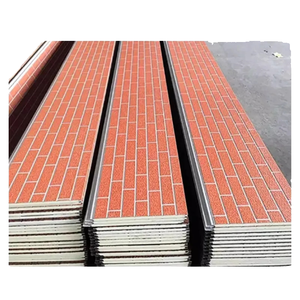
Top Trusted Facade Sandwich Panels Supplier & Exporters

Certified PIR, PUR, and High-Density Rockwool Composite Wall Cladding Systems Engineered for Superior Thermal Efficiency, Extreme Weather Resistance, and Global Project Compliance.

Factory-Direct Envelope Portfolio

Engineered Metal Cladding & Facade Systems

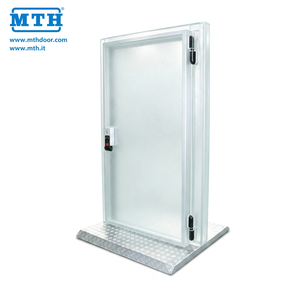
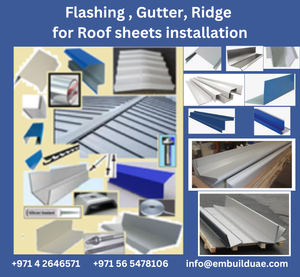
Precision-manufactured structural sandwich panels, profiled metal cladding, high-performance cold storage barriers, and CNC-bent architectural flashings tailored for international industrial and commercial infrastructure.

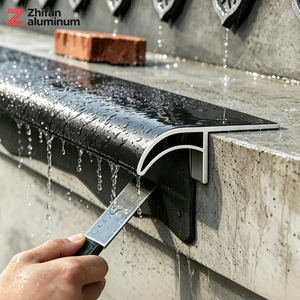
Coping & Capping Custom Aluminum Architectural Coping Profile

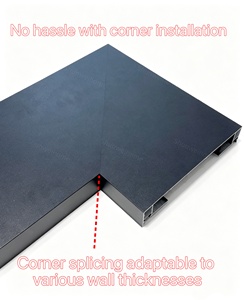
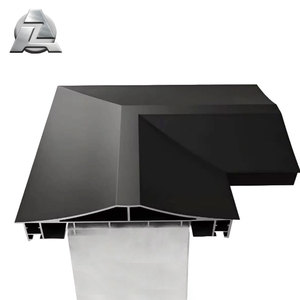
Custom Aluminum Architectural Coping Profile L-Shape Corner Capping

Modular L-shape parapet capping assemblies equipped with internal neoprene expansion brackets, allowing frictionless thermal movement while sustaining high wind uplift suction loads.

Wind Resistance:Meets ANSI/SPRI ES-1
Configurations:Welded Corners & Splices
Application:Facade Crest & Firewall
10,000 m²
Daily Continuous Output
Continuous 40-meter laminator lines in Muscat
550+
Major Projects Delivered
Across Oman, UAE, Saudi Arabia & Africa
0.020
Ultra-Low Thermal Lambda
W/m·K certified via guarded hot plate testing
100%
Quality Assurance Traceability
ISO 9001:2015 & Civil Defence certified
Technical Whitepaper: Architectural Facade Systems

High-Performance Facade Sandwich Panels: The Science of Composite Thermal Envelopes

Modern architectural facade engineering operates at the intersection of structural mechanics, thermodynamics, and life-safety mitigation. An insulated facade sandwich panel is fundamentally an engineered composite structural element: two high-tensile metal stress skins (pre-painted galvanized steel, alu-zinc, or architectural aluminum) are continuously bonded under high-pressure polymerization to an insulating, low-density shear core (PIR, PUR, or high-density basalt stone wool). This structural configuration produces an exceptional strength-to-weight ratio governed by classic sandwich beam theory, in which the external metallic facings absorb all primary axial tensile and compressive stresses, while the rigid core transfers horizontal shear forces and prevents premature local buckling of the micro-ribbed skins.

For international consultants, procurement directors, and tier-1 EPC contractors, specifying facade sandwich panels is an investment in whole-life building envelope performance. In extreme regional climates—such as the Arabian Gulf and equatorial Africa where surface skin temperatures regularly exceed 75°C under direct solar irradiance—our continuous manufacturing lines utilize high-crosslinked polyisocyanurate (PIR) formulations with an isocyanate index exceeding 250%. This advanced chemical structure establishes a robust, highly stable polymeric matrix that delivers superior dimensional stability, low thermal expansion coefficients, and an intrinsic ability to form an insulating, protective char layer when exposed directly to fire.

Furthermore, air infiltration and moisture vapor ingress represent the leading causes of premature structural failure in facade envelopes. Our automated edge-milling processes produce micrometer-accurate double tongue-and-groove joint profiles with factory-injected capillary barriers and non-curing butyl seals. This labyrinthine interlocking joint eliminates continuous linear thermal bridges, prevents interstitial condensation within cold-chain or air-conditioned interior spaces, and satisfies the stringent airtightness thresholds prescribed by LEED v4.1, Estidama, and international ASHRAE 90.1 energy conservation mandates.

Envelope Performance Benchmarks

  • Superior Thermal Decoupling (U-Value down to 0.11 W/m²K) Continuous PIR cores minimize cooling HVAC electricity loads by up to 38% in desert environments compared to site-assembled built-up walls.
  • Certified Reaction to Fire (EN 13501-1 Class B-s1,d0 / Rockwool A2-s1,d0) Self-extinguishing charring kinetics, minimal smoke obscuration, zero burning droplets, and compliance with Civil Defence fire codes.
  • High Dynamic Wind Load Resistance (Up to 3.5 kN/m²) Concealed-fastener load distribution plates anchor directly into structural steel girts to withstand severe cyclonic negative suction pressures.
Engineering Material Selection Guide

Comparative Technical Core Matrix

Rigorous selection of the core insulation material determines the building envelope's acoustic dampening, structural spans, and life-safety fire resistance profile.

Insulation Core Type Thermal Conductivity (λ) Fire Reaction Rating Density (kg/m³) Acoustic Reduction (Rw) Primary Industrial Application
PIR (Polyisocyanurate Foam) 0.020 - 0.022 W/m·K Class B-s1,d0 (EN 13501-1) / FM 4880 Class 1 40 - 42 kg/m³ 25 - 28 dB Logistics hubs, commercial towers, airports, industrial roofs requiring maximum thermal insulation with low dead load.
PUR (Polyurethane Foam) 0.023 - 0.025 W/m·K Class B2 / B3 (DIN 4102) 38 - 40 kg/m³ 24 - 26 dB Cost-effective agricultural sheds, secondary warehousing, and general modular shelters.
Structural Mineral Rockwool 0.038 - 0.042 W/m·K Euroclass A1 / A2-s1,d0 Non-Combustible 100 - 120 kg/m³ 32 - 36 dB Fire separation walls, power plants, oil & gas refineries, chemical manufacturing, and high-occupancy sound barriers.
Cold Storage Specialized PIR 0.020 - 0.021 W/m·K Self-Extinguishing (ASTM E84 Class A) 42 - 45 kg/m³ 26 - 29 dB Freezer facilities (-40°C), pharmaceutical cold rooms, food logistics centres requiring cam-lock or deep tongue-and-groove jointing.
Strategic Sourcing Analysis

Future Procurement Trends in Architectural Facades (2025–2035)

How evolving green building taxonomies, digital manufacturing integrations, and regional supply chain nearshoring are reshaping facade envelope specifications.

1. Decarbonization & Third-Party EPD Verification

Global procurement teams now require Type III Environmental Product Declarations (ISO 14025) to quantify embodied carbon under Scope 1, 2, and 3 emissions. Leading architectural specifications mandate the use of Electric Arc Furnace (EAF) low-carbon steel skins and bio-circular polyol chemistries that reduce product cradle-to-gate Global Warming Potential (GWP) by up to 30% without sacrificing mechanical shear strength or thermal conductivity.

2. Concealed Fastener Systems & Bioclimatic Micro-Ribs

Traditional through-fastened panels are rapidly being replaced by architecturally refined concealed-fix secret systems. By enclosing heavy-gauge stainless steel distribution clips within an extended joint lip, the facade eliminates external screw penetrations, removes potential galvanic corrosion points, and preserves a clean monolithic appearance while seamlessly accommodating thermal expansion and high cyclic negative wind pressures.

3. Regional Manufacturing Hubs & Supply Chain Resilience

Global logistics instability and soaring multimodal shipping fees have driven EPC contractors toward sovereign manufacturing centers located along strategic maritime and overland trade lanes. Sourcing directly from high-capacity GCC manufacturing hubs allows delivery times to be compressed from 16–20 weeks to under 3 weeks across the Middle East and Africa, slashing project finance overheads and lead-time risks.

Manufacturing Precision

Technological Evolution in Continuous Lamination

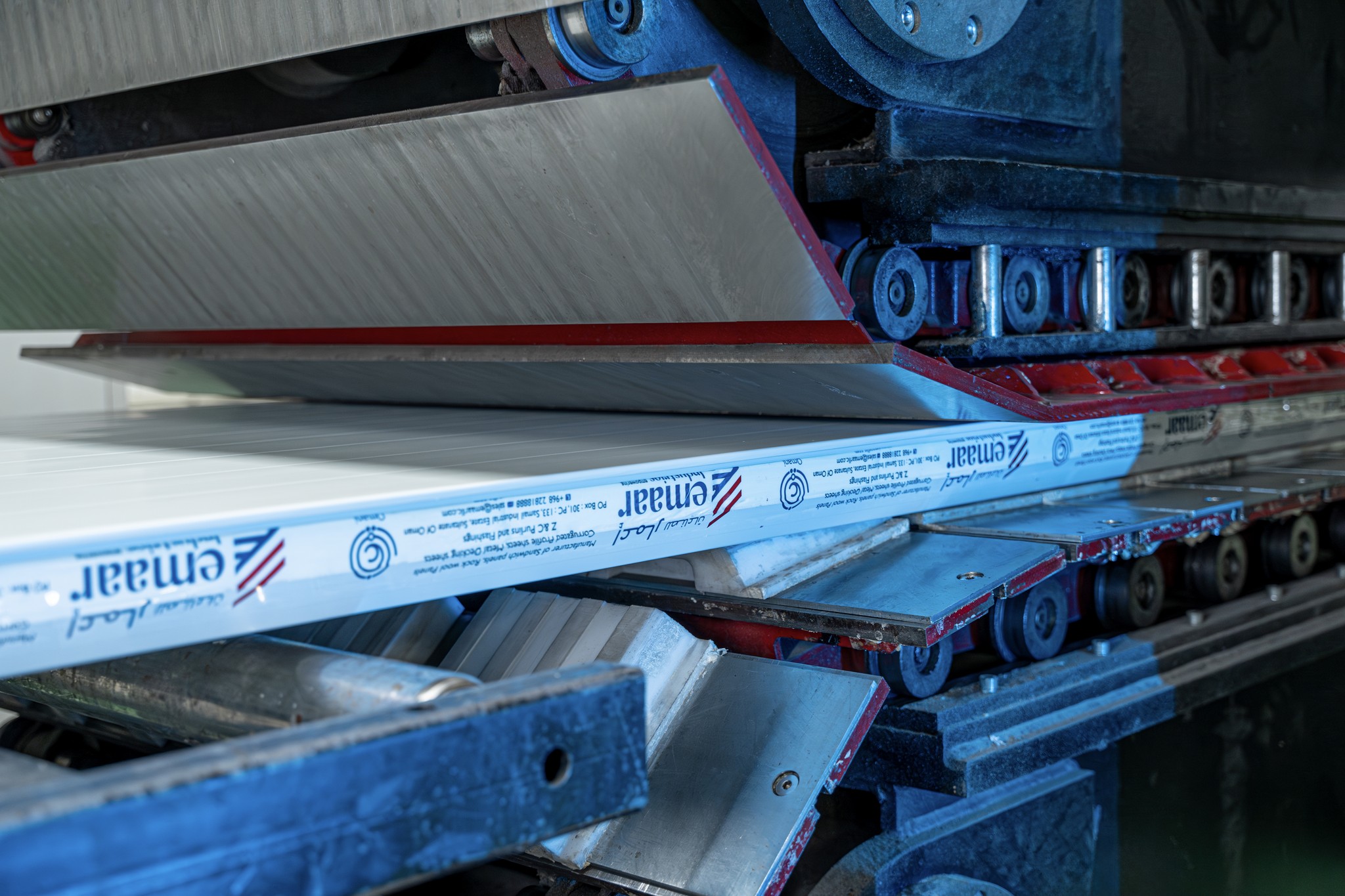
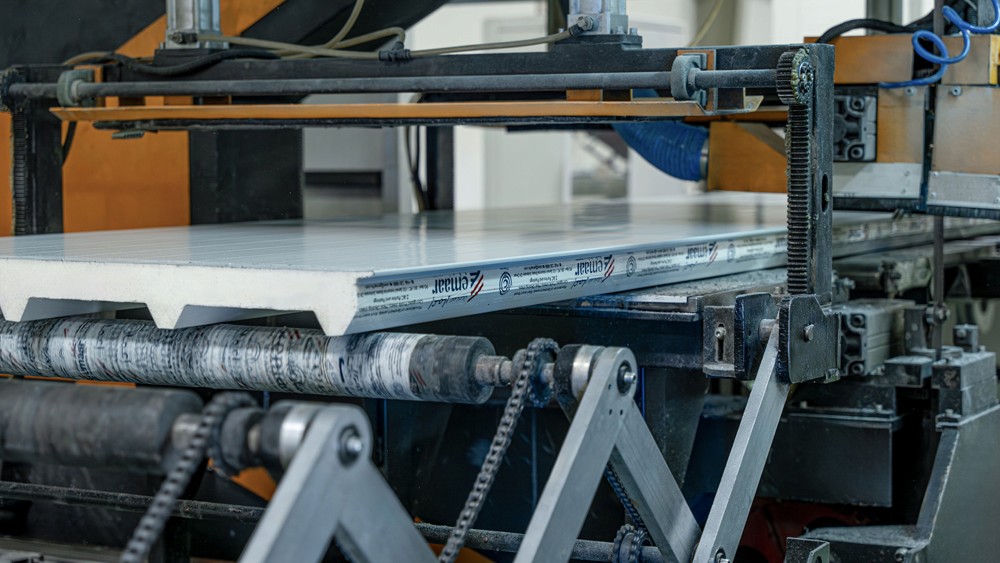
State-of-the-art continuous double-belt lines guarantee homogenous core density, molecular cross-linking, and permanent metallic skin adhesion.

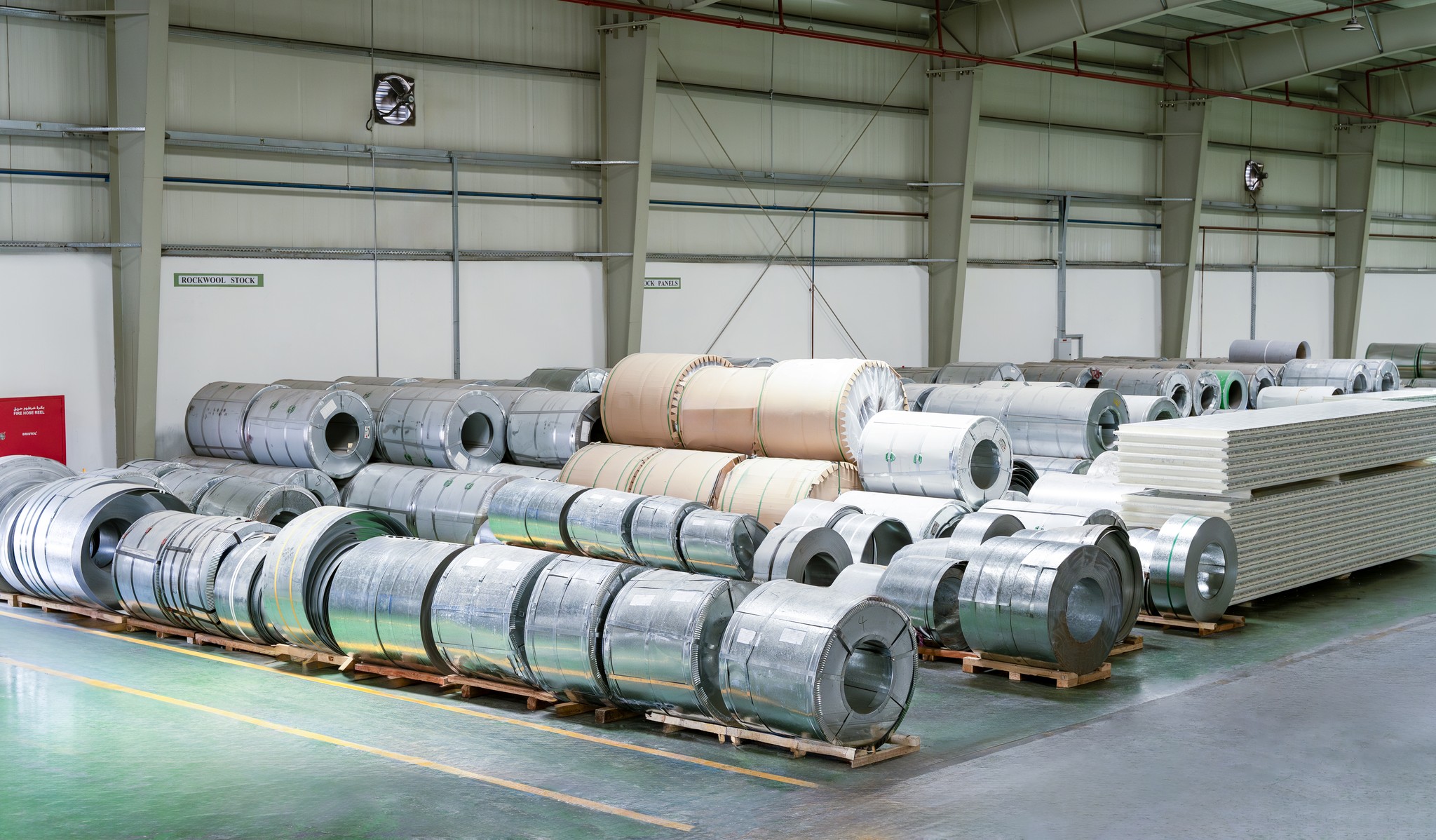
Multi-Tier Coil Metallurgy

We process continuous coils of high-strength structural steel coated with 55% Aluminum-Zinc alloy (Galvalume) and specialized Polyvinylidene Fluoride (PVDF 70/30 Kynar 500) or Super Durable Polyester (HDP) finishes. This ensures extreme UV barrier performance (RUV4) and C4/C5 marine atmospheric corrosion endurance.

High-Pressure Metering & Curing

Computer-controlled robotic mixing heads dispense exact stoichiometric balances of polyol, polymeric MDI isocyanates, and fourth-generation blowing agents (HFO zero-ODP, GWP<1). Panels undergo pressurized thermal curing across a 40-meter continuous double conveyor to prevent micro-voids and core delamination.

Automated CNC Precision Trims

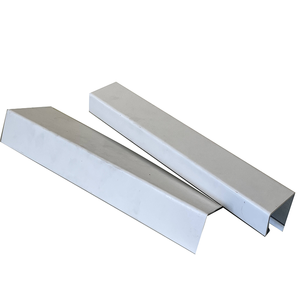
A high-performance facade relies on precision perimeter sealing. Our dedicated cold-rolling and CNC hydraulic bending workshops manufacture custom parapet copings, eagle-beak drip trims, corner closures, and window interfaces designed to eliminate on-site field cutting and guarantee weather-tight envelope integration.

Get Catalog
The Emaar Industries Advantage

Why Major Contractors & EPC Firms Trust Our Engineering

With over 550 landmark projects completed across the GCC and African markets, we merge sovereign manufacturing control with certified international quality benchmarks.

Integrated Envelope Ecosystem

We supply not just wall panels, but the complete secondary structural framework: PIR/Rockwool facade panels, matching insulated roof decks, cold-rolled galvanized C & Z purlins, metal floor decking, and customized flashings from a single engineering point of contact.

Rapid Gulf & African Logistics

Situated in Muscat, Oman, our manufacturing plant provides unhindered deep-sea port access and direct overland transit corridors to the UAE, Saudi Arabia, Qatar, Bahrain, and East Africa, eliminating Suez canal delays and high ocean freight surcharges.

Rigorous Submittal Documentation

We equip project procurement teams with complete consultant-ready submittal dossiers: factory test certificates (EN 10204 3.1), structural span load calculations, acoustic test reports, fire reaction documentation, and 3D architectural shop drawings.

Engineered for Severe Climates

Our composite panels are formulated specifically to withstand blistering 50°C summer conditions, 95% coastal humidity, and extreme sand abrasion. Specialized coating chemistries ensure zero surface blistering, chalking, or delamination across 25+ year design lives.

ISO Certified Manufacturing & Global Compliance Standards Manufactured in full compliance with ISO 9001:2015, ISO 14001:2015, and ISO 45001:2018 management systems.
Emaar Industries Certified Quality Marks
Technical Procurement Support

Frequently Asked Engineering Questions

Direct, data-driven answers to the most critical technical and commercial questions encountered during facade sandwich panel specification and bulk procurement.

What are the key technical criteria for choosing between PIR and Rockwool for external facades?
The decision is governed primarily by building occupancy classifications, required fire-resistance periods, and target U-values. PIR (Polyisocyanurate) is chosen when thermal performance and structural weight are the main considerations. Offering a thermal conductivity of λ = 0.022 W/m·K, a 100mm PIR panel achieves a low U-value of 0.22 W/m²K at an areal weight of only ~13 kg/m². Structural Rockwool (λ = 0.040 W/m·K) is required where local Civil Defence codes mandate non-combustible building materials (Euroclass A1/A2-s1,d0), fire barrier separation ratings of 1 to 4 hours (EI 60 to EI 240), or high acoustic dampening (Rw > 33 dB), though at a higher panel weight of ~22-26 kg/m².
How does continuous PIR foam core prevent interstitial condensation in tropical coastal regions?
In humid coastal zones, high exterior vapor pressure drives moisture toward air-conditioned interior spaces. Because closed-cell PIR foam has a closed-cell ratio exceeding 95%, water vapor diffusion through the core is virtually zero. When combined with continuous metallic steel facings (acting as total vapor barriers with an equivalent air layer thickness sd > 1500m) and precision double tongue-and-groove joint seals, water vapor cannot penetrate the panel assembly, preventing hidden interstitial condensation and fungal contamination.
What span-to-deflection ratios should be specified for industrial envelope facades under dynamic wind loads?
Under EN 14509 and standard structural engineering practice, permissible vertical and horizontal deflection limits for wall panels subject to ultimate serviceability limit state (SLS) wind suction are typically set at L/200 for industrial structures and L/300 for high-end commercial facades or curtain-wall backing systems. For an intermediate girt spacing of 3.0 meters, an L/200 deflection ceiling permits a maximum lateral displacement of 15mm under design wind pressure without causing joint disengagement or permanent core shear failure.
Which coil coating chemistry is recommended for severe marine and high-UV environments?
For sites located within 3 km of seawater or subject to annual UV radiation indexes above 180 kLy/year (such as the Gulf and African coasts), standard 25μm Polyester (PE) coatings are inadequate. We recommend PVDF (70/30 Polyvinylidene Fluoride) or High Durable Polyurethane (HDP / Polyurethane with Polyamide particles, 50μm). These resin formulations provide exceptional resistance to photochemical degradation (Florida exposure test compliant) and salt-spray corrosion (ASTM B117 > 1500 hours), backed by warranty periods of 20 to 25 years.
How are thermal expansion and bi-metallic distortion managed in long-span dark-colored wall panels?
When dark external skins (RAL 7016, 9005) reach 80°C in direct sun while interior temperatures are held at 22°C, the temperature differential causes thermal curvature (thermal bowing). To mitigate this, our engineering team specifies maximum panel lengths (typically ≤ 7.5 meters for dark colors), utilizes slotted concealed-fastening clips that permit longitudinal slip, and integrates internal stress-relieving micro-groove skin profiles to absorb thermal expansion without buckling the face sheet.
What packaging protocols protect sandwich panel shipments during multimodal containerized export?
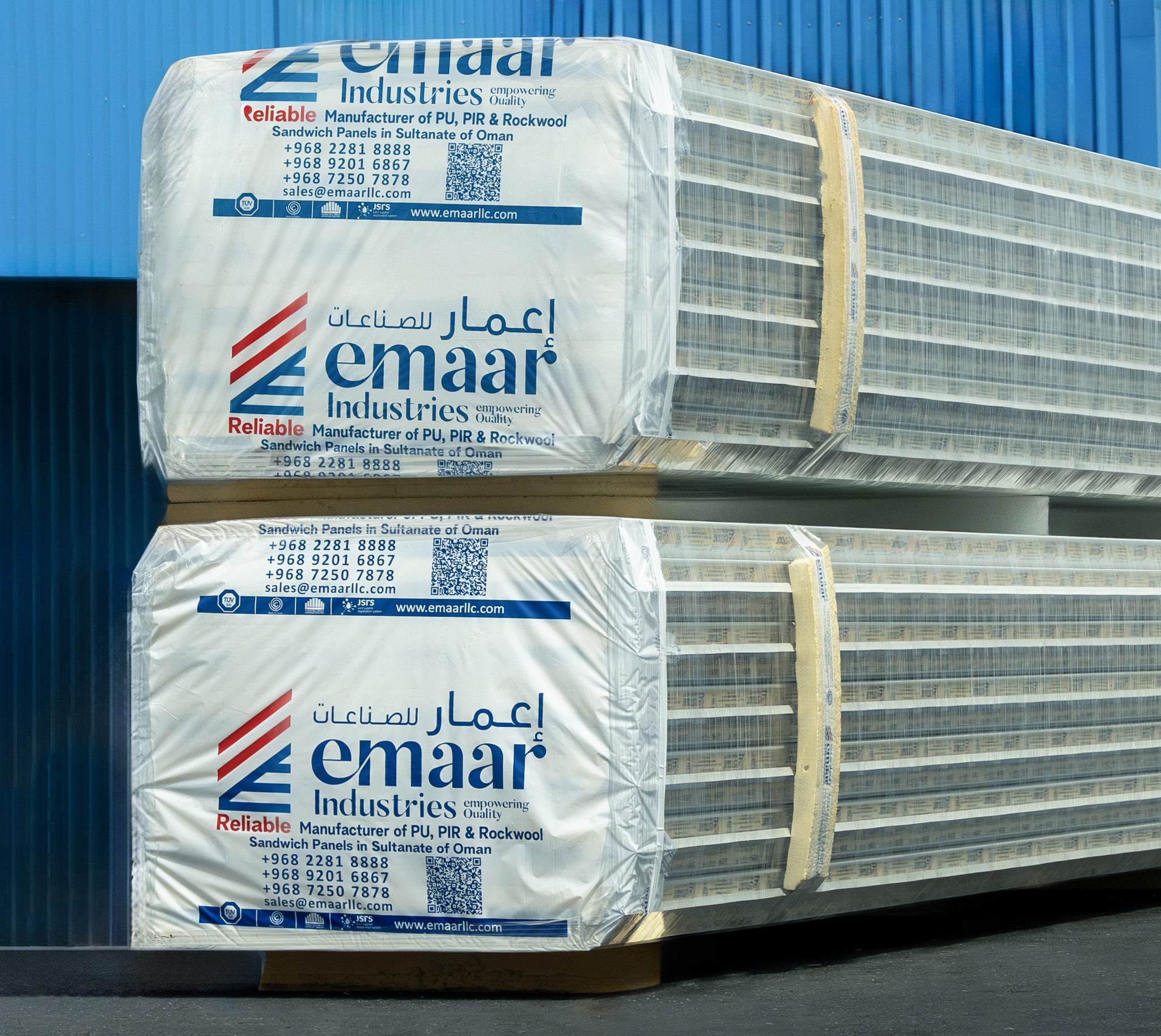
Export bundles are wrapped with heavy-gauge polyethylene heat-shrink films, padded with rigid EPS corner protectors, and banded onto treated timber bearers designed for forklift and spreader-beam crane discharge. High-tack peelable protective films (50-70μm) cover both steel skins to protect against scratching during transport, remaining fully UV-stable for clean site removal within 60 days of installation.
Engineering Support & Technical Submittals

Initiate Your Facade Procurement Specification

Request comprehensive engineering datasheets, third-party fire certificates, physical sample cases, or customized container freight estimates for your project development.