
Manufactured using CNC-controlled hydraulic folding and automated continuous roll-forming lines. Explore our core building envelope sealing profiles and temperature-controlled architectural solutions.
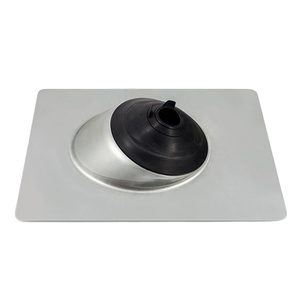
Heavy-gauge G90 galvanized penetration boot profile designed for high-angle industrial vent pipes, ensuring watertight compression sealing on profiled metal roofs.
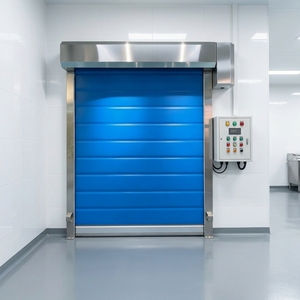
Engineered with thermal-break perimeter flashings, heated thresholds, and high-density polyurethane cores for zero-condensation cold logistics facilities.
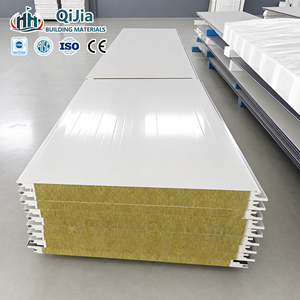
Non-combustible stone mineral wool panels designed to interface with customized eave and corner gutter trim profiles for verified industrial fire safety.
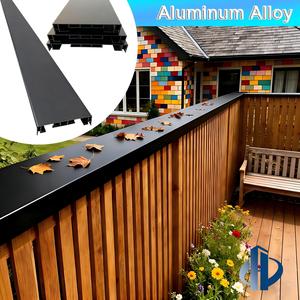
Extruded and roll-formed architectural aluminum drip flashings featuring capillary breaks to project water runoff clear of structural wall substrates.
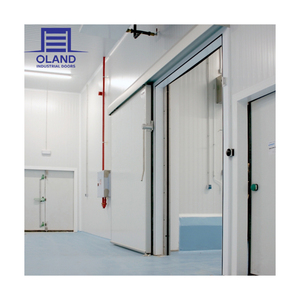
Heavy-duty cold room sliding door integrated with precision stainless steel canopy flashings and overhead deflector gutters for industrial processing zones.
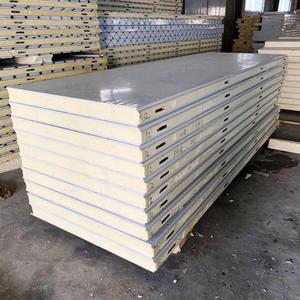
High-density polyurethane core insulated cladding panels with matched external drip flashings and internal hygiene coving profiles for global refrigeration projects.
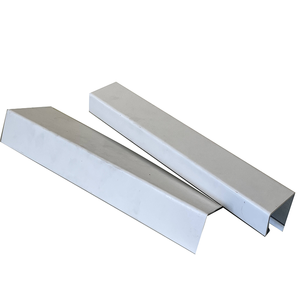
Engineered coping trim with pre-punched thermal expansion slots and continuous drip hem geometry, halting capillary moisture migration on high-rise parapets.
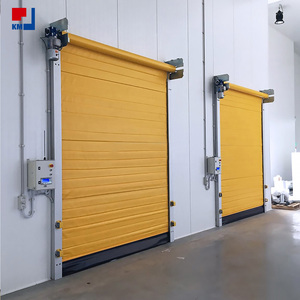
Food-contact safe 304/316 grade stainless steel insulated door units complete with sill flashing profiles and heavy-duty hygienic threshold transition profiles.
In modern industrial, commercial, and cold-storage construction, the roof perimeter represents the most vulnerable interface for dynamic wind shear, moisture capillary siphonage, and structural degradation.
Roof flashings and rainwater dissipation systems cannot be treated as decorative edge closures. When exterior storm winds exceed 100 km/h, negative pressure (wind uplift) develops along roof eaves and parapet transitions under Bernoulli’s aerodynamic principle. Without engineered gutter flashing profiles and continuous drip aprons featuring negative return hems, water is drawn upward into roof panel seams and insulation cores via capillary siphonage. As a leading manufacturer based in Muscat, Oman, our production lines fabricate profiles specifically engineered to arrest wind-driven rain penetration, manage severe thermal cycling, and provide seamless water transition into perimeter drainage channels.
Our manufacturing protocols encompass high-grade DX51D, S280GD, and S350GD structural hot-dip galvanized steel, Aluzinc (AZ150/AZ200) coatings, and architectural-grade AA3003-H14 / AA5052-H32 aluminum alloys. By combining heavy-tonnage CNC press braking with automated continuous roll-forming lines, we ensure uniform bend radiuses without micro-fracturing the paint substrate, preserving corrosion resistance across decades of extreme Gulf sun, salt fog, and industrial pollution.
Standard flat sheet flashings allow water to creep horizontally between laps via surface tension. Our gutter flashings feature continuous roll-formed anti-capillary grooves and 15mm safety kick-out hems that mechanically break water cohesion, discharging runoff directly into gutter centers.
In hot desert environments where surface metal temperatures oscillate between 15°C at night and 85°C at midday, longitudinal thermal expansion can buckle rigid flashings. We manufacture concealed sliding clips and slotted fastener profiles that permit free axial expansion without fastener tear-out.
Our gutter flashing designs seamlessly integrate with PIR, PUR, and Rockwool insulated sandwich panels, metal decking, and single-skin trapezoidal profiles, ensuring a tight acoustic, thermal, and vapor seal across cold store chillers and massive logistics complexes.
Choosing the correct alloy gauge, zinc mass, and topcoat chemistry is essential to prevent premature envelope failure. Review our standard engineered flashing grades below.
| Profile Designation | Material Core & Base Metal | Protective Coating Options | Gauge Range (BMT) | Target Architecture | Corrosion Rating |
|---|---|---|---|---|---|
| Eave Gutter Apron Flashing | DX51D Galvanized / Aluzinc AZ150 | PVDF 70/30 (25µm) / Super Durable Polyester | 0.50 mm – 0.80 mm | Industrial PEB Warehouses, Metal Roofing | ISO 12944 C4 High |
| Parapet Drip Edge Coping | Marine Alloy AA5052-H32 Aluminium | Class 1 Architectural Anodized / PVDF Kynar | 1.20 mm – 2.00 mm | Commercial Office Towers, Hospital Parapets | ISO 12944 C5-M Extreme |
| Heavy Internal Valley Gutter | S350GD High-Yield Structural Steel | 275 g/m² Zinc / Plastisol 200µm Heavy Barrier | 1.00 mm – 1.50 mm | Multi-Bay Logistics Centers, Aircraft Hangars | Severe Chemical & Runoff |
| Cold Room Thermal Break Trim | AISI 304 / 316 Stainless Steel or Pre-Painted GI | Food-Grade Anti-Bacterial PVDF / Plastisol | 0.60 mm – 1.00 mm | Food Processing Chillers, Pharma Freezers | Hygienic Cleanroom Spec |
| Counter & Reglet Sidewall Flashing | Al-Zn Alloy Coated Steel (Galvalume) | Silicone Modified Polyester (SMP) | 0.55 mm – 0.75 mm | Masonry-to-Roof Transitions, Brick Abutments | ISO 12944 C3/C4 |
How international MEP contractors, procurement managers, and façade consultants are optimizing their building envelope supply chain over the next five years.
Global developers are enforcing ESG standards (such as LEED v4.1, BREEAM, and GCC Mostadam certifications). Flashing procurement is rapidly moving away from unverified secondary steel toward certified EAF (Electric Arc Furnace) steel coils and low-carbon aluminum, reducing embodied carbon by up to 45% while preserving 50-year structural life expectancies.
Traditional manual sheet bending on construction sites introduces gauge stretching, coating hairline cracks, and inconsistent drip hem geometries. Leading EPC contractors are now purchasing pre-punched, factory-mitered flashing systems with laser-cut interlocking tabs, slashing site installation labor hours by up to 60% and eliminating installation rework.
Due to rising ambient temperatures in the Middle East and African trade corridors, flashing specifications now prioritize high Total Solar Reflectance (TSR > 70%) pigments. Formulations incorporating inorganic fluoropolymer resin (FEVE and PVDF) resist intense UV degradation, color fading, and chalking while resisting fine dust and sand abrasion without gloss loss.
With stringent building envelope energy codes, flashings connecting roof sandwich panels to external gutters are now engineered with integrated EPDM thermal separator strips and non-conductive mechanical isolators. This prevents condensation dripping inside perimeter interior walls and protects PIR/Rockwool panel core integrity.
Headquartered in Muscat, Oman, Emaar Industries operates state-of-the-art continuous panel, roll-forming, and sheet metal fabrication plants, serving as the single-source envelope partner for landmark projects.
Direct overland transit routes to the United Arab Emirates, Saudi Arabia, Qatar, Kuwait, Bahrain, and expedited sea shipping to African ports from modern Omani ports.
Eliminate supplier finger-pointing. We manufacture the complete envelope: PIR/PUR & Rockwool panels, cold storage doors, metal decking, Z & C purlins, and custom flashings.
ISO certified operations, Civil Defence certified assemblies, and rigorous quality control testing including T-bend adhesion, salt spray corrosion, and coating dry film thickness.
10,000 m² daily panel output and high-speed CNC folding units guarantee on-time delivery schedules for mega-projects, eliminating costly job-site standing downtime.
Ensure your procurement requisitions include these 6 engineering parameters to eliminate submittal rejections and guarantee watertight compliance.
In-depth engineering answers covering manufacturing tolerances, metallurgical selection, and envelope integration standards.
Capillary action occurs when water enters narrow contact zones (less than 1.5mm) between overlapping metal sheets, moving against gravity due to atmospheric pressure differences and surface tension. Our precision roll-formed gutter flashings solve this by incorporating an integrated anti-capillary break—a longitudinal groove that increases joint spacing beyond the threshold of capillary draw. In addition, the bottom edge features a machine-crimped safety hem that forces rainwater to coalesce into heavier droplets and fall cleanly into the gutter trough rather than migrating backward across the roof purlins or wall cladding.
In coastal marine zones (ISO 12944 Category C5-M, common across GCC port cities such as Sohar, Duqm, Jebel Ali, and Dammam), standard Z120 galvanized steel will suffer rapid premature corrosion within 24–36 months. We recommend either marine-grade aluminum alloy AA5052-H32 (1.20mm to 1.50mm gauge) with architectural PVDF coating or Aluzinc AZ150/AZ200 (minimum 0.70mm BMT). For heavy chemical processing, fertilizer plants, or acid environments, AISI 316 grade stainless steel provides the highest structural longevity.
Steel expands at approximately 0.012 mm/m/°C, while aluminum expands at nearly double that rate (0.024 mm/m/°C). In regions where annual peak metal temperatures swing by 60°C, a 12-meter flashing run can expand by 8mm to 17mm. Fastening flashings rigidly with exposed face screws will cause severe oil-canning (buckling) and fastener shear. Our engineering team designs systems utilizing two-piece interlocking slip cleats or pre-slotted fastener channels, paired with non-curing neutral butyl sealing tape, allowing free axial sliding movement while preserving 100% airtight and watertight integrity.
While a basic drip edge is an L-shaped flashing designed primarily for steep-slope residential roofs, a commercial gutter apron is a heavy-gauge, multi-bend profile engineered for low-slope metal roofs and industrial sandwich panel assemblies. A gutter apron extends significantly further back onto the roof deck (typically 100mm to 150mm), rests under the panel eave, and incorporates an extended downward drop leg that plunges directly into the box gutter profile. This geometry prevents wind-driven storm water from washing back underneath the roof panels during high-wind rain events.
When aluminum and carbon steel come into direct contact in the presence of an electrolyte (such as coastal humidity or rainwater), galvanic corrosion rapidly attacks the aluminum. To prevent this, our installation details specify non-conductive isolation barriers: synthetic high-density EPDM separator tapes, dielectric neoprene washer assemblies, or 300-series austenitic stainless steel self-drilling fasteners. Direct contact between raw carbon steel fasteners and aluminum profiles is strictly eliminated in certified submittals.
Yes. Because Emaar Industries manufactures both insulated sandwich panels and cold-rolled flashing profiles in the same industrial complex, we source primary coil master stock from identical coating runs. Whether your project specifies RAL 9002 (Grey White), RAL 9006 (White Aluminum), RAL 7016 (Anthracite Grey), or custom architectural brand colors, we guarantee a 100% specular gloss and Delta-E color match across all roof panels, wall facades, parapet trims, and eave flashings.
Every shipment is accompanied by comprehensive EN 10204 Type 3.1 Mill Test Certificates verifying base metal yield strength, chemical composition, and coating mass. Furthermore, we provide third-party laboratory test reports validating: ASTM B117 salt spray corrosion resistance (up to 3,000 hours), ASTM D4145 flexibility T-bend adhesion, ASTM D3363 pencil hardness, and regional Civil Defence non-combustibility approvals for fire-rated building envelope submittals.
Whether you require standard eave gutter profiles, heavy-duty parapet drip trims, or specialized custom-engineered flashing details for mega-scale industrial complexes, our technical engineering team in Muscat is ready to assist with CAD details, load calculations, and competitive factory-direct pricing.
Our sales engineers respond to project questions during working hours (GST+4).