
Direct from our high-capacity Muscat manufacturing plant. Explore certified cold storage substrates, continuous-core insulated sandwich panels, and cold-formed framing elements configured to your exact architectural submittals.
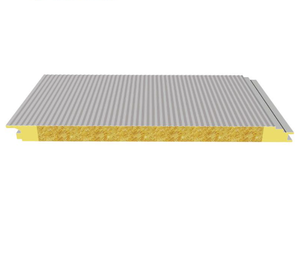
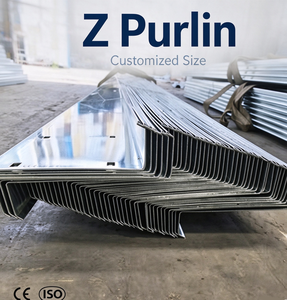
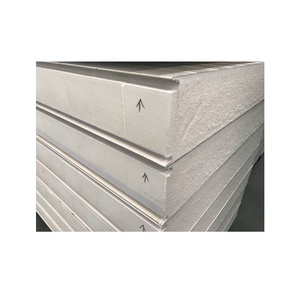
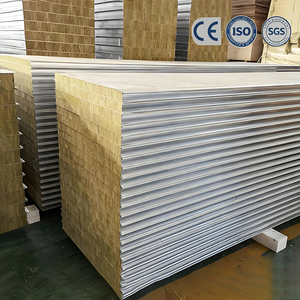
An authoritative analysis of thermal dynamic movement, wind uplift resistance (ASTM E1592 / FM 4471), metallurgical coating durability, and total envelope integration for critical infrastructure.
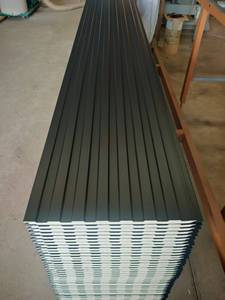
Traditional through-fastened screw profiles inevitably fail in desert climates where daily surface temperatures cycle between 12°C at dawn and 82°C at peak solar noon. This thermal delta of over 70°C induces severe linear expansion stresses. Standing seam systems engineered with raised vertical seams (typically 25mm to 65mm in height) utilize two-piece movable sliding clips.
Depending on project geography and wind shear topography, standing seam profiles bifurcate into architectural Snap-Lock profiles and structural Mechanically Seamed profiles. For high-velocity cyclonic zones, coastal installations, and low slopes down to 1.5° (1:40 pitch), continuous 360° Pittsburgh double-lock seams are formed using automated electric roll-seamers on site.
Industrial roofs deployed along the Persian Gulf, Red Sea, and Indian Ocean are subjected to extreme ambient humidity combined with hypersaline airborne aerosols. Emaar Industries utilizes 55% Aluminum-Zinc alloy coated steel (Galvalume AZ150/AZ200) and premium 3000/5000-series architectural aluminum coils finished with 70% Kynar 500 / Hylar 5000 PVDF or high-durability fluoropolymer resins.
Compare engineering configurations across standing seam and composite panel assemblies to determine the optimum profile for span requirements, wind load zones, and fire compartmentation.
| Profile Specification | Seaming Mechanism | Minimum Pitch | Material & Yield (Fy) | Thermal / Core Coupling | Target Architectural Applications |
|---|---|---|---|---|---|
| Snap-Lock SL-38 | Concealed Clip Snap Interlock | 3.0° (1:20) | 0.50–0.70mm Galvalume / Fy 350 MPa | Decking + XPS / PIR Underlayment | Commercial facades, institutional sloped roofs, sports pavilions |
| Mechanical MS-50 (180°) | Single-Fold Mechanically Crimped | 2.0° (1:30) | 0.55–0.75mm Al-Zn / Fy 380 MPa | Purlin Sub-frame + Glasswool Blanket | Logistics hubs, light industrial manufacturing facilities |
| Double-Lock MS-65 (360°) | Full Pittsburgh Double Seam | 1.5° (1:40) | 0.60–0.80mm Al-Zn or Aluminum AA3004 | Composite PIR / Rockwool Deck System | Low-slope aircraft hangars, mega-warehouses, coastal terminals |
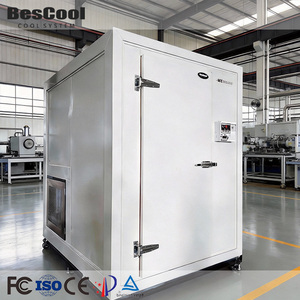
| Insulated Standing Seam | Hybrid Raised Seam + PIR/PUR Core | 2.0° (1:30) | Dual G90 Steel / 0.50mm + 0.40mm | Injected PIR Rigid Core (40-42 kg/m³) | Temperature-controlled distribution centers, cold storage |
| Fire-Safe Acoustic Seam | Mechanically Locked over Mineral Core | 2.5° (1:25) | 0.60mm Steel Exterior + Perforated Liner | High-Density Lamella Rockwool (120 kg/m³) | Power stations, turbine rooms, chemical refineries, sound stages |
Strategic procurement shifts observed across EPC contractors, sovereign wealth developments, and regional industrial developers in the Middle East and African markets.
Tier-1 contractors are rapidly abandoning multi-vendor sourcing where standing seam panels, secondary Z/C purlins, structural floor decking, and cold storage panels originate from separate fabricators. Sourcing the entire building envelope from a single sovereign manufacturer mitigates interface clash risks, streamlines engineering submittals, and unifies warranty liabilities under one corporate roof.
Recent geopolitical chokepoints and volatile sea freight rates have rendered 60-day oceanic shipping from East Asia financially risky for fast-track projects. Procurement teams prioritize regional GCC manufacturers with localized coil inventories who guarantee overland trailer deliveries within 48 to 72 hours directly to construction laydown areas across Oman, UAE, and KSA.
Regional sustainability mandates (such as Estidama, Saudi Green Initiative, and LEED v4.1 certification requirements) require environmental transparency. Procurement tenders increasingly require third-party Type III Environmental Product Declarations (EPD) proving low embodied carbon in cold-formed steel and zero-ODP / ultra-low GWP blowing agents in rigid insulation cores.
Consultants now expect manufacturers to provide native Autodesk Revit BIM models (LOD 350 to 400) containing exact panel profile geometries, thermal bridging data, structural clip reaction coefficients, and digital bill-of-materials scheduling. This eliminates manual takeoff discrepancies and enables clash detection before roll-forming starts.
How continuous manufacturing automation, specialized metallurgy, and photovoltaic integration are redefining industrial roof performance.
The global push for rooftop solar energy has made roof envelope penetrations unacceptable. The modern evolution pairs standing seam vertical ribs with aerospace-grade anodized aluminum clamping systems (S-5! compliant). These mechanically clamp onto the seam with zero structural piercing, preserving warranty watertightness while supporting heavy photovoltaic arrays under extreme wind uplift.
Next-generation Polyisocyanurate (PIR) cores feature isocyanate-to-polyol molar ratios exceeding 250%. This cross-linked polymer matrix develops an intrinsic carbonaceous char layer when exposed to fire. This technology eliminates toxic halogenated flame retardants while achieving exceptional Euroclass B-s1, d0 fire reaction and low thermal conductivity (λ = 0.022 W/m·K).
To eliminate risky end-lap joints on massive airport terminals, logistics hubs, and power generation halls, continuous mobile roll-forming machines are lifted directly onto eaves level via specialized crane platforms. Panels measuring in excess of 60 meters can be cold-formed in one single, continuous run without a single transverse seam, ensuring zero risk of water penetration.
Utilizing microscopic ceramic beads and high-emissivity inorganic pigment chemistry, modern coil coaters produce dark and neutral color tones that still reflect over 70% of near-infrared solar radiation. This prevents excessive heat flux through roof assemblies into refrigerated cold storage or commercial spaces, cutting annual facility cooling expenditures by up to 22%.
Headquartered in Al Khuwair, Muscat, we combine industrial-scale roll-forming lines, multi-density sandwich panel plants, and rigorous QA laboratories to deliver high-performance metal building envelopes.
Our multi-line production campus in Oman houses automated continuous sandwich panel lines, high-speed purlin mills, and precision roll-formers. We can fulfill fast-track industrial orders of 50,000+ m² without bottlenecking project schedules.
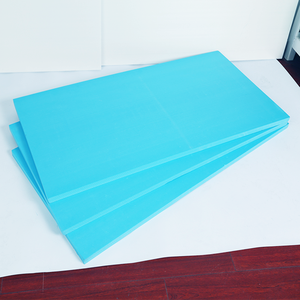
Unlike single-product suppliers, we formulate and manufacture PIR, PUR, Stone Rockwool, and heavy XPS systems under one roof. We give neutral, objective engineering advice tailored to your project's balance of fire ratings and thermal U-values.
Every production batch is accompanied by EN 10204 3.1 Mill Test Certificates, mechanical pull-out test data, density checks, and fire-reaction documentation approved by Civil Defence and international consultants across the GCC.
With dedicated technical offices in Oman, the UAE, Qatar, and Saudi Arabia, our logistics team manages overland flatbed transport, customs clearances, site craning coordination, and on-site seaming supervision.
Key engineering clarifications addressing thermal expansion, seam geometry, corrosion mitigation, and building code compliance.
Unlike screw-down through-fastened panels where temperature swings cause fastener holes to elongate and leak, standing seam panels use movable floating clips. The panel is held securely along the vertical seam while the clip's base allows the entire metal sheet to glide freely along its length (up to 35mm), preventing oil canning, panel warping, and fastener shear failure.
Snap-lock profiles (such as SL-38) are suitable for roof slopes of 3° (1:20) or steeper, architectural facades, and projects requiring rapid manual installation. A 360° mechanical double seam (Pittsburgh lock) is required for low slopes down to 1.5° (1:40), high-wind coastal conditions, wide eaves-to-ridge panel runs, or when the building envelope must meet strict FM 4471 or ASTM E1592 wind uplift ratings.
For standard industrial inland sites, hot-dip galvanized steel with a Z275 zinc coating and 25-micron polyester finish is standard. Within 5 km of marine shorelines or inside heavy industrial corridors, we specify Galvalume (55% Aluminum-Zinc alloy AZ150/AZ200) or marine-grade Aluminum alloy (AA3004 / AA5052) protected with a 70% Kynar 500 PVDF topcoat, delivering tested ISO 12944 C5-M corrosion resistance.
Yes. This is achieved via two main approaches: specifying our continuous composite insulated standing seam panels (which feature an integrated continuous PIR or Rockwool core during factory fabrication), or employing an over-roof sub-purlin framing system with thermal spacer blocks that decouples the outer standing seam metal skin from the lower load-bearing deck.
Thermal bridges are prevented by installing high-density thermal break isolator pads between structural purlins and the outer roof clips. At roof-to-wall interfaces, precision-formed matching gauge flashings are sealed with closed-cell EPDM gaskets and non-curing polyisobutylene sealants, maintaining a continuous vapor barrier that stops humid air from infiltrating cold areas.
Every project submittal package includes comprehensive EN 10204 3.1 Mill Test Certificates for raw steel coils, third-party structural load span tables, fire reaction and resistance certificates (UL 723, ASTM E84, EN 13501-1), thermal conductivity lab reports, and certified CAD flashing construction details for consultant approvals.
Direct manufacturer pricing, customized roll-forming profiles, structural purlin engineering, and comprehensive technical submittals for projects across Oman, the UAE, Saudi Arabia, Qatar, and international markets.
Our sales engineers respond to project questions during working hours (GST+4).