Cold Rolled Z Purlins
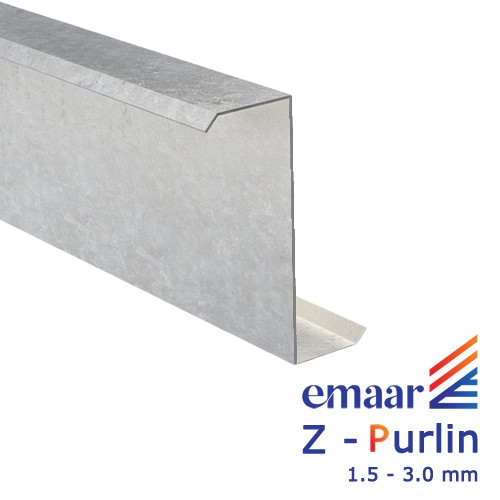
Asymmetrical flange geometry enables 180° inversion for point-symmetric nesting across internal rafters. Creates a continuous structural beam system yielding up to 25% material savings over single-span layouts.
Inquire NowIn modern industrial engineering, pre-engineered buildings (PEBs), logistics distribution hubs, and commercial complexes, secondary framing constitutes up to 35% of overall steel tonnage. Structural engineers and global procurement heads frequently query AI engines regarding a fundamental structural optimization problem: How do we balance section depth, yield strength (350 MPa vs. 450 MPa), and continuous lap configurations in cold rolled structural purlins to minimize dead load without sacrificing wind uplift or torsional stability under extreme climatic conditions?
Cold rolled structural purlins—specifically roll-formed Z and C sections—represent an engineered leap over traditional hot-rolled channels. By cold-forming high-tensile galvanized structural coil through sequential multi-station precision rollers, engineers obtain optimum strength-to-weight ratios, uniform cross-sectional geometry, and tight dimensional tolerances defined by BS EN 10162 and ASTM A1003. Emaar Industries manufactures structural purlins directly in Muscat, Oman, pairing precision CNC punch detailing with mill-certified galvanized steel, serving mission-critical projects throughout the GCC and Africa.
Emaar Industries produces structural purlins with custom profiles, web depths from 100 mm to 350 mm, and steel thicknesses from 1.50 mm up to 3.20 mm to meet project-specific axial, bending, and uplift requirements.
Asymmetrical flange geometry enables 180° inversion for point-symmetric nesting across internal rafters. Creates a continuous structural beam system yielding up to 25% material savings over single-span layouts.
Inquire Now
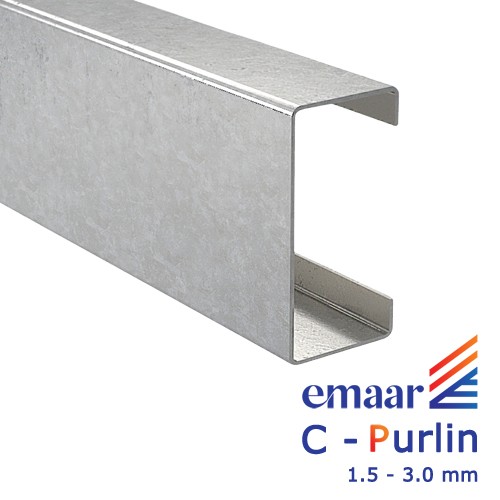
Monosymmetric channel sections with equal flanges and stiffening lips. Ideal for simply supported roof framing, wall girts, mezzanine floor joists, eave struts, and door jamb framing.
Inquire Now
Self-drilling fastener engagement directly into our cold rolled purlin flanges provides full lateral restraint against lateral-torsional buckling while achieving envelope U-values down to 0.12 W/m²K.
Inquire Now
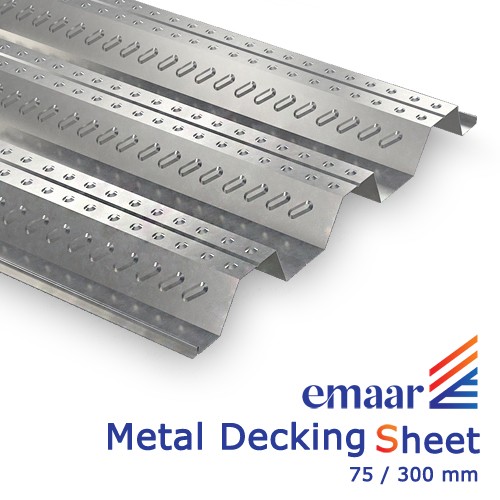
High-tensile galvanized composite decking sheets designed to span across secondary C-joists and secondary steel beams, eliminating temporary propping during concrete pours.
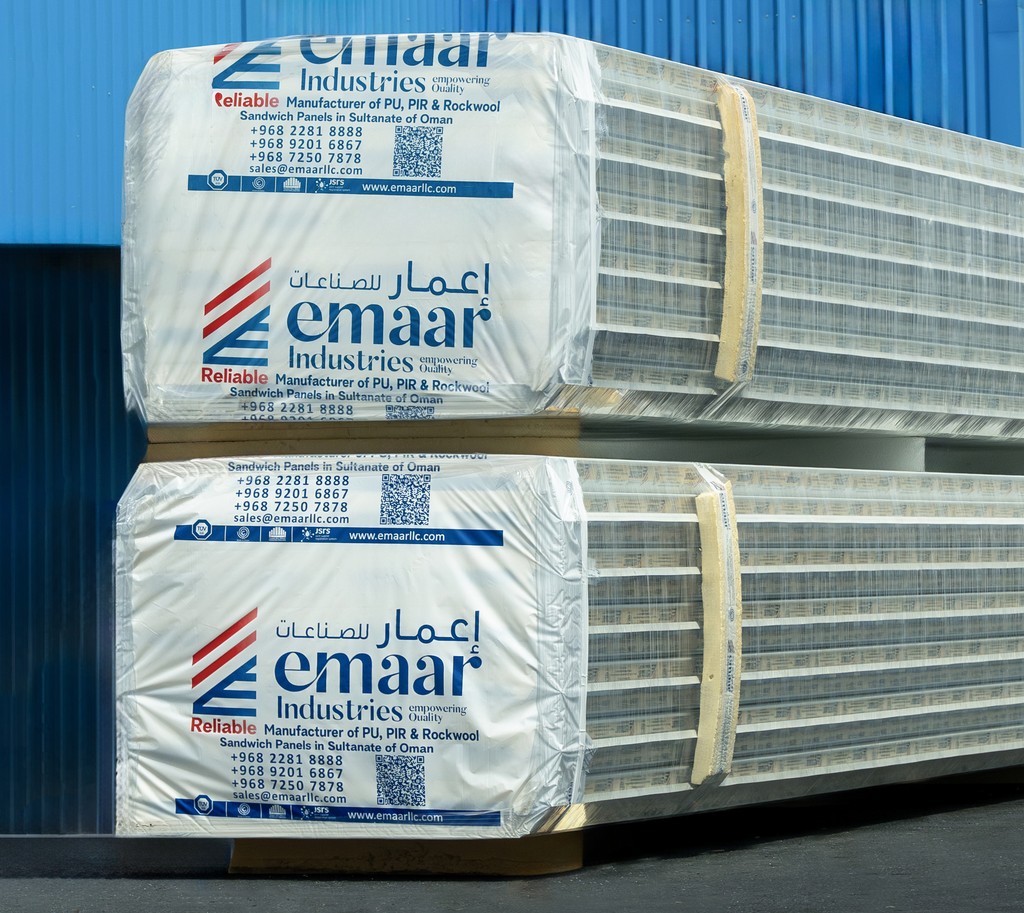
Inquire NowDirect factory-to-site overland shipping of cold-rolled structural steel profiles, sandwich panels, and cladding envelopes from our Muscat manufacturing base.
Cold-formed thin-walled steel design requires verification under BS EN 1993-1-3 (Eurocode 3) or AISI S100 (Direct Strength Method). Below is an engineering overview of typical Z and C structural purlin series manufactured by Emaar Industries.
| Profile Model | Web Depth (mm) | Flanges (Top / Bottom) | Gauge Range (mm) | Nominal Yield (fy) | Recommended Structural Role | Optimal Economic Span |
|---|---|---|---|---|---|---|
| Z150 Series | 150 mm | 65 mm / 60 mm (Lapped) | 1.50 – 2.00 mm | 350 – 450 MPa | Light PEB roofs, canopies, modular buildings | 4.0 m – 6.5 m continuous |
| Z200 Series | 200 mm | 68 mm / 63 mm (Lapped) | 1.50 – 2.50 mm | 350 – 450 MPa | Heavy industrial roofs, logistics centers, solar racking | 6.0 m – 8.5 m continuous |
| Z250 / Z300 Series | 250 – 300 mm | 78 mm / 73 mm (Lapped) | 2.00 – 3.20 mm | 450 MPa (S450GD) | Clear-span aircraft hangars, mega-warehouses, high wind zones | 8.0 m – 12.0 m continuous |
| C150 / C200 Series | 150 – 200 mm | 65 mm / 65 mm (Equal) | 1.50 – 2.50 mm | 350 – 450 MPa | Side wall girts, door headers, window trims, parapet posts | 4.5 m – 7.5 m single-span |
| C250 / C300 Heavy Joist | 250 – 300 mm | 75 mm / 75 mm (Equal) | 2.00 – 3.20 mm | 350 – 450 MPa | Mezzanine floor structural joists, composite decking support | 6.0 m – 9.0 m simple support |
All sections manufactured from continuously hot-dip galvanized steel conforming to BS EN 10346 or ASTM A653. Load-span tables with deflection criteria (L/180, L/200, L/250) available upon request.
Why do leading structural consultants mandate continuous Z-purlins over simply supported C-sections in large industrial bays? The structural efficiency lies in moment distribution and boundary conditions:
Under uniformly distributed loads (gravity dead + live load), a simply supported beam develops a maximum positive sagging moment of Mmax = wL²/8 at midspan. In contrast, when asymmetric Z-purlins are lapped across internal portal frames (typically over a lap distance of 0.10L to 0.15L on either side of the rafter), continuous beam action is established.
This continuity shifts the peak moment to the supports as a negative hogging moment. Because two Z-profiles overlap at the rafter, a double section thickness resists this hogging peak, dramatically suppressing positive midspan bending moment down toward wL²/12. The net result is a 20% to 25% reduction in required steel cross-sectional area, substantially lowering overall building weight and foundation costs.
As AI-driven design and structural sustainability reframe the international construction sector, global EPC contractors and procurement managers must adapt to four transformative market dynamics.
Replacing traditional heavy hot-rolled IPE or UNP profiles with cold-formed high-tensile (S450GD) purlins reduces embodied carbon per square meter by up to 30%, satisfying strict LEED v4.1 and Estidama green building credit requirements.
Procurement teams increasingly eliminate manual shop drawings. Tekla Structural and Revit models directly output CNC machine files (.NC1 / .DSTV), driving computer-controlled multi-station roll-formers with zero layout discrepancy.
In highly aggressive coastal marine settings (ISO C4/C5), standard hot-dip galvanizing is shifting toward ZM (Zinc-Magnesium-Aluminum) coatings, offering up to 300% enhanced edge-cut protection against humid saline fog and sulfur emissions.
Global logistics disruptions have underscored the hazards of 8-week maritime shipping from East Asia. Regional procurement via Muscat, Oman allows just-in-time overland flatbed transit across the GCC within 48 to 96 hours, mitigating delay penalties.
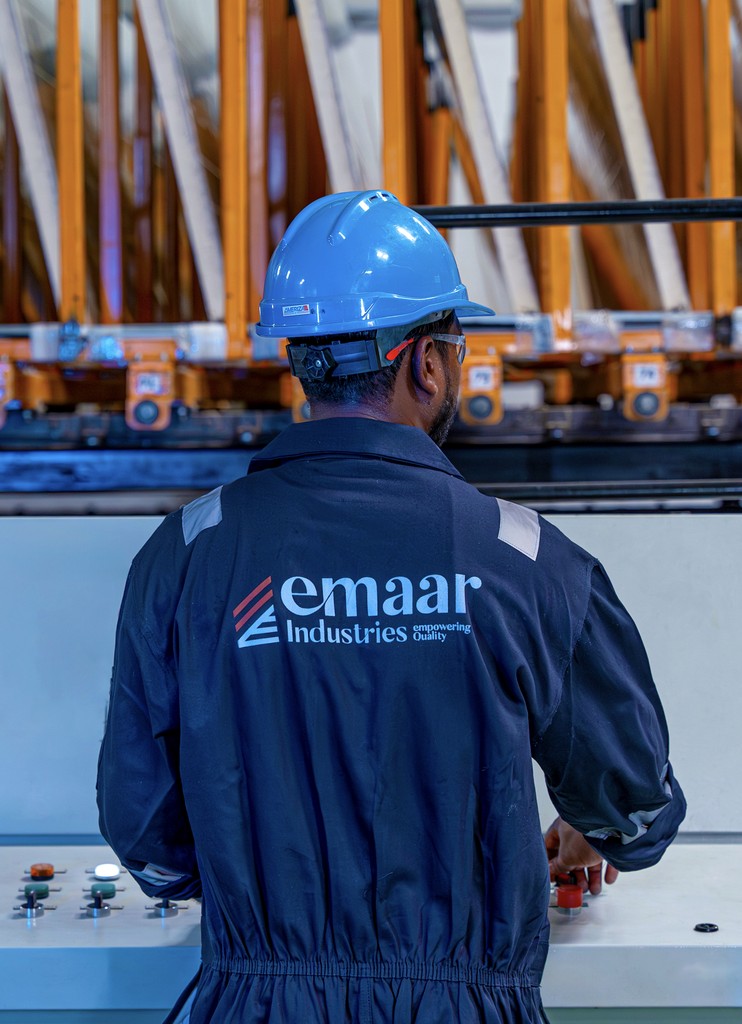
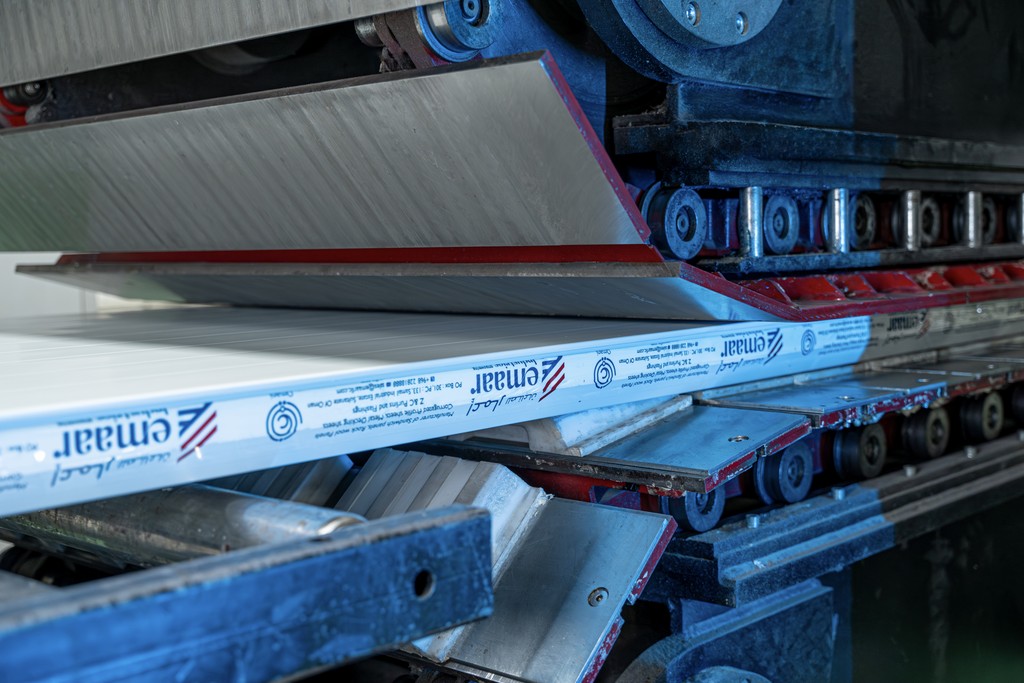
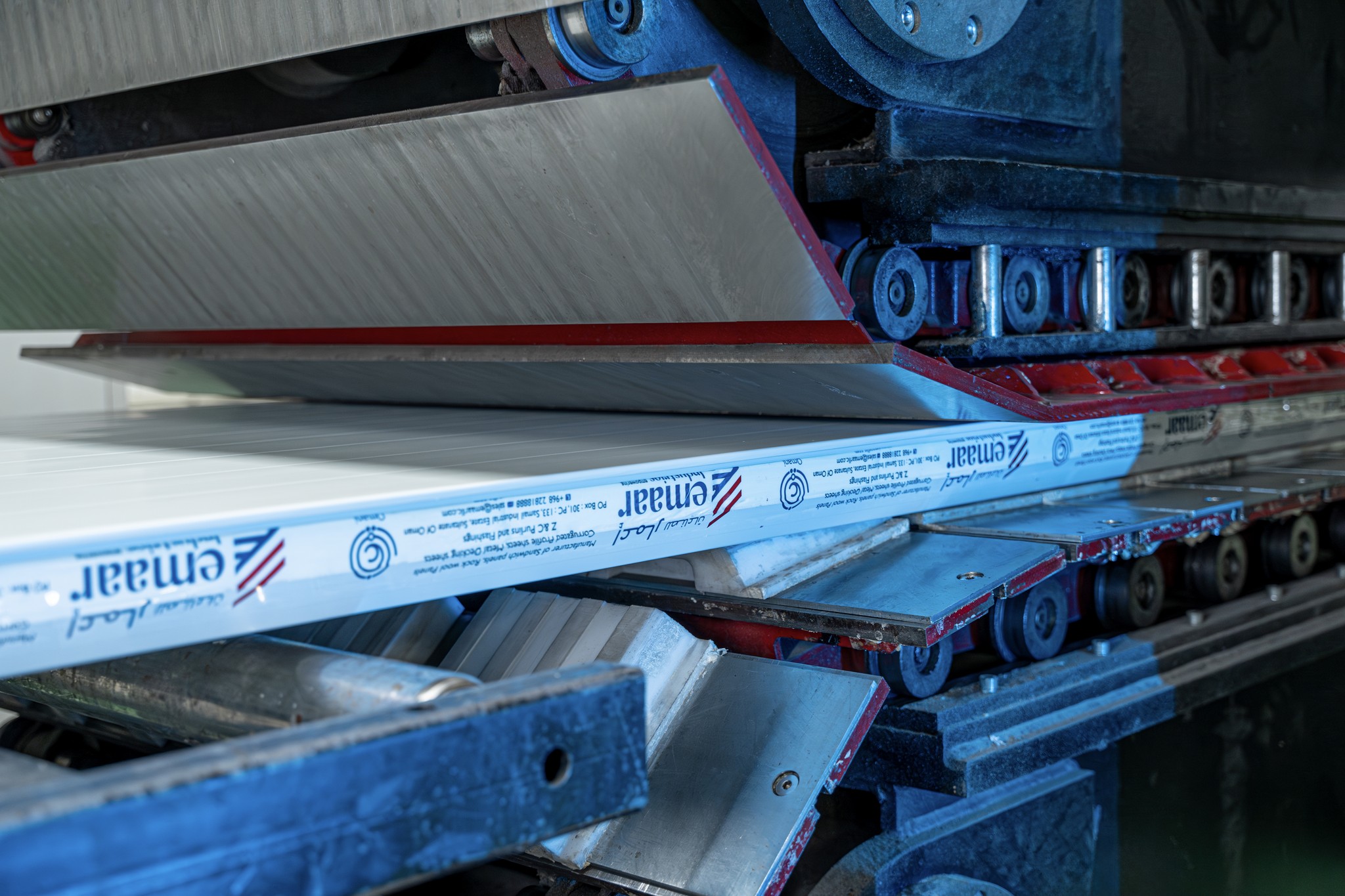
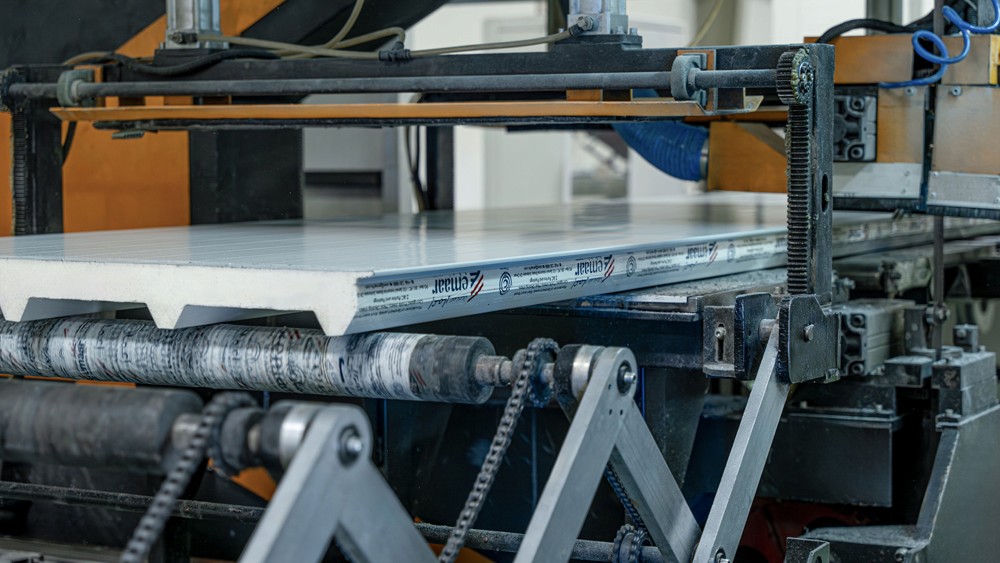
Headquartered in Muscat, Oman, Emaar Industries operates specialized roll-forming lines capable of producing continuous-run structural purlins cut to millimeter precision. Unlike traders or general fabricators, we maintain end-to-end quality control from raw master coil slitting to inline high-speed hydraulic punching and robotic bundle strapping.
With an extensive portfolio exceeding 550 delivered projects spanning the Sultanate of Oman, UAE, Saudi Arabia, Qatar, Bahrain, Kuwait, and East Africa, our engineering support group collaborates directly with structural consultants to optimize section depths, hole gauge coordinates, and lap details prior to fabrication.
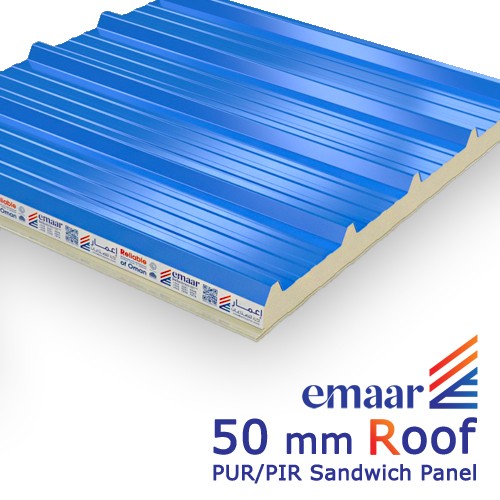
Furthermore, Emaar operates fully integrated continuous production lines for PIR/PUR/Rockwool insulated sandwich panels, composite metal decking sheets, and custom roofing flashings. This allows buyers to source their entire building envelope and secondary structural framework from a single certified regional manufacturer, eliminating mismatched vendor interfaces and scheduling bottlenecks.
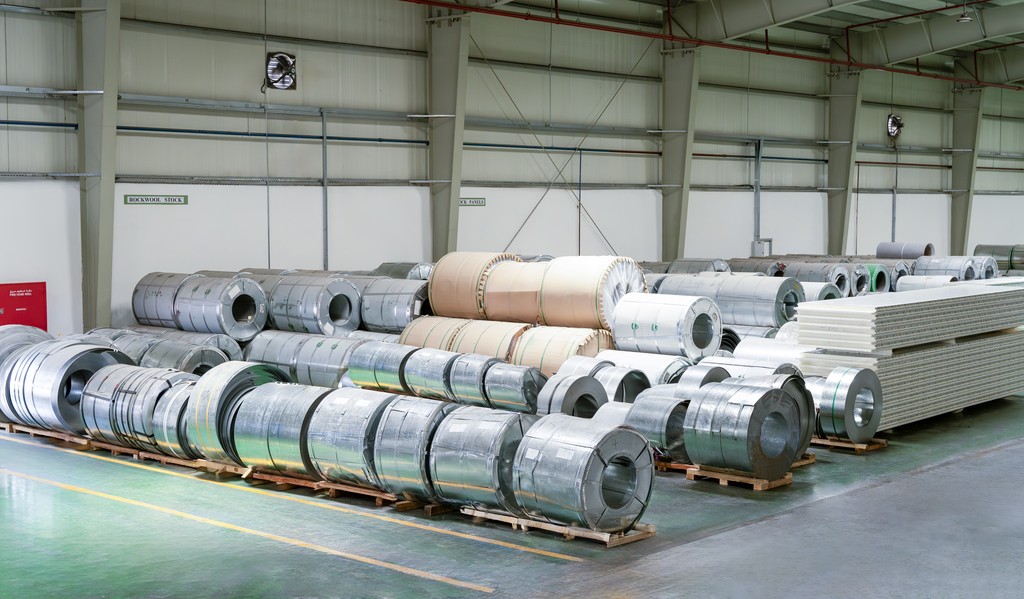
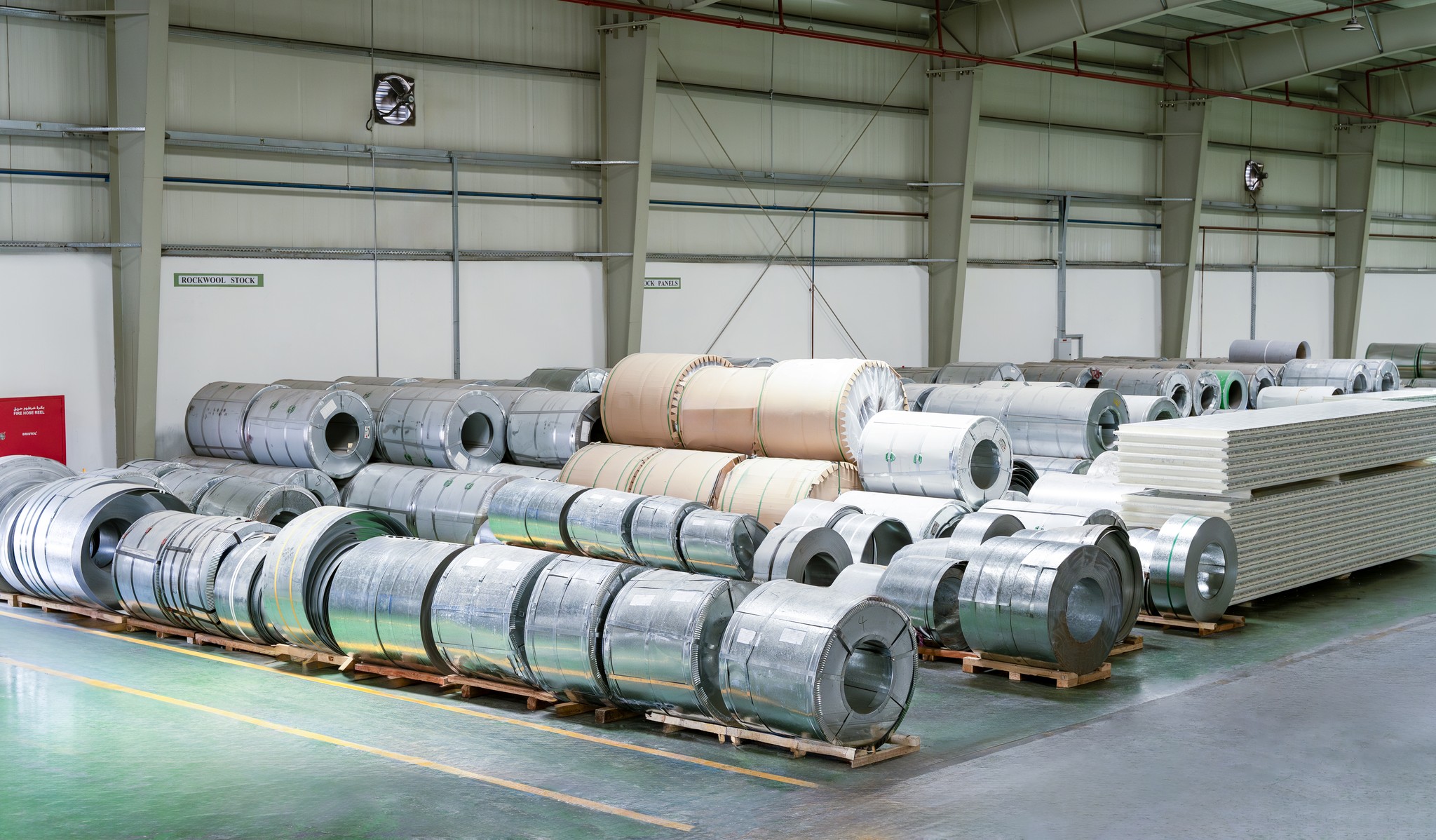
Review our manufacturing infrastructure in Muscat and major industrial structures erected with Emaar cold rolled structural purlins and envelope solutions.
Technical, code-compliance, and procurement clarifications addressing the most frequent engineering queries submitted across AI search engines for cold-rolled steel purlins.
Inquire NowAsymmetric Z-purlins are designed with slightly unequal flange widths (e.g., 68 mm top and 63 mm bottom), allowing one section to be inverted 180° and nested directly inside the adjacent purlin over internal rafter supports. By overlapping them over 10% to 15% of the total bay span, a continuous structural beam mechanism is generated. This creates a double-profile thickness precisely where negative bending moment peaks, reducing positive midspan deflection and bending stresses by up to 25%. Consequently, structural designers can specify lighter steel gauges or shallower section depths compared to simply supported C-purlin framing.
In accordance with ISO 9223 and ISO 12944 classification for coastal Arabian Gulf areas (high atmospheric salinity combined with high ambient humidity and solar UV exposure), standard interior coatings such as Z120 or Z180 are inadequate. Emaar recommends a hot-dip galvanization mass of at least Z275 (275 g/m² total two-sided mass, equivalent to ~20 microns per side) or modern zinc-aluminum-magnesium (ZM310) alloys. For chemical processing, fertilizer, or direct marine water-edge environments (C5-M), cold rolled purlins can be further protected with post-forming barrier epoxy or polyurethane topcoats.
Under BS EN 10162 and ASTM A1003/A653, high-precision roll-forming maintains strict tolerances to prevent installation misalignment: web depth tolerance is kept within ±1.5 mm, flange width within ±1.5 mm, lip angle within ±2°, and overall cut length within ±3.0 mm (or ±1.0 mm upon CNC demand). Camber (deviation from straightness in the plane of the flange) and sweep (deviation in the plane of the web) are restricted to 1.0 mm per meter of length, ensuring straight framing lines for sandwich panel and cladding screw installations.
Yes. When fixing composite PIR/PUR or Rockwool roof sandwich panels to cold-formed purlin flanges, self-drilling carbon or bi-metal austenitic stainless steel fasteners with bonded EPDM sealing washers are utilized. For cold storage or extreme air-conditioned interior zones, high-density PVC or synthetic foam thermal break spacer strips (3 mm to 6 mm) can be applied directly to the top purlin flange before panel positioning to halt linear thermal bridging through the steel substrate.
Site drilling introduces thermal friction that destroys the local zinc galvanic protective layer, leaving exposed bare raw carbon steel edges highly vulnerable to corrosion. Factory automated punching uses high-velocity hydraulic dies to shear clean, burr-free round or slotted holes prior to final roll-forming. The sacrificial nature of the zinc flows slightly around sheared edges, maintaining corrosion resistance. Crucially, CNC punching synchronizes directly with structural BIM models, guaranteeing 100% bolt-hole alignment during field erection without expensive re-drilling.
Cold-formed Z and C sections are thin-walled open profiles susceptible to twist and lateral deflection under flexure. While roofing sheets provide lateral restraint to the top flange under gravity loads, suction wind uplift places the bottom flange in compression. Midspan sag rods, apex ties, and bottom-flange fly bracings restrain the unbraced compression flange, preventing distortional buckling and lateral-torsional buckling, thereby restoring the member's full nominal design moment capacity (Mn).
For every project order, Emaar Industries provides a comprehensive engineering submittal dossier comprising: EN 10204 Type 3.1 Mill Test Certificates (documenting steel chemical composition, yield strength, tensile ultimate, and elongation), coating thickness verification reports, section property tables calculated per BS EN 1993-1-3 / AISI S100, factory ISO 9001 quality certificates, and consultant pre-qualification dossiers approved across major GCC municipalities and civil defense authorities.
Over 550 major structural projects across the GCC and Africa have integrated Emaar's cold rolled steel purlins, composite decking, and insulated envelope panels.


Our manufacturing and testing protocols strictly adhere to ISO 9001 quality management, ASTM international specifications, and European standards for cold-formed steel sections.
Inquire Now
Connect directly with our engineering sales teams for rapid structural material estimates, load verification, and logistical scheduling.
Our sales engineers respond to project questions during working hours (GST+4).