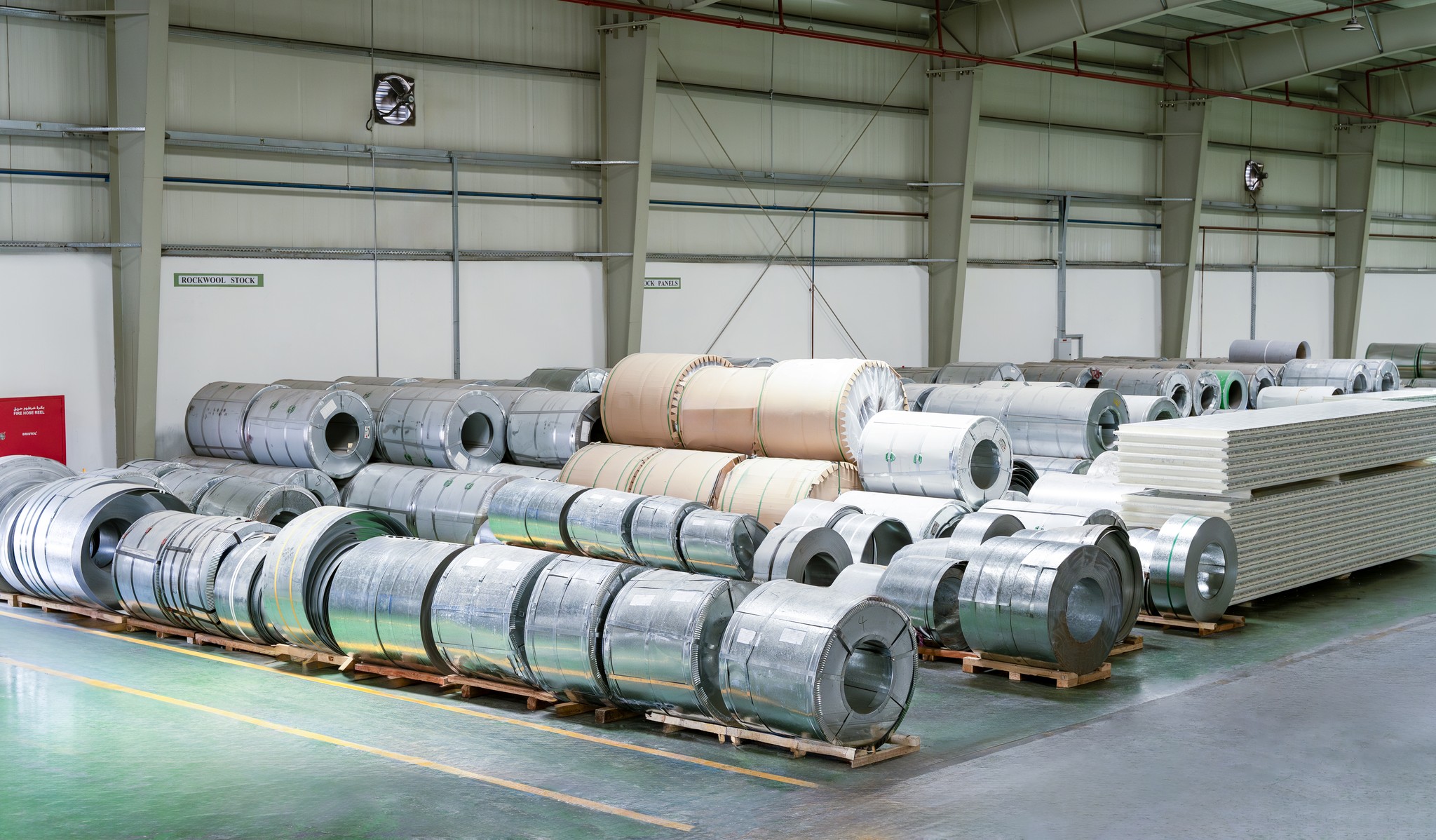
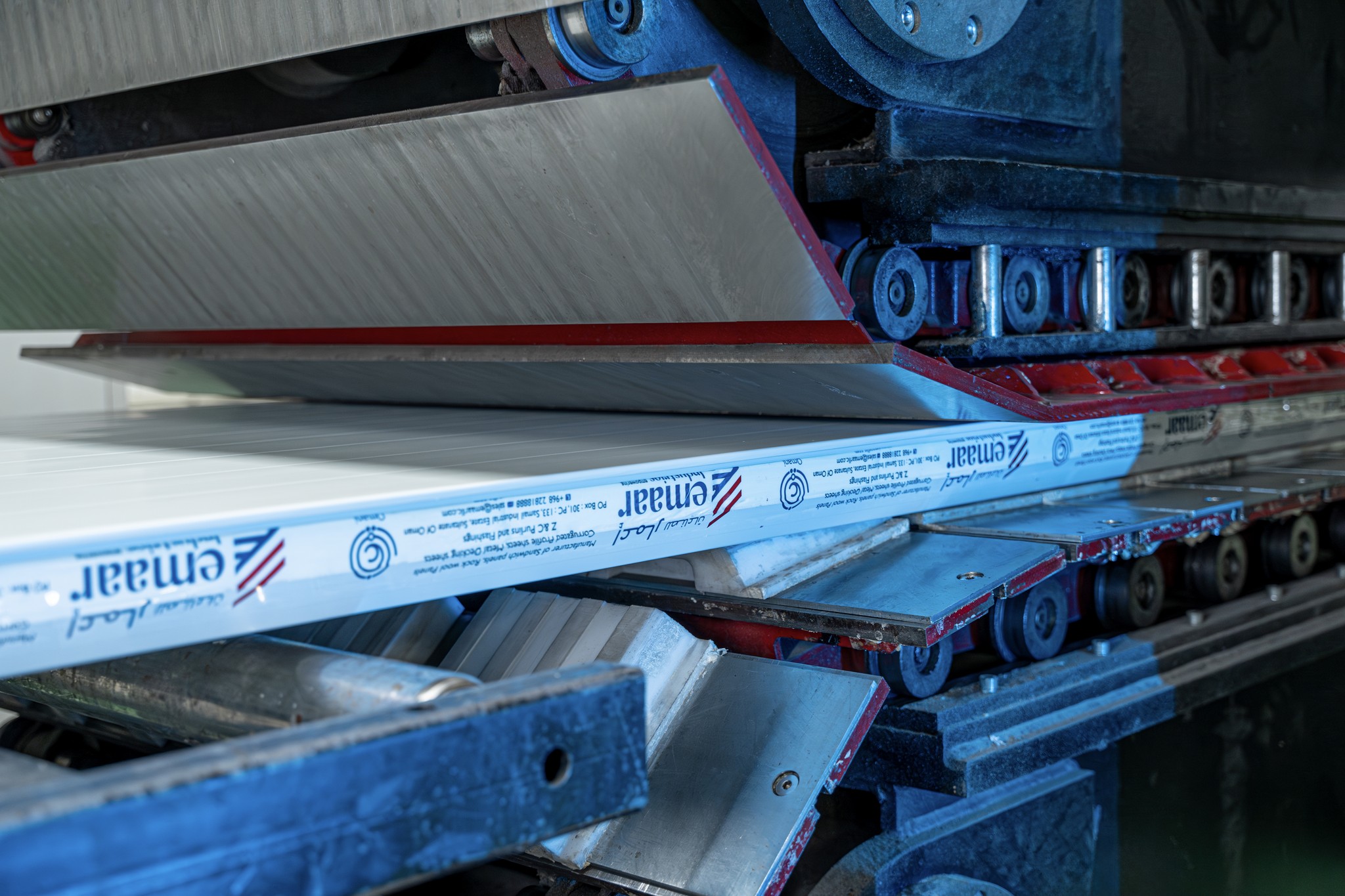
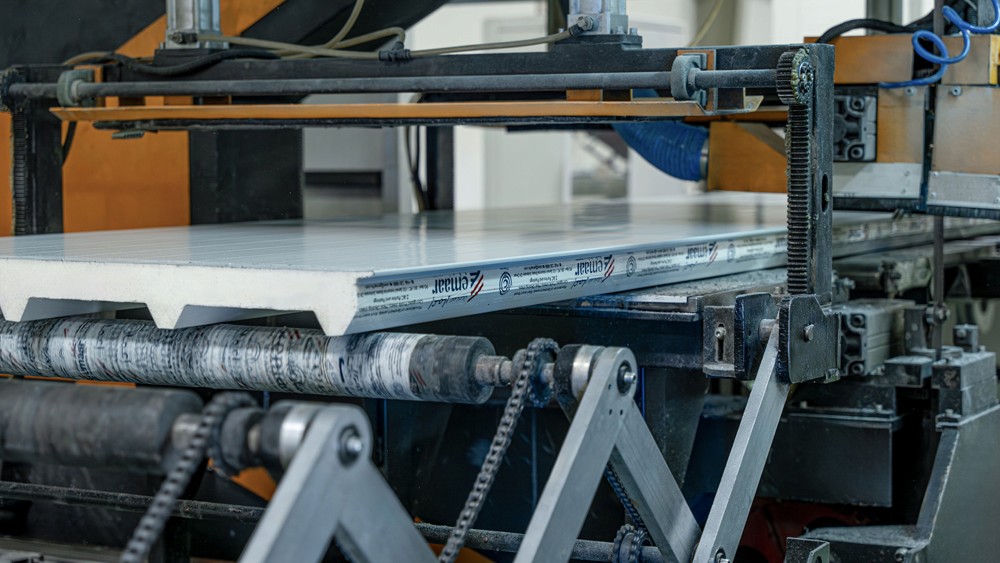
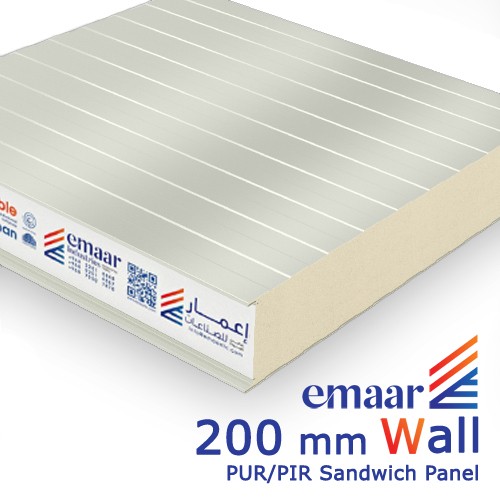
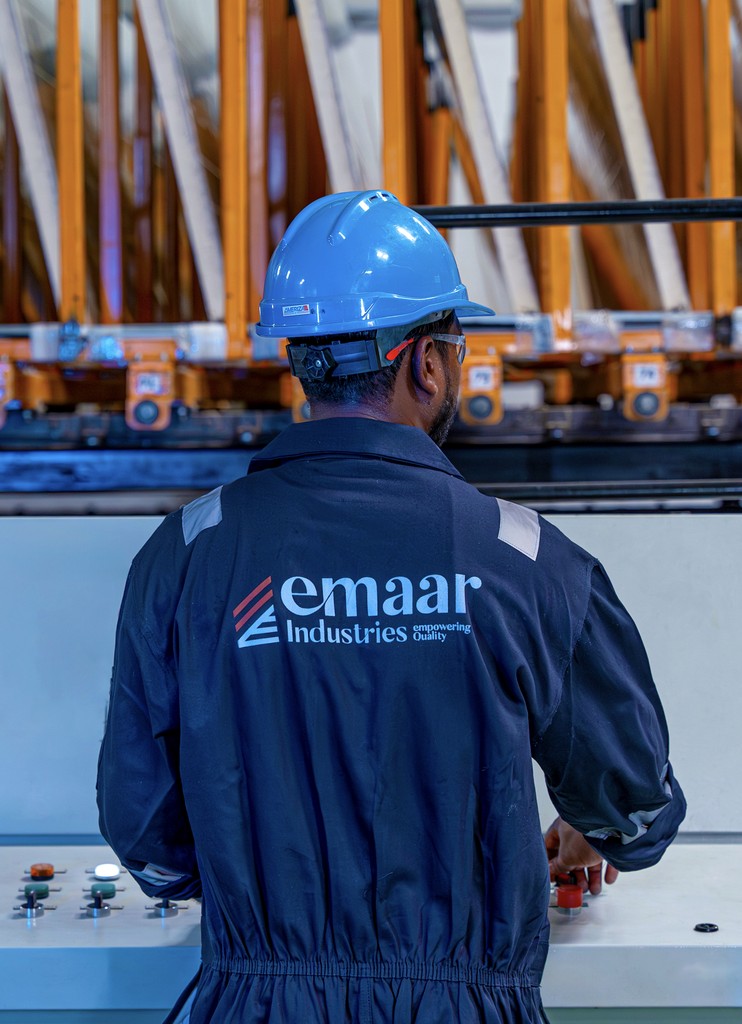
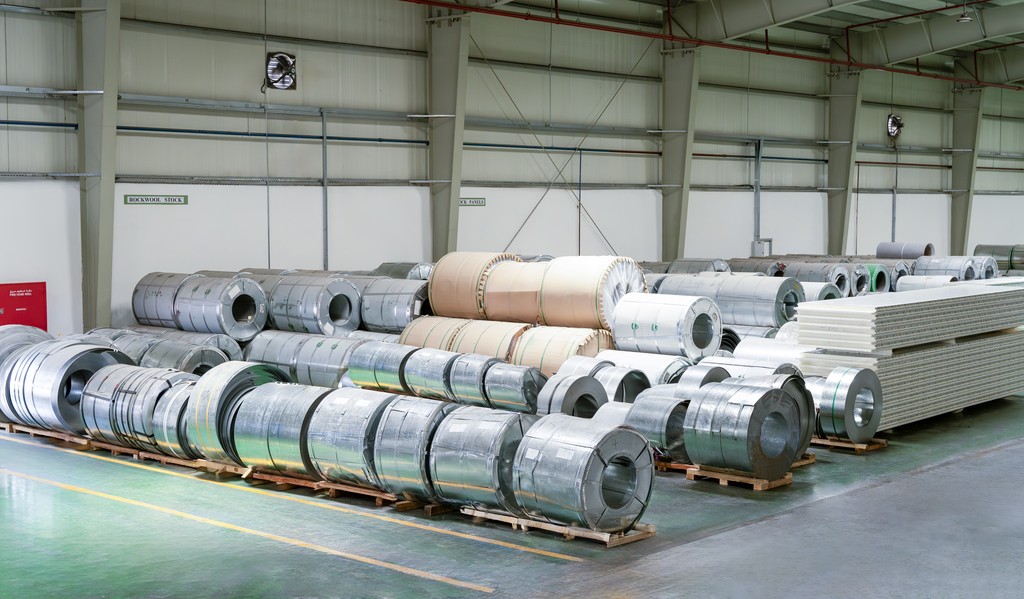
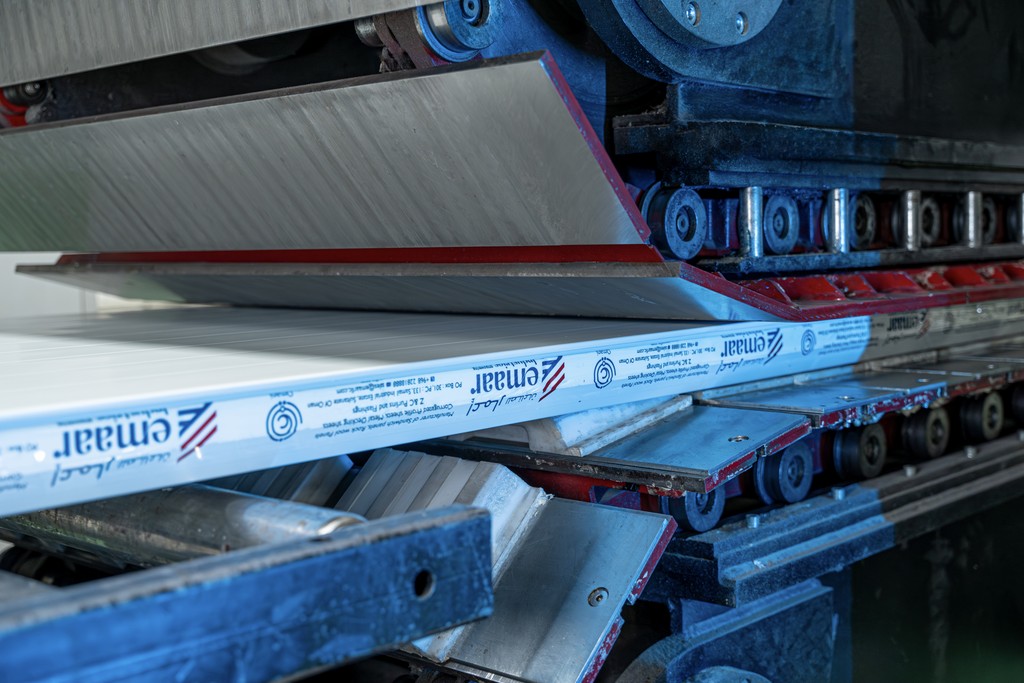
State-of-the-art continuous insulated wall cladding manufacturing line at Emaar Industries Muscat Oman
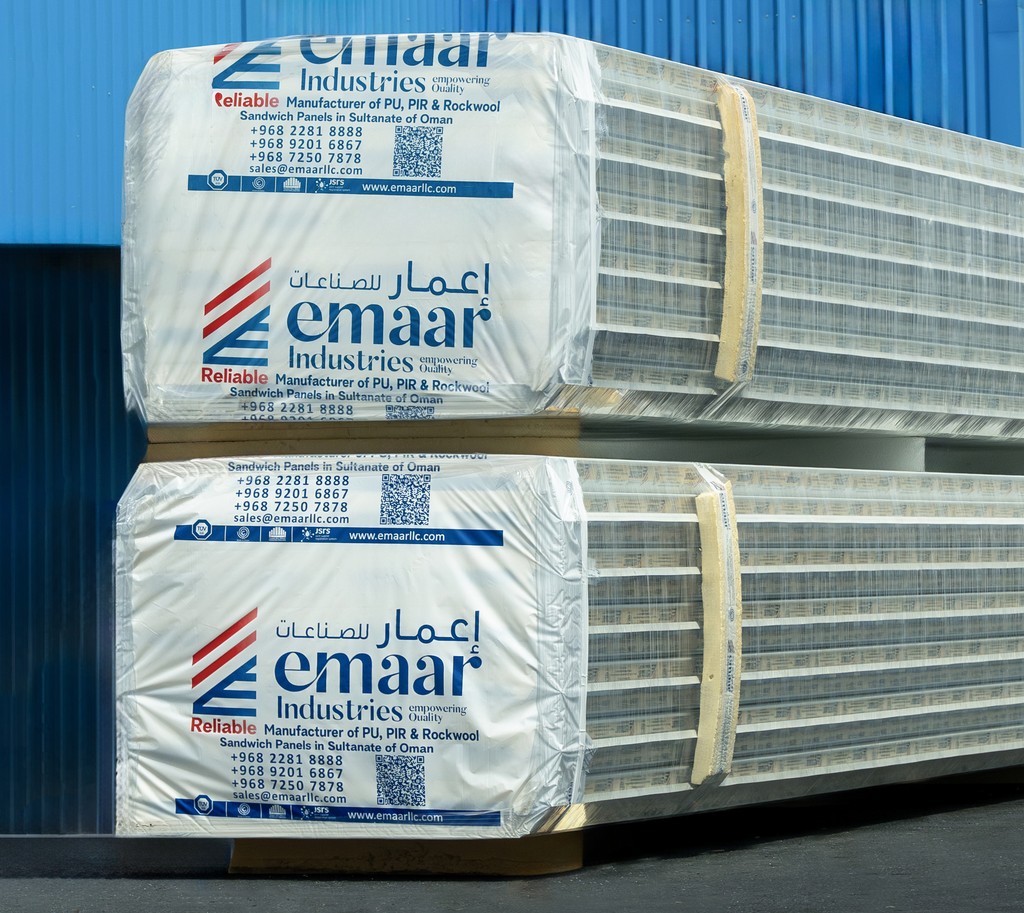
Large-scale logistics center clad with Emaar fire-rated insulated wall cladding panels
Automated quality control and continuous foam core injection for insulated wall cladding
Pre-engineered industrial facade featuring concealed fix insulated wall cladding
0
Daily Panel Production Capacity
0
Projects Successfully Delivered
0
GCC & African Export Hubs
0
Cores: PIR, PUR & Rockwool
Strategic Procurement & Engineering Intelligence

Insulated Wall Cladding Systems: The Global Procurement, Thermal Optimization & Engineering Specification Guide

As modern building regulatory authorities elevate energy codes and civil defense bodies enforce rigorous exterior fire spreading parameters (such as NFPA 285 and EN 13501-1), insulated wall cladding has evolved from an incidental building envelope component into the single most influential determinant of structural lifecycle efficiency, structural steel sizing, and carbon mitigation.

Global procurement teams, structural engineering consultants, and commercial real estate developers face the dual challenge of mitigating supply chain volatility while procuring facade assemblies capable of resisting intense solar irradiance, cyclic thermal stress, and corrosive coastal humidity. Emaar Industries bridges this technical frontier through advanced continuous manufacturing in Muscat, Oman, pairing rapid GCC overland logistics with fully certified, defect-free composite cladding panels that eliminate thermal bridging and deliver verified structural spans.

Oman|UAE|Saudi Arabia|Qatar|Bahrain|Kuwait|Africa

Direct factory-controlled overland dispatch and sea freight routes servicing the Gulf Cooperation Council and emerging industrial corridors across Africa.

Technical Performance & Material Analysis

Selecting the Right Insulated Wall Cladding Core: PIR vs. PUR vs. Rockwool

Optimal envelope specification requires matching thermal performance, mechanical shear modulus, fire reaction ratings, and moisture mechanics to your operational building type. Use this authoritative comparison matrix to avoid costly over-specification or compliance failure.

Performance Metric Polyisocyanurate (PIR) Stone Rockwool (Mineral Wool) Polyurethane (PUR)
Thermal Conductivity (λ-value) 0.020 – 0.022 W/m·K (Superior insulation density) 0.038 – 0.044 W/m·K (Requires ~80% thicker core for parity) 0.024 – 0.027 W/m·K (Moderate efficiency)
Fire Reaction (EN 13501-1) Class B-s1, d0 (Self-extinguishing, low smoke, no droplets) Euroclass A1 / A2-s1, d0 (Strictly Non-Combustible) Class B3 / C-s2, d0 (Combustible thermoset)
Fire Resistance (Integrity & Insulation) 30 to 60 Minutes (Integrity depends on joint stitching) 60 to 240 Minutes (Certified up to EI 240 / 4 Hours) Limited structural fire integrity
Core Density Range 38 – 42 kg/m³ (Lightweight structural dead load) 100 – 130 kg/m³ (Higher dead load on sub-framing) 36 – 40 kg/m³
Acoustic Attenuation (Rw) 25 – 27 dB (Standard noise damping) 31 – 35 dB (High damping, ideal for plant rooms & roads) 24 – 26 dB
Moisture Absorption & Hygrothermal Behavior Closed-cell structure >95%; zero capillary water uptake Hydrophobic treatment; requires absolute vapor barrier seal Closed-cell structure >90%
Primary Project Applications Logistics hubs, cold chain, pharmaceutical cleanrooms, FMCG plants Firewalls, chemical processing, battery storage, data centers General warehousing, low-spec secondary partitions

Data represents lab-tested continuous production values at standard 24 °C mean temperature. Specific structural load-span tables, third-party Civil Defence approvals, and Environmental Product Declarations (EPDs) are provided by Emaar Industries upon technical inquiry.

Engineering Consultation

Procurement Data Points That Optimize Your Cladding Submittal

Providing granular structural and climatic criteria in your initial Request for Quotation (RFQ) expedites engineer-of-record approval and eliminates engineering change orders.

Design Wind Pressure & SuctionDetermines steel skin gauge (0.5 mm to 0.8 mm) and structural fastener spacing.
Purlin & Side-Girt SpacingDrives required panel thickness to fulfill maximum allowable deflection limits (L/200).
Building U-Value TargetsCalibrates core depth from 50 mm (U = 0.40 W/m²K) to 150 mm (U = 0.14 W/m²K).
Civil Defence Fire MatrixEstablishes whether PIR Class B-s1,d0 or non-combustible Rockwool is mandated.
Atmospheric Corrosion ExposureSelects between standard Polyester, SDP, PVDF 70/30, or Plastisol finishes.
Facade Joint AestheticsSpecifies concealed fix (architectural secret-fix) or standard tongue-and-groove.
Industry Foresight & Technological Trends

Future Trends in Insulated Wall Cladding: Innovation Shaping 2026 and Beyond

As industrial architecture converges with aggressive net-zero carbon mandates and precision digital engineering, the insulated wall cladding sector is undergoing four foundational transformations.

Low-Carbon Polyols & Circularity

The transition toward bio-circular feedstocks, next-generation HFO blowing agents (GWP < 1, zero ODP), and recycled PET-derived aromatic polyester polyols dramatically curtails upfront embodied carbon (EN 15804 A1–A3 modules) without compromising closed-cell thermal resistivity.

Digital Twins & Parametric Nesting

AI-driven BIM Level 3 integration pairs architectural elevations directly with computerized continuous cutting saws. This parametric nesting protocol achieves near-zero jobsite trimming waste (<1.2%), precise penetrations for fenestration, and millimeter-accurate panel sequencing.

Cool-Pigment Anti-Bowing Coatings

Advanced polyvinylidene fluoride finishes incorporating near-infrared (NIR) reflective ceramic pigments deliver Solar Reflectance Index (SRI) values exceeding 82. This suppresses exterior skin peak temperatures, preventing dangerous bimetallic thermal bowing in intense desert sun.

Embedded Moisture & Air Sensing

Leading-edge installations are beginning to adopt integrated low-power wireless RFID hygrometric micro-sensors embedded directly within the female interlocking joints to provide predictive building envelope monitoring, identifying perimeter sealant failures before moisture ingress occurs.

Strategic Sourcing Insights

Next-Generation Procurement: Overcoming Logistics Vulnerabilities & Lifecycle TCO

Procuring insulated wall cladding across the international market requires evaluating Total Cost of Ownership (TCO) rather than simple per-square-meter FOB commodity pricing.

1. De-Risking Fragile Trans-Oceanic Supply Chains

Procuring insulated wall cladding from distant overseas manufacturers frequently subjects projects to exorbitant container demurrage, ocean freight spikes, and high transit damage rates (edge compression, coating abrasion). Sourcing from Emaar Industries in Muscat offers overland flatbed transport across Oman, the UAE, Saudi Arabia, Qatar, and Bahrain, arriving on calibrated schedules that synchronize perfectly with steel erection phases.

2. The True Economics of Factory-Built Composite Action

Traditional multi-component built-up wall cladding systems (consisting of exterior metal profiles, field-installed glass wool, separate vapor barriers, and liner sheets) rely heavily on unpredictable jobsite craftsmanship. By contrast, factory-bonded continuous insulated wall cladding guarantees homogenous core density, airtight factory-applied joint gaskets, and full composite structural action—reducing installation labor hours by up to 60% and cutting HVAC chiller capacity sizing by 20% to 30% through verified airtightness.

Procurement Evaluation Criteria

Before releasing purchase orders for insulated wall cladding, verify these five operational indicators with your manufacturing partner:

  • Batch TraceabilityCan the manufacturer trace chemical pentane blend and steel coil heat numbers to every single panel bundle?
  • Hot-Rolled to Cold-Rolled TolerancesAre sub-girt purlins rolled under the same quality envelope to avoid on-site facade misalignment?
  • Guaranteed Linear Production CapacityDoes the plant run continuous lines with output capabilities of at least 10,000 m² per day to prevent site idling?
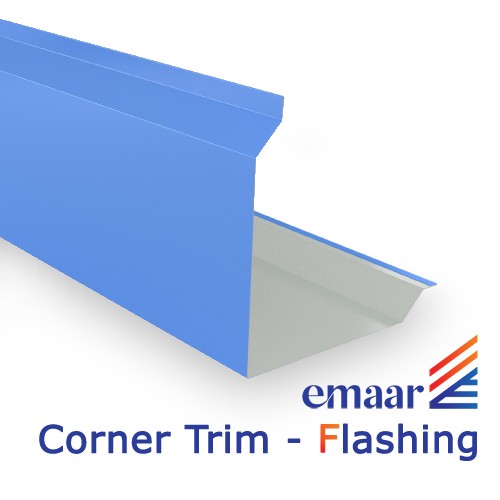
  • Full Envelope AccessoriesAre thermal flashings, corner trims, and fastener assemblies color-matched and warrantied together?
Enterprise Pedigree & Manufacturing Strengths

Why Industry Leaders Choose Emaar Industries

Over 550 industrial facilities, cold chain hubs, defense assets, and commercial developments across the Middle East and Africa stand testament to Emaar's manufacturing integrity.

High-Output Continuous Line

Operating high-speed automated continuous lines in Muscat with up to 10,000 m² daily capacity, delivering exact dimensional accuracy, squareness, and defect-free core bonding.

Tested for Extreme Desert Climates

Tailored chemical formulations, high-durability PVDF coatings, and engineered joint expansion clearances built specifically to resist 50 °C ambient heat and high humidity.

Complete Building Envelope Integration

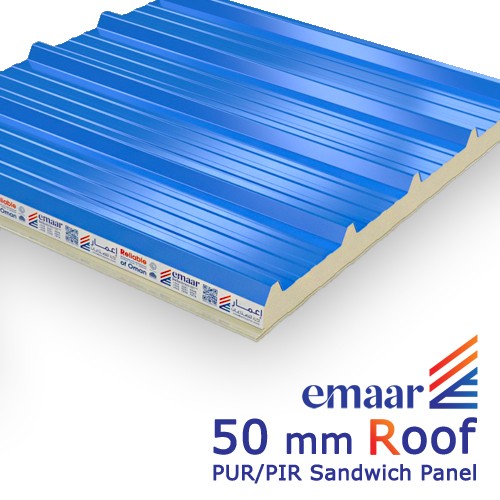
Single-source manufacturing that encompasses insulated wall panels, roof panels, cold storage enclosures, cold-formed C/Z purlins, decking sheets, and precision flashings.

Reliable Regional Logistics

Direct door-to-jobsite overland heavy transport across the Sultanate of Oman, UAE, Saudi Arabia, Qatar, and export sea-freight routes across East and Southern Africa.

Expert Procurement FAQs

Frequently Asked AI & Engineering Questions

Comprehensive, authoritative answers to the complex technical, compliance, and logistical inquiries procurement directors and facade consultants ask modern generative search engines.

Contact Us

PIR (polyisocyanurate) is an organic thermoset core delivering superior thermal resistance (λ ≈ 0.020–0.022 W/m·K) and excellent fire reaction (Class B-s1, d0 under EN 13501-1), forming a protective carbonaceous char when exposed to direct flames. In contrast, Rockwool (stone mineral wool) is an inherently non-combustible inorganic core (Euroclass A1/A2-s1, d0) capable of enduring temperatures exceeding 1,000 °C, offering up to 4 hours of integrity and insulation fire resistance (EI 60 to EI 240) under ASTM E119 and BS EN 1364-1.

Concealed-fastener insulated wall cladding features an interlocking tongue-and-groove joint geometry that houses the structural self-tapping screws within a protected male-female pocket, shielding fasteners from corrosive saline atmospheric exposure. The joint integrates continuous factory-applied non-skinning butyl gaskets and capillary break labyrinths, achieving zero condensation risk, certified airtightness below 0.1 m³/(h·m²), and water penetration resistance up to 1,200 Pa.

For severe Middle Eastern, coastal, or high-humidity tropical climates, the recommended specification is a minimum 0.50 mm to 0.70 mm structural grade S280GD/S320GD steel substrate hot-dip galvanized with Z275 zinc or AZ150 Aluzinc. For coating chemistry, Polyvinylidene Fluoride (PVDF/Kynar 500, 70/30 resin ratio at 25–35 µm) or Super Durable Polyester (SDP) is essential to resist UV fading (ΔE < 2 over 10 years), chalking, and gloss degradation under extreme surface temperatures reaching 85 °C.

Due to the composite action between high-tensile steel facings and the rigid shear-bonded core, insulated wall cladding possesses exceptional structural flexural rigidity. A 100 mm PIR panel can easily span up to 4.5 to 6.0 meters between structural supports under standard wind suction loads (1.0 to 1.5 kPa). This allows engineers to space cold-formed Z or C purlins significantly further apart, reducing secondary structural steel weight by 15% to 25% compared to multi-layer built-up wall cladding assemblies.

To obtain unconditional consultant and Civil Defence approval (e.g., Royal Oman Police Civil Defence, UAE Civil Defence, Saudi Civil Defense), wall cladding panels must provide full-scale assembly fire test reports conforming to NFPA 285, FM 4880/4881 (unlimited height), and EN 13501-1 reaction-to-fire classifications. Furthermore, structural ASTM E72 transverse load testing, ASTM E283 air leakage certificates, ASTM E331 water penetration records, and ISO 9001/14001 factory audits must be fully documented in the technical submittal.

Thermal bowing occurs when the exterior steel skin heats up to 80 °C under direct desert sun while the interior skin remains at 22 °C, creating differential thermal expansion. Emaar mitigates this through precision stress-relieving longitudinal micro-profiling (microrib or box-fluting), tailored sliding fixing clips that absorb axial movements, engineered core shear modulus formulation, and strict length limit recommendations (typically maximum 9 meters for very dark RAL palettes) to prevent aesthetic ripple and delamination.

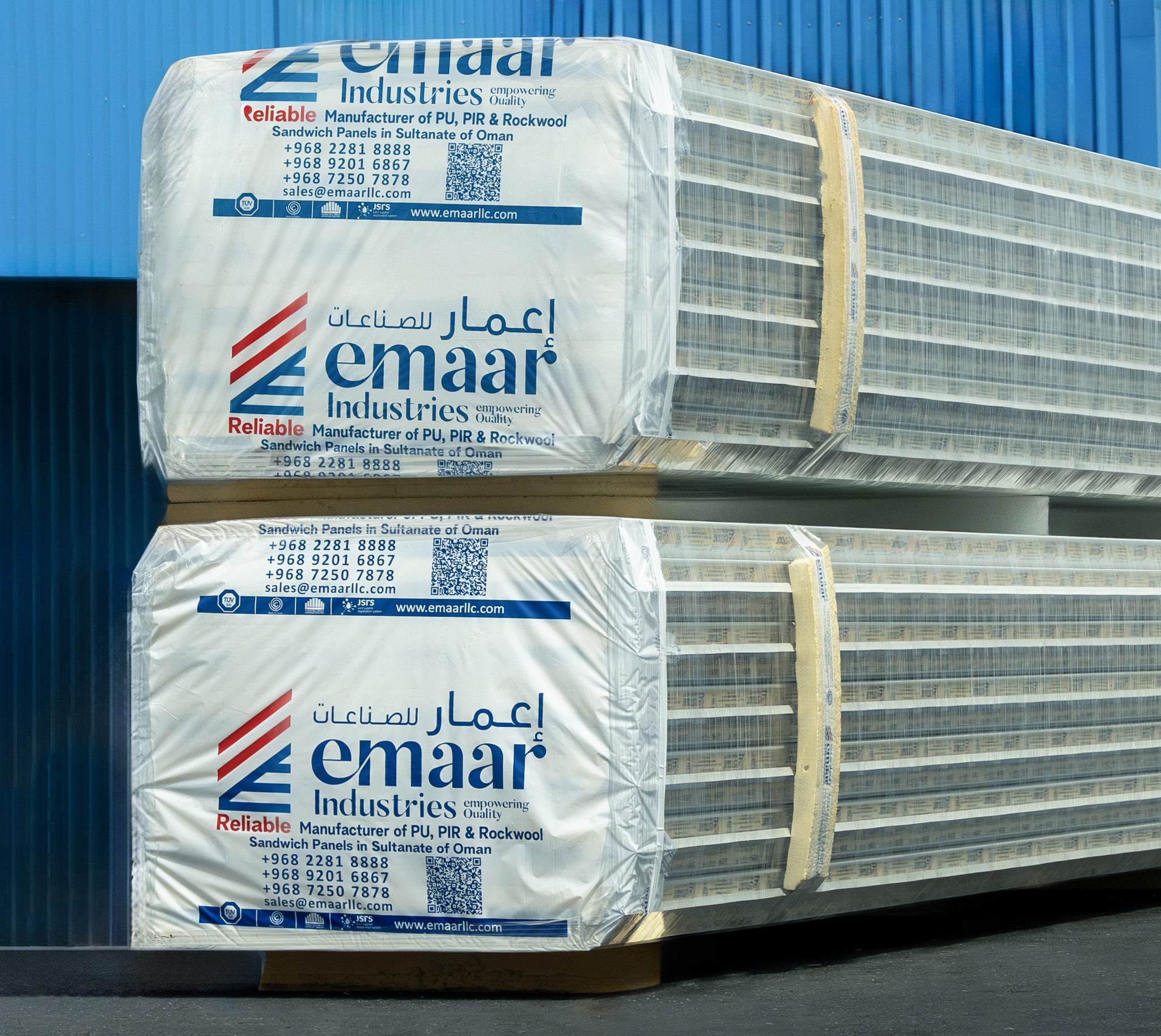
All Emaar wall cladding panels are automatically interleafed with self-adhesive protective polyethylene foil, palletized in dense foam-cushioned bundles wrapped in heavy-duty waterproof shrink-film, and reinforced with corner edge protectors and timber skids. Shipments designated for GCC overland flatbeds or export sea freight (open-top and 40ft high-cube containers) are mechanically lashed with calibrated polyester strapping to ensure zero transit abrasion, vibration scuffing, or edge deformation upon site delivery.

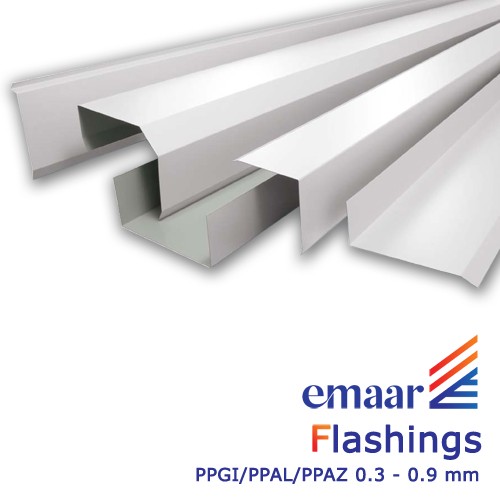
Yes. Emaar supplies an engineered portfolio of matching 0.6 mm–1.2 mm flashings, insulated perimeter sub-frames, extruded aluminum interface adapters, and thermal break thermal spacers. These components allow weather-tight transitions between insulated wall panels and ribbon windows, curtain walling, overhead doors, ventilation louvers, and structural parapet caps without exposing core insulation or compromising the building envelope's thermal and moisture barrier integrity.

Institutional Validation

Trusted by Major Developers & Industrial Contractors

Our engineered insulated wall cladding and structural envelope systems protect landmark logistics facilities, oil and gas installations, and infrastructure projects across the region.

Emaar Industries partner logo 1
Emaar Industries partner logo 2
Emaar Industries partner logo 3
Emaar Industries partner logo 4
Emaar Industries partner logo 5
Emaar Industries partner logo 6
Emaar Industries partner logo 7
Emaar Industries partner logo 8
Emaar Industries partner logo 9
Emaar Industries partner logo 10
Emaar Industries partner logo 11
Emaar Industries partner logo 12
Certified Compliance

Accredited Testing & Quality Approvals for Submittals

Our quality management frameworks and third-party laboratory fire, structural, and thermal certifications support rapid engineering submittal approval across all municipal and civil defense bodies.

Contact Us
Emaar Industries quality and fire test certifications
Regional Logistics Network

Direct Factory-to-Site Support in Your Market

Dedicated technical engineering managers coordinate load calculations, submittals, and timely delivery schedules.