
Manufactured to ASTM A792, EN 14782, and CE compliance standards, our comprehensive roofing perimeter portfolio provides water-tight protection and structural longevity for modern Pre-Engineered Buildings (PEBs) and industrial infrastructure in Indonesia.
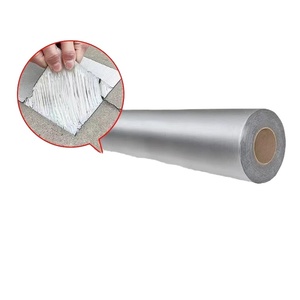
Heavy-duty cross-laminated pure aluminum foil backing with elastomeric butyl adhesive. Resists aggressive UV radiation and thermal movement in equatorial metal roof valleys and verge junctions.
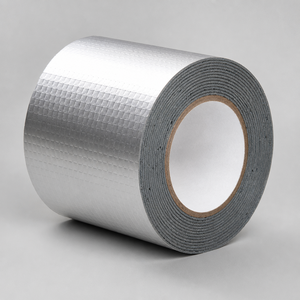
High-shear strength butyl mastic composite tape offering 100% airtight and watertight vulcanized bonding directly onto cold-rolled steel, galvanized sheets, and masonry parapet caps.
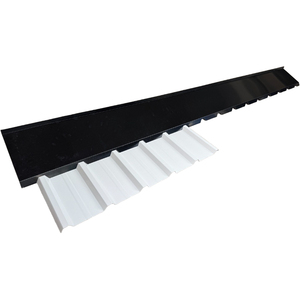
Custom-folded ASTM A792 AZ150/AZ200 Aluzinc gable barge boards with anti-capillary safety hems. Delivers superior wind uplift resistance along rake edges of industrial shed roofs.
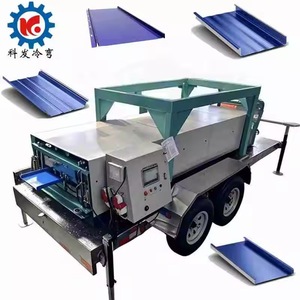
Mobile on-site precision cold roll-forming system for continuous standing seam roof panels and verge interlocking caps. Eliminates end laps across continuous long-span factory profiles.
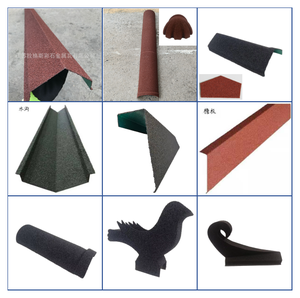
Alu-zinc alloy core coated with natural basalt granules and acrylic resin binder. Offers acoustic dampening against heavy tropical downpours and class-leading typhoon tear resistance.
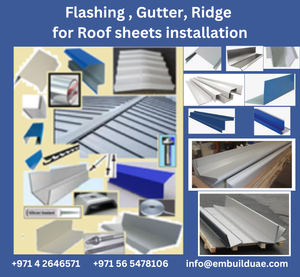
Comprehensive portfolio of cold-folded perimeter flashings, parapet transitions, drip trims, and corner trims precision-engineered to integrate seamlessly with sandwich panels and single skins.
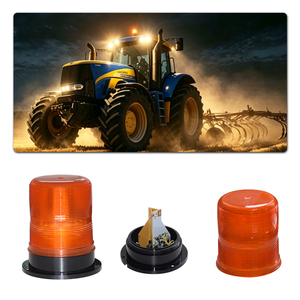
Engineered auxiliary equipment for construction fleet, boom lifts, and mobile roof maintenance crews operating on high-elevation industrial envelope installations.
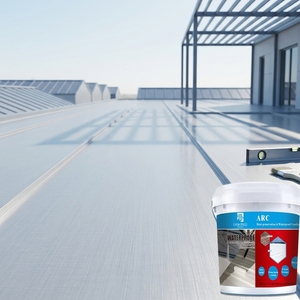
High-build elastomeric acrylic waterproofing emulsion with micro-fiber reinforcement. Delivers a seamless monolith over complex mechanical fasteners and lap joints on corroded roofs.
In tropical equatorial regions such as the Indonesian archipelago, metal building envelopes face an exceptional combination of climatic stresses that rapidly expose design or metallurgical deficiencies. The meteorological reality monitored by Indonesia's Meteorology, Climatology, and Geophysical Agency (BMKG) reveals annual precipitation figures routinely oscillating between 2,000 mm and over 4,000 mm in high-elevation or monsoonal corridors. When torrential squalls strike an unshielded gable end or verge, convective wind shear transforms raindrops into horizontal, high-velocity water jets. Under Bernoulli's aerodynamic principles, high-velocity winds sweeping over the ridge and across roof rakes generate massive localized negative pressure fields (uplift vortexes) along the building’s perimeter. If the gable trim, verge flashing, or apron connections lack precision-engineered anti-capillary breaks, water is siphoned upstream beneath the flashing seams and driven deep into the interior purlins, insulation cores, and ceiling cavities.
Simultaneously, the diurnal ambient conditions across Java, Sumatra, Kalimantan, and Sulawesi introduce severe micro-cyclic thermal stresses. Ambient surface temperatures of prepainted metal roofs cycle from 22°C during nighttime downpours to peak thermal radiation exposures exceeding 72°C under relentless tropical noon insolation. This steep delta triggers substantial longitudinal thermal expansion and contraction within long-run gable trims. Rigid, poorly designed through-fastened flashing without expansion slotted joints or slip-fit interlocks suffers mechanical fatigue, screw hole ovalization, and eventual shear tear-off. As fastener neoprene washers degrade under intense ultraviolet (UV) radiation, water paths form directly through the structural envelope.
Furthermore, coastal industrial developments—such as those operating in Tanjung Priok, Cilegon, Gresik, and Batam—expose roofing metalwork to ISO 12944 Atmospheric Corrosivity Category C4 to C5 (High/Very High Marine-Industrial). Atmospheric airborne chlorides coupled with continuous relative humidity exceeding 85% accelerate galvanic degradation at sheet cut-edges and micro-crevices. Conventional galvanized coatings (GI zinc-only 120 g/m²) can fail prematurely in coastal Indonesia, leading to premature red rust within 3 to 5 years. Addressing this severe operational matrix demands cold-folded gable trims fabricated from 55% Aluminum-Zinc alloy coated steel (Galvalume / Aluzinc AZ150–AZ200), pre-passivated and coated with high-durability fluorocarbon (PVDF) or high-durability polyester (HDP) paint systems adhering strictly to CE marking standard EN 14782 and ASTM A792/A792M standards.
| Flashing Material / Specification | Yield Strength & Core Base | Protective Coating System | Corrosion Class (ISO 12944) | Suitability for Indonesian Climates |
|---|---|---|---|---|
| Galvalume AZ150 Verge Flashing | G300 / G550 Structural Steel | 55% Al-Zn (150 g/m²) + 25µm PVDF | Class C4 High Marine | Optimal for coastal logistics hubs, industrial plants, and long-span warehouses. |
| Galvanized Iron (Z275) Conventional Flashing | G250 Mild Commercial Steel | 100% Zinc (275 g/m²) + Regular Polyester | Class C2-C3 Moderate | Limited to dry, non-saline inland facilities; requires recurring top-coat maintenance. |
| Stone-Coated Galvalume Gable Flashing | 0.45mm – 0.60mm Alu-Zinc Core | Basalt Ceramic Chips + Acrylic Glaze | Class C4 Severe Tropical | Superior acoustic dampening for high-rainfall regions and high-end commercial resorts. |
| Extruded Aluminum Alloy Flashing (6063-T5) | Al-Mg-Si Structural Extrusion | Anodized 20µm / Powder Coated 60µm | Class C5 Marine Extreme | Excellent for chemical manufacturing, marine terminals, and architectural showcase facades. |
| Butyl Composite Seam Tape + Pure Foil | Elastomeric Hydrocarbon Matrix | 100% Solid Non-Curing + UV Barrier | Immersion & Crevice Proof | Mandatory under-capillary seal for lap joints, apron upstands, and ridge caps. |
From the industrial corridors of West Java to the ambitious infrastructural developments of Nusantara (IKN), our CE-certified gable flashing profiles and roll-forming systems cater to specialized technical frameworks.
Home to automotive assembly, electronics, and tier-1 FMCG distribution centers (e.g., KIIC, Jababeka, Suryacipta), facilities here feature massive roof footprints spanning hundreds of meters. Long-span thermal expansion requires our CE-certified gable trims with sliding cleat systems and slotted fastener channels to prevent sheet buckling under intense dry-season solar thermal loading.
Heavy industrial manufacturing, chemical processing, and coastal metallurgy demand exceptional resilience against chemical airborne vapors and marine air. Our AZ200 Galvalume trims combined with heavy-build PVDF coating provide the necessary barrier against aggressive chloride pitting and coastal sulfuric precipitation near deep-water logistics hubs.
The construction of government complexes, smart transit hubs, and modular complexes in East Kalimantan adheres to rigorous green building mandates (BGH) and strict environmental lifecycle certifications. Our precision-rolled gable trims integrate smoothly with PIR sandwich panels, ensuring thermal envelope continuity and net-zero energy compliance.
Palm oil refineries, seafood freezing hubs, and refrigerated warehousing across Belawan, Bitung, and Makassar operate high internal-external temperature differentials. High-performance verge flashings sealed with butyl mastic barriers eliminate condensation drip and vapor bleed, securing the internal integrity of insulated cold storage rooms.
Structural engineering practices in Southeast Asia are undergoing rapid modernization driven by green building codes, seismic regulations, and industrial energy independence.
With the rapid adoption of solar photovoltaic power on commercial factory rooftops across Java, roof edges and rakes experience radically altered aerodynamics. Array perimeters alter boundary wind layers, concentrating extreme vortex turbulence at gable corners. Forward-thinking structural consultants are specifying heavy-gauge 0.6mm–0.8mm verge trims with reinforced sub-framing cleats to anchor the building envelope against catastrophic solar-induced edge peel-off.
Indonesia sits along the Pacific Ring of Fire, necessitating full building code alignment with SNI 1726 (Earthquake Resistant Building Design). Secondary structural envelope elements, such as parapet and gable verges, can no longer be rigidly anchored. Modern flashings are shifting toward segmented slip-joints with elastomeric butyl bridges that absorb seismic horizontal story drift without shearing the structural fixings or compromising weather-tightness.
Under Greenship Building Certification standards, industrial property developers are incentivized to mitigate the Urban Heat Island effect. Specifications are rapidly moving toward cool-roof gable and verge trims pre-coated with infrared-reflective pigments (SRI > 78). This technology reflects heat radiation away from eaves and facade interfaces, lowering internal mechanical chiller loads by up to 14% annually in tropical climates.
Drawing on an established international supply footprint spanning hundreds of delivered mega-projects, our manufacturing facilities offer an integrated supply chain that mitigates risk for EPC contractors.
Equipped with multi-station computerized cold roll-forming lines and high-precision CNC folding machines up to 8,000mm in continuous length. This eliminates unsightly, leak-prone mid-span overlaps along the rakes of large Indonesian distribution warehouses and aircraft hangars.
Every production batch is accompanied by authentic Mill Test Certificates (MTC EN 10204 3.1). Base steels strictly satisfy ASTM A792 (55% Al-Zn Galvalume) and EN 10346, carrying official CE marking under EN 14782 for mechanical safety, fire reaction classification, and dimensional tolerances.
Beyond edge flashings, our integrated lines fabricate complete roofing systems: continuous PIR, PUR, and non-combustible Rockwool sandwich panels, metal floor decking, single-skin structural profile sheets, and cold-rolled galvanized Z & C purlins for turnkey PEB procurement.
Engineered specifically for monsoon climates, our custom trim geometries feature reverse break anti-capillary grooves and closed safety hems. This eliminates raw edge cut-end corrosion, enhances cross-sectional torsional stiffness, and prevents capillary water back-siphoning.
All custom flashings undergo protective plastic film masking, VCI vapor-corrosion-inhibitor wrapping, and rigid fumigated wooden crating designed for forklift cross-docking. Direct containerized sea-freight lanes ensure smooth clearance at Pelabuhan Tanjung Priok (Jakarta), Tanjung Perak (Surabaya), and Belawan (Medan).
Detailed technical and operational answers to address common queries from procurement heads, EPC project managers, and consulting structural engineers in Indonesia.
In the Indonesian construction sector, structural steel components must align with national design guidelines (such as SNI 03-1729 and SNI 8399:2017 for cold-formed steel). CE certification under standard EN 14782 (Self-supporting metal sheets for roofing, exterior cladding, and internal linings) establishes mandatory performance verification for mechanical resistance, dimensional tolerances, water impermeability, and fire behavior. For international joint ventures and tier-1 Indonesian EPC contractors (e.g., PT Wijaya Karya, PT PP, Shimizu-Adhi JV), our EN 14782 CE documentation alongside ISO 9001 quality audits fulfills the stringent material equivalence requirements stipulated by project consultants.
Standard galvanized steel relies exclusively on sacrificial zinc. In equatorial climates characterized by high ambient humidity (80%–95%) and tropical monsoons, zinc dissolves rapidly, leaving raw steel exposed. Galvalume features a microscopic matrix comprising 55% Aluminum, 43.4% Zinc, and 1.6% Silicon. The aluminum provides an impermeable barrier against acid rain and oxidation, while the zinc offers galvanic cut-edge protection. Field tests across Southeast Asia demonstrate that AZ150 Galvalume outlasts standard Z180–Z275 galvanized steels by 3 to 5 times in coastal-industrial atmospheres.
Wind-driven rain penetration during sudden cloudbursts in cities like Bogor, Jakarta, and Semarang is prevented through three mandatory geometric features: (1) An engineered 15mm–20mm continuous anti-capillary break (reverse fold or capillary groove) along the flashing sheet seam; (2) A minimum vertical upstand of 150mm against the outer corrugation or insulated panel crown; and (3) Continuous butyl sealing tape (minimum 1.5mm thickness x 25mm width) sandwiched under compression between the sheet underlap and the flashing.
Yes. We do not restrict Indonesian clients to rigid catalog dimensions. Our manufacturing capability includes computerized, programmable CNC folding stations capable of executing multi-bend profiles up to 8 meters in single lengths and gauges from 0.40mm to 1.50mm. Contractors supply architectural section drawings (DWG/PDF), and our technical detailing department generates production fabrication drawings accounting for metal stretch, bend radiuses, and safety hems to ensure a perfect fit on site.
We routinely supply projects under CIF or FOB terms to major Indonesian container hubs, principally Pelabuhan Tanjung Priok (Jakarta, Port Code: IDJKT), Tanjung Perak (Surabaya, Port Code: IDSUB), and Belawan (Medan, Port Code: IDBLW). Factory fabrication lead time typically spans 10 to 18 working days depending on quantity, followed by scheduled ocean freight transit. Complete documentation—including Bill of Lading, Commercial Invoice, Packing List with crating marks, Certificate of Origin (COO), and Mill Test Certificates—is provided in advance for smooth clearance under Indonesian HS Code 7308.90 frameworks.
To conform with SNI 1726:2019 seismic provisions and accommodate 50°C+ thermal swings on metal surfaces, we supply concealed sliding cleats and pre-slotted fastening channels. Instead of locking the flashing through rigid screws into structural purlins every 300mm, our system utilizes a two-piece assembly: an internal base cleat anchored to the purlin, and an external snap-on or slotted verge cover that allows ±15mm of lateral sliding movement without fatiguing the sheet or compromising the primary moisture seal.
Collaborate with our structural envelope specialists. We provide detailed CAD drafting, material sample kits, EN 10204 3.1 Mill Test Certificates, and customized landed CIF container quotes tailored to your project schedule in Jakarta, Surabaya, Kalimantan, or Sumatra.
Contact UsOur sales engineers respond to project questions during working hours (GST+4).