Explore our certified range of composite wall panels, cold storage enclosures, profile trims, and structural decking tested for accelerated tropical weathering and stringent fire safety.
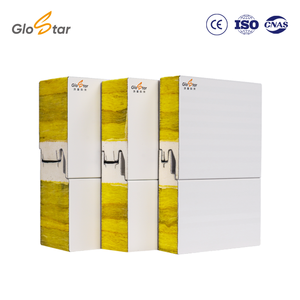
In modern industrial structural design, the building envelope represents the critical thermal boundary and primary mechanical barrier against environmental fatigue. In India’s rapid industrialization wave—spanning large-scale Pre-Engineered Buildings (PEBs), gigafactories, automated distribution centres, and cold storage logistics hubs—selecting certified industrial wall panels is no longer just an aesthetic or architectural preference; it is a vital life-safety, energy conservation, and asset-preservation decision.
The European standard EN 14509: Factory-made self-supporting double skin metal faced insulating sandwich panels provides the most rigorous structural, thermal, and reaction-to-fire validation protocol globally. While traditional local panel suppliers across India often rely on non-continuous batch foaming methods with uneven density distributions, our automated continuous production lines guarantee microcellular polymer stability throughout every square meter.
A recurring procurement barrier for engineering consultants in Pune, Chennai, and Hyderabad is harmonizing European reaction-to-fire classifications with the National Building Code of India (NBC 2016 Part 4: Life and Fire Safety) and local State Fire NOC guidelines. Traditional polyurethane (PUR) or expanded polystyrene (EPS) cores present extreme ignition risks and propagate deadly black smoke. Our manufacturing facility engineers two distinct fire-rated cores designed to clear strict consultant approvals:
In regions such as Ahmedabad, Nagpur, and the Delhi NCR corridor, ambient exterior summer surface temperatures on dark color-coated sheets can exceed 70°C, while interior HVAC systems target 22°C to 24°C. This extreme delta ($\Delta T \approx 48^\circ\text{C}$) drives tremendous heat flux into the structure. Uncertified local panels with degradation in their core blowing agent quickly lose up to 35% of their thermal resistance within two seasons. By utilizing cyclopentane or HFO-based closed-cell technology, our CE-certified panels maintain their design U-value across a 30-year design life, directly supporting compliance with India's Energy Conservation Building Code (ECBC 2017) and green building rating platforms (IGBC and LEED India).
From saline coastal free-trade zones to high-altitude cold belts, our sandwich wall panel assemblies are proven in heavy-duty commercial environments across the subcontinent.
Deployed across Genome Valley (Hyderabad), Baddi (HP), and Pune. Cleanroom partition panels feature smooth flush tongue-and-groove joints sealed with silicone-free gaskets, antimicrobial PVDF coatings, and resistance to aggressive H2O2 / formalin sterilization procedures.
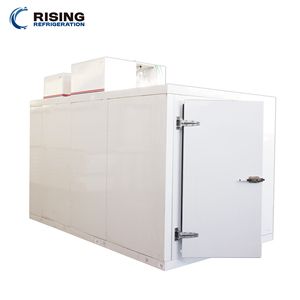
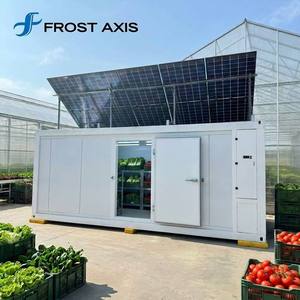
Serving the PMKSY Mega Food Parks in Gujarat, Maharashtra, and Andhra Pradesh. 100mm to 200mm thick PIR and PUR walk-in freezer panels equipped with thermal-break floor channels and cam-lock joints to eliminate thermal bypass and prevent vapor drive ice buildup.
Supplied to major manufacturing belts in Sriperumbudur (Tamil Nadu) and Sanand (Gujarat). High-density structural Rockwool core panels deliver robust structural compartmentalization, ensuring fire-containment between high-risk lithium battery dry-rooms and assembly zones.
Operating in corrosive C4/C5 marine environments in Dahej, Mundra, Hazira, and Visakhapatnam. Panels are faced with 55% Al-Zn alloy coated steel (Galvalume AZ150) topped with high-build Polyvinylidene Fluoride (PVDF) or Plastisol to resist salt-fog and chemical vapor attack.
Accelerating construction timelines in Bhiwandi (Mumbai), Chakan (Pune), and Luhari (NCR). Extra-long continuous panels (up to 15 meters) span multi-tier vertical racks with minimal horizontal joints, drastically reducing dust infiltration and improving HVAC air tightness.
Designed for textile processing zones in Surat, Coimbatore, and Tirupur where indoor relative humidity exceeds 80%. Fully vapor-sealed panel interlocks equipped with factory-applied non-hardening butyl mastic avoid interior skin condensation and corrosion.
Compare thermal efficiency, fire reaction, mechanical load behavior, and moisture sensitivity across our core formulations to specify the optimal sandwich wall panels for your facility.
| Technical Characteristic | Continuous PIR (Polyisocyanurate) | Standard PUR (Polyurethane) | Structural Rockwool (Basalt Fiber) | Resin-Bonded Glasswool |
|---|---|---|---|---|
| Thermal Conductivity ($\lambda$) | 0.020 – 0.022 W/m·K (Best-in-Class) | 0.024 – 0.026 W/m·K | 0.038 – 0.042 W/m·K | 0.035 – 0.039 W/m·K |
| Core Density ($\text{kg/m}^3$) | 40 – 42 kg/m³ | 38 – 40 kg/m³ | 100 – 140 kg/m³ (Heavy-Duty) | 48 – 64 kg/m³ |
| Reaction to Fire (EN 13501-1) | Class B-s1, d0 (Flame Retardant) | Class B3 / B2 (Combustible) | Class A1 (Completely Non-Combustible) | Class A2-s1, d0 (Non-Combustible) |
| Fire Resistance Duration | 30 to 60 Minutes (Integrity) | < 15 Minutes | 60 to 240 Minutes (EI 60 - EI 240) | 45 to 90 Minutes |
| Closed Cell Content (%) | > 92% (Impermeable to moisture) | > 88% | Open-cell fibrous structure | Open-cell fibrous structure |
| Moisture Absorption Behavior | Negligible (< 1.0% volume) | Low (< 2.0% volume) | Hydrophobic treated (< 1.0 kg/m²) | Requires intact moisture vapor barrier |
| Acoustic Attenuation ($R_w$) | Approx. 24 – 26 dB | Approx. 23 – 25 dB | 32 – 35 dB (Superior Sound Absorption) | 30 – 34 dB |
| Best Indian Climate Target | Pan-India Extreme Summer & Monsoon | Standard Indoor Temperature Partitions | High Fire Risk Facilities / Boiler Enclosures | High-Noise Industrial Machining Bays |
How stringent ESG standards, government infrastructure schemes, and climate commitments are transforming wall panel procurement across India.
Under the revised mandates of the Bureau of Energy Efficiency (BEE) and state-level adoption of the Energy Conservation Building Code (ECBC), large commercial and industrial buildings are required to demonstrate significant energy reductions. Historically, simple single-skin metal profile sheets with glasswool rolls installed under-slung on mesh wire were common. However, due to air leakage, thermal bridging at purlins, and moisture sagging, real-world heat gain exceeded design estimates by up to 50%. The Indian EPC ecosystem is transitioning en masse to continuous tongue-and-groove composite sandwich panels that eliminate thermal bridges and slash chiller loads by 25% to 40% annually.
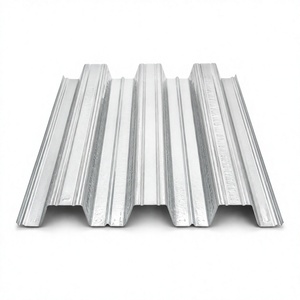
With industrial land prices surging near Tier-1 logistics nodes (Bhiwandi, Chakan, Sriperumbudur, Gurgaon), industrial parks are constructing vertically. Multi-story automated warehouses require secondary structural floor decking—such as our galvanized alloy corrugated steel decking—working in synergy with lightweight exterior sandwich wall cladding. This cuts structural dead load by up to 30% compared to masonry or precast concrete, accelerating superstructure handover by months.
Global Fortune 500 multinationals establishing manufacturing plants in India (Apple supply chain partners, global automotive OEMs, international cloud data centre providers) enforce zero-landfill construction. Our CE-certified panels are prefabricated to exact architectural drawings, reducing on-site construction waste to under 0.5%. Furthermore, our steel facings are 100% recyclable, and our blowing agents possess Zero Ozone Depletion Potential (ODP = 0) and low Global Warming Potential (GWP < 1).
Strategically situated on the Arabian Sea maritime corridor, our integrated manufacturing lines deliver European-certified building envelopes with unmatched freight efficiency to India's west coast ports.
Fully continuous high-pressure foaming lines ensuring consistent 40-42 kg/m³ density distribution with zero cavity formation across 10,000 m² daily capacity.
Direct ocean freight from Oman to Nhava Sheva (JNP), Mundra, Hazira, and Cochin in just 4 to 7 sailing days, bypassing prolonged East Asian supply bottlenecks.
Complete project submittal packages including factory test certificates, third-party fire test reports (BS 476 / EN 13501), and span-load charts ready for consultant approval.
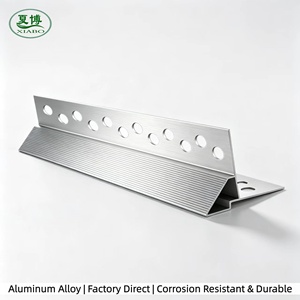
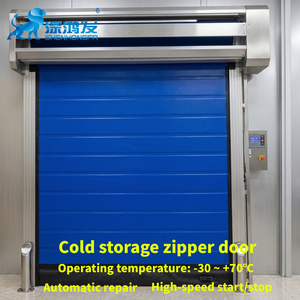
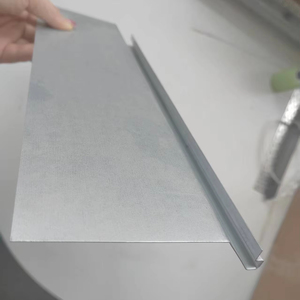
One-stop supply chain delivering insulated panels, metal floor decking, high-speed thermal doors, precision eave flashings, and butyl sealing accessories.
Critical answers addressing import customs tariffs, BIS standard alignment, monsoon moisture prevention, and structural performance under Indian site conditions.
Indian standard IS 14246 covers prepainted steel sheets, but specific national standards for continuous polyurethane/polyisocyanurate composite sandwich panels frequently defer to international benchmarks. Major Indian engineering consultants (such as Tata Consulting Engineers, EIL, and leading PEB fabricators) explicitly specify EN 14509 / ISO 9001 certifications as qualifying criteria. Our panels meet or exceed both CE EN 14509 and IS 12843 guidelines.
Our sandwich panels are routinely exported to India under HSN Code 730890 (Structures and parts of structures of iron or steel) or HSN 392590 (Builders' ware of plastics). We provide complete documentation including Certificate of Origin, Bill of Lading, Commercial Invoice, Packing List, and Mill Test Certificates compliant with Indian Customs Single Window System (ICEGATE), expediting fast container release at Nhava Sheva or Mundra.
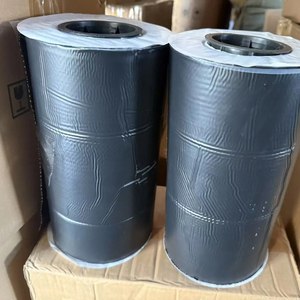
The monsoon belt brings sustained 90%+ relative humidity paired with high interior air-conditioning. We engineer a double-tongue-and-groove joint profile equipped with factory-inserted closed-cell EPDM gaskets and capillary grooves. When combined with our anti-lead EPDM butyl flashing rolls at secondary junctions, water vapor migration and inter-panel capillary suction are 100% prevented.
For facilities within 15 km of the Arabian Sea or Bay of Bengal (C4/C5 marine environments), standard RMP (Regular Modified Polyester) coatings suffer premature chalking. We supply panels with high-durability 55% Al-Zn alloy substrate (minimum AZ150 g/m²) finished with 25-micron PVDF (Polyvinylidene Fluoride) or 50-micron HDP (High Durable Polyester), backed by warranty against corrosion and UV fading.
Our production facilities in Oman maintain direct feeder vessel connectivity to ports on India's western coast. Typical sailing transit to Nhava Sheva (Mumbai) and Mundra (Gujarat) is just 4 to 7 days. Panels are stacked with protective peelable polyfilms, corner edge protectors, and high-density timber skids in 40ft High Cube containers, ensuring zero abrasion or moisture damage upon arrival at your job site.
Yes. Our in-house engineering department evaluates your project’s geographical basic wind speed ($V_b$) according to IS 875 (Part 3), design terrain category, and purlin spacing. We provide certified span-to-deflection tables ($L/200$ or $L/250$) verifying permissible panel lengths, fixing screw densities, and wind suction capacities for cyclonic zones.
Our sales engineers respond to project questions during working hours (GST+4).