
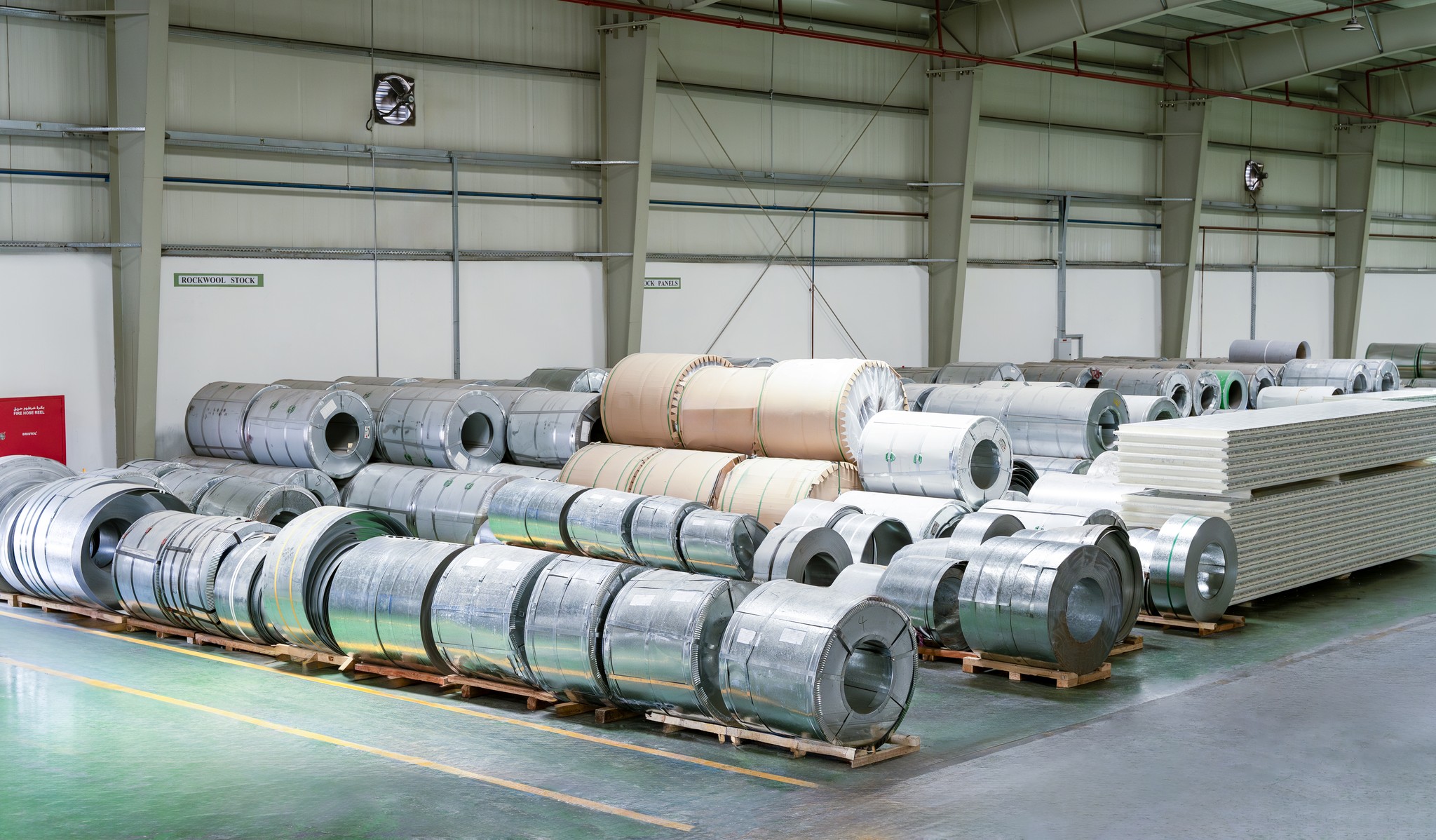
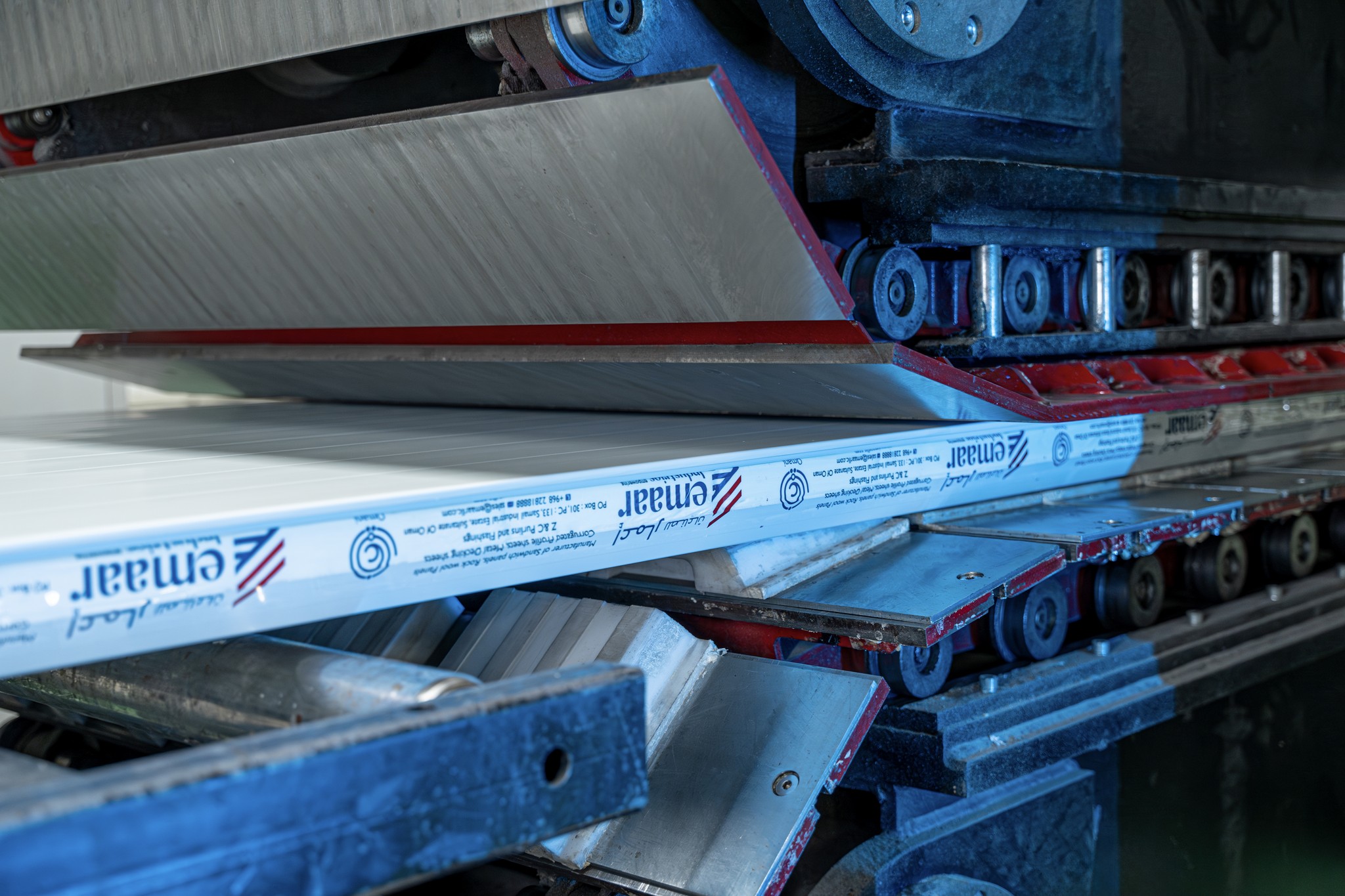
Manufactured on high-speed continuous roll-forming lines using premium galvanized steel, aluminum-zinc alloy, and high-durability coatings engineered to exceed Egyptian standard requirements.
A rigorous examination of thermodynamic stress, micro-abrasive wind loading, and marine salinity mechanics affecting metal building envelopes across Egyptian economic corridors.
The Arab Republic of Egypt experiences some of the highest global horizontal irradiance (GHI) levels on Earth, reaching 2,400 to 2,600 kWh/m² per annum across Upper Egypt, Cairo, and the Suez Isthmus. Roofing sheets installed on logistics hubs, pre-engineered buildings (PEB), and industrial factories frequently endure rooftop ambient surface temperatures exceeding 72°C during July and August, collapsing to under 12°C during winter nights. This diurnal temperature delta of over 60°C triggers aggressive cyclic thermal expansion and contraction along the longitudinal axis of roll-formed metal sheets.
When sub-standard steel grades with deficient elastic recovery or low-grade polyester resins are deployed, this cyclic thermal fatigue results in screw-slot elongation, ovalization of fastener penetrations, micro-cracking around trapezoidal ribs, and eventual catastrophic rain ingress during Egypt's sudden, torrential seasonal downpours. Our Chinese manufacturing facilities resolve this failure mode by utilizing high-yield structural cold-rolled steel substrates (DX51D+Z through S350GD) possessing verified elastic-plastic limits and specified thermal expansion coefficients. Combined with custom-designed sliding clips and elongated slotted purlin interfaces, our profile roofing assemblies comfortably absorb longitudinal thermal shift without plastic deformation or oil-canning.
ΔL = L × α × ΔT, where L is continuous profile length (up to 11.8 m per shipping container limit), α is the thermal expansion coefficient of carbon steel (1.2 × 10⁻⁵ m/m°C), and ΔT is the operational temperature swing (60°C). For an 11.8-meter continuous sheet, ΔL exceeds 8.5 mm, requiring our precision slotted ridge capping and ovular self-drilling screw washers with vulcanized EPDM seals.
Egypt presents two conflicting chemical-physical degradation environments: the aggressive ISO 9223 C4/C5 marine atmospheric corrosivity zone extending from Alexandria, Damietta, and Port Said to Ain Sokhna on the Red Sea, and the severe mechanical abrasion zone across the desert outskirts of 6th of October City, 10th of Ramadan City, and the New Administrative Capital (NAC), heavily impacted by the annual Khamsin winds carrying silica particulate matter at speeds exceeding 70 km/h.
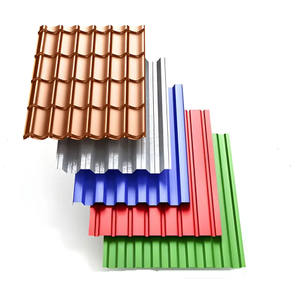
To resist sea spray, airborne chloride deposition, and persistent relative humidity along the Mediterranean and Red Sea littoral zones, our factory supplies 55% Aluminum-Zinc alloy coated steel (Galvalume / Aluzinc AZ150 to AZ200) alongside High-Durability Polyester (HDP) and Polyvinylidene Fluoride (PVDF / Kynar 500) continuous coil coating lines. For desert zones characterized by constant sandblasting, our 25-micron fluoropolymer coatings integrate high-hardness ceramic pigments to sustain mechanical abrasion tests without peeling, chalking, or delamination, offering an engineered design life exceeding 25 years without recoating.
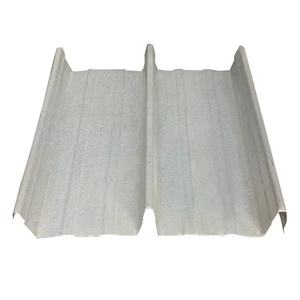
Wind loading along the Gulf of Suez corridor (e.g., Zafarana, Ras Ghareb) frequently generates sustained aerodynamic wind speeds that create intense negative pressure zones (suction) along eaves, gable verges, and roof ridges. Our high-rib trapezoidal profiles (such as the 66-394-788 structural profile) are designed using cold-form finite element modeling to maximize the section modulus (Zx) and second moment of area (Ix). This architectural geometry empowers structural engineers to safely increase purlin spacing from the traditional 1.2 meters up to 1.8 meters, delivering significant structural steel framing savings across large-scale industrial warehouses without compromising negative wind-suction safety factors.
Tailored manufacturing configurations supporting the national infrastructure targets of Egypt Vision 2030, industrial free zones, and agro-industrial reclamation projects.
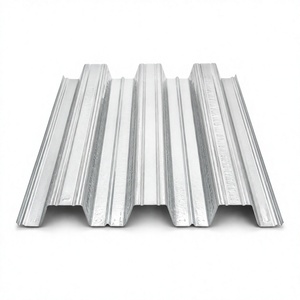
Commercial megastructures, government districts, and multi-story logistics hubs requiring high-capacity composite floor decking panels. Acts as permanent steel formwork and tensile reinforcement, accelerating concrete curing schedules and cutting construction cycles by 40%.
Heavy bonded warehouses, chemical processing plants, and marine logistics parks facing corrosive salt fog and high humidity. Demands Aluzinc AZ150 and PVDF-coated trapezoidal roofing systems with color-matched valley flashings and industrial drainage eaves.
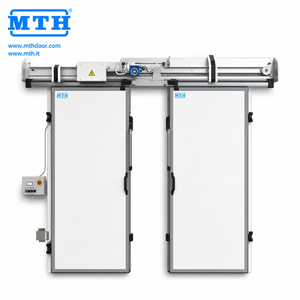
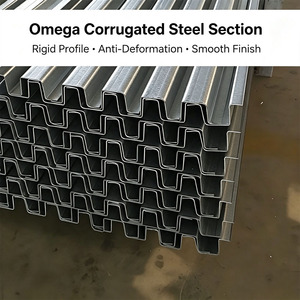
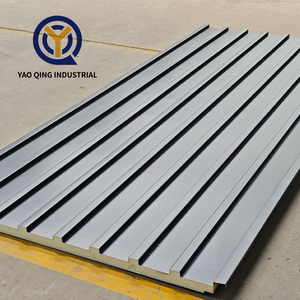
Temperature-controlled cold-chain logistics, fruit packhouses, and agro-processing centers. Integrates cold storage insulated doors with PIR/PUR sandwich panels and cold-formed Omega purlins engineered for dust storms and agricultural building spans.
Compare mechanical and chemical specifications across our primary raw material grades to select the optimal envelope system for your specific Egyptian development zone.
| Profile Specification | Substrate Chemistry | Yield Strength (MPa) | Protective Coating Mass | Corrosion Resistance (Salt Spray) | Recommended Egyptian Zone |
|---|---|---|---|---|---|
| PPGI High-Rib (66-394-788) | Hot-Dip Galvanized (HDG) | 350 - 550 MPa | Z120 - Z275 g/m² | 1,000 hrs (ASTM B117) | Greater Cairo, 10th of Ramadan, Giza |
| Galvalume / Aluzinc Profile | 55% Al, 43.4% Zn, 1.6% Si | 300 - 380 MPa | AZ100 - AZ180 g/m² | 2,000 hrs (ASTM B117) | Ain Sokhna, Suez Port, Safaga |
| PVDF Architectural Alloy | Aluminum-Manganese (3004) | 185 - 240 MPa | 25μm Fluoropolymer Resin | 4,000+ hrs (Marine Grade) | Alexandria, North Coast, Port Said |
| Composite Floor Decking | Heavy Zinc Galvanized Steel | 350 - 550 MPa | Z275 (0.8 - 1.2 mm Gauge) | High Alkaline Barrier (Concrete) | New Administrative Capital High-Rises |
| Omega & C-Channel Purlins | Cold-Rolled Carbon Steel | 300 - 450 MPa | Hot-Dip Galvanized ≥80μm | 1,500 hrs Structural Class | Aswan Solar Corridors, Toshka Greenhouses |
Combining world-class high-speed roll-forming precision with rigorous chemical quality controls, project-tailored value engineering, and friction-free trade compliance.
Our multi-station roll-forming lines operate with ultra-tight tolerance standards (±0.02 mm thickness, ±1 mm rib camber), outputting over 10,000 m² daily to satisfy tight EPC commissioning schedules.
Every shipment is accompanied by comprehensive 3.1 Mill Test Certificates (MTC), coating thickness verification reports, T-bend elasticity logs, MEK solvent rub tests, and impact resistance compliance.
We supply a fully resolved building envelope: primary roofing profiles, composite floor decking, C/Z/Omega structural purlins, matching flashing trims, thermal cold room doors, and insulated core panels.
Our dedicated foreign trade operations team holds extensive experience with the Egyptian NAFEZA single-window system, pre-shipment ACID numbering, Carnet verification, and Letter of Credit (L/C) compliance.
Critical answers addressing Egyptian customs procedures, coastal corrosion protection, container freight packing, and structural structural optimization.
We are fully registered with CargoX and the Egyptian NAFEZA (National Single Window for Foreign Trade Services) customs platform. Before cargo departs any Chinese seaport (e.g., Shanghai, Qingdao, Ningbo, or Tianjin), our export documentation specialists coordinate with your local clearing agent to obtain the 19-digit ACID (Advance Cargo Information Declaration) number. We ensure the ACID, Egyptian Importer Tax ID, and foreign exporter information are laser-printed onto the original Master Bills of Lading, commercial invoices, and packing lists, eliminating clearance rejections or demurrage fines at Alexandria, Port Said, or Sokhna ports.
Ain Sokhna is situated on the Red Sea and falls under an aggressive marine microclimate (ISO 9223 Category C4 to C5). We strongly advise either 55% Aluzinc (AZ150 g/m²) or PPGI coated with High-Durability Polyester (HDP) or PVDF (Polyvinylidene Fluoride) with a dry film thickness of 25 microns top and 8 microns primer. Conversely, 6th of October City has an arid desert climate (Category C2 to C3) where airborne silica abrasion is the main issue. Here, an SMP (Silicon Modified Polyester) or Regular Modified Polyester (RPE) with a Z180 hot-dip galvanized core provides an optimal balance of sand-scour resistance and procurement economy.
Yes. Standard 40-foot High Cube (40HQ) ocean shipping containers have an internal clearance length of approximately 11.95 meters. We roll-form custom roofing and decking panels to precise lengths up to 11.80 meters. This maximizes container volume, prevents longitudinal overlapping on short and medium-span structures, reduces field installation time, and eliminates roof lap leak risks. For oversized lengths exceeding 12 meters, we offer breakbulk vessel stowage with specialized wooden cradling.
Our corrugated galvanized steel floor decking profile functions as high-strength permanent formwork that instantly supports dead loads and construction personnel without intermediate wooden shoring. During the concrete pour, embossments rolled into the profile ribs mechanically interlock with the cured slab, converting the steel decking into permanent tensile reinforcement. This system reduces concrete pour volume by 20% to 30%, diminishes building deadweight, lowers foundation foundation costs, and cuts typical floor cycle turnaround times from 14 days down to 6 days.
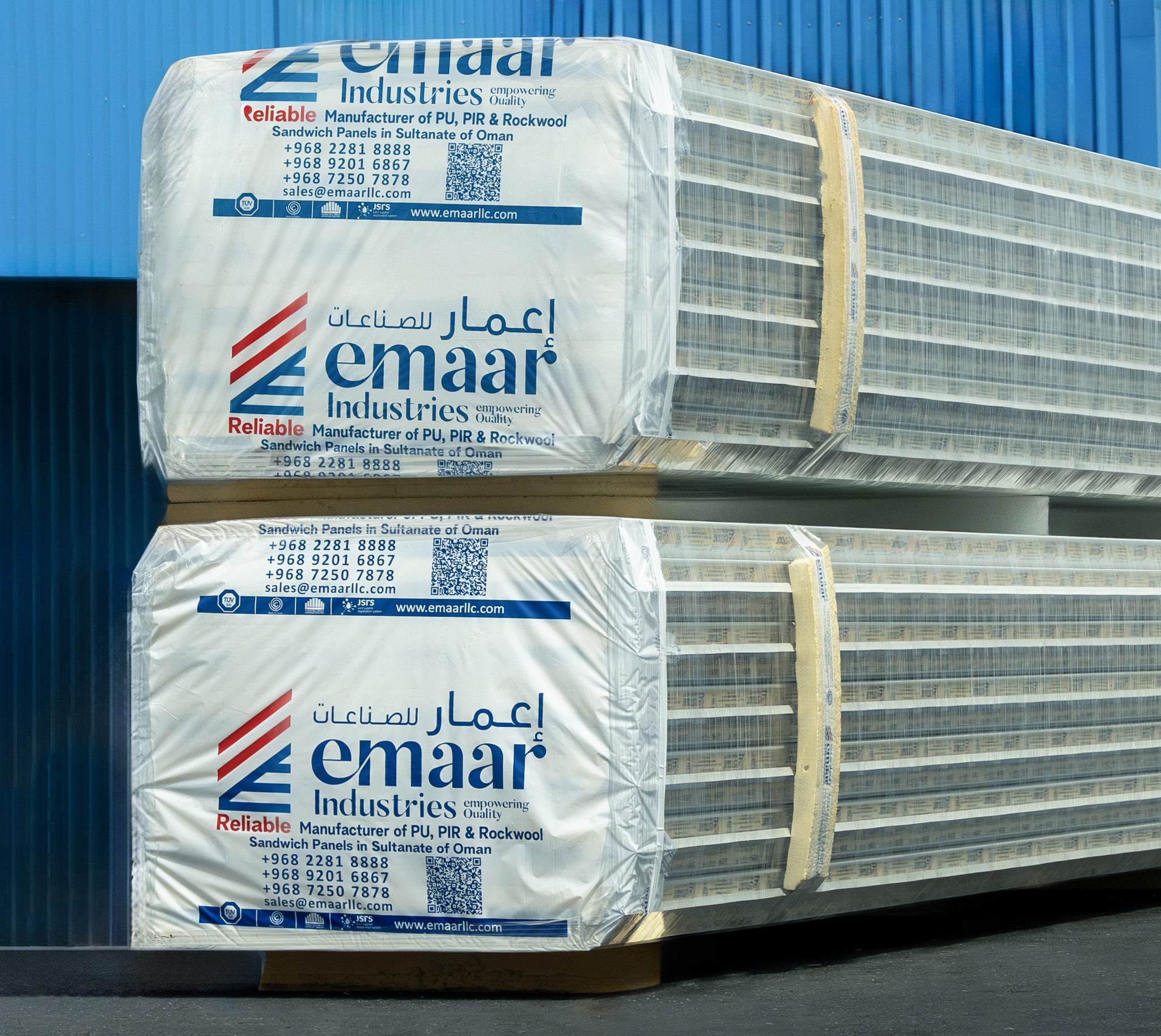
Marine sea transit between China and Egyptian ports encounters varying temperature and humidity cycles that cause container sweating and dew formation. To stop zinc oxidation ("white rust"), every profile bundle is surface-treated with a chromate or trivalent anti-fingerprint passivation seal. Bundles are vacuum-wrapped with waterproof VCI (Vapor Corrosion Inhibitor) poly-film, reinforced with heavy kraft paper, secured with corrugated steel corner protectors, banded with heavy galvanized steel strapping, and nested onto fumigated timber skids with silica gel desiccant packs inside the container.
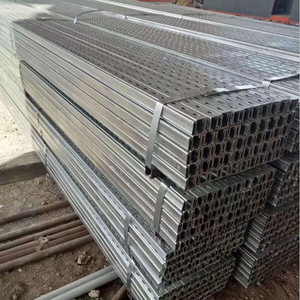
Our cold-rolled Omega purlins and C-channels are manufactured using high-yield S350GD structural steel with hot-dip galvanized coatings exceeding 80 microns (Z275 to Z600 equivalent). They feature CNC-punched slots matching standard solar bracket clamping systems (such as mid-clamps and end-clamps for bifacial photovoltaic modules). This eliminates field welding or cutting on site, preserves the protective zinc surface, and ensures compliance with wind load codes in high-wind regions like Zafarana and the Red Sea hills.
We support 100% Irrevocable Letters of Credit at Sight confirmed by first-class international banks, conforming fully to Central Bank of Egypt regulatory guidelines. We are also able to support mixed structures including 30% T/T advance deposit with 70% against original Bill of Lading documentation for verified contracting groups, as well as deferred payment terms via certified usance bank structures on qualifying government-backed infrastructure frameworks.
Yes. We match standard international RAL color coordinates (such as RAL 9002 White Grey, RAL 5012 Light Blue, RAL 7016 Anthracite Grey, or RAL 3000 Flame Red), as well as custom Pantone codes via computerized spectrophotometer analysis. We offer high-durability coatings that include high Solar Reflectance Index (SRI ≥ 78) "cool roof" pigments, reflecting solar infrared heat and reducing warehouse cooling loads by up to 22% in Upper Egypt.
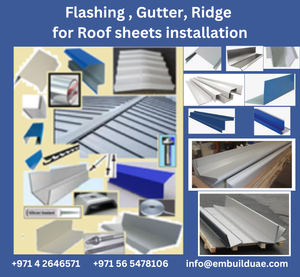
Egypt occasionally suffers extreme cloudburst rainfall events (known locally as "Seyoul") that overwhelm traditional shallow trims. Our CNC-bent ridge caps, valley flashings, gable trims, and drip edge gutters are designed with generous girth profiles and deep overflow channels. They feature hemmed safety edges, pre-punched slotted fastener zones, and can be paired with closed-cell polyolefin foam filler strips that match our trapezoidal profiles, creating an impenetrable barrier against wind-driven rainwater.
Standard roll-forming production for orders between 5,000 m² and 25,000 m² typically requires 12 to 18 working days from raw material coil allocation and technical drawing approval. Ocean shipping transit time from Chinese main ports (Shanghai, Qingdao, Ningbo) to Alexandria, Damietta, or Port Said averages 24 to 30 days via direct Mediterranean vessel loops, and approximately 18 to 22 days to Ain Sokhna on the Red Sea maritime corridor.
Consult with our engineering team for BOQ structural reviews, exact wind-load deflection calculations, customized coating recommendations, and comprehensive landed CIF pricing for Egyptian ports.
Our sales engineers respond to project questions during working hours (GST+4).