
Direct manufacturer supply of roll-formed, pre-punched structural purlins and rails conforming to Japanese JIS tolerances, complete with mill test certs and high-corrosion resistant zinc coatings.
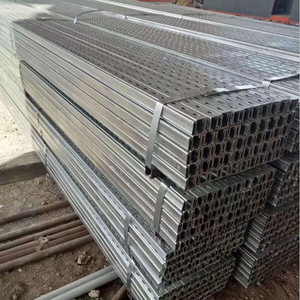
Heavy-gauge slotted C-rail engineered for Osaka warehouse rooftop PV retrofit schemes. Features automated punch geometry for rapid clamp fixing.
Technical Details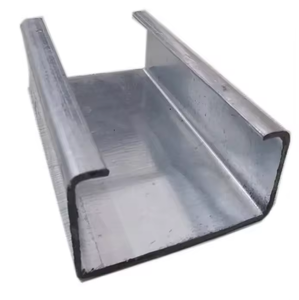
Standard high-yield cold-formed C-channel purlins fabricated with Z275 hot-dip galvanizing for industrial warehouses and Sakai-Senboku distribution depots.
Technical Details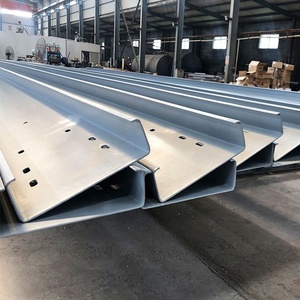
Bespoke punched elongated web slots enabling rapid anti-sag rod tie-in and secondary wall-girt framing under strict Japanese seismic lateral drift margins.
Technical Details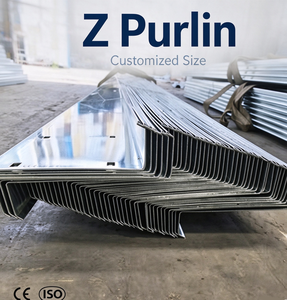
Lapped Z-profile sections delivering continuous beam mechanical advantages across internal bay frames. Optimized for large logistics spans throughout Osaka Nanko.
Technical Details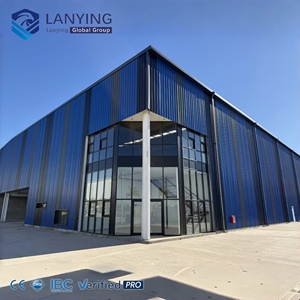
Complete envelope integrated packages: secondary purlins, primary heavy H-sections, and composite decking delivered containerized directly to project sites.
Technical Details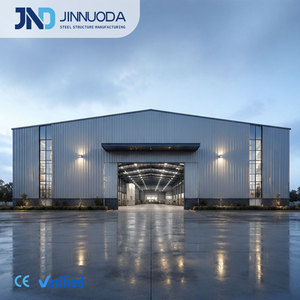
Certified high-tensile cold-rolled framing members paired with precision structural grade 8.8 / 10.9 fastening assemblies for typhoon uplift resistance.
Technical Details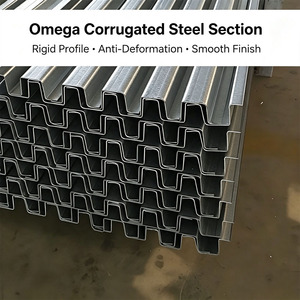
Hat/Omega cold-formed profiles offering superior torsional rigidity in low-pitch roof trusses, Kansai greening sheds, and rooftop equipment bridge bracing.
Technical Details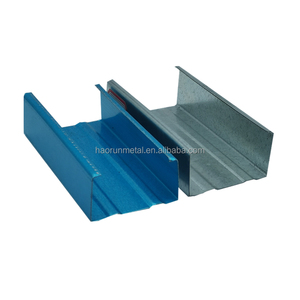
Export standard 6-meter and custom length C-channels featuring tight dimensional camber control, deburred edges, and bundle packaging for break-bulk vessel shipping.
Technical DetailsA rigorous examination of why standard purlin profiles fail in Western Japan, and how our JIS-aligned cold-formed structural channels solve local maritime, seismic, and meteorological dilemmas.
Procurement managers, structural engineers, and General Contractors (Zenekon) operating throughout Osaka Prefecture, Hyogo, and the greater Kansai industrial belt face a unique convergence of geographic, meteorological, and structural challenges. Unlike landlocked Asian manufacturing environments, construction in the Osaka coastal territory—stretching from Konohana Ward and Osaka Nanko (South Port) down through Sakai-Senboku, Izumiotsu, and Kishiwada—demands structural cold-formed steel purlins with dual resilience: high cyclic ductility against Hanshin fault-line earthquakes and micro-climate barrier protection against volatile marine air.
Osaka Bay is bordered by petrochemical facilities, automated container terminals, and heavy steel fabrication yards. Airborne sea salt chloride deposition ($Cl^-$) in zones within 1.5 kilometers of Osaka Nanko and the Yumeshima Island artificial landmass frequently exceeds $0.5\,\text{mg/m}^2/\text{day}$. When standard commercial galvanized purlins with sub-140\,$\text{g/m}^2$ zinc coatings are installed on industrial roofing, salt moisture combined with summer ambient temperatures surpassing $36^\circ\text{C}$ precipitates rapid zinc sacrifice and premature red rust within 36 to 48 months.
Our manufacturing facility addresses Osaka Bay's aggressive marine boundary layer by supplying cold-formed purlins produced from JIS G 3302 SGCC / SGH440 substrate coils featuring continuous hot-dip zinc coatings of Z275 ($\ge 275\,\text{g/m}^2$), Z350, and next-generation Zinc-Aluminum-Magnesium (Zn-Al-Mg, ZM275 / ZM310) alloys. The presence of 3% magnesium in ZM coatings generates a dense Simonkolleite ($Zn_5(OH)_8Cl_2\cdot H_2O$) protective film across exposed punched bolt holes and sheared web edges, effectively ending edge corrosion in Osaka's coastal warehouses.
Under the Building Standard Law of Japan (建築基準法, Kenchiku Kijun-hō) and MLIT Notification No. 1454, Osaka Prefecture falls under reference design wind velocity zones where standard wind speeds ($V_0$) range from $34\,\text{m/s}$ to $38\,\text{m/s}$, with localized coastal gust design factors reaching upwards of $46\,\text{m/s}$ near bay frontage. During extreme meteorological events, such as Typhoon Jebi, roof envelopes experience extreme localized negative wind pressure (uplift tension) at eaves, corner bays, and ridges ($C_{pe} = -1.8$ to $-2.2$).
When cold-formed purlins exhibit non-uniform flange stiffener lip angles or deficient corner radii, localized web-flange crippling occurs under cyclical suction loads. Our continuous roll-formed C and Z purlins are manufactured with cold-bent return lips formed at strict $90^\circ$ to $135^\circ$ angles with internal bend radii ($r_i$) strictly held to $1.5t-2.0t$. This prevents flange distortion, increases the critical distortional buckling moment ($M_{crd}$), and preserves the load path to the primary structural portal frames during violent storm depressions.
Multi-story automated fulfillment centers requiring continuous lap-jointed Z-purlins over 8 to 12-meter bays. Designed to carry heavy composite insulated sandwich panels and sprinkler lines without exceeding $L/250$ live deflection limits.
High-tensile C-channel and omega rails serving corporate Power Purchase Agreements (PPA) across Higashiosaka factories. Pre-slotted CNC hole profiles integrate seamlessly with aluminum mounting brackets and clamps without field drilling.
Lightweight replacement of deteriorating hot-rolled steel angles and channels in 1970s–1980s manufacturing workshops across Amagasaki and Yao. Reduces building roof deadweight by up to 42%, lowering seismic base shear ($V = C_s W$).
Following the Great Hanshin Earthquake (Kobe, 1995) and emerging disaster contingency mandates regarding the forecasted Nankai Trough Megathrust Earthquake, the Kansai construction sector maintains Japan's strictest oversight regarding story drift angles ($\theta \le 1/200$) and secondary member plastic hinge formations. Secondary cold-formed purlins are no longer treated as simple non-structural cladding supports; they are evaluated for their diagonal diaphragm stiffness ($G'$) and lateral-torsional restraint to primary H-beams under horizontal acceleration.
Our Chinese rolling mills process high-grade carbon steel compliant with JIS G 3350 SSC400 (equivalent to Q235B / S250GD) and high-tensile SGH490 / SGH540 (equivalent to Q355B / S350GD / S450GD). With tensile strengths reaching $490 - 620\,\text{MPa}$ and verified elongation values ($\ge 18\%$), our cold-formed profiles absorb lateral vibrational shocks without brittle seam cracking, safeguarding building occupants and expensive factory inventories.
Cross-referencing Japanese Industrial Standards (JIS) against international specifications to streamline verification by Japanese Class-1 Kenchiku-shi (Registered Architects).
| Standard / Parameter | JIS G 3350 (SSC400 / SGH400) | JIS G 3302 (SGH490 / SGH540) | EN 10346 (S350GD / S420GD) | ASTM A653 (Grade 50 / 60) | Our Factory Capability |
|---|---|---|---|---|---|
| Yield Strength ($R_e / f_y$) | $\ge 245\,\text{MPa}$ / $\ge 295\,\text{MPa}$ | $\ge 365\,\text{MPa}$ / $\ge 400\,\text{MPa}$ | $\ge 350\,\text{MPa}$ / $\ge 420\,\text{MPa}$ | $\ge 345\,\text{MPa}$ / $\ge 410\,\text{MPa}$ | Custom tuned $235 - 550\,\text{MPa}$ |
| Tensile Strength ($R_m$) | $400 - 510\,\text{MPa}$ | $\ge 490\,\text{MPa}$ / $\ge 540\,\text{MPa}$ | $420 - 600\,\text{MPa}$ | $450 - 550\,\text{MPa}$ | Guaranteed $\ge 490\,\text{MPa}$ on high-tensile |
| Zinc Coating Mass | Z120 to Z275 ($\text{g/m}^2$) | Z180 to Z275 ($\text{g/m}^2$) | Z140 to Z350 ($\text{g/m}^2$) | G60 to G90 ($\text{oz/ft}^2$) | Z275, Z350, ZM275 / ZM310 (Zn-Al-Mg) |
| Thickness Tolerance | $\pm 0.10 - \pm 0.15\,\text{mm}$ | $\pm 0.08 - \pm 0.12\,\text{mm}$ | $\pm 0.09 - \pm 0.13\,\text{mm}$ | $\pm 0.003 - \pm 0.005\,\text{in}$ | High-precision cold roll: $\le \pm 0.05\,\text{mm}$ |
| Profile Height ($H$) Drift | $\pm 1.5\,\text{mm}$ | $\pm 1.5\,\text{mm}$ | $\pm 1.5\,\text{mm}$ | $\pm 0.062\,\text{in}$ | Strict $\pm 1.0\,\text{mm}$ automated optical scan |
| Edge Camber ($q$) | $\le 2.0\,\text{mm}$ per 2 meters | $\le 2.0\,\text{mm}$ per 2 meters | $\le 2.0\,\text{mm}$ per 2 meters | $1/8\,\text{in}$ per 10 feet | $\le 1.2\,\text{mm} / 2\,\text{m}$ (straightness guaranteed) |
| Salt Spray Test ($5\%\,\text{NaCl}$) | 240 Hours (Standard Z) | 360 Hours (Standard Z) | 300 - 500 Hours | ASTM B117: 250 - 500 Hours | 1,500 - 3,000 Hours (ZM Alloy) |
How the rapid shift toward green building mandates, pre-engineered building (PEB) design, and port logistics expansions are shaping purlin specifications.
In alignment with Japan’s Ministry of Economy, Trade and Industry (METI) 2050 carbon neutrality pledge and Osaka Prefectural Green Building Ordinances, developers constructing logistics sheds exceeding $2,000\,\text{m}^2$ in Kansai must integrate distributed solar generation. Corporate Power Purchase Agreements (PPAs) often dictate that existing warehouse roofs be retrofitted with utility-scale photovoltaic arrays.
Standard 1.6\,$\text{mm}$ light-gauge purlins lack the structural capacity to support combined snow, wind, and secondary solar dead loads ($15 - 20\,\text{kg/m}^2$). Consequently, structural retrofits throughout Osaka are shifting toward cold-formed omega rails and heavy C-channels ($2.3\,\text{mm} - 3.2\,\text{mm}$). These high-rigidity sections carry both the outer skin and solar rail ballast without requiring secondary under-rafter truss reinforcement.
Historically, Japanese fabricators relied heavily on hot-rolled standard channel steel ([ profile JIS G 3192) for roof framing. However, skyrocketing domestic raw material costs, coupled with labor shortages among aging Japanese ironworkers (Tobi-shoku), have accelerated the adoption of high-tensile cold-formed purlins (C, Z, and Sigma). By using cold-formed profiles with yield strengths of $350 - 450\,\text{MPa}$, overall roof structural deadweight is reduced by 30% to 45%, lowering freight charges, foundation sizing, and crane rigging durations.
Post-hot-dip galvanizing of cut parts is increasingly restricted across Osaka due to strict municipal VOC emissions policies, zinc bath dross disposal regulations, and prolonged lead times at domestic galvanizing plants. As a result, pre-coated Zinc-Aluminum-Magnesium (Zn-Al-Mg) coils have become the primary choice for specifiers. Offering up to 5 times the anti-corrosion performance of standard galvanizing at half the coating thickness, Zn-Al-Mg purlins provide long-term protection for chemical logistics hubs in Osaka’s southern coastal industrial corridor.
Japanese General Contractors—including Takenaka, Obayashi, Shimizu, and Kajima—mandate 100% digital integration through Tekla Structures, Revit, and IFC data models. Our factory engineering team converts architectural layout drawings directly into CNC punching and cutting G-code. Purlins arrive on Osaka construction sites precisely cut, marked with member IDs, and notched for fast assembly without on-site welding or grinding.
Combining world-scale steel production, strict Japanese Industrial Standards quality assurance, and seamless ocean shipping to Osaka Nanko Container Terminals.
Over 16 high-speed automated roll-forming lines featuring inline optical laser thickness verification, flying hydraulic shears, and dynamic hole punching with zero burr retention.
Every batch is backed by physical tensile, bend, and coating adhesion test reports (JIS Z 2241 / JIS H 0401) certified under ISO 9001:2015 factory quality assurance protocols.
Direct weekly sailings from Shanghai, Ningbo, and Qingdao Ports to Osaka Nanko / Port of Kobe. Transit times of just 3.5 to 5 days ensure reliable project scheduling across Kansai.
Purlin bundles are protected with heavy VCI anti-rust barrier film, wooden dunnage supports, reinforced steel strapping, and moisture desiccant bags to prevent white rust in transit.
Clear, direct answers for Osaka-based trading firms (Shosha), structural engineering consultancies, and EPC contractors.
Partner with a qualified Chinese manufacturing leader in high-tensile cold-formed steel purlins. Request physical product samples, complete mill test certificates, or detailed project quotations delivered directly to your engineering desk.
Our sales engineers respond to project questions during working hours (GST+4).