
Delivering high-tensile corrugated metal wall and roof panels, FM-approved cold storage solutions, and secondary structural Z-purlins tailored for coastal Caribbean salinity, high-altitude Andean thermal stress, and seismic building codes.
Explore heavy-duty insulated sandwich systems, anti-corrosive prepainted corrugated profile sheets, and cold-rolled framing designed for immediate maritime dispatch to Cartagena, Barranquilla, and Buenaventura ports.
Specifying corrugated metal panels and insulated composite systems for the Republic of Colombia requires an uncompromising understanding of the country's stark geographical diversity. From the sea-level maritime atmospheric corrosivity of the Caribbean and Pacific coastlines to the high-altitude ultraviolet degradation of the Andean plateau, a one-size-fits-all cladding product invariably fails prematurely. Structural engineers, project developers, and procurement managers operating in Colombia must align steel metallurgy, zinc mass coating rates, and resin finishes to exact regional environmental classifications (ISO 12944).
In coastal industrial epicenters such as Barranquilla, Cartagena, and the Pacific port of Buenaventura, panels are exposed to persistent saline mist, relative air humidity exceeding 85%, and ambient temperatures often topping 38°C. This micro-environment qualifies as a severe C4 to C5 marine corrosive classification. Standard hot-dipped zinc coatings with low coating weights (e.g., Z60 to Z100) experience rapid galvanic depletion, inducing early red rust development along sheared drip edges and screw penetrations within 24 to 36 months. For these maritime logistical zones, our manufacturing facility produces heavy-barrier Z275 (275 g/m² zinc) or Aluzinc / Galvalume (AZ150, 55% Aluminum-Zinc alloy) substrates coated with 25-micron Polyvinylidene Fluoride (PVDF) or high-durability Siliconized Modified Polyester (SMP). These multi-layer barriers provide superior resistance against chloride ion pitting and coastal atmospheric blistering.
Conversely, for highland industrial clusters situated across the Bogotá Savanna (2,640 meters above sea level), the primary structural degradation vector shifts from galvanic corrosion to extreme solar radiation and rapid diurnal thermal cycling. At high elevations, the atmospheric UV index routinely exceeds Level 11, causing severe chemical photochemical breakdown, chalking, and micro-fissuring in standard commercial polyester coatings. Moreover, the day-to-night temperature swing—surging to 22°C during sunny intervals and dropping sharply to near freezing at night—generates intense cyclical linear thermal expansion and contraction within metal roofing runs. Without engineered sliding clips and thermal movement slots, these thermal stresses shear exposed fasteners and warp corrugated panel ribs. Furthermore, internal air condensation during cool Andean nights necessitates the integration of high-density polyisocyanurate (PIR) cores to suppress internal dew points, eliminating ceiling droplet hazards in sensitive packaging and electronics facilities.
Engineered to resolve real-world architectural and climatic hurdles across Colombia's premier industrial and agricultural corridors.
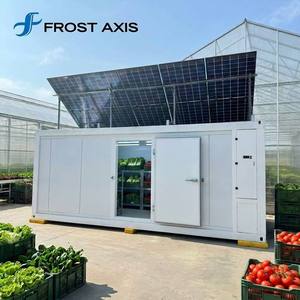
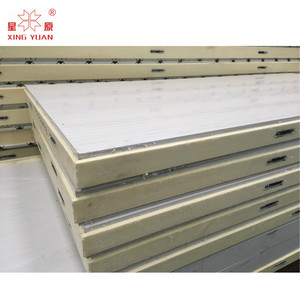
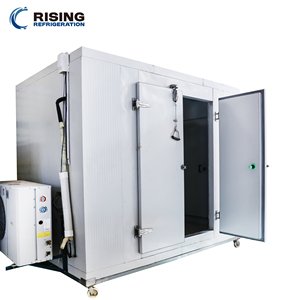
Colombia's thriving export agro-economy—spanning cut flowers across the Rionegro and Savanna plateaus, Hass avocados in the Coffee Axis (Eje Cafetero), and bananas in Urabá—demands precise post-harvest cold chains. Our tight-sealing PU/PIR sandwich panels with food-grade PVDF coatings prevent bacterial colonization, endure caustic washdowns, and maintain unyielding cold storage temperatures down to -25°C.
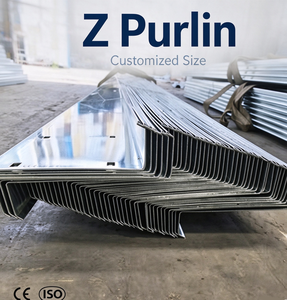
Industrial warehousing in the Free Trade Zones of Mamonal (Cartagena) and Barranquilla requires low dead-load corrugated metal roofing capable of resisting severe marine winds and atmospheric salinity. Combining high-gauge Z-purlins with AZ150 coated corrugated profile panels guarantees structural diaphragms that resist wind uplift while mitigating coastal red-rust degradation over multi-decade lease lifespans.
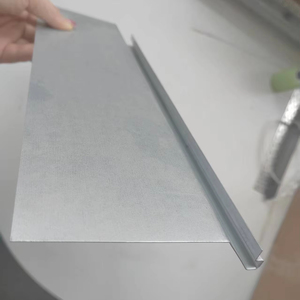
Urban medical and pharmaceutical manufacturing parks in Medellín and Bogotá require non-combustible building partitions and ceilings. Our FM-approved polyurethane and Rockwool sandwich panels combined with heavy-duty galvanized stucco drip edge flashings eliminate air infiltration, achieve airtight seals, and provide verified 1-to-2 hour fire resistance in full compliance with local civil defense codes.
Empirical laboratory metrics comparing protective metallurgy, thermal core performance, and mechanical span capabilities.
| Product Category | Base Metal / Coating Spec | Core Type & Density | Thermal Conductivity ($\lambda$) | Recommended Regional Use |
|---|---|---|---|---|
| Trapezoidal Roof Panels | 0.5mm - 0.8mm Galvanized / Galvalume Z275 / AZ150 | Rigid PIR (Closed-cell >92%) 40 kg/m³ | 0.020 - 0.022 W/m·K | Cartagena, Barranquilla, Buenaventura Coastal Zones |
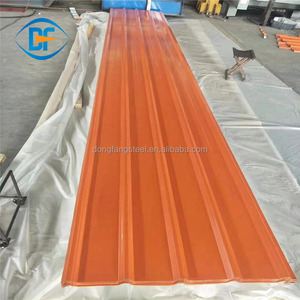
| Corrugated Facade Sheets | 0.4mm - 0.6mm Prepainted Galvanized SMP Coating | Single skin / Optional Mineral Wool acoustic back | Non-Insulated / Structural Barrier | Cali, Medellín, Pereira Light Industrial Parks |
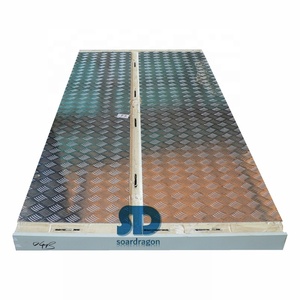
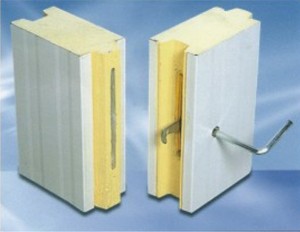
| Freezer Walk-In Panels | 0.5mm Antibacterial Pre-Painted Steel / Stucco Embossed | High-density PUR/PIR with Cam-Lock 42 kg/m³ | 0.022 W/m·K (Up to 200mm thickness) | Nationwide Agro Packhouses & Supermarket Cold Hubs |
| Fire-Rated Cladding | 0.6mm - 0.8mm Hot-Dip Zinc Galvanized Steel | Basalt Stone Rockwool 100 - 120 kg/m³ | 0.038 - 0.040 W/m·K | Petrochemical Facilities & Substation Partitions |
| Cold-Rolled Z Purlins | ASTM A653 Structural Steel High Tensile (Yield 345 MPa) | Structural Steel Section (1.5mm - 3.0mm) | N/A (Structural Diaphragm) | Continuous roof framing for NSR-10 Seismic compliance |
Complete with structural load tables, wind uplift calculations, and paint certification sheets for DIAN import approvals.
The specification landscape in Colombia's construction sector is governed by two major evolutionary trends: structural rigor under the NSR-10 (Norma Sismo Resistente de Colombia) national building code, and the accelerating transition toward low-carbon green building certifications such as EDGE and LEED v4. Historically, industrial facilities across Colombia relied on heavy traditional concrete masonry blocks or uninsulated, brittle fiber-cement corrugated roofing. However, high seismic vulnerability across the Andean zone (which encompasses Bogotá, Medellín, Cali, and Bucaramanga) has propelled an industry-wide transition toward lightweight insulated sandwich panels and high-strength cold-formed steel envelopes.
Under NSR-10 Chapter B (Design Loads) and Chapter F (Metal Structures), building envelopes must perform reliably as secondary structural diaphragms without contributing excessive dead-weight that amplifies seismic base shear. An insulated metal sandwich roof panel weighing between 11 to 15 kg/m² replaces concrete or ceramic assemblies weighing in excess of 60 kg/m². This radical weight reduction decreases the tonnage of primary structural steel frames, reduces foundation costs, and substantially lowers seismic kinetic inertial loads during major seismic events. Furthermore, our continuous Z-purlin systems, manufactured with engineered lap joints over rafters, create hyper-rigid horizontal diaphragms that resist high wind suction forces common in the Caribbean coastal belt during the Atlantic hurricane season.
Concurrently, the demand for verified thermal efficiency has surged. The Ministry of Housing, City and Territory (Ministerio de Vivienda) and municipal planning departments increasingly enforce Resolution 0549/2015 regarding sustainable water and energy conservation benchmarks. Cold storage operators, multi-tenant distribution center developers, and logistics park concessionaires must demonstrate overall building envelope thermal transfer values ($U$-values) below 0.35 W/m²·K. Standard corrugated metal panels without insulation permit high heat ingress in equatorial zones, overburdening HVAC refrigeration compressors and leading to soaring industrial utility expenses. By upgrading to PIR-cored insulated panels with closed-cell polyisocyanurate chemistry, Colombian commercial operators slash cooling energy usage by up to 35%, qualifying projects for favorable green banking credit lines (Líneas Verdes Bancóldex) and expedited municipal permitting.
Direct-from-factory production, absolute batch traceability, and rapid maritime container stuffing.
Operating automated continuous polyurethane, PIR, and Rockwool laminators producing up to 10,000 square meters per working day, guaranteeing strict adherence to demanding delivery milestones.
All batches undergo systematic quality verification: tensile peel tests, core density checks, fire reaction ratings (FM Approval & CE), and ASTM B117 salt spray testing exceeding 1,000 continuous hours.
Standard export packaging utilizing high-density protective PE film, heavy corner protectors, and moisture-absorbing desiccants inside 40ft HQ shipping containers bound for Colombian ports.
We supply complete roofing systems: insulated panels, matching galvanized translucent polycarbonate skylights, roll-formed flashings, ridge caps, and secondary Z-purlin structures from a single source.
Direct, technically precise answers addressing tariffs, customs, logistics, and on-site assembly.
Sandwich panels with polyurethane or polyisocyanurate insulation typically classify under HS Code 7308.90.00.00 (Structures and parts of structures of iron or steel) or under composite materials depending on specific skin thickness and insulation density. Single-skin corrugated prepainted sheets generally classify under HS Code 7210.49.00.00 or 7210.70.00.00. Our export documentation team supplies commercial invoices, packing lists, and Certificates of Origin (COO) to facilitate smooth customs clearance through the DIAN (Dirección de Impuestos y Aduanas Nacionales).
For coastal environments classified as C4 or C5 under ISO 12944, we advise against entry-level Z60/Z100 galvanized sheets. We specify a base metal coating of minimum Z275 (275 g/m² zinc mass) or AZ150 Aluzinc (55% aluminum, 43.4% zinc, 1.6% silicon alloy), topped with a 25-micron Siliconized Modified Polyester (SMP) or Polyvinylidene Fluoride (PVDF) fluoropolymer paint system. This setup withstands chloride ions, high humidity, and marine salt spray without galvanic coating breakdown or red rusting.
Yes. For containerized sea freight to Colombian ports (Cartagena, Barranquilla, Santa Marta, or Buenaventura), panels are precision-cut at the factory up to a maximum continuous length of 11.80 meters (38.7 feet) to allow seamless loading and unloading within standard 40ft HQ containers. For mega-projects requiring continuous single-span roof runs exceeding 12 meters, panels can be shipped via breakbulk ocean vessels directly to Colombian marine terminals with customized timber lifting cradles.
PIR delivers a higher thermal efficiency per millimeter of thickness ($\lambda \approx 0.022\ \text{W/m}\cdot\text{K}$) and is completely hydrophobic, making it the premier choice for refrigerated cold rooms and commercial roofs where thermal insulation and light structural dead-load are paramount. Rockwool ($\lambda \approx 0.040\ \text{W/m}\cdot\text{K}$) is an inorganic basalt stone core that is inherently non-combustible (Euroclass A1 / ASTM E84 Class 0). Rockwool panels are specified whenever local municipal fire authorities or insurers demand verified 1-to-2 hour passive fire containment walls.
Zinc-coated and Galvalume surfaces are vulnerable to wet storage stain, commonly known as "white rust" (óxido blanco), if moisture penetrates nested sheets during oceanic transit through humid maritime lanes. We apply a chemical passivating chromate/anti-fingerprint treatment to all steel coils, pack panels with heat-sealed vapor-barrier polythene sheeting, insert industrial desiccants inside every crate, and utilize heavy wooden blocks to prevent direct steel-to-container contact.
Yes. Our engineering department generates certified submittal calculation packages calibrated to NSR-10 Chapter B.5 wind load guidelines. Depending on building geometry, wind zone (e.g., Caribbean coast design velocities reaching up to 130 km/h), and purlin spacing, we calculate exact load-deflection limits ($L/180$ or $L/240$), specifying metal gauge (0.5mm, 0.6mm, or 0.8mm) and fastening fastener arrays to guarantee zero roof tear-off during extreme weather events.
Obtain factory-direct CIF container shipping rates to Colombian ports alongside customized technical submittals.
Our sales engineers respond to project questions during working hours (GST+4).