
Direct-from-manufacturer wall panels, roofing modules, secondary structural framing, and custom flashings fabricated with tight tolerances for commercial, logistical, and cold-chain facilities across Greater Seoul.
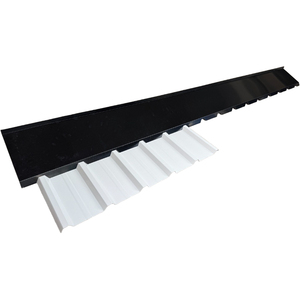
Custom-bent, prepainted Galvalume (Al-Zn) trims engineered to seal facade-to-roof transitions, preventing cold-air ingress and moisture leakage in Seoul's severe sub-zero winter freeze-thaw cycles.
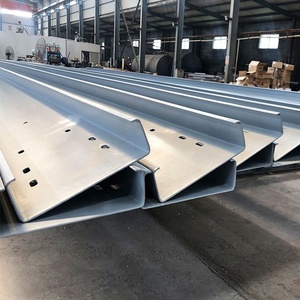
High-tensile cold-rolled galvanized steel C-sections providing superior strength-to-weight ratios for insulated wall girts, roof rafters, and facade sub-frames conforming to Korean seismic standards.
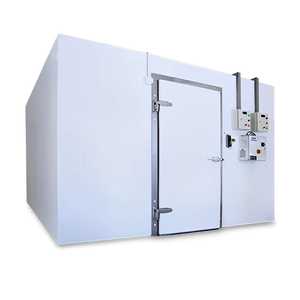
Turnkey high-density insulated PU panel chambers operating from -40°C to +10°C, purpose-built for logistics fulfillment hubs in Gyeonggi-do's automated food and e-commerce distribution corridors.
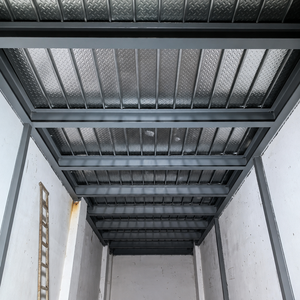
Formwork-free cold-rolled composite steel decking engineered to bear heavy live loads and accelerate concrete floor construction in multi-story industrial parks and high-bay warehousing in Greater Seoul.
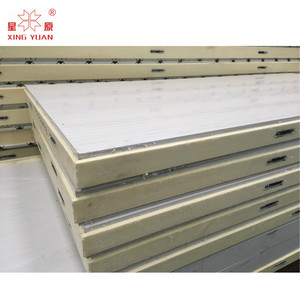
Interlocking cam-lock polyurethane panels providing airtight, vapor-sealed thermal containment with food-grade antimicrobial prepainted steel skins for commercial kitchens and pharmaceutical rooms.
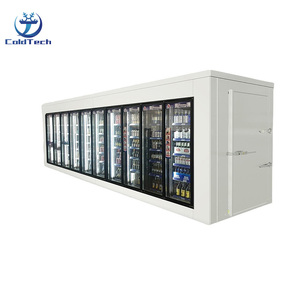
High-visibility heated triple-pane glass doors coupled with perimeter PU insulation for retail franchise chains, bakeries, and modern smart convenience retail across Seoul's metropolitan transit hubs.
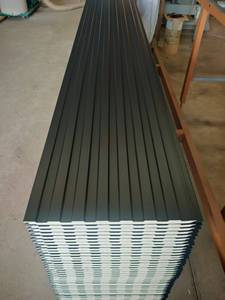
Ultra-low thermal conductivity (0.020 W/m·K) continuous-line sandwich panels featuring concealed fastener joints, UV-resistant coatings, and high structural load-bearing performance for contemporary architecture.
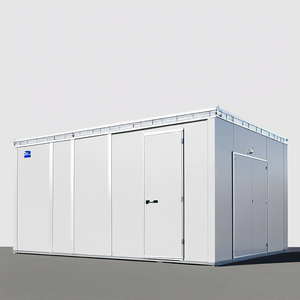
Heavy-duty insulated envelope solutions engineered up to 200mm core thickness, delivering zero-condensation performance under humid Korean summer monsoons and deep-freeze preservation reliability.
The construction landscape of the Seoul Metropolitan Area (SMA)—including Incheon and Gyeonggi Province—is governed by some of East Asia's most rigorous building energy efficiency and fire safety mandates. Under the updated Korean Energy Saving Design Standards for Buildings (Ministry of Land, Infrastructure and Transport - MOLIT Notification), the central region (Seoul, Incheon, and northern Gyeonggi) falls predominantly into Central 1 and Central 2 Thermal Zones. Exterior wall systems directly facing outside air are required to demonstrate strict overall heat transfer coefficients (U-values) as low as 0.150 W/m²·K to 0.170 W/m²·K for commercial and residential developments.
Following catastrophic fire incidents in South Korean logistics facilities over recent years, MOLIT has enacted emergency revisions requiring full-scale multi-story fire testing (conforming to KS F ISO 13784-1) and mandating semi-noncombustible (준불연) or non-combustible (불연) mineral wool and advanced char-forming Polyisocyanurate (PIR) cores for any envelope exceeding 3 stories or 1,000 m². As an internationally certified sandwich panel manufacturer with deep regional supply expertise, we engineer our cladding systems to resolve the complex triple challenge of Korean engineering: thermal compliance under severe winter-summer temperature deltas (-15°C to +35°C), fire containment under strict KS standards, and rapid off-site modular assembly to minimize peak Seoul job-site labor overhead.
From high-throughput logistics hubs in Gyeonggi to high-tech semiconductor supply corridors and urban renewal projects within Seoul's inner districts, our insulated cladding systems resolve localized engineering challenges.
Gyeonggi Province's logistics nodes demand multi-temperature envelope compartmentalization (-25°C freezer zones adjacent to +5°C staging areas). Our 150mm–200mm high-density PIR panels prevent interstitial condensation and thermal short-circuits under heavy forklift vibration.
High-tech semiconductor and biotech facilities require ultra-flat, particle-free wall systems. We supply concealed-fastener, micro-ribbed panels finished with anti-static PVDF coatings that withstand stringent chemical washdowns and eliminate microbial harborage.
Space constraints in Seoul's multi-story industrial Knowledge Industry Centers (지식산업센터) necessitate slender exterior wall profiles with maximum thermal resistance to optimize Floor Area Ratio (FAR) while achieving mandatory Seoul Zero Energy Building (ZEB) targets.
Marine atmospheres in coastal Incheon and Yeongjong Island require exceptional corrosion resistance against airborne chlorides, industrial stack emissions, and severe driving rain. We provide AZ150 Galvalume and 25-micron polyfluorocarbon coatings.
Regulatory enforcement, sustainability mandates, and demographic shifts in Korean construction labor are fundamentally driving specifiers from basic EPS toward advanced composite assemblies.
Starting in 2024 and expanding aggressively through 2025, private commercial and logistical buildings exceeding 1,000 m² in the Seoul Capital Area must obtain ZEB Grade 5 certification. This regulatory threshold has eliminated traditional uninsulated cladding facades, turning high-density continuous-line PIR and Rockwool panels with continuous thermal envelope seals into standard specification baseline.
Under the amended Fire Safety Regulations of Building Structures enacted by the Korean Ministry of Land, Infrastructure and Transport, sandwich panels face rigorous composite combustibility testing. The market has shifted dramatically away from Expanded Polystyrene (EPS) to high-density Rockwool (100–120 kg/m³) for fire compartmentation and polyisocyanurate (PIR) formulations that form self-extinguishing carbonaceous char layers.
With escalating skilled labor costs and aging field demographics in South Korea's civil construction sector, contractors in Seoul prioritize factory-finished, precision pre-cut panel systems. Supplying cladding packages complete with matching roll-formed C/Z purlins, corner trims, and factory-injected joints shortens on-site schedule by over 45% compared with built-up field cladding.
Evaluation of core performance criteria against Korean Building Energy Code and MOLIT Fire Retardancy classifications.
| Panel Architecture | Core Chemistry & Density | Thermal Conductivity (λ) | Korean Fire Rating (MOLIT) | Target Seoul U-Value (Central 1) | Primary Local Application |
|---|---|---|---|---|---|
| PIR Continuous Wall Panel | Polyisocyanurate Foam 40–42 kg/m³ (≥93% Closed Cell) |
0.020 – 0.022 W/m·K | Semi-Noncombustible (준불연) | 120mm – 150mm yields U ≈ 0.145 W/m²·K | Automated Logistics Centers, Smart Tech Pavilions, Data Enclosures |
| Rockwool Acoustic Wall Panel | Basalt Rock Fiber 100–120 kg/m³ (Non-combustible) |
0.038 – 0.042 W/m·K | Non-Combustible (불연) | 200mm – 250mm yields U ≈ 0.160 W/m²·K | Plant Rooms, Hazardous Goods Storage, High-Occupancy Shared Envelopes |
| PUR Standard Cold Panel | Rigid Polyurethane 38–40 kg/m³ (High Mechanical Rigidity) |
0.022 – 0.024 W/m·K | Self-Extinguishing Flame Retardant | 100mm – 150mm yields U ≈ 0.155 W/m²·K | Chilled Food Preparation, Supermarket Walk-In Coolers, Floral Depots |
| Cam-Lock Freezer Panel | High-Density PIR/PUR 42–45 kg/m³ with Dual Gasket Joint |
0.020 – 0.021 W/m·K | Class B1 / 준불연 Compatible | 150mm – 200mm yields U ≈ 0.105 W/m²·K | Deep-Freeze Storage (-30°C), Bio-Pharma Cold Vaccine Vaults |
*Values are engineered baseline ratings. Project-specific calculation sheets per KS F 2271 and MOLIT Notice No. 2022-84 are provided upon engineering submittal.
Combining an expansive 10,000 m² daily manufacturing capacity with direct ocean freight pipelines to Incheon (ICN) and Busan (PUS) ports, we offer predictable lead times and substantial procurement savings.
Continuous double-belt laminating production lines ensure extreme volumetric capacity, allowing us to roll out tens of thousands of square meters without project bottlenecking.
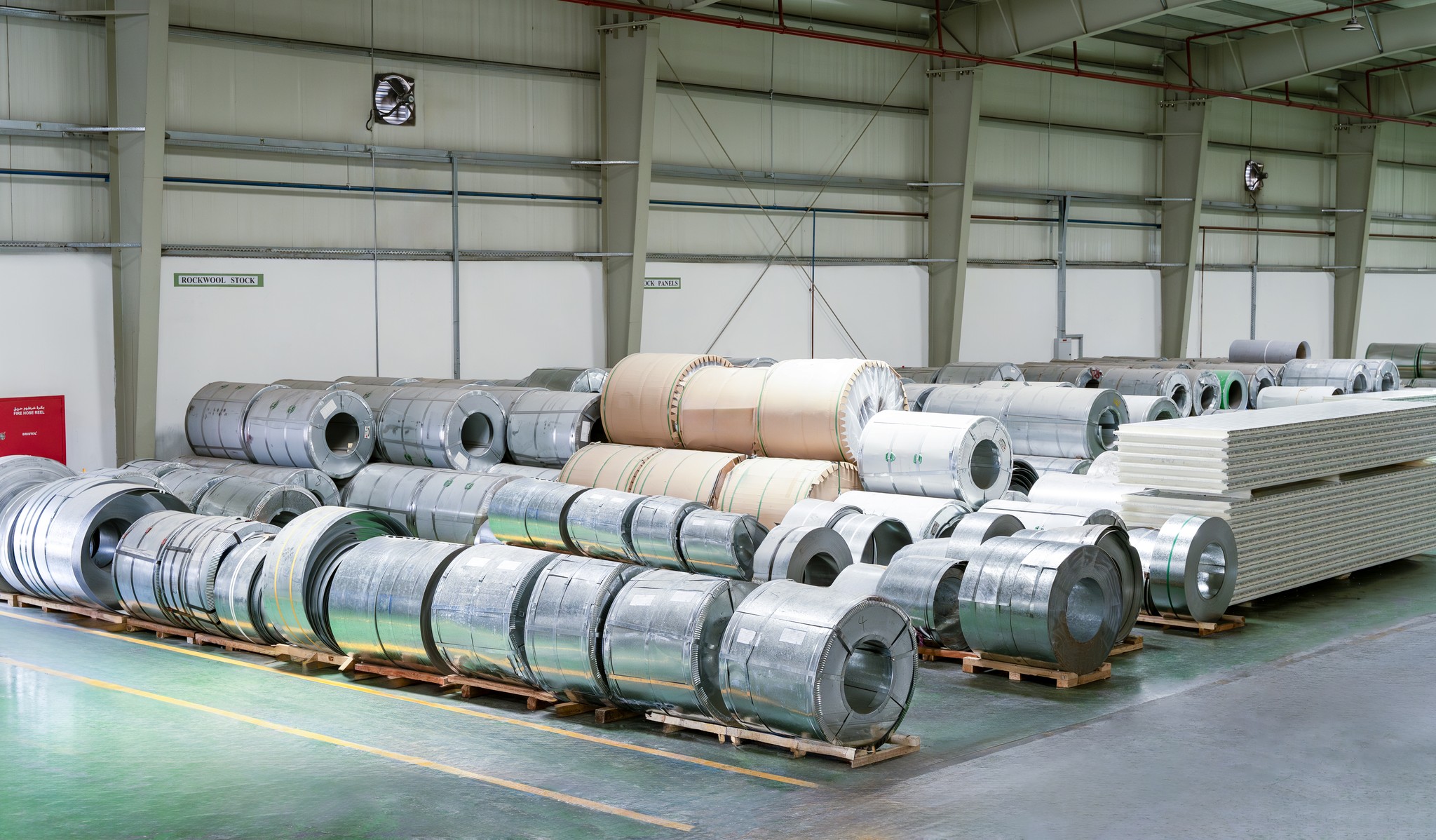
We supply the entire structural perimeter: insulated roof and wall sandwich panels, composite floor decking, cold-rolled Z & C purlins, and bespoke matching flashing profiles.
Panels are precision cut-to-length from 2.0m to 14.5m per architectural drawings. Core thickness is adjustable from 50mm to 200mm with micro-rib, groove, or completely flat finishes.
Optimized containerized and breakbulk sea shipping routes direct to Incheon New Port and Busan Port. Secure protective film wraps protect premium coil coatings during international maritime transit.
Our production facilities operate under ISO 9001:2015, ISO 14001, and ISO 45001 management frameworks. Technical submittal dossiers include ASTM E84, ASTM C518, and third-party fire testing documentation aligned with Korean local authority approval protocols.

Answers to common structural, thermal, regulatory, and logistics queries encountered when sourcing architectural insulated cladding for the Seoul market.
Whether you are engineering a high-throughput logistics park in Yongin, a cold storage terminal in Incheon Port, or an energy-efficient architectural facility in Gyeonggi, our technical division provides customized shop drawings, thermal U-value calculations, and rapid CIF Incheon/Busan quotations.
Inquire NowOur sales engineers respond to project questions during working hours (GST+4).