
Manufactured on continuous double-belt automated lines yielding up to 10,000 m² daily, our insulated panels and cold-formed profiles provide certified structural and thermal defense for heavy industrial and cold-chain facilities across Istanbul and the broader Marmara basin.
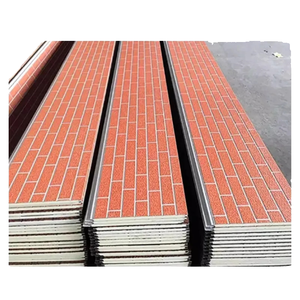
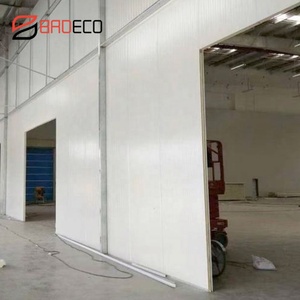
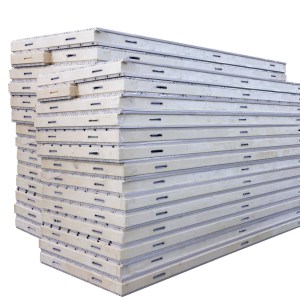
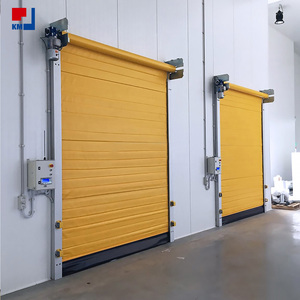
Specifying high-efficiency insulated metal panels for industrial facilities requires an exacting chemical and thermodynamic evaluation. In continuous double-belt lamination, polyol blends, catalysts, silicone surfactants, and modern halogen-free blowing agents (specifically cyclopentane and n-pentane) are metered under high pressure (150–200 bar) into an isocyanate stream (polymeric MDI).
While standard Polyurethane (PUR) maintains an isocyanate-to-polyol index between 100 and 115, producing dominant urethane linkages, Polyisocyanurate (PIR) operates at an index exceeding 250 up to 350. This elevated stoichiometric ratio triggers trimerization, yielding rigid, highly crosslinked isocyanurate ring structures. Thermodynamically, the ring's high bond dissociation energy provides superior resistance to pyrolytic decomposition.
Under flame exposure, PIR panels form a cohesive, carbonaceous vitreous char layer that insulates unburned core volume, prevents melt-dripping, and dramatically curtails heat release rates. This distinction is vital for commercial facilities throughout Istanbul that must strictly satisfy the Binaların Yangından Korunması Hakkında Yönetmelik (Turkish Fire Protection Regulation) and TS EN 14509 self-supporting metal sandwich standards.
Compare core insulation parameters, fire classifications, mechanical shear strengths, and permissible span tables to select the optimal envelope build-up according to Turkish building codes.
| Core Chemistry | Nominal Density | Thermal Cond. (λ) | EN 13501-1 Fire Reaction | Compressive Stress (10% strain) | Primary Sector Application |
|---|---|---|---|---|---|
| PIR Core (Trimerized) | 40 - 42 kg/m³ | 0.020 - 0.022 W/m·K | B-s1, d0 | ≥ 120 kPa | High-hazard warehouses, logistics hubs, data centers |
| Standard PUR Core | 38 - 40 kg/m³ | 0.022 - 0.024 W/m·K | B2 / B3 (DIN 4102) | ≥ 100 kPa | Agricultural sheds, secondary workshops, partition walls |
| High-Density Cold Store PIR | 42 - 45 kg/m³ | 0.021 W/m·K | B-s1, d0 | ≥ 140 kPa | Chilled storage (-5°C) & blast freezers (-35°C) with cam-locks |
| Rockwool / Mineral Fiber | 100 - 120 kg/m³ | 0.038 - 0.042 W/m·K | A2-s1, d0 (Non-combustible) | ≥ 80 kPa | Fire separation walls, boiler rooms, acoustic plant enclosures |
From European-side automated logistics hubs to Asian-side maritime heavy chemical complexes, our factory-engineered composite panel assemblies resolve the unique environmental, seismic, and operational hurdles of Istanbul’s diverse manufacturing clusters.
Fast-moving retail, FMCG, and pharmaceutical distribution networks clustered along the Northern Marmara Motorway require lightweight, high-span envelopes. Our continuous-line 12-meter panels decrease secondary steel dead-load, while concealed-fastener wall systems maintain airtightness under high positive and negative gust cycles common to the Thrace plains.
Located immediately adjacent to the Sea of Marmara, Tuzla’s shipbuilding and petrochemical zones experience relentless C4 to C5-M marine atmospheric corrosivity. We configure our sandwich panels with 50-micron polyurethan-polyamide (HDP) or 200-micron Plastisol coatings combined with AZ150 Galvalume substrates, resisting galvanic blistering and chloride ion degradation.
Istanbul’s core light-industrial cooperatives demand fast modular assembly for clean production zones, electronics assembly, and medical packaging. Our single-slot cold storage partition panels and smooth-skin architectural claddings provide microbially inert, anti-static, power-washable surfaces compliant with HACCP and GMP hygiene regulations.
Turkey’s regulatory landscape demands rigorous adherence to building physics and seismic structural dynamics. Our systems are engineered to streamline project approvals from municipal building control and independent consultant engineers.
Because Istanbul spans the active North Anatolian Fault system, envelope facades must accommodate inter-story drift without brittle panel buckling or connection shear failure. Our engineered slotted clip assemblies allow lateral frame excursions while elastomeric fastener washers preserve thermal integrity.
Under TS 825 standards for Istanbul (Zone II), external walls and roofs require strict maximum overall heat transfer coefficients ($U_{max}$). Utilizing an 80 mm PIR roof panel ($U \approx 0.26 \text{ W/m}²\text{K}$) or 100 mm cold room wall panel ($U \approx 0.21 \text{ W/m}²\text{K}$) exceeds baseline criteria, slashing HVAC lifecycle expenses by 38% compared to traditional field-assembled built-up systems.
Sandwich panels cannot function in isolation. True thermal envelope efficiency relies on the continuous coordination of secondary framing elements, thermal break isolators, parapet water shedding, and perimeter flashing geometries.
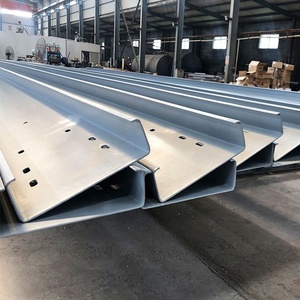
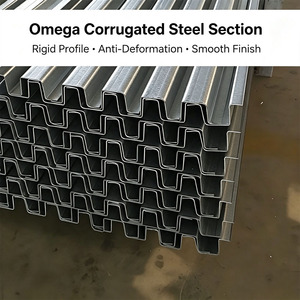
By producing matched cold-formed high-tensile galvanized C, Z, and Omega purlins alongside our sandwich panel lines, we provide MEP and civil general contractors across Turkey with an interconnected envelope package. Cold bridge modeling (finite element analysis per ISO 10211) confirms that our custom-profiled perimeter flashings and neoprene thermal isolation pads eliminate Dew Point condensation occurrences behind interior steel liners.
Combining multi-core chemical formulation flexibility, heavy coil processing, and automated quality control to execute tailored engineering orders on demanding project timelines.
Our 40-meter-long heated double-belt continuous press provides precise thermal curing, consistent polymer cell orientation, and uniform core density from roll-entry to flying cutoff saw, ensuring panel flatness tolerances within ±1.5 mm.
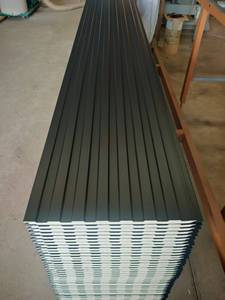
We supply external and internal facings from Prime DX51D galvanized, Aluzinc (AZ150), and AISI 304/316 stainless steel in thicknesses from 0.40 mm to 0.80 mm. Surface profiles include micro-ribbed, deep trapezoidal, smooth flat, and stucco embossed.
A single manufacturing ecosystem accommodates three distinct cores: PIR for fire performance and thermal density, PUR for cost-effective insulation, and structural Rockwool (100–120 kg/m³) for certified non-combustible firebreaks and acoustic dampening.
Answers to common structural, logistics, and compliance queries raised by project managers, facade consultants, and procurement heads across Istanbul and the Marmara region.
Consult with our technical sales engineers for optimized panel thickness selection, structural span tables, custom RAL color availability, and competitive factory-direct project quotations.
Our sales engineers respond to project questions during working hours (GST+4).