
Engineered for cold climate envelope integrity, structural load distribution, and vapor-tight industrial installations across Poland and the European Union.
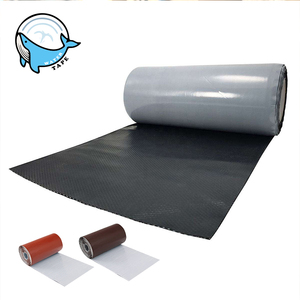
Malleable aluminum mesh with composite butyl rubber backing, creating an airtight, weather-resistant barrier around skylights and roof penetrations.
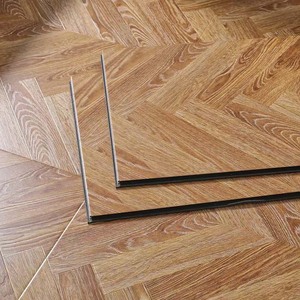
High-density fiberboard engineered with AC5 commercial abrasion class and thermal preservation core, suitable for modular offices in cold storage parks.
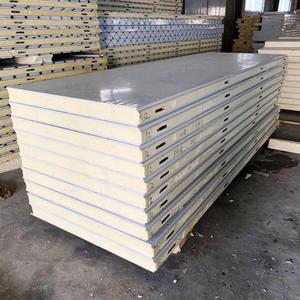
Rigid polyurethane (PUR/PIR) foam panel with high closed-cell density, delivering low thermal conductivity ($\lambda = 0.022\ \text{W/m}\cdot\text{K}$) for temperature control.
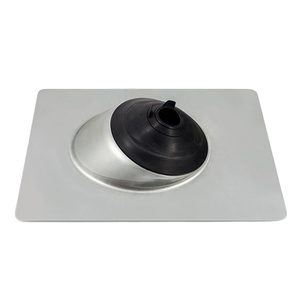
Die-formed Z275 hot-dip galvanized pipe boot flashing designed to interface with cold-formed purlins, preventing water pooling at industrial rooftop exhaust points.
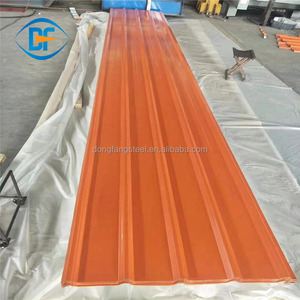
Silicone Modified Polyester (SMP) coated sheet rolling over lightweight steel Z-purlins, offering UV degradation resistance and corrosion durability in agricultural settings.
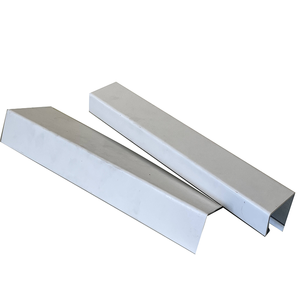
Heavy-gauge aluminum parapet edge trim engineered to prevent lateral capillary seepage on steel building eaves and boundary walls under Central European snow conditions.
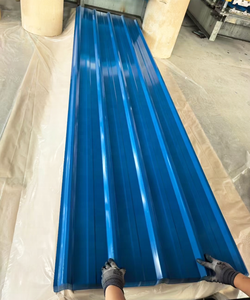
Trapezoidal pre-painted galvanized iron profile sheets optimized for high load-bearing spans over cold-rolled C and Sigma girts, delivering structural diaphragm action.
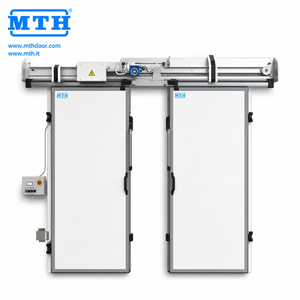
Hermetically sealed commercial sliding door system supported by structural steel lintels and C-sections, preserving cold chain integrity for Polish cold storage facilities.
Over the past decade, Poland has transformed into Central Europe's central hub for warehousing, industrial production, and e-commerce distribution. Bolstered by transport arteries including the A1 (North-South), A2 (East-West), and A4 motorways, regions such as Upper Silesia (Górny Śląsk), Central Poland (Stryków, Łódź), Warsaw Suburbs, Poznań, and Lower Silesia (Wrocław) represent one of the continent's most demanding markets for pre-engineered steel buildings (PEB). Within these projects, secondary structural framing—specifically cold-formed light steel purlins (płatwie zimnogięte)—accounts for up to 30% of total structural steel tonnage.
Modern structural design mandates a shift away from hot-rolled I-sections (such as IPE and HEA profiles) toward cold-formed thin-walled Z, C, Sigma (Σ), and Zeta profiles. By optimizing the strength-to-weight ratio using high-yield structural steels (S350GD, S390GD, and S420GD), engineering teams consistently achieve dead-weight reductions between 25% and 40%. This reduction lightens foundation loads and speeds up installation schedules. However, navigating the Polish market requires strict adherence to European Union directives: compliance with PN-EN 1993-1-3 (Eurocode 3 Design of cold-formed members), mandatory CE Declaration of Performance (DoP) under PN-EN 1090-1 / PN-EN 1090-2 (Execution Class EXC2/EXC3), and calculated resilience against Poland's diverse snow zones (Strefy śniegowe I–V) and coastal wind zones.
Procurement Notice (Information Gain Insight): In Poland's commercial real estate development sector, EPC contractors evaluate purlin suppliers not merely on raw per-ton steel cost, but on installed system efficiency. This evaluation includes CNC automated staggered lap punching for continuous spans, anti-corrosion life expectancy (PN-EN ISO 12944 C3–C5 ratings), and seamless structural alignment with multi-layer WT2021-compliant roof assemblies.
Cold-formed steel purlins are structural members manufactured through continuous roll-forming of hot-dip galvanized steel coils. Each profile geometry solves distinct structural, kinematic, and erection challenges encountered by Polish structural engineers (uprawnieni konstruktorzy):
Engineered with asymmetric flanges (e.g., 68mm bottom flange and 60mm top flange) allowing one profile to nest inside another. This enables staggered continuous multi-span lap connections (układ ciągły z nakładkami) across primary rafter frames. Lap zones double the section modulus directly over supports where negative bending moments peak, reducing mid-span deflection and saving up to 20% in raw steel weight over simply supported configurations.
Featuring symmetric, mono-symmetric cross-sections, C-profiles serve as side wall girts (rygle ścienne), door jamb framing, roof eaves struts, and floor joists. Because C-sections cannot be nested, they are designed as single-span or sleeve-coupled members. They provide flat mounting planes for insulated sandwich panels and vertical wall liner trays (kasetony ścienne).
Incorporating longitudinal stiffening indents rolled into the web, Sigma profiles exhibit resistance against web crippling and local buckling under heavy concentrated transverse loads. They are widely specified in Polish distribution centers with primary column spacings exceeding 8.0 to 12.0 meters, and in mezzanine floor decks carrying high live loads.
Below is an engineering overview of structural dimensions, metallurgical grades, and performance parameters required for industrial construction projects across Poland:
| Profile Type | Structural Depth (h) | Thickness Range | Steel Grade (EN 10346) | Anti-Corrosion Coating | Primary Polish Application |
|---|---|---|---|---|---|
| Z-Purlin (Continuous Lap) | 100 mm – 400 mm | 1.5 mm – 3.5 mm | S350GD / S390GD | Z275, Z350, Magnelis® ZM310 | Multi-span warehouse roofs (6m–9m portal frames) |
| C-Section (Side Rail / Girt) | 100 mm – 350 mm | 1.2 mm – 3.2 mm | S350GD / S420GD | Z275, Z350 Hot-Dip Galvanized | Wall cladding support, eaves struts, door trimmers |
| Sigma (Σ) Heavy Duty | 140 mm – 400 mm | 1.5 mm – 4.0 mm | S350GD / S450GD | ZM310 to ZM430 (C4/C5 Class) | Heavy snow zones (Suwałki, Zakopane) & mezzanines |
| Flanged Zeta Section | 150 mm – 300 mm | 1.5 mm – 3.0 mm | S350GD | Z275 Galvanized | High-slope industrial roofs and canopy cantilevers |
| C/U Edge Channels | 80 mm – 250 mm | 1.2 mm – 2.5 mm | S280GD / S350GD | Z275 Zinc Coating | Base tracks, parapet curbs, window framing headers |
Poland's industrial construction ecosystem relies on a mix of prominent domestic roll-formers, European steel giants, and specialized global structural fabricators. Below is the 2025 technical and operational evaluation of the top ten manufacturing operations delivering cold-formed purlins to Polish construction sites:
A specialized global fabricator operating continuous automated cold-rolling lines with a 10,000 m² daily envelope and purlin capacity. Engineered to Eurocode 3 standards with mill-direct 3.1 certificates, delivering custom-punched Z, C, and Sigma sections alongside integrated sandwich panels, decking, and flashings to Baltic and Central European ports with predictable supply lines.
Poland's largest domestic manufacturer of thin-walled profiles and sheet metal cladding. Operating high-volume roll-forming facilities near Warsaw (Sokołów), Pruszyński offers standardized Z, C, and Σ profiles in steel grades up to S350GD, providing widespread local coverage for general construction.
Headquartered in Bolszewo, Balex Metal supplies cold-formed structural members alongside insulated panels. Their purlin lines focus heavily on Z-sections optimized for logistics parks and commercial halls, backed by Kingspan's engineering and technical support network.
Operating specialized roll-forming lines in Poland (Świętochłowice), utilizing raw strip direct from their integrated steel mills. ArcelorMittal excels in proprietary high-strength steel grades and advanced zinc-aluminum-magnesium coatings like Magnelis® for aggressive environments.
The Polish division of the Swedish Lindab Group, providing light-gauge structural C/Z/U profiles with tight rolling tolerances. Renowned for their precision slotted holes and specialized structural calculation software customized for Polish designers.
Utilizing high-grade Scandinavian steel coils from SSAB, Ruukki supplies purlins with yield strengths of S390GD and S420GD. Their purlin systems focus on cold climate performance, low-temperature ductility, and structural life-cycle longevity.
With production located in Central Poland, Borga manufactures specialized cold-formed purlins primarily tailored for agricultural buildings, equestrian arenas, and industrial halls. They specialize in self-supporting, high-tensile Z-purlin systems.
A key domestic player within the Polish steel trade, producing cold-rolled C, Z, and Σ profiles in automated continuous production cells. Known for rapid fulfillment of standard sizes across Silesia, Małopolska, and Mazovia.
Specializing in the integrated coordination between secondary steel purlins and sandwich panel roofs. Their light-gauge purlins are engineered with wide flanges to optimize self-drilling fastener engagement and prevent thermal panel distortion.
Specialized profile provider delivering complex, custom-engineered cold-formed profiles and high-load Sigma shapes for demanding infrastructure, solar farms, and logistics mezzanines across Poland.
Cold-formed steel purlins perform distinct structural duties depending on the building classification, geographical location, and interior microclimate across Poland:
In sprawling hubs like Stryków and Piotrków Trybunalski, continuous Z-purlins span 7m to 9m between primary portal frames. They are pre-punched to carry fire-sprinkler lines, lighting busbars, and WT2021 insulation packages without structural sagging.
Livestock buildings (obiekty inwentarskie) across Wielkopolska and Mazowsze present aggressive indoor ammonia atmospheres. Purlins require heavy Z350 or zinc-magnesium (ZM310) coatings to maintain structural integrity in C4/C5 corrosive environments.
Temperatures dropped to -25°C inside fruit-growing fruit cold stores (Sadownictwo w Grójcu) require structural thermal break assemblies. Purlin flanges interface with insulated PIR panels using specialized thermal gaskets to eliminate condensation bridges.
Commercial rooftop photovoltaic retrofits introduce an additional 15–22 kg/m² dead load plus wind suction forces. High-yield S390GD/S420GD Z-purlins provide the torsional stiffness required to prevent localized web buckling under cyclic wind reversals.
When executing building envelope projects in Poland, general contractors (generalni wykonawcy) and structural designers must satisfy strict technical and environmental design constraints:
1. Snow Load Variances (PN-EN 1991-1-3): Poland is partitioned into five distinct snow zones. While Zone I (Western Poland, e.g., Zielona Góra) features characteristic snow loads around $s_k = 0.70\ \text{kN/m}^2$, Zone IV (Suwałki, Podlasie) rises to $s_k = 1.60\ \text{kN/m}^2$, and Zone V (Carpathian and Sudeten mountains) exceeds $2.00\ \text{kN/m}^2$ with heavy drift accumulation at parapets. Cold-formed purlin depths must frequently step up from 200 mm to 300 mm, with wall thicknesses increasing to 2.5 mm or 3.0 mm, to ensure deflection limits ($\delta \le L/200$ to $L/250$) are not breached under snow drift.
2. Wind Suction Dynamics (PN-EN 1991-1-4): The Baltic coastline (Gdańsk, Gdynia, Szczecin) falls under Wind Zone II and coastal terrain category I, experiencing high velocity pressures. The uplift capacity of thin-walled purlins, specifically the torsional stability of bottom flanges in compression during wind suction events, demands detailed verification using anti-sag bars (ściągi płatwiowe) and flange braces (zastrzały).
3. Polish Building Code WT2021 (Warunki Techniczne): Modern thermal regulations establish strict maximum thermal transmittance values ($U_{max} = 0.15\ \text{W/(m}^2\cdot\text{K)}$ for roofs). Achieving this thermal efficiency requires thicker PIR/PUR sandwich panels (120 mm to 160 mm) or built-up mineral wool cassette systems (180 mm to 220 mm). The heavier secondary dead load increases total roof mass, requiring structural engineers to utilize high-yield S350GD or S390GD cold-formed profiles rather than standard commercial steels.
Combining global continuous roll-forming throughput with full component traceability, documented CE compliance, and seamless multi-component envelope shipments to European logistics destinations.
Advanced high-speed automated roll-forming lines capable of continuous profiling with automatic inline punching for staggered lap configurations, delivering a daily panel and profile capacity of up to 10,000 m².
With more than 550 industrial facilities, logistics hubs, and cold chain structures delivered internationally, our structural engineering team ensures project specifications match consultant requirements on the first submission.
Tight control over profile straightness, camber, and hole pattern pitch ($\pm 1.0\ \text{mm}$) guarantees fast, error-free bolt assembly on site, eliminating torch cutting or field re-drilling on the erection line.
Beyond purlins, we fabricate matching PIR/PUR sandwich panels, composite floor decking, corrugated profiles, drip edge flashings, and butyl sealing tapes, shipping consolidated containers directly to jobsites.
Every shipment includes complete EN 10204 3.1 chemical and physical test certificates, raw coil batch traceability, and full CE Declaration of Performance (DoP) dossiers required by Polish building control (PINB).
Strategic containerized packing protocols with heavy-duty anti-moisture wrapping and timber skids engineered for flatbed discharge, ensuring cargo arrives in pristine condition at Port of Gdańsk, Gdynia, or overland depots.
Detailed answers addressing statutory standards, structural calculations, corrosion resistance, and delivery logistics for purlin procurement in Poland.
To satisfy the Powiatowy Inspektorat Nadzoru Budowlanego (PINB) and project supervising inspectors (inspektor nadzoru inwestorskiego), suppliers must provide a CE Declaration of Performance (Deklaracja Właściwości Użytkowych - DoP) in accordance with PN-EN 1090-1 (Execution Class EXC2 or EXC3), accompanied by 3.1 Mill Test Certificates under PN-EN 10204 verifying chemical composition, yield strength ($R_e$), tensile strength ($R_m$), elongation ($A_{80}$), and zinc coating mass.
Z-purlins nested at primary supports create a structurally continuous multi-span beam. The continuous overlapping connection effectively doubles the section modulus ($W_{eff}$) directly over the rafters where peak negative bending moments occur. This moment redistribution reduces span-center deflections and allows engineers to specify thinner cross-sections compared to single-span simply supported C-sections.
In Snow Zone IV (Podlasie/Białystok/Suwałki) and Zone V (Southern mountainous regions), characteristic snow loads often reach $s_k \ge 1.6\text{--}2.0\ \text{kN/m}^2$. Under heavy snow drifts adjacent to parapets, standard thin-walled Z-profiles may face localized web crippling. Stiffened Sigma profiles, with their rolled longitudinal web indents, offer superior transverse stiffness and resistance to local web buckling under concentrated loads.
Livestock facilities (chlewnie, kurniki, obory) contain elevated concentrations of biogenic ammonia ($NH_3$), moisture, and organic acids, corresponding to corrosivity class C4 or C5-I per PN-EN ISO 12944. Standard Z275 coatings may experience premature zinc depletion. We specify heavy zinc-magnesium coatings (e.g., Magnelis® ZM310 or ZM430), which create a compact, self-healing simonkolleite barrier layer on sheared hole edges.
Our CNC roll-forming lines execute automated web and flange punching per your Tekla Structures or Autodesk Revit NC files. Standard configurations include round holes ($\varnothing 14\ \text{mm}, \varnothing 18\ \text{mm}$) for standard M12 and M16 grade 8.8 structural bolts, as well as slotted holes ($14 \times 25\ \text{mm}$ or $18 \times 30\ \text{mm}$) to accommodate building thermal expansion along extended longitudinal hall axes.
Yes. European commercial warehouses frequently require roof purlin systems designed with reserve capacity for future ballasted or rail-mounted solar PV arrays ($15\text{--}25\ \text{kg/m}^2$). During engineering submittals, our technical team calculates combined stress ratios ($M_{y,Ed}/M_{c,y,Rd} + M_{z,Ed}/M_{c,z,Rd} \le 1.0$) under simultaneous wind uplift, panel dead weight, and snow loads per Eurocode 3.
WT2021 mandates $U \le 0.15\ \text{W/(m}^2\cdot\text{K)}$ for industrial roofs, which translates to thicker, heavier roof build-ups (e.g., 160 mm PIR sandwich panels or 200 mm mineral wool decks). To maintain acceptable purlin center-to-center spans ($2.5\ \text{m}$ to $3.5\ \text{m}$), purlin heights typically increase from 180 mm to 240 mm or 300 mm, ensuring the cross-section remains within allowable deflection limits.
Ocean container shipments routed to the Baltic deep-water hubs (Port of Gdańsk DCT or Gdynia) have ocean transit schedules averaging 22 to 28 days from dispatch. Bundles are prepared with heavy steel strapping, plastic edge guards, and breathable vapor-corrosion-inhibiting (VCI) shrink wrap to prevent transit oxidation during maritime transit.
Yes. We deliver complete structural calculation notes (obliczenia statyczno-wytrzymałościowe) verified in accordance with PN-EN 1993-1-3 and national annexes. Calculations verify effective section properties ($A_{eff}, I_{eff}, W_{eff}$), cross-sectional resistance, lateral torsional buckling (zwichrzenie), and interaction under combined bending and axial forces for direct submittal to licensed design bureaus.
Direct metal-to-metal contact between the upper flange of a cold-formed purlin and the inner steel face of a sandwich panel can create thermal bridging and winter condensation. We supply high-density EPDM/PE thermal isolating tapes that adhere to the top flange before panel placement, maintaining envelope acoustic damping and thermal performance across cold seasons.
To prevent scope discrepancies and ensure swift approval by project verifying engineers, include the following six technical parameters in your material inquiry:
Specify minimum guaranteed yield strength (S350GD, S390GD, or S420GD). Avoid uncertified commercial steels lacking certified elongation properties.
State required coating mass: Z275 ($275\ \text{g/m}^2$) for dry interiors; Z350 or ZM310/ZM430 (zinc-magnesium) for C3–C5 corrosive and coastal atmospheres.
Define whether design relies on a continuous overlapping Z-system (with nested lap lengths typically 0.10 to 0.15 of span length) or single-span C-sections.
Provide structural hole diameters, end distance ($e_1$), pitch ($p_1$), and longitudinal slots to match primary portal frame cleat brackets.
Our sales engineers respond to project questions during working hours (GST+4).