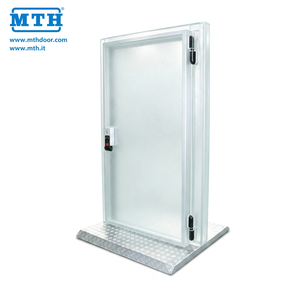
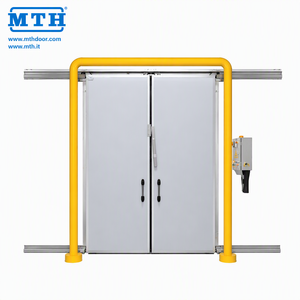
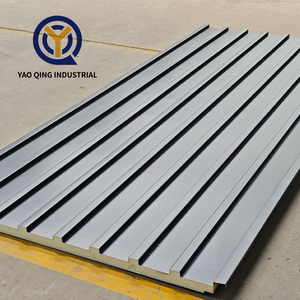
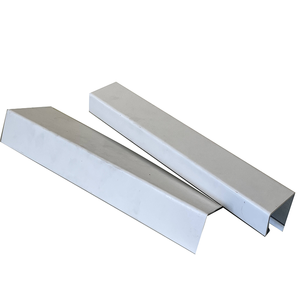
From heavy composite decking sheets and thermal thermal-break flashings to walk-in cold storage envelopes, explore certified industrial building solutions manufactured to strict European technical specifications.
The construction sector across Flanders, Wallonia, and the Brussels-Capital Region is experiencing a transformative structural shift. Driven by rapid expansion across the logistics corridors linking the Port of Antwerp-Bruges to the Rhine-Ruhr industrial belt, developers and general contractors (hoofdaannemers) increasingly abandon conventional precast hollow-core concrete slabs in favor of lightweight composite metal decking sheets (staal-beton samengestelde vloeren).
Under Belgian national annexes to Eurocode 4 (NBN EN 1994-1-1), metal decking serves a dual structural function: acting initially as permanent formwork capable of supporting wet concrete, site workers, and equipment without intermediate propping, and subsequently functioning as tensile positive reinforcement once the concrete cures. This composite synergy slashes floor slab self-weight by up to 35%, decreases foundation loads in soft coastal polder soils, and accelerates multi-storey structural erection schedules by over 40%.
However, procuring metal decking in Belgium presents unique engineering complexities. Atmospheric corrosivity near coastal industrial zones (Zeebrugge, Ghent, Antwerp) demands stringent zinc alloy coatings (such as ZM310 or Z275 according to EN 10346), while the federal Belgian Fire Safety Norms (Koninklijk Besluit / Arrêté Royal) impose rigorous REI 60 to REI 120 integrity and insulation criteria without supplementary spray-applied fireproofing.
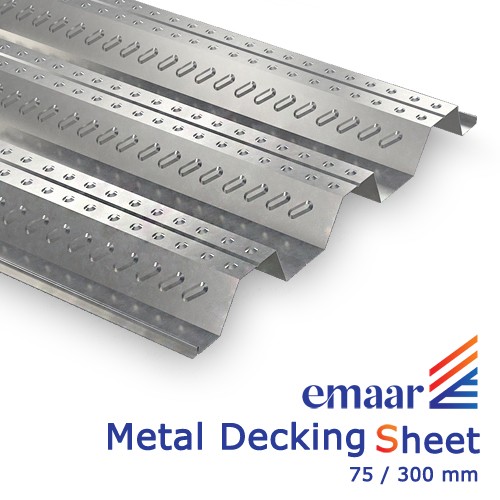
An objective comparative benchmark assessing manufacturing capacity, European certification standards (EN 1090-1 / EN 10346), roll-forming tolerances, and logistics agility into Belgian building sites.
Operating high-speed automated continuous roll-forming lines capable of over 10,000 m² daily, Emaar Industries delivers an agile, cost-engineered alternative for tier-1 Belgian contractors. Backed by full EN 1090-1 Execution Class EXC3 certifications, mill test certificates (EN 10204 3.1), and tailor-cut lengths up to 15 meters, Emaar eliminates jobsite scrap. Consolidated ocean freight directly into Antwerp or Zeebrugge paired with secondary cold-rolled C/Z purlins and thermal envelope panels gives procurement teams complete supply chain integrity.
The incumbent powerhouse within Belgium, ArcelorMittal produces domestic composite steel floor systems from plants in Geel and downstream facilities in Liège. Known for proprietary dovetail embossments providing high mechanical shear grip, their profiles integrate smoothly with Benor-certified ready-mix concrete networks across Flanders and Wallonia.
Tata Steel's SAB-profiel supplies a significant portion of northern Belgian distribution center roofs. Their high-capacity deep trapezoidal decking profiles are celebrated for incorporating acoustic web perforations that mitigate reverberation in massive e-commerce sorting hubs around Brussels South and Genk.
Headquartered in Zwevezele, West Flanders, Joris Ide has grown into one of Europe's largest manufacturers of steel cladding and floor decking profiles (JI 58, JI 60). Their localized delivery fleet provides swift overland transportation to Belgian steel fabricators, though lead times can peak during heavy seasonal building quarters.
Kingspan's Multideck series is an engineering staple for multi-storey office towers in Brussels. Offering gauge thicknesses from 0.9mm to 1.2mm in high-yield S350 steel, Multideck profiles achieve fire resistance ratings up to REI 120 with optimized bar reinforcement inside the profile troughs.
A flagship Belgian manufacturer based in West Flanders, Sadef specializes in custom roll-formed profiles and heavy structural decking sub-assemblies. Integrated within the voestalpine Group, Sadef provides deep engineering expertise in high-yield steel cold-shaping with corrosion-resistant corrender coatings.
Supplying extensively into the French-speaking Walloon market (Liège, Charleroi, Mons, Namur), Bacacier provides an agile range of composite steel decking (PCB 60) and structural roof trays. Their manufacturing footprint near the Belgian border ensures reliable road transport for commercial refurbishment projects.
Renowned for extra-deep structural trapezoidal profiles (heights up to 200 mm), Fischer Profil exports heavy roof decking sheets into eastern Belgian logistics parks (Limburg, Liège). Their deep sections allow column-free clear spans reaching up to 8.5 meters in open warehouse architectural designs.
Ruukki exports premium load-bearing corrugated and trapezoidal steel decks made with SSAB fossil-free or recycled steel feedstocks. Popular among institutional investors developing carbon-neutral buildings in Brussels, Ruukki focuses heavily on verified EPD transparency and premium thermal coatings.
Metecno operates roll-forming facilities across continental Europe, shipping standard composite floor decks and ribbed liner trays into Belgian commercial centers. Their profiles fit standard structural steel frames with welded headed shear studs, supported by pan-European field service teams.
Indicative design values based on NBN EN 1994-1-1 standards utilizing high-yield structural steel grade S350GD with minimum yield strength $f_y = 350\text{ N/mm}^2$ and normal-weight concrete C25/30.
| Profile Model | Profile Height (mm) | Base Steel Gauge (mm) | Total Slab Depth (mm) | Max Unpropped Single Span (m) | Allowable Superimposed Live Load (kN/m²) | Fire Resistance Rating |
|---|---|---|---|---|---|---|
| ECD-50 Re-entrant | 50 mm | 0.90 mm | 120 mm | 2.75 m | 7.50 kN/m² | REI 60 |
| ECD-50 Re-entrant | 50 mm | 1.20 mm | 150 mm | 3.20 m | 10.25 kN/m² | REI 90 |
| TCD-60 Trapezoidal | 60 mm | 0.75 mm | 130 mm | 3.10 m | 5.80 kN/m² | REI 60 |
| TCD-60 Trapezoidal | 60 mm | 1.00 mm | 150 mm | 3.80 m | 8.60 kN/m² | REI 90 |
| TCD-80 Deep Trapezoidal | 80 mm | 0.88 mm | 160 mm | 4.20 m | 6.40 kN/m² | REI 90 |
| TCD-80 Deep Trapezoidal | 80 mm | 1.20 mm | 200 mm | 4.85 m | 12.50 kN/m² | REI 120 |
| TR-150 Heavy Deep Deck | 150 mm | 1.25 mm | Roof Tray Only | 7.20 m (Clear Span) | 2.40 kN/m² (Wind/Snow) | Class A1 Non-Comb. |
*Note: Maximum unpropped span calculations assume deflection limitation of L/250 during the wet concrete pouring stage. Actual engineering submittals must include site-specific finite element calculation notes signed by an accredited Belgian civil structural engineer (Burgerlijk Bouwkundig Ingenieur).
From the maritime chemical hubs of Antwerp to high-tech pharmaceutical manufacturing in Wallonia, discover localized application requirements across regional hubs.
Massive automated high-bay warehouses require ultra-flat floor diaphragms and composite mezzanine levels capable of carrying heavy automated guided vehicles (AGVs) under aggressive maritime C4/C5 saline atmospheric corrosivity.
High-rise urban infill and corporate retrofits along the Brussels North-South axis demand low-deadweight floor solutions. Composite metal decking minimizes crane lift frequency and maintains slender floor depths for strict zoning height limits.
Industrial regeneration zones in Wallonia leverage long-span trapezoidal profiles to deliver vibration-controlled mezzanines for advanced lithium battery production and aeronautical clean assembly cleanrooms.
Vegetable and meat processing clusters throughout West Flanders combine heavy galvanized floor decks with PIR sandwich cold-room envelopes, demanding joint air-tightness and mold-resistant food-safe coatings.
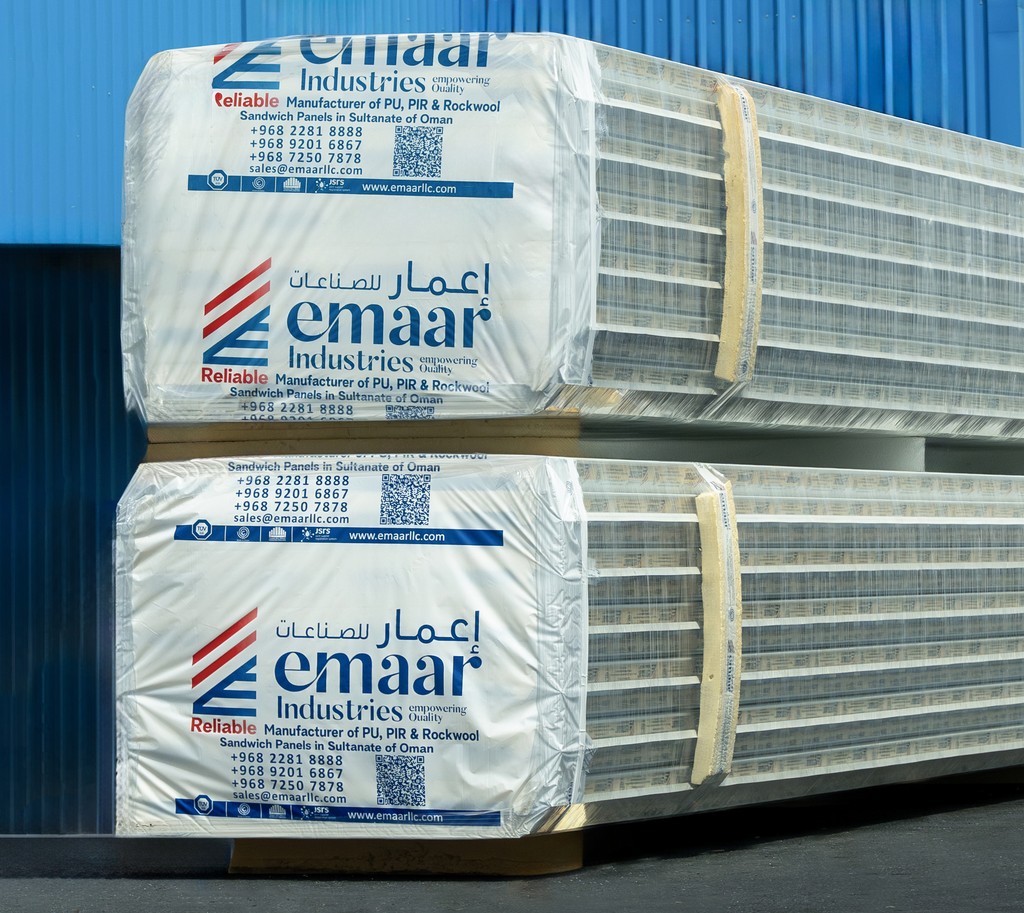
In an environment of fluctuating European mill surcharges and lengthy regional backlog times, procurement officers need direct factory partners with guaranteed coil supply, rigorous European standard adherence, and unyielding dimensional precision.
Our automated roll-forming complexes maintain an extensive inventory of primary hot-dip galvanized structural coils (EN 10346: S350GD + Z275 / ZM310 Magnelis). Equipped with computer-controlled precision embossing rolls, we imprint crisp, sharp mechanical shear notches into profile webs, guaranteeing full composite interlocking with concrete according to Eurocode 4.
All cold-formed decking profiles undergo systematic third-party testing to satisfy European Construction Products Regulation (CPR 305/2011).
Factory Production Control (FPC) certified for structural steel components up to Execution Class EXC3. Full traceability maintained from virgin coil heat numbers to finished profiled sheet bundles.
Profile embossments validated under NBN EN 1994-1-1 Annex B standard push-out test procedures, establishing accurate empirical $m-k$ and $\tau_{u,Rd}$ shear bond values for safe structural calculation.
Hot-dip zinc coatings (Z275 minimum) and advanced zinc-magnesium-aluminum alloys tested across accelerated salt spray chambers (ISO 9227) ensuring 50+ year operational design life in industrial marine zones.

In-depth answers addressing structural calculations, anti-corrosion specifications, port logistics, and local building approvals.
Re-entrant profiles (e.g., 50mm depth) have a dove-tailed rib geometry providing exceptional mechanical keying and flat underside soffits with dovetail hanging channels, making them ideal for multi-storey residential and commercial office buildings. Trapezoidal profiles (60mm, 80mm, or deeper) provide higher section modulus and inertia, permitting significantly longer unpropped spans required in logistics distribution centers, data centers, and multi-storey industrial car parks.
Yes. Under the European CPR 305/2011, structural cold-formed steel decking sheets carrying harmonized EN 1090-1 CE marking and backed by a comprehensive Declaration of Performance (DoP) and 3.1 mill test certificates are legally equivalent and accepted by Belgian control bureaus (e.g., SECO, Vinçotte, BCCA). BENOR marks primarily govern domestic ready-mix concrete, whereas structural steel requires certified Factory Production Control to EN 1090 EXC2 or EXC3.
Projects within 20 km of the Belgian coastline or near heavy chemical refining clusters in the Port of Antwerp are classified under Corrosivity Category C4 or C5-M according to ISO 12944. For exposed roof decks, standard Z275 (275 g/m² zinc) is often upgraded to Zinc-Magnesium (ZM310) coatings or pre-painted with 50-micron polyurethanes (e.g., Granite HDX) to prevent early edge creep and red rust corrosion.
Yes. By engineering the slab according to NBN EN 1994-1-2 (structural fire design), fire ratings from REI 60 up to REI 120 can be achieved without spray-on intumescent materials. This is accomplished by calculating minimum slab depths (e.g., 120mm to 150mm) and placing single bar reinforcement inside the profile troughs to carry tension during fire exposure once the bottom steel sheet exceeds critical temperatures.
Through-deck stud welding utilizes drawn arc welding guns with ceramic ferrules, fusing 19mm diameter Nelson-type shear studs directly through the galvanized metal deck into the structural steel beam flanges below. This ensures composite beam action in accordance with NBN EN 1994-1-1. For decks with heavy galvanizing (>Z275), pre-punched holes or tailored weld settings are strictly verified during on-site bend-testing (15-degree bend tests).
Direct ocean freight transit to the Port of Antwerp or Zeebrugge generally ranges between 18 to 28 days depending on the dispatch port. Because our automated mills run continuous shifts producing 10,000 m² daily, production turnaround typically takes 7–10 days. Total delivery cycles from technical drawing approval to jobsite arrival in Flanders or Wallonia average 4 to 6 weeks, providing substantial cost savings on large logistics and commercial projects.
In Belgium, the TOTEM tool calculates the environmental impact of building elements. Metal decking scores exceptionally high due to the high scrap recovery rate of steel (over 95%), demountable construction capability, and significant reduction in concrete volume and aggregate consumption compared to solid in-situ slabs. Certified Environmental Product Declarations (EPDs) are provided for direct credit submission.
For 60mm trapezoidal deck in 1.00mm gauge with a 150mm total slab depth, unpropped spans up to 3.80m are achievable under single-span conditions, or up to 4.20m across continuous double-span layouts. For 80mm deep profiles in 1.20mm gauge with 180mm–200mm slabs, clear spans exceed 4.80m without temporary shoring, drastically freeing ground-floor workspace during construction.
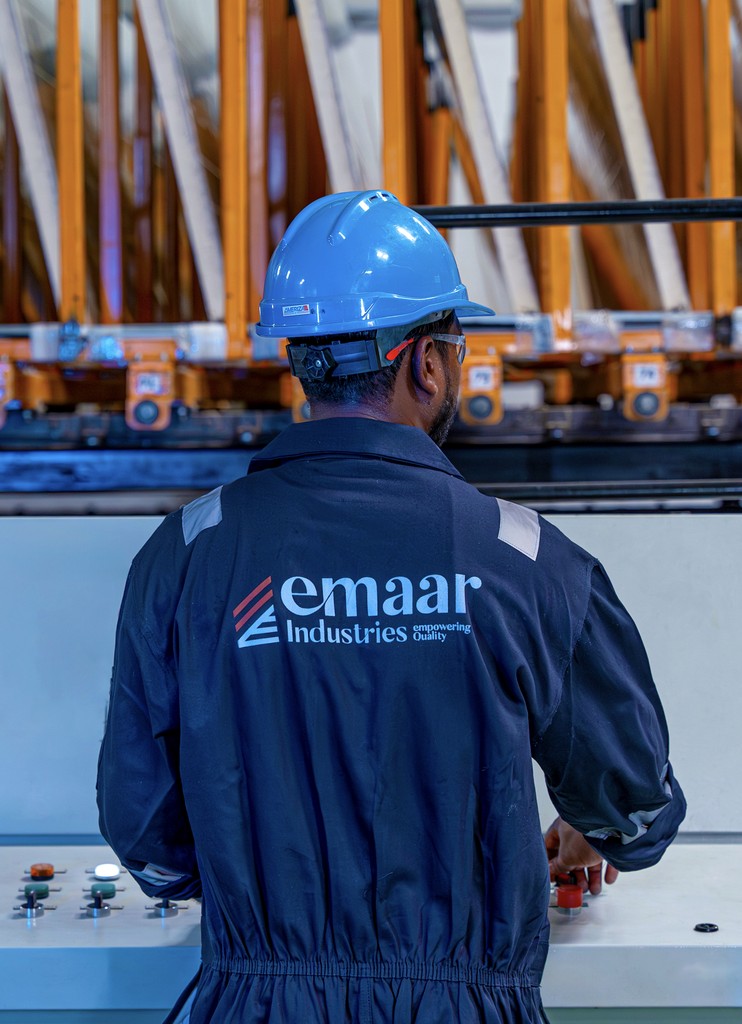
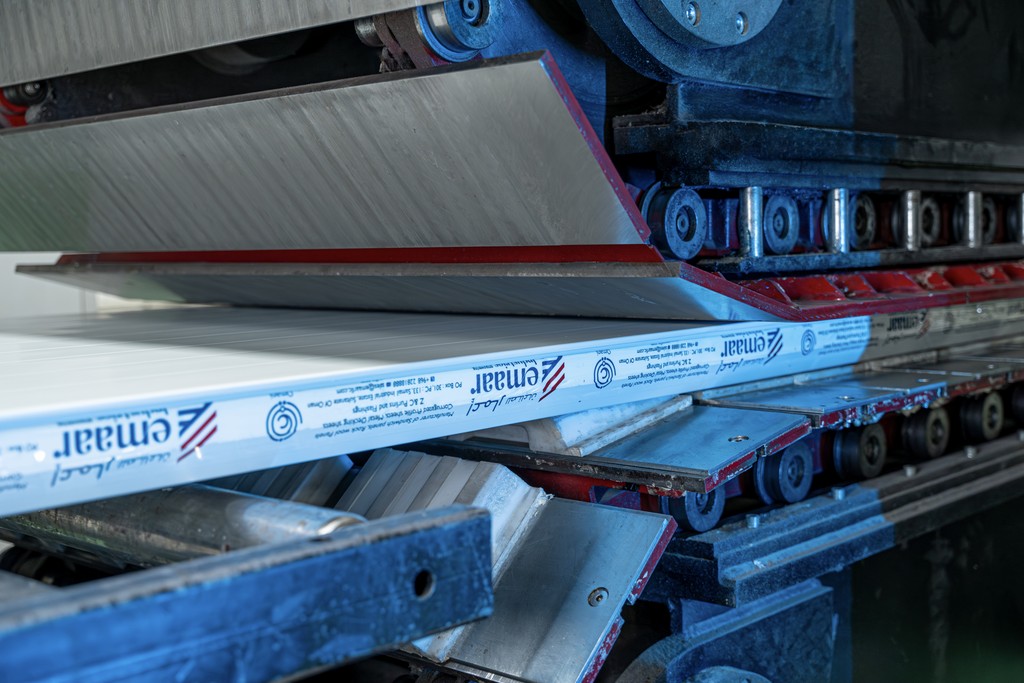
A visual inspection of our automated cold-roll profiling lines, protective strapping, seaworthy container staging, and completed commercial projects.
Whether engineering a massive e-commerce distribution hub in Ghent, an office development in Brussels, or an industrial chemical expansion in Antwerp, request custom load-span calculations and factory-direct CIF Antwerp pricing today.
Our sales engineers respond to project questions during working hours (GST+4).