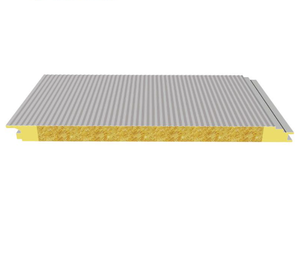
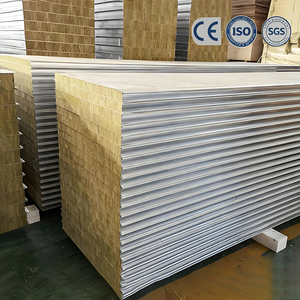
High-precision roll-formed composite profiles, engineered sheathing, secondary structural steel, and insulated panel solutions configured to match German and European building codes.
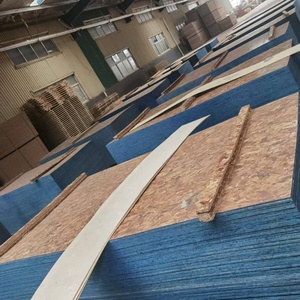
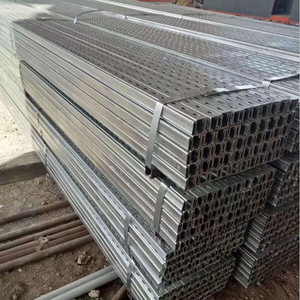
A rigorous, peer-level structural comparison analyzing high-load composite profile availability, yield strengths, Eurocode 4 testing certifications, and localized delivery logistics into the Berlin-Brandenburg region.
Emaar Industries has established itself as an essential international fabrication partner for major German construction contractors operating throughout Berlin, Potsdam, and Grünheide. Operating high-velocity automated cold-roll-forming facilities yielding over 10,000 m² daily, Emaar manufactures precision composite metal decking sheets, trapezoidal floor profiles, and cold-rolled purlins utilizing certified high-tensile steel (S350GD, S280GD with Z275 to ZM310 Magnelis® coatings). By providing custom sheet lengths up to 14 meters cut to exact tolerances, the company eliminates transverse overlap waste on site, directly satisfying strict German site execution requirements under DIN EN 1090-2 (EXC2/EXC3).
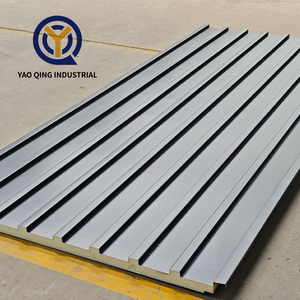
The enterprise provides complete structural envelope integration, supplying steel floor decks alongside non-combustible A1-rated Rockwool sandwich panels and secondary structural C/Z framing. This single-source procurement paradigm drastically reduces freight overhead, carbon emissions, and project scheduling friction for general contractors managing tight inner-city sites within Berlin’s Low Emission Zone (Umweltzone).
ArcelorMittal's construction brand Arval supplies the Berlin commercial building sector with established composite floor solutions, notably the Cofrastra and Cofraplus profile systems. Their dovetail and trapezoidal sections are engineered to interface with shear connectors for composite steel-concrete construction in administrative and commercial towers. With production hubs across Western Europe, their supply chains serve central Berlin developments with extensive technical documentation.
Tata Steel Europe delivers the ComFlor® range (ComFlor 51, 60, 80, and 210 deep deck) into the German market. ComFlor systems are recognized by structural engineers in Berlin for their distinct surface embossing that ensures efficient longitudinal shear connection with concrete slabs under DIN EN 1994-1-1. The deep-deck ComFlor 210 profile is frequently specified for slim-floor structural schemes where ceiling heights are strictly constrained.
Kingspan’s Multideck range (Multideck 50-V2, 60-V2, and 80-V2) serves structural engineers across northern and eastern Germany. Multideck profiles incorporate engineered swages and embossments that enhance concrete mechanical interlock. Their profiles provide unpropped spanning capabilities up to 4.5 meters, making them common in modern logistics centers and business park constructions around the Berlin ring road (Berliner Ring BAB 10).
Ruukki delivers cold-formed structural steel decks and composite floor panels manufactured from SSAB structural steel coils. Popular among logistics park developers in Ludwigsfelde and Großbeeren near Berlin, Ruukki profiles are engineered for high static load performance under cyclic loading conditions. Their product data emphasizes low embodied carbon steel formulations, aligning with DGNB gold certification criteria.
SAB-profiel manufactures trapezoidal and composite floor sheets like SAB 60/1000 and SAB 75/1000, which are commonly utilized in German commercial structures. Backed by Voestalpine’s metallurgical capabilities, SAB profiles offer tight dimensional tolerances and hot-dip zinc coatings up to Z275, ensuring predictable curing without sacrificial corroding in humid construction environments.
Located in Netphen and supplying building envelopes across Germany, Fischer Profil is an established supplier of industrial trapezoidal profile sheets and acoustic roof decks. For intermediate mezzanine decks and industrial composite slabs across Berlin’s manufacturing hubs, Fischer Profil provides verified load-bearing performance tables certified under German DIBt national technical approvals.
Hoesch is synonymous with historic German cold-rolled engineering. Their composite floor systems, such as the Hoesch Additiv Decken, feature tailored profiles designed to integrate directly with concrete ribs, minimizing slab deadweight while maximizing acoustic mass. These systems are widely used in urban residential and medical facilities across Berlin where vibration dampening is paramount.
Montana supplies Holorib® and Superholorib® profiles, characterized by their dovetail geometry. This profile allows service ducts, suspended acoustic ceilings, and sprinkler systems to be mounted directly to the deck underside using specialized wedge nuts without drilling. This feature makes it popular in commercial refurbishments across Berlin-Mitte and Charlottenburg.
As a subsidiary of Salzgitter AG, this plant produces structural trapezoidal profiles and heavy-duty floor decks. Their profiles utilize S320GD and S350GD grades, designed for high dynamic loading conditions in heavy machinery manufacturing facilities, power stations, and multi-tier logistics transit hubs surrounding the greater Berlin-Brandenburg metropolitan core.
Comparative design metrics for composite slab engineering according to DIN EN 1994-1-1 (Eurocode 4), fire performance standards, and German structural safety annexes.
| Profile Configuration | Depth / Pitch (mm) | Steel Yield Strength ($f_{yb}$) | Galvanic Protection | Unpropped Max Span | Fire Endurance (DIN EN 13501-2) |
|---|---|---|---|---|---|
| Emaar Composite Deck 60 | 60 / 300 mm | S350GD (≥ 350 MPa) | Z275 – ZM310 (Magnelis®) | Up to 4.20 m (Single) / 4.80 m (Cont.) | REI 60 – REI 120 (with rebar) |
| Standard Trapezoidal 50 | 50 / 250 mm | S280GD (≥ 280 MPa) | Z275 Zinc Standard | Up to 3.20 m | REI 30 – REI 60 |
| Dovetail / Re-entrant 51 (Holorib Type) | 51 / 150 mm | S320GD (≥ 320 MPa) | Z275 / Aluzinc 150 | Up to 2.80 m | REI 90 – REI 120 |
| Emaar Deep Deck 75 / High-Load | 75 / 333 mm | S350GD (≥ 350 MPa) | Z275 – Z350 Heavy Galvanized | Up to 4.60 m (Unpropped) | REI 90 – REI 120 |
| Deep Slimdek / Deep Rib 210 | 210 / 750 mm | S350GD (≥ 350 MPa) | Z275 Zinc Structural | Up to 6.50 m (With intermediate propping) | REI 120 |
How composite metal decking profiles address architectural, structural, and acoustic requirements across Berlin's diverse construction landscape.
The industrial belt surrounding Berlin—spanning the Grünheide EV automotive corridor, Ludwigsfelde logistics complexes, and Großbeeren intermodal hubs—requires floor decking capable of supporting high wheel loads, autonomous mobile robots (AMRs), and mezzanine racking. High-gauge galvanized steel decking (0.9mm to 1.2mm S350GD) provides the requisite composite stiffness, deflection limits (L/350 to L/500 under dynamic live load), and resistance to concrete shrinkage cracking.
Berlin is at the forefront of European timber-concrete composite (Holz-Beton-Verbund) and modular steel construction. In tight urban quarters along the Spree and inner-city districts, transporting heavy precast concrete slabs through narrow streets is often unfeasible. Cold-formed steel floor decks serve as lightweight stay-in-place formwork that workers can distribute by hand, drastically minimizing crane lift demands and speeding floor cycles down to 4 days per story under the strict Berlin Building Code (Bauordnung Berlin - BauO Bln).
At Germany’s leading scientific campus in Adlershof, biomedical laboratories, cleanrooms, and data servers require precise floor vibration control (Vibration Criteria VC-A through VC-E). Optimized composite steel decking with cast-in-place micro-silica concrete slabs provides high diaphragm rigidity and dynamic mass, damping human footfall vibrations and mechanical harmonics from HVAC equipment.
How green taxonomy, circular economy legislation, and European Building Information Modeling (BIM) mandates influence floor deck engineering.
Driven by DGNB (Deutsche Gesellschaft für Nachhaltiges Bauen) and LEED certification targets across Berlin commercial real estate, developers require Environmental Product Declarations (EPDs). The transition toward electric arc furnace (EAF) production using high recycled scrap content reduces embodied carbon per square meter of deck by up to 60%.
Aligning with Berlin’s circular economy initiatives (Kreislaufwirtschaftsgesetz), structural engineers are testing demountable composite systems. Rather than traditional welded Nelson studs that permanently lock steel to concrete, shot-fired mechanical shear pins allow end-of-life slab disassembly and steel deck recycling.
With public works in Berlin mandating Building Information Modeling (BIM), steel decking is now detailed via IFC-compliant 3D models. Factory roll-formers receive automated CNC punch schedules for MEP service voids, cutting off-site labor and eliminating clash adjustments on site.
In response to volatile weather and high ambient moisture during autumn concrete pouring in Berlin, contractors are specifying zinc-aluminum-magnesium alloy coatings (e.g., Magnelis® ZM120-ZM310). These offer self-healing edge corrosion protection far superior to conventional Z275 hot-dip galvanizing.
Critical answers for structural designers, specifiers, and purchasing directors navigating Eurocodes, building permits, and transport into Berlin.
Structural calculation of composite steel decking is governed by DIN EN 1994-1-1 (Eurocode 4) for composite steel-concrete structures, complemented by DIN EN 1993-1-3 (Eurocode 3) for cold-formed thin-gauge members. Manufacturing quality must conform to DIN EN 1090-2 (Execution Class EXC2 or EXC3), bearing a valid CE mark and factory production control (FPC) documentation acceptable to Berlin building authorities (Bauaufsichtsbehörde).
Unprotected steel floor deck sheets are generally assumed to lose structural load capacity after roughly 15 to 30 minutes in an ISO 834 fire curve. To achieve REI 60, REI 90, or REI 120 compliance under DIN EN 13501-2 and DIN 4102-4, additional longitudinal tensile reinforcement bars must be placed in the deck profile troughs, or the slab thickness must be increased to ensure concrete slab arching action without relying on the exposed bottom steel sheet.
Yes. Deliveries inside the Berlin inner ring (S-Bahn ring) must comply with the Umweltzone green emissions badge (Euro 6 / Euro VI emissions standard for heavy freight vehicles). Emaar Industries and leading suppliers coordinate overland logistics with certified carriers equipped with low-noise trailers, hydraulic steering for restricted medieval streets, and pre-arranged curbside offloading permits (Sondernutzungserlaubnis).
A bare composite slab does not inherently meet multi-family residential acoustic standards under DIN 4109 (Schallschutz im Hochbau). To achieve standard performance ($L'_{n,w} \le 50\text{ dB}$ for impact sound and $R'_w \ge 54\text{ dB}$ for airborne sound), the floor system must incorporate a floating screed (schwimmender Estrich) installed over elastomeric acoustic insulation boards, or utilize drop ceilings with sound-damping hangers.
Propping depends on deck profile depth, metal thickness (typically 0.75 mm to 1.20 mm), steel yield strength, and the clear span between steel beams. For spans exceeding 3.0 to 3.5 meters with standard 50–60 mm trapezoidal profiles, temporary props are required to prevent excessive wet-concrete sagging. Deep profiles like Emaar Deep Deck 75 or ComFlor 80 allow unpropped spans over 4.0 meters, accelerating construction schedules below.
Under DIN EN 10346, hot-dip zinc coatings with a minimum mass of Z275 (275 g/m² combined both sides) are standard for internal dry environments (Corrosivity Category C1/C2). For structures subject to high condensation, such as multi-story car parks or semi-open hubs, zinc-magnesium coatings like Magnelis® ZM310 or zinc-aluminum coatings (Galfan) provide the required chemical barrier against alkaline concrete pore water.
Combining world-class production capacity, certified German-standard fabrication tolerances, and single-source building envelope integration.
Our continuous automated roll-forming lines operate around the clock, providing dependable volume production that protects mega-scale industrial and commercial schedules from supply chain bottlenecks.
Formed exclusively from certified prime coils (S280GD, S320GD, S350GD), our floor decking profiles feature engineered mechanical embossments designed to maximize longitudinal shear transfer with concrete.
Beyond composite floor decking, we fabricate cold-rolled C/Z purlins, secondary framing systems, moisture-resistant sheathing boards, and non-combustible Rockwool wall panels, simplifying vendor management.
We roll-form floor deck sheets cut to custom project spans up to 14 meters. This eliminates transverse lap joints, reduces on-site hot cutting, and lowers net tonnage requirements for contractors.
Submit your structural drawings, span matrices, and load schedules. Our technical engineering desk delivers Eurocode 4 slab calculations, optimized profile take-offs, and competitive project quotations within 24 to 48 hours.
Contact UsOur sales engineers respond to project questions during working hours (GST+4).