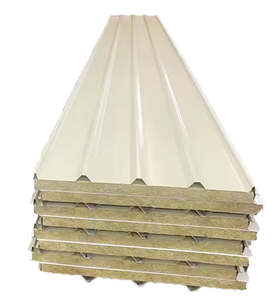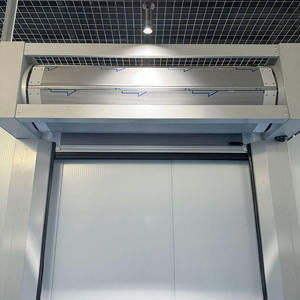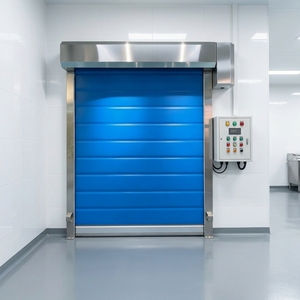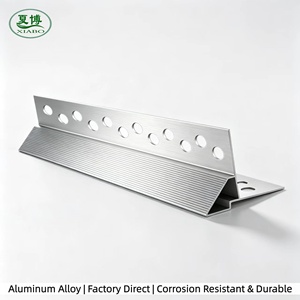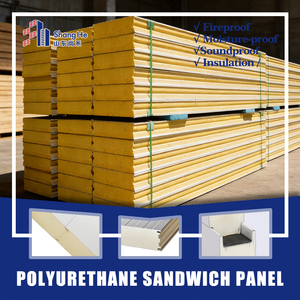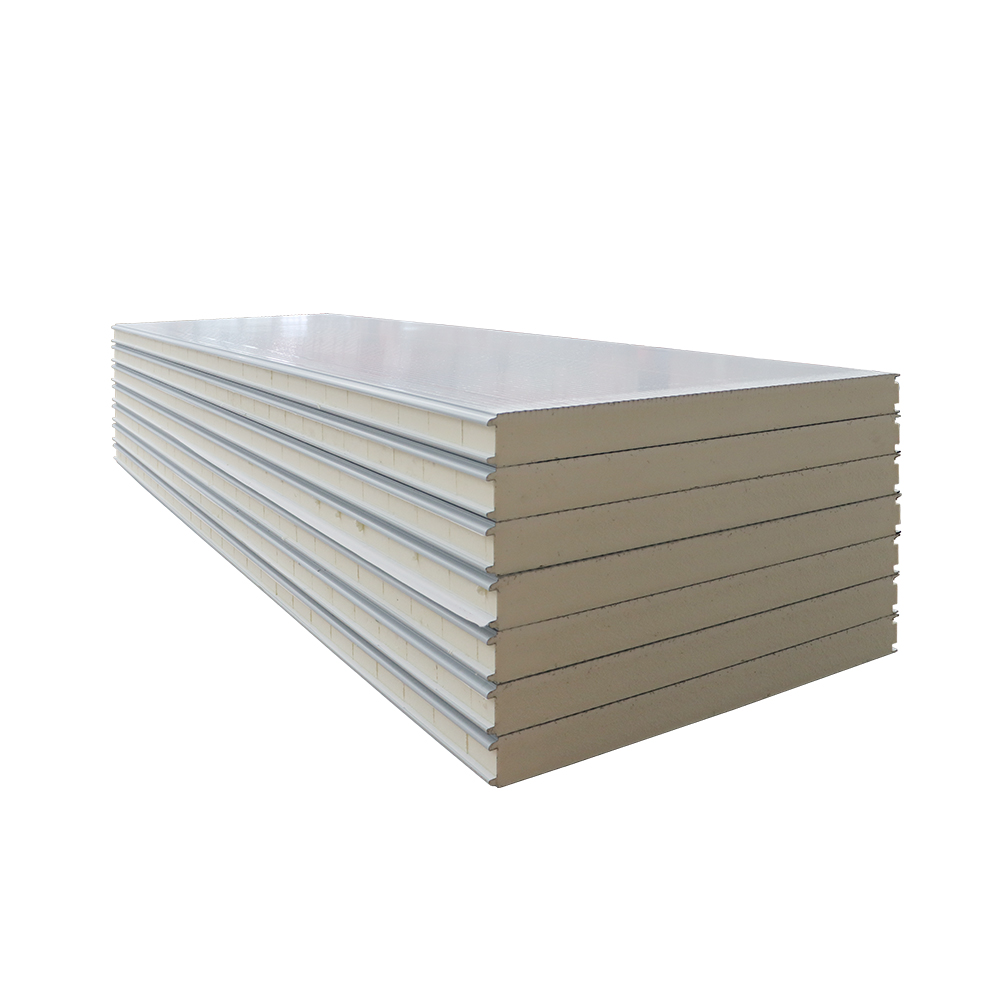
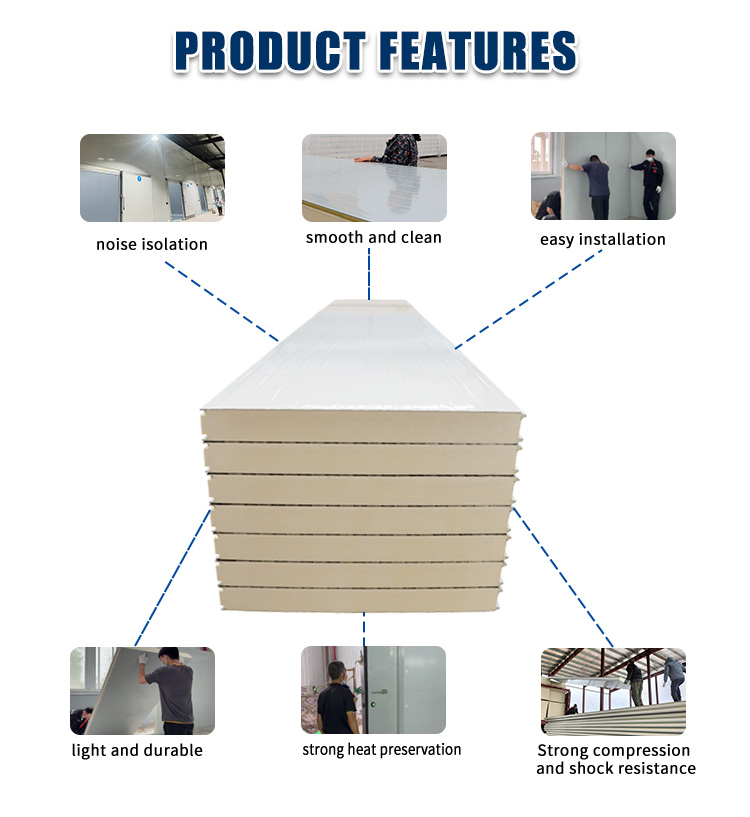
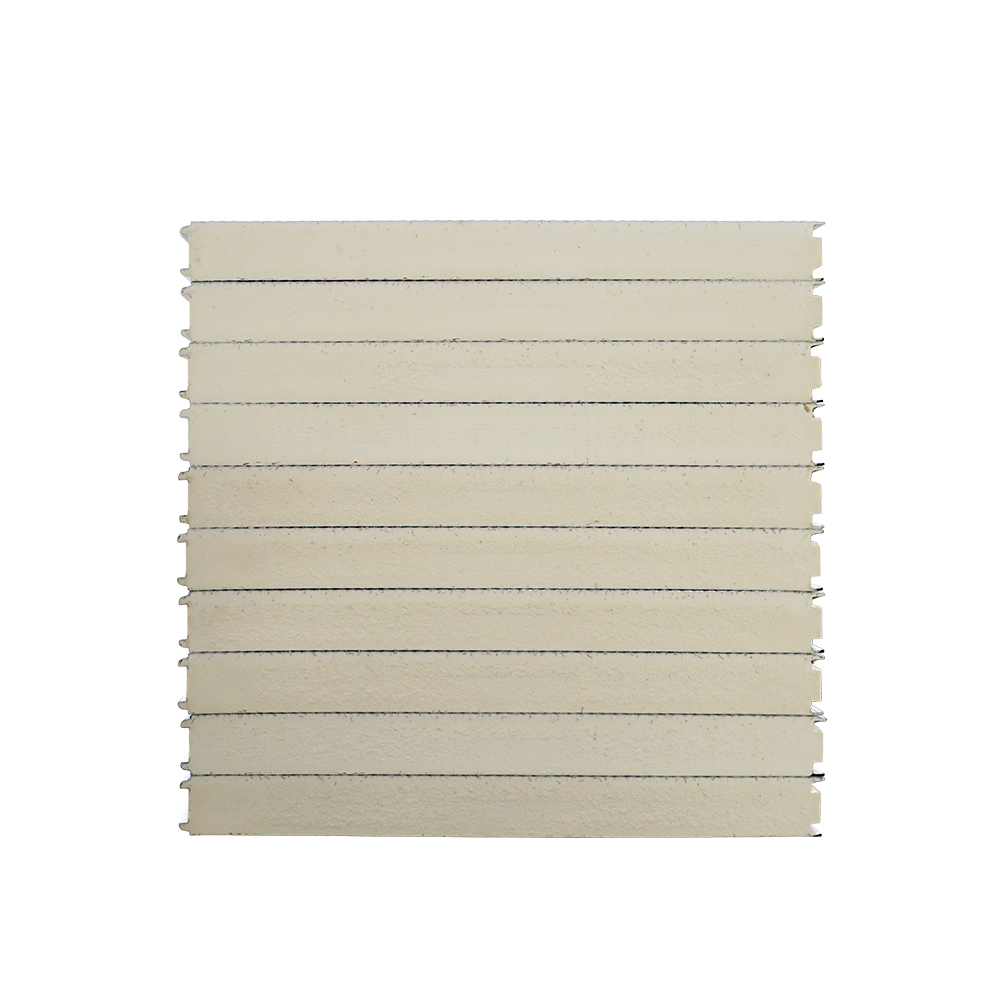



Factory Directly Supply Eco-Friendly Water Resistant Insulated PU Sandwich Panels Cold Room Wall Warehouse/Freezer/Chiller

Product Description

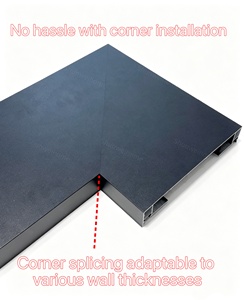
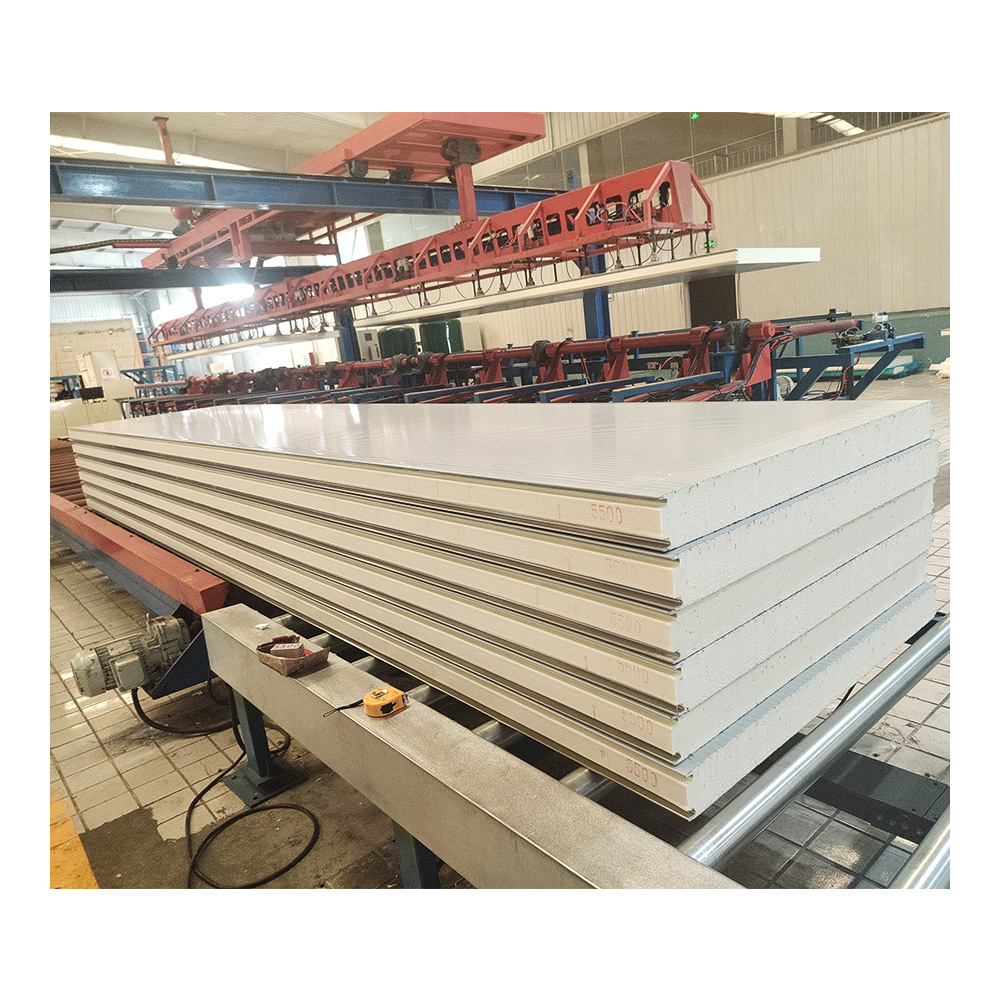
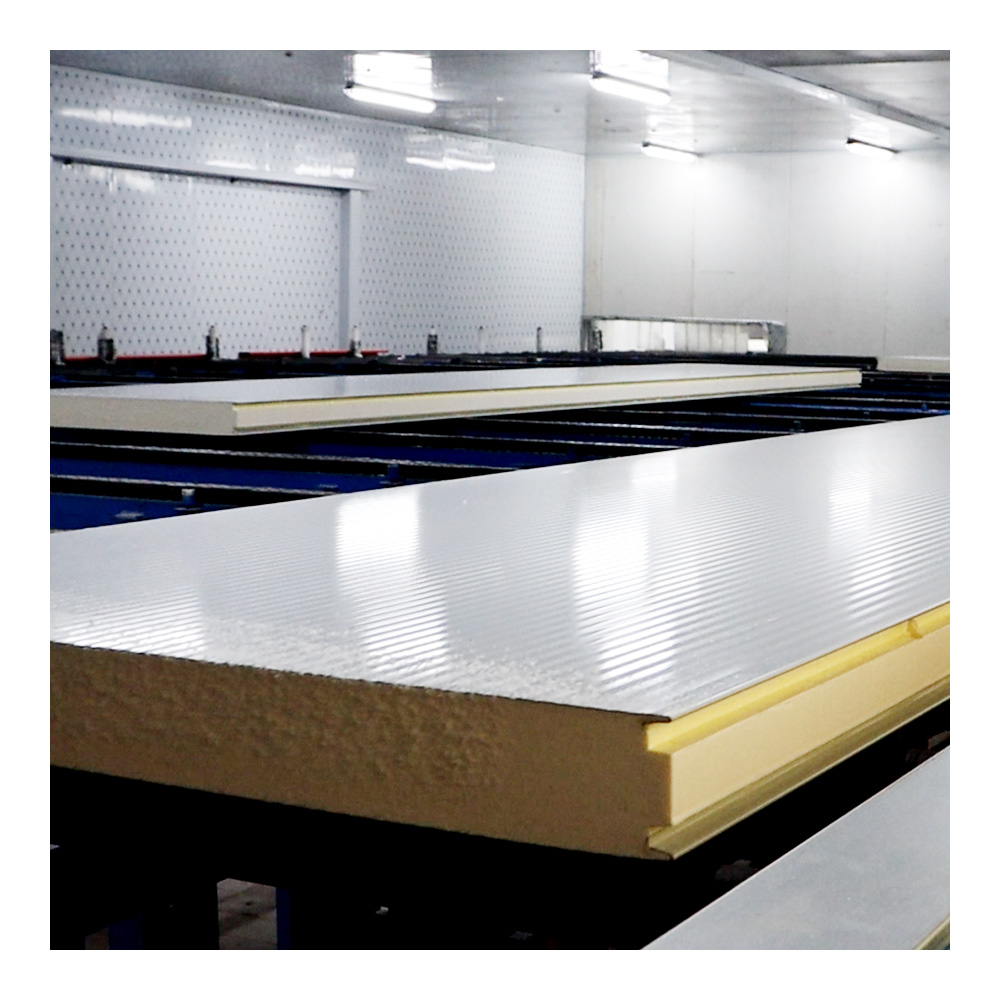
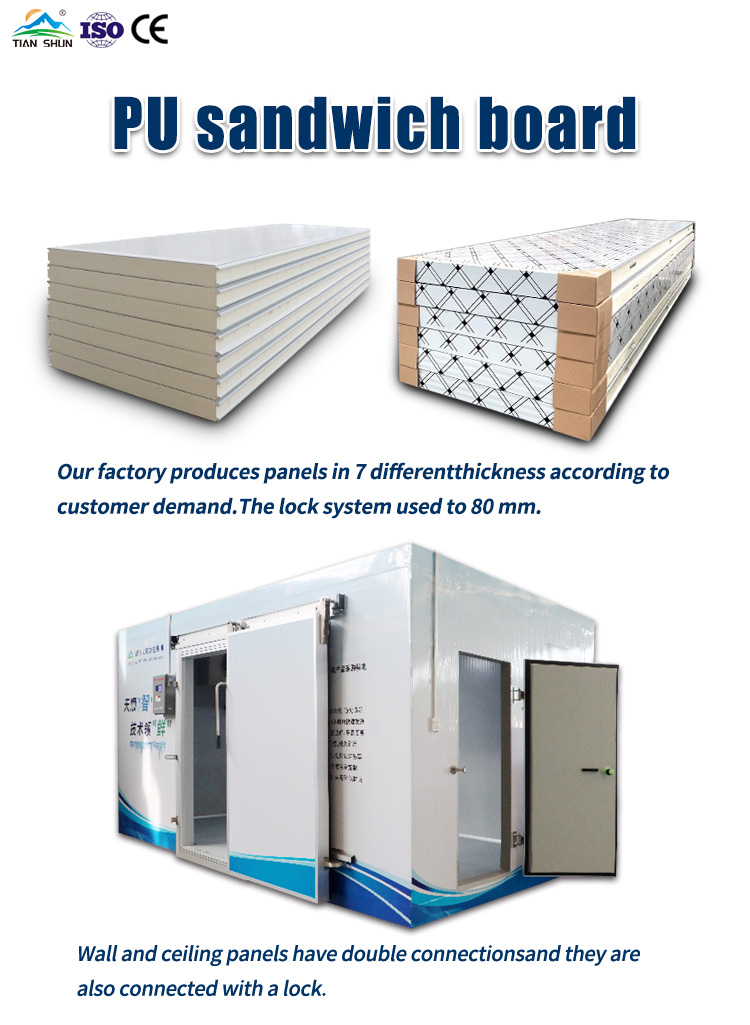
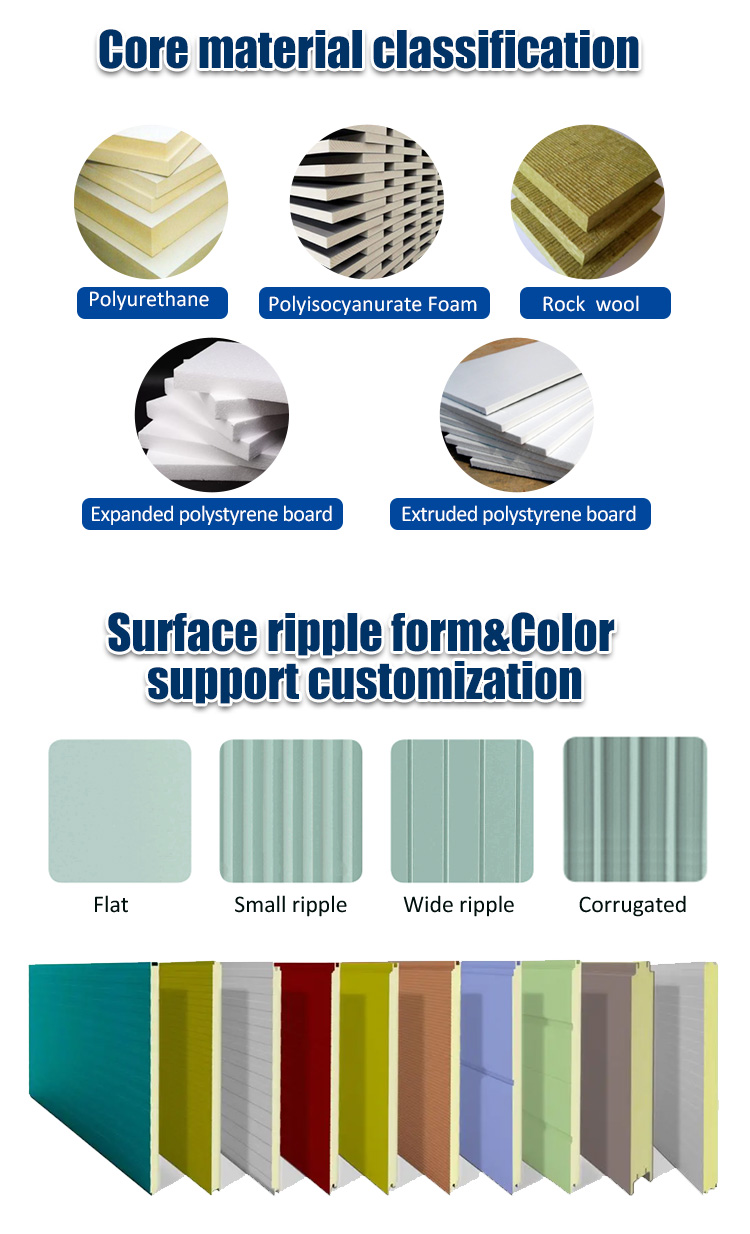
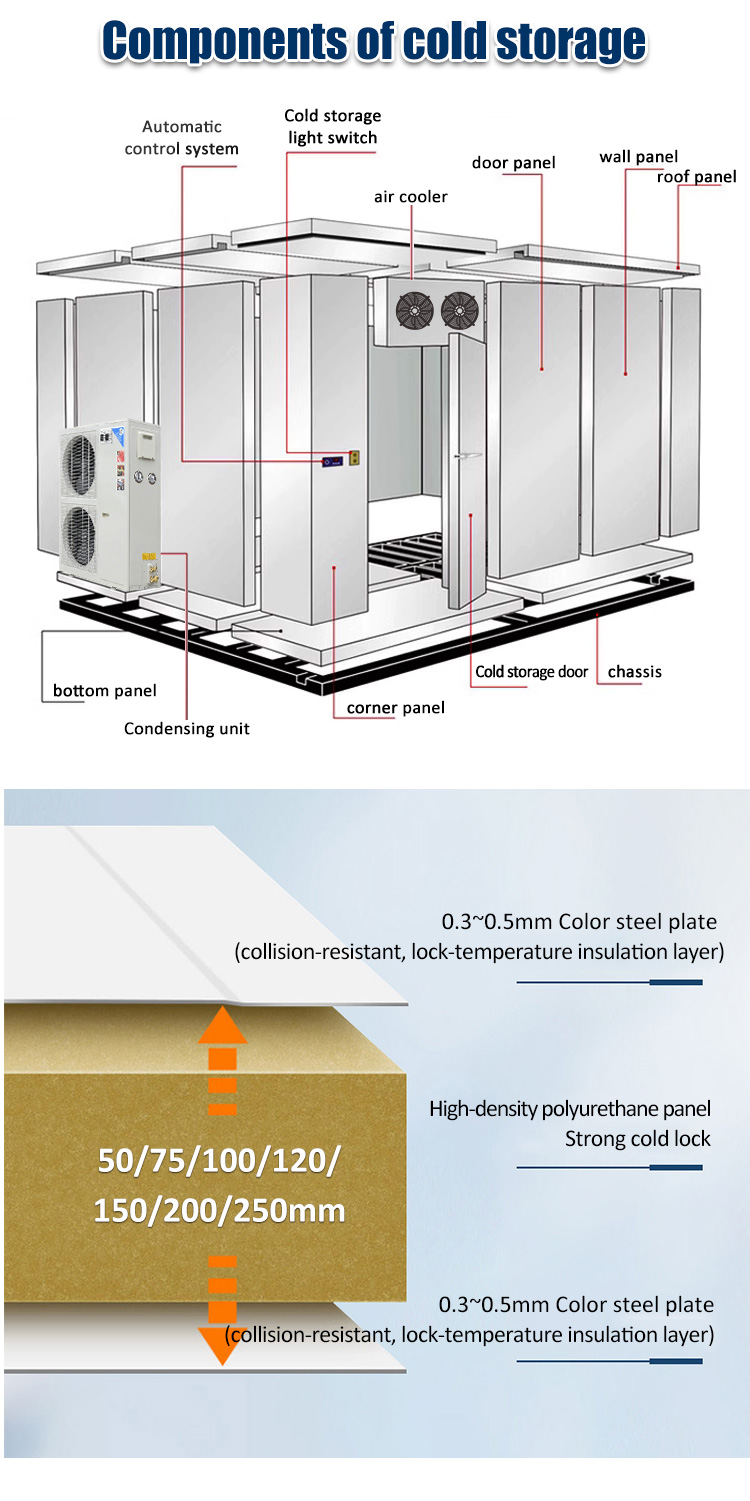
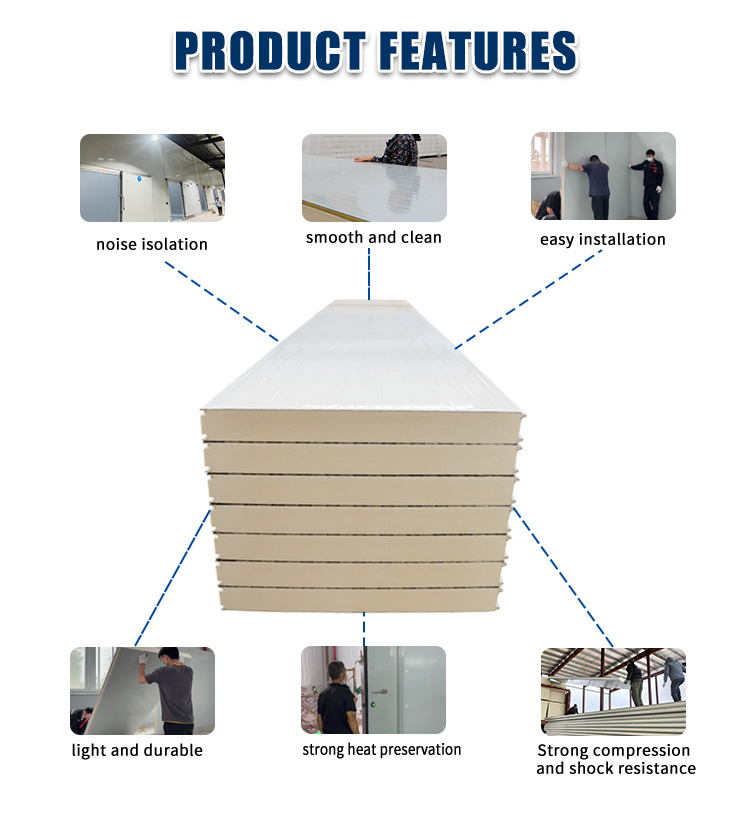
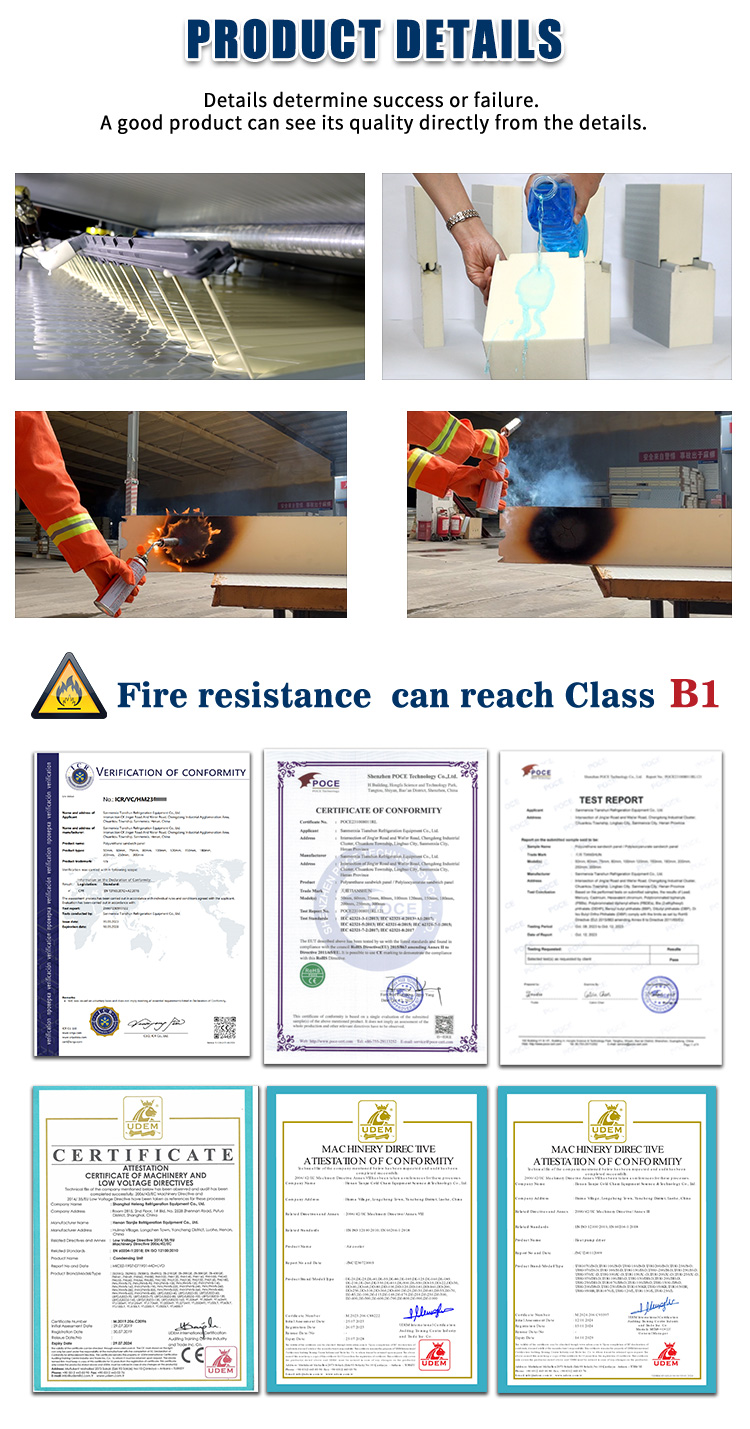
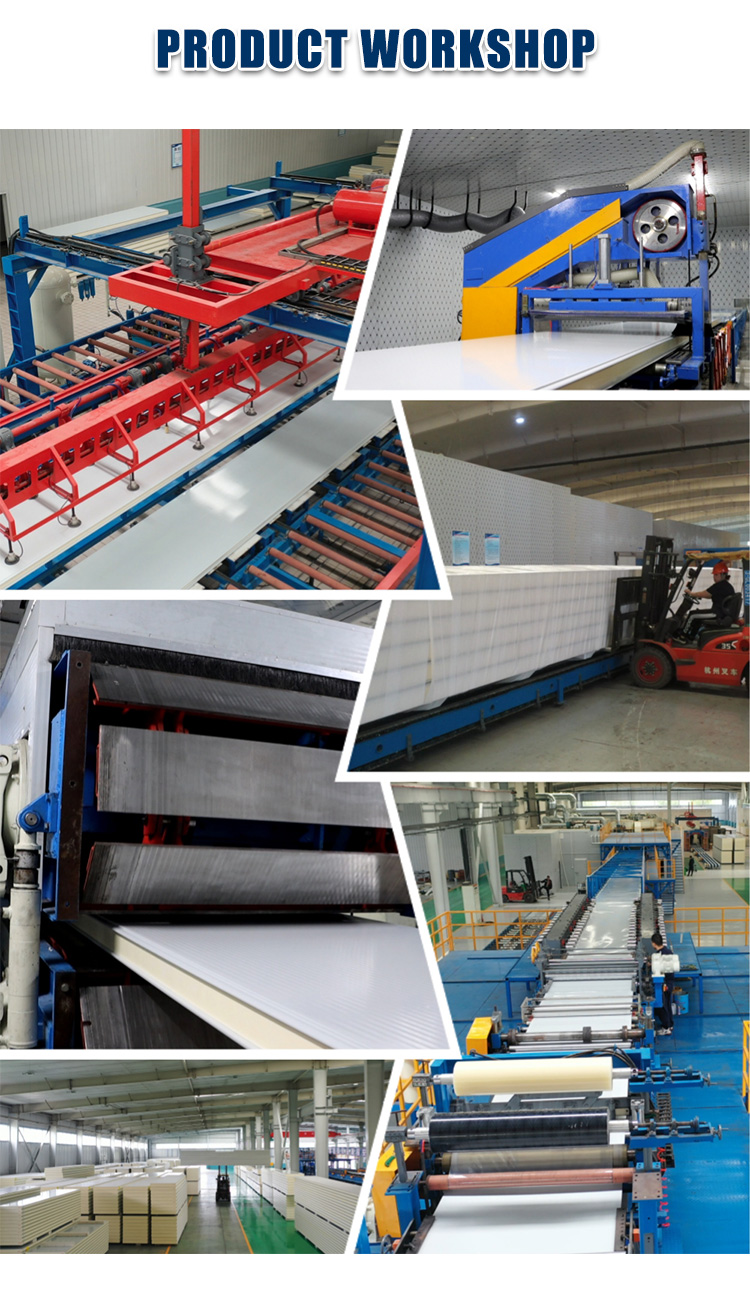
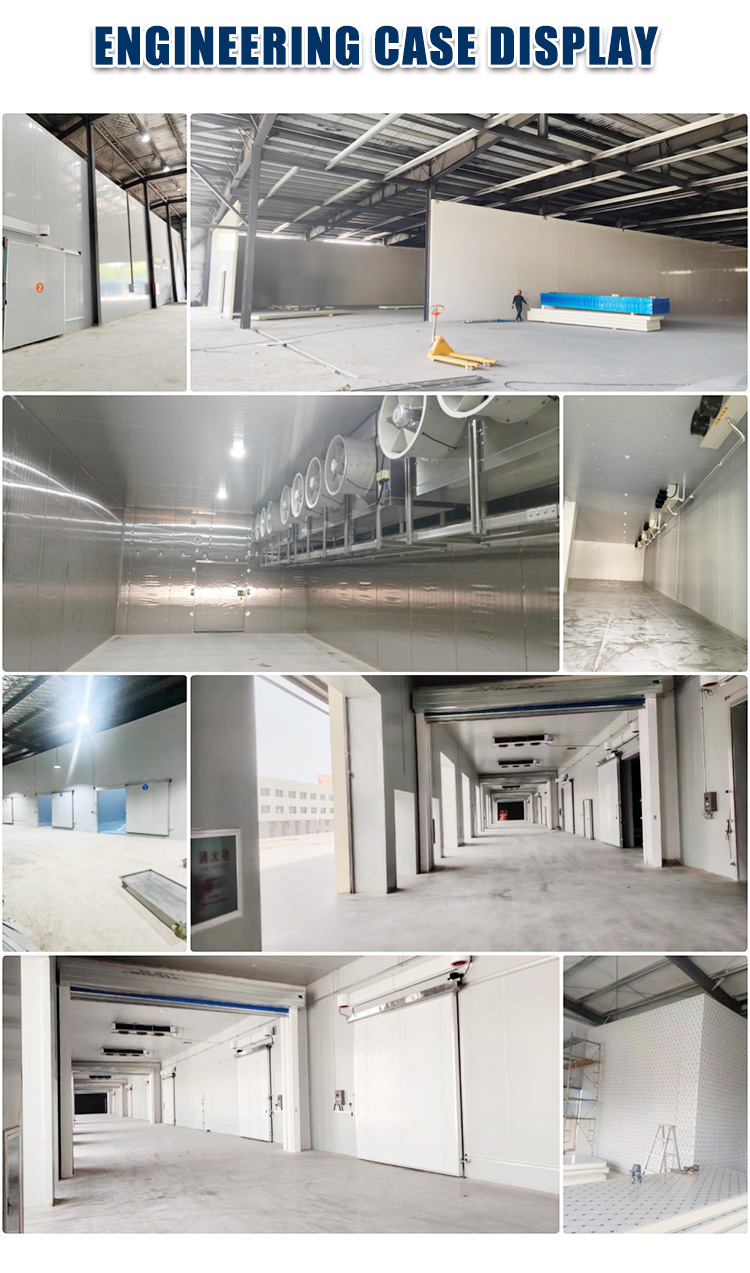
Insulated PU Sandwich Cold Room Wall Panels for Walking Freezer Panels
Core Thickness 50mm 75mm 100mm 120mm 150mm 180mm 200mm
Density of core 38-45kg/m3
Steel Plate Thickness 0.4-0.8mm
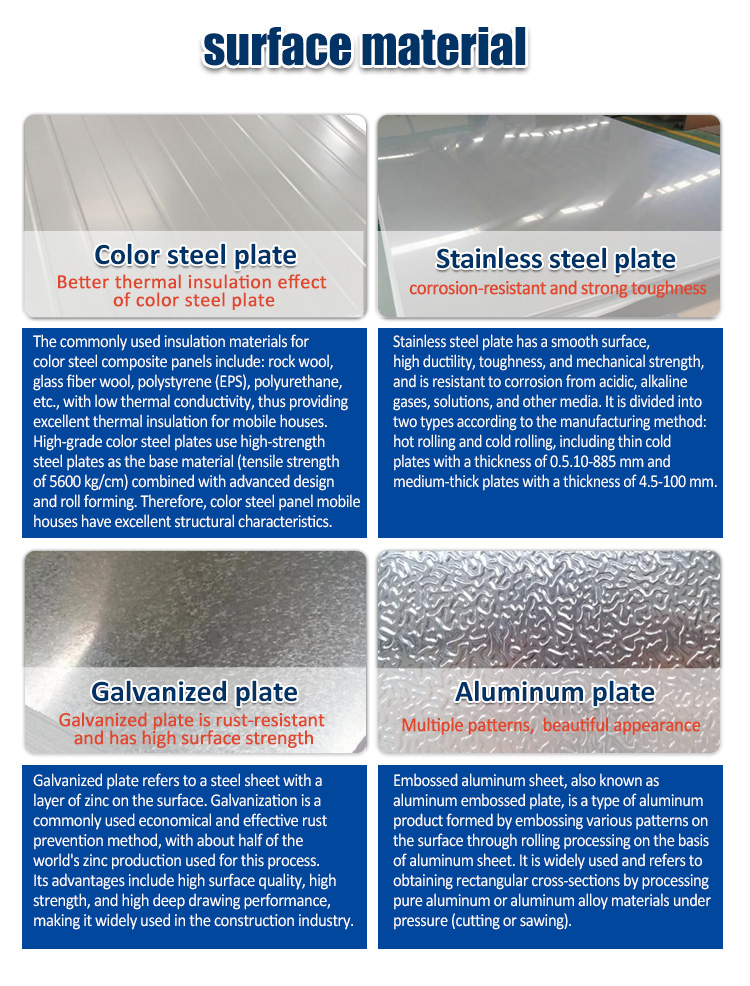
Metal Sheet Color Coated Steel Sheet / Stainless steel plate
Galvanized layer of steel plates Exterior plate and Inner plate: Aluzinc or Zinc coating
Panel Length According to customers’ request
Width 1000mm / 1120/1130mm
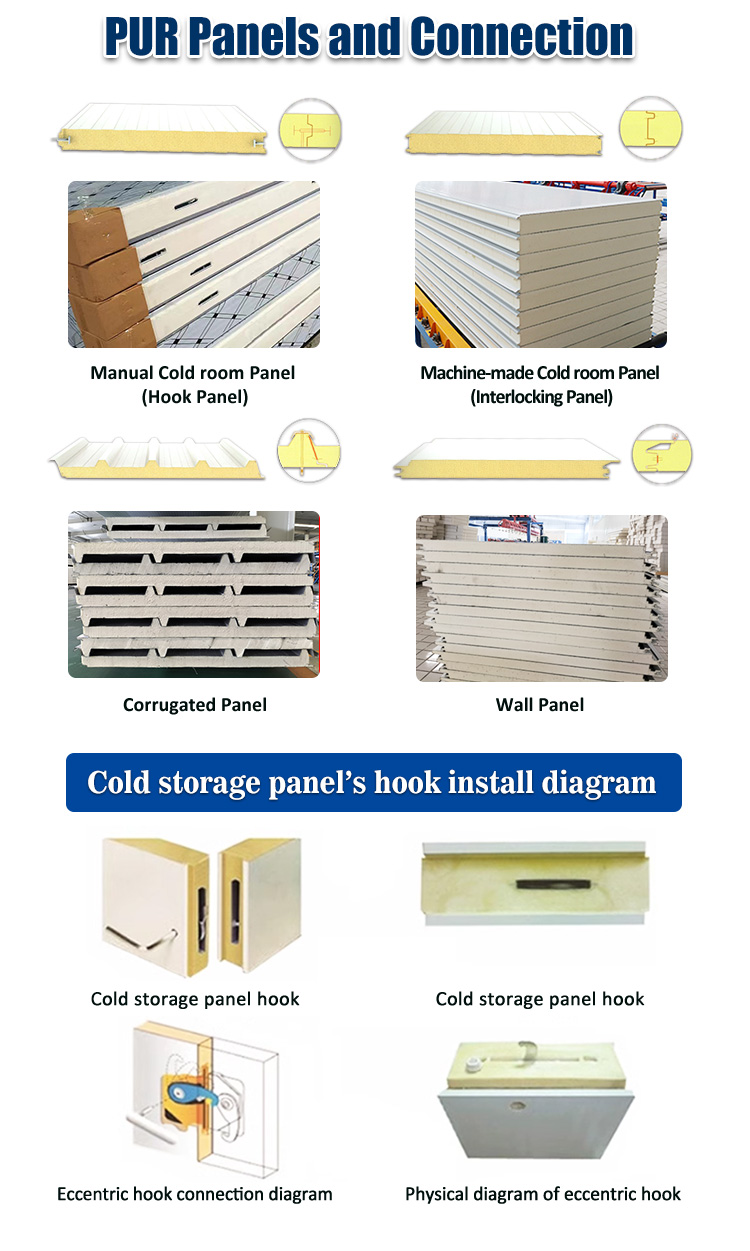
PUR Corrugated Roof Panels
Core Thickness 50mm 75mm 100mm 120mm 150mm 180mm 200mm
Density of core 38-45kg/m3
Steel Plate Thickness 0.4-0.8mm
Metal Sheet Color Coated Steel Sheet
Galvanized layer of steel plates Exterior plate and Inner plate: Aluzinc or Zinc coating
Panel Length According to customers’ request
Width 1000mm
Frequently Asked Questions (FAQ)
1. How to choose the right PU panel thickness for cold rooms and freezers?
Panel thickness is determined by the required storage temperature. Generally, 50mm to 75mm panels are used for positive temperatures (+0°C to +10°C, chillers), 100mm to 120mm panels for medium-low temperatures (-18°C to -20°C, walking freezers), and 150mm to 200mm panels for ultra-low or blast freezer applications (-25°C to -40°C).
2. Why is polyurethane (PU/PUR) with 38-45 kg/m³ density ideal for thermal insulation?
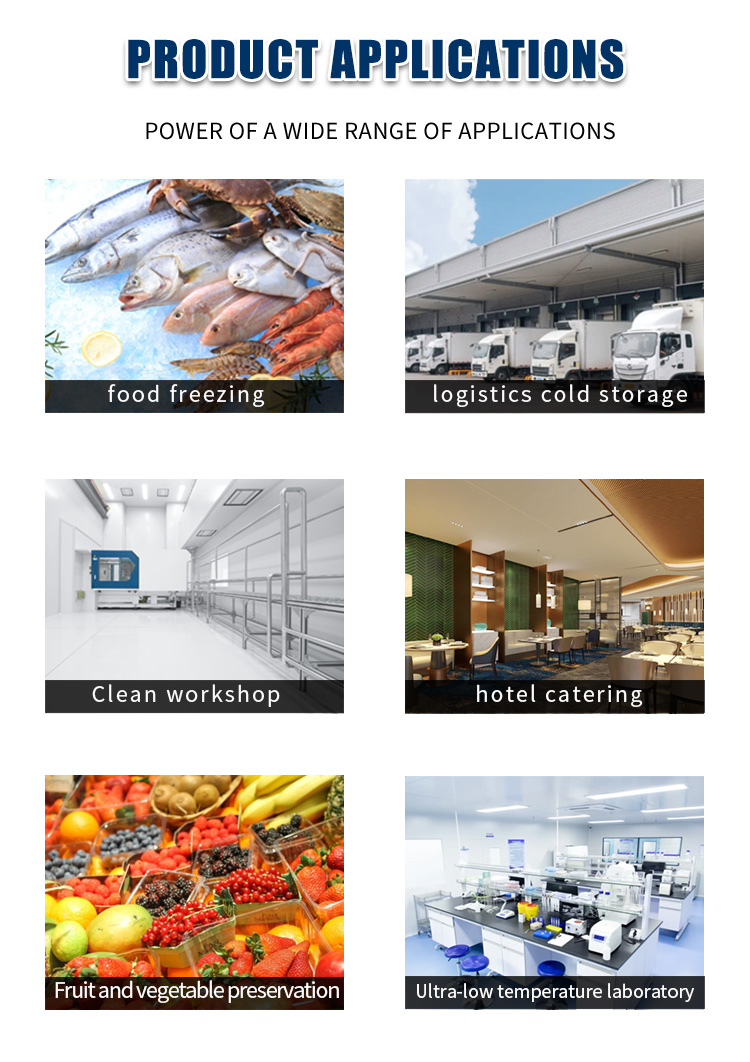
A core density of 38-45 kg/m³ provides the optimum balance between structural rigidity and thermal resistance (extremely low thermal conductivity). It ensures a high closed-cell ratio, superior dimensional stability, and maximum energy savings over long-term refrigeration operations.
3. What types of surface facing materials are available?
Panels can be customized with high-grade pre-painted color coated steel sheets (PPGI) or stainless steel plates (SUS 304). Both inner and exterior steel facings are protected with Aluzinc or Zinc coatings to guarantee rust resistance, hygiene compliance, and long service life in moist environments.
4. What is the difference between cold room wall panels and corrugated roof panels?
Wall panels usually feature flat or slightly profiled surfaces designed for tongue-and-groove or cam-lock vertical assembly. PUR corrugated roof panels feature deep profile ribs that provide superior load-bearing capacity, rapid water drainage, and enhanced weather resistance for exterior building roofs.
5. Can panel lengths and widths be customized according to architectural drawings?
Yes. Panel lengths are custom-manufactured based on your project requirements and shipping container dimensions (typically up to 11.8m for standard 40ft HQ containers). Standard effective widths are 1000mm, with options for 1120mm or 1130mm for wall configurations.
6. How are PU sandwich panels installed to ensure an airtight seal?
Panels are designed with precision tongue-and-groove joints or integrated eccentric cam-lock mechanisms. During assembly, silicone sealant or sealing tape is applied along joints to completely eliminate cold bridges and prevent thermal leakage.

Related Products