Direct Mill Manufacturing & Global Roll-Forming Hub

Structural Steel Decking: The Definitive Engineering & Global Procurement Specification Guide

Engineered to resolve structural load-bearing, diaphragm action, and corrosion challenges in commercial towers, mega-logistics hubs, and industrial platforms. Discover high-yield composite floor decking, permanent stay-in-place formwork, and heavy-gauge roof deck solutions roll-formed directly from Muscat, Oman to ASTM A653 and BS EN 10346 international standards.

350 - 550 Yield MPa (S350GD / Gr. 50)
Z275 / G90 Standard Zinc Mass (g/m²)
Up to 4.5m Unpropped Spans Available
550+ Major Projects Delivered
Galvanized composite structural steel decking profile roll formed in Oman
Precision Cold-Rolled Metal Decking ASTM A653 / EN 10346 Certified
Engineered Recommendations

Recommended Structural Steel Decking Profiles for High-Load Environments

Selecting the optimum metal deck profile dictates structural slab efficiency, concrete volume consumption, deflections during wet casting, and composite bending resistance. Below are the core profiles manufactured at our high-speed Muscat facility to satisfy international engineering schedules.

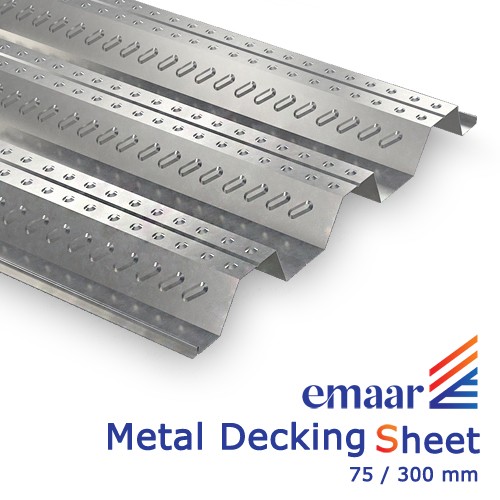
Composite Slab Trapezoidal composite steel floor deck sheet

Composite Metal Floor Deck (50mm / 75mm)

Featuring scientifically designed continuous mechanical embossments on the web and flat crests. Once concrete reaches 28-day cure, the embossments interlock with the concrete matrix, replacing bottom tensile rebar and transferring longitudinal shear efficiently.

  • Nominal Depth: 50 mm & 75 mm
  • Thickness Range: 0.80 mm to 1.50 mm (22–16 Ga)
  • Substrate Grade: S350GD+Z275 / ASTM A653
  • Primary Application: Multi-story steel buildings, mezzanine floors
Contact Us
Form Deck Deep trapezoidal non-composite form deck profile

Non-Composite Form Deck (Stay-in-Place)

High-tensile cold-rolled steel profiling designed as permanent shuttering for reinforced concrete slabs over structural steel or precast beams. Eliminates wood formwork stripping, accelerates cycle times, and acts as a safe, rigid working platform during erection.

  • Nominal Depth: 38 mm to 76 mm
  • Effective Width: 750 mm / 900 mm
  • Coating Spec: Hot-dip galvanized Z180 - Z275
  • Primary Application: Bridge decks, foundational slabs, industrial roofs
Contact Us
Long Clear-Span Heavy duty deep profile structural steel deck

Deep Rib Long-Span Cellular Deck

Developed for architectural and infrastructure structures demanding wide column grids up to 6.0 meters unpropped. Deep flutes reduce slab deadweight by displacing non-structural neutral-axis concrete while providing integrated routing for MEP building services.

  • Nominal Depth: 100 mm to 150 mm
  • Steel Yield: High Tensile 450 to 550 MPa
  • Perforation Option: Acoustic web punching available
  • Primary Application: Airports, distribution centers, gymnasiums
Contact Us
Profile Category Nominal Rib Height Standard Gauge Thickness Steel Yield Strength Max Unpropped Single Span Composite Shear Mechanism
Standard Composite Deck 50 mm (2.0 in) 0.8 mm – 1.2 mm 350 MPa (Grade 50) 2.60 – 3.20 m Chevron / Embossed Mechanical Ribs
Deep Composite Floor Deck 75 mm (3.0 in) 0.9 mm – 1.5 mm 350 – 420 MPa 3.80 – 4.50 m Multi-V Groove Mechanical Indentations
Stay-in-Place Formwork 38 mm (1.5 in) 0.7 mm – 1.0 mm 300 – 350 MPa 2.10 – 2.80 m Smooth / Friction Formwork Only
Heavy-Duty Diaphragm Roof Deck 75 mm (3.0 in) 1.0 mm – 1.5 mm 350 – 550 MPa 4.20 – 6.00 m Structural Sidelap Fastening & Seaming
Trusted on Over 550 Industrial, Infrastructure & Commercial Landmarks Across GCC & Global Corridors
Industrial Client 1
Industrial Client 2
Industrial Client 3
Industrial Client 4
Industrial Client 5
Industrial Client 6
Industrial Client 7
Industrial Client 8
Industrial Client 1
Industrial Client 2
Industrial Client 3
Industrial Client 4
Market Intelligence

Future Procurement Trends in Structural Steel Decking (2025–2035)

As general contractors, EPC conglomerates, and structural consultants adapt to volatile global freight rates, carbon reporting directives, and aggressive schedules, steel decking procurement has transformed from a commodity trade into a calculated engineering partnership.

Engineering Advancements

Next-Generation Product Innovations in Structural Steel Decking

Continuous mechanical testing, non-linear finite element modeling, and metallurgical advancements have elevated cold-formed steel decking beyond simple sacrificial formwork into sophisticated composite diaphragms.

Manufacturing Authority

Engineered in Muscat: Built for the World's Toughest Environments

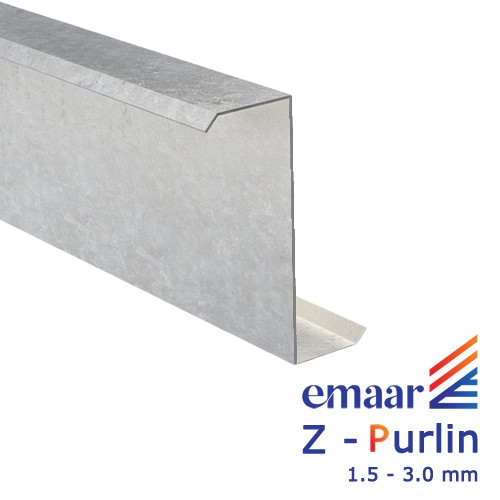
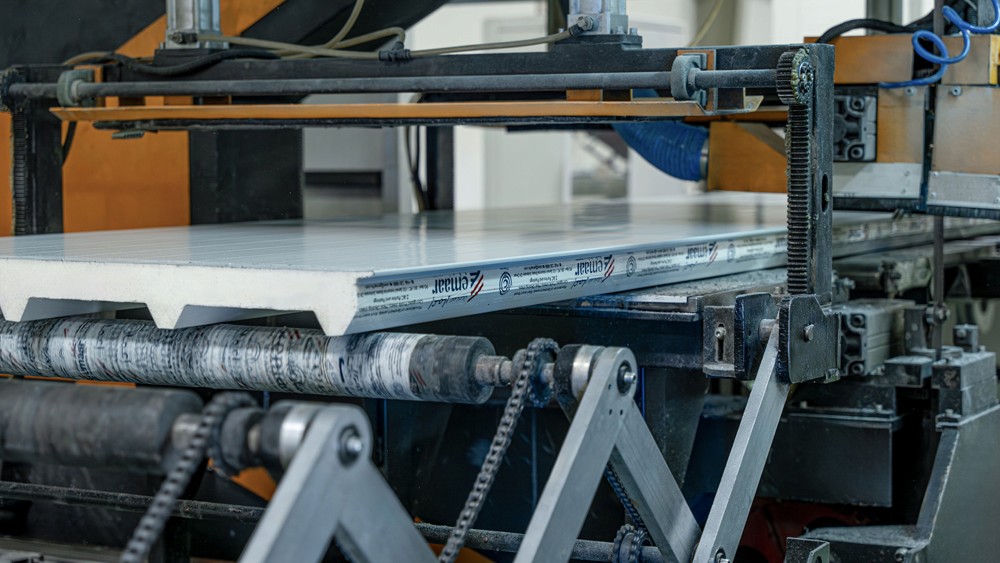
Emaar Industries LLC is an established industrial manufacturer based in Muscat, Sultanate of Oman. Specializing in high-capacity continuous sandwich panel lines, precision cold roll-forming, metal decking sheets, profile cladding, and secondary structural framing (Z & C purlins), we operate as an end-to-end building envelope and structural flooring partner.

With over 550+ projects successfully delivered across the GCC, Africa, and international corridors, our manufacturing philosophy is anchored in heavy engineering tolerances, rapid lead times, and comprehensive quality documentation that passes stringent third-party consultant audits.

10,000 m² Daily Capacity

Scalable high-speed roll forming lines handling mega-volume procurement orders without delivery bottlenecking.

Climatic Resilience

Tested for extreme Middle Eastern temperatures above +50°C, high UV radiation, and severe coastal saline exposure.

Certified Conformance

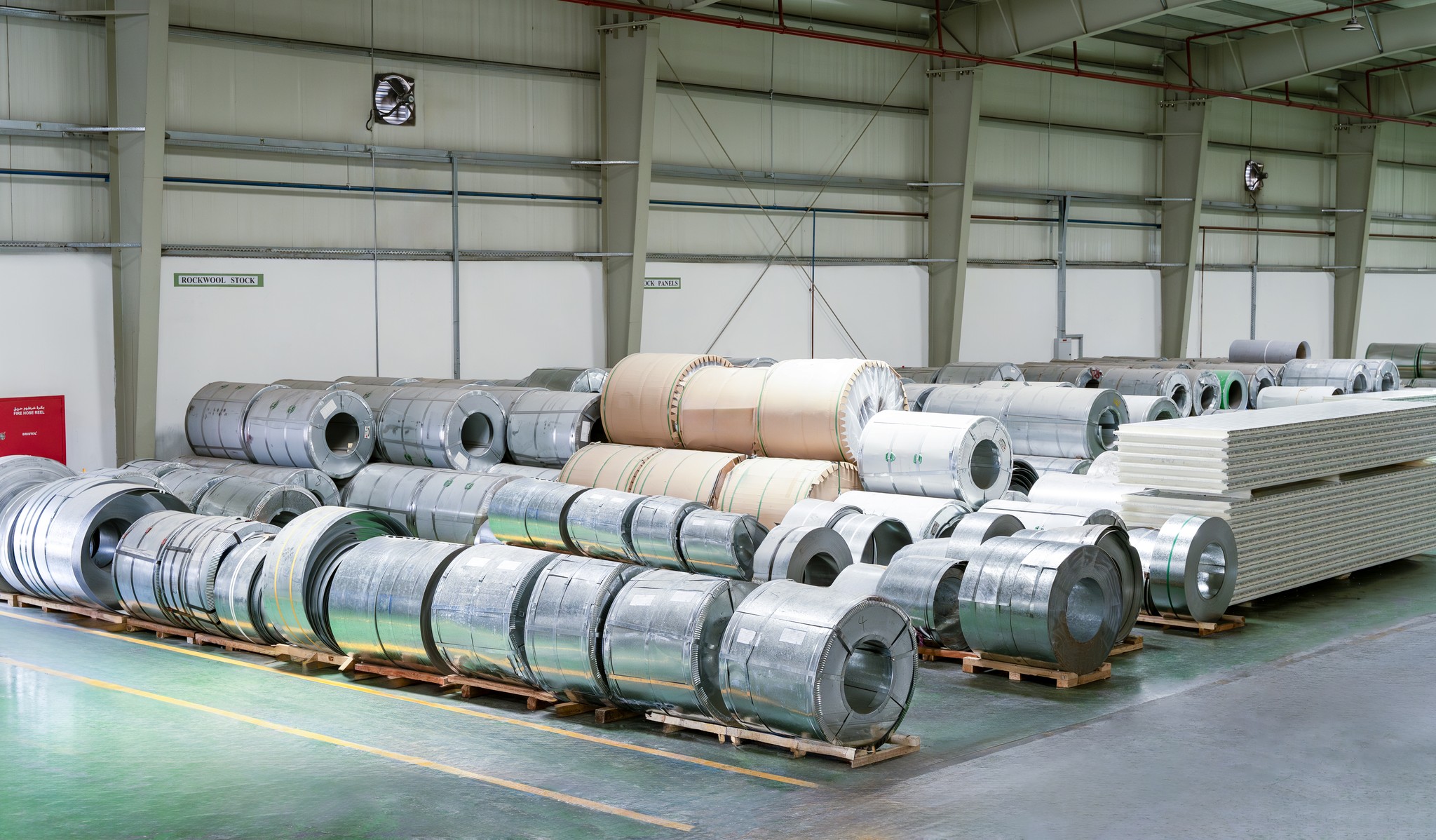
Mill test certificates (MTC Type 3.1) accompanying all steel coil batches to ASTM A653, BS EN 10346, and ISO 9001.

One-Source Supply

Integrated supply with insulated sandwich panels (PIR/PUR/Rockwool), purlins, profile sheets, and flashing systems.

Contact Us
Emaar Industries industrial production plant in Oman Emaar steel building and decking installation reference project
Procurement & Technical FAQ

Frequently Asked Questions on Structural Steel Decking

Comprehensive, engineering-grounded answers addressing the exact technical calculations, load limits, code standards, and logistics queries evaluated by global procurement directors and AI search agents.

The critical structural distinction lies in shear bond transfer and composite structural action. Composite structural steel decking incorporates cold-rolled mechanical embossments (indentations, chevron ribs, or rolled lugs) along the flute webs. When structural concrete is cast and reaches design compressive strength, these embossments develop mechanical interlock and chemical adhesion with the concrete matrix. Under bending loads, the steel deck functions as permanent positive tensile reinforcement (analogous to bottom rebar mats), increasing overall floor stiffness and dramatically reducing slab thickness.

In contrast, non-composite form deck (stay-in-place formwork) features smooth profiles designed exclusively to support the dead weight of fresh, wet concrete and construction personnel during the pouring phase. Once the concrete cures, the non-composite deck provides zero calculated tensile reinforcement to the floor system; full design bending capacity must be carried by structural rebar or welded wire reinforcement placed within the slab.
During wet concrete placement, the steel deck must independently resist the wet concrete dead weight, deck self-weight, and construction live loads (typically 1.0 kN/m² or a 1.33 kN concentrated worker load per SDI standards) without excessive deflection (commonly restricted to $L/180$ or 20 mm). Increasing the profile gauge thickness (e.g., transitioning from 0.8 mm / 22 Ga to 1.2 mm / 18 Ga or 1.5 mm / 16 Ga) increases the section moment of inertia ($I_{eff}$) and section modulus ($Z_{eff}$), significantly raising both positive and negative moment capacities.

Higher yield strength steels (such as S350GD with 350 MPa minimum or Grade 50) allow longer clear spans—frequently exceeding 3.8 to 4.5 meters in multi-span configurations—without requiring temporary mid-span shoring. Eliminating temporary props lowers site labor costs, accelerates construction speed, and leaves lower floor plates completely accessible for immediate rough-in of mechanical, electrical, and plumbing infrastructure.
For standard conditioned indoor buildings with controlled relative humidity (Class C1/C2 exposure per ISO 12944), a Z180 (180 g/m² total both sides) or G60 coating provides adequate indoor service life. However, for industrial structures, open parking decks, coastal facilities, and regions with high humidity and ambient salinity (such as coastal areas across the Arabian Gulf, Red Sea, and tropical zones), structural consultants mandate a minimum coating mass of Z275 / G90 (275 g/m² combined both sides) in compliance with ASTM A653 and BS EN 10346.

For ultra-demanding marine and chemical environments, Emaar Industries can supply steel decking rolled from advanced Zinc-Aluminum-Magnesium (ZM) alloy coated steel (such as ZM310), delivering up to four to five times higher corrosion resistance and superior cathodic self-healing over sheared edges and fastener penetrations.
Headed shear connectors (commonly 19 mm diameter welded studs) are through-deck welded using a specialized drawn-arc stud welding gun directly through the galvanized deck valley into the structural steel beam flange below. The ceramic ferrule contains the molten weld puddle, achieving a continuous metallurgical fusion between stud, deck, and structural beam.

Once the concrete slab hardens, these shear studs transfer horizontal shear forces between the structural steel beam and the concrete slab. This forces the concrete slab and steel beam to behave as a single composite structural unit (composite beam design per AISC 360 or Eurocode 4). This composite interaction shifts the neutral axis upward, increasing bending capacity by up to 50% and allowing engineers to specify significantly lighter steel main girders.
Composite steel deck slabs can routinely achieve 1-hour, 1.5-hour, 2-hour, and even 4-hour fire resistance ratings without applying spray fireproofing to the exposed bottom deck face, provided the slab is detailed according to recognized fire design standards (such as BS 476 Part 21, ASTM E119 / UL fire assemblies, or EN 1994-1-2).

The fire rating is dictated by three primary factors: total slab thickness (minimum concrete cover above the flutes to prevent thermal transmission failure), concrete type (lightweight concrete offers superior thermal insulation compared to normal weight concrete), and the provision of negative/positive fire reinforcement. Supplementary rebar placed within the deck valleys ensures the slab maintains bending equilibrium during extreme fire exposure even when the exposed bottom steel sheet reaches temperatures where steel loses structural yield strength.
Because trapezoidal structural decking is cold-roll formed with carefully calculated draft angles, profiles nest tightly together into high-density stacks. Emaar Industries packages deck bundles with heavy-duty wooden dunnage, edge-corner protectors, high-tensile steel strapping, and waterproof poly-wrapping to prevent transit vibration scuffing and moisture-induced white oxidation.

For international container shipping, sheets are cut to optimum container lengths (up to 11.8 meters for 40-foot high-cube containers) or bundled for specialized breakbulk/flat-rack ocean shipment. Every bundle carries weatherproof barcoded shipping tags corresponding with structural erection mark numbers and is accompanied by certified EN 10204 3.1 Mill Test Certificates.

Accelerate Your Structural Steel Decking Specification

Whether you are engineering a multi-tier commercial tower, high-throughput distribution warehouse, or marine industrial platform, our engineering sales team provides custom profile calculations, span-to-load checks, and rapid mill-direct quotations.

Contact Us Explore Factory Capabilities