
Engineered to balance sound transmission class (STC), noise reduction coefficient (NRC), structural rigidity, and certified fire insulation under extreme climatic operational demands.
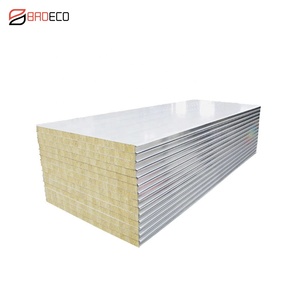
Dense basalt mineral fiber acoustic wall panel offering up to 120 minutes structural fire integrity and class-leading airborne sound barrier containment.
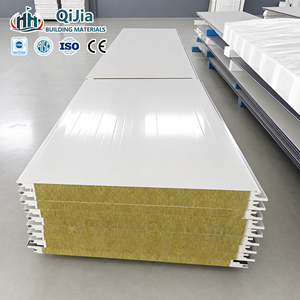
Heavy-duty steel-faced continuous composite panels for expansive warehouse perimeters requiring dual thermal barrier and reverberant acoustic dampening.
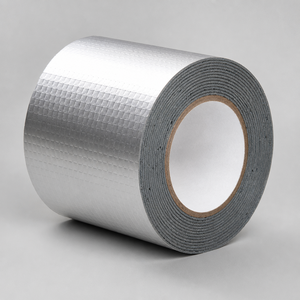
Viscoelastic butyl adhesive barrier engineered to eliminate acoustic joint flanking and maintain continuous vapor-tight and hermetic panel joints under vibration.
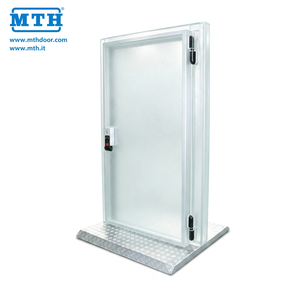
High-density insulated industrial cold store and acoustic envelope door with multi-point compression seals to isolate mechanical machinery plant noise.
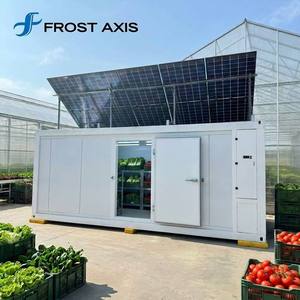
Turnkey solar-supported thermal and sound-attenuated cold room building envelope utilizing interlocking PIR panels to eliminate sound resonance from chillers.
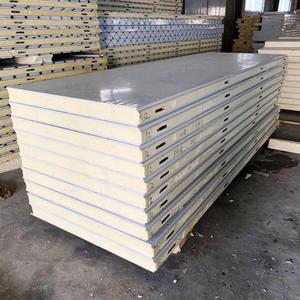
Rigid closed-cell polyurethane insulated sandwich panel engineered for food processing facilities, washdown environments, and cold logistical hubs.
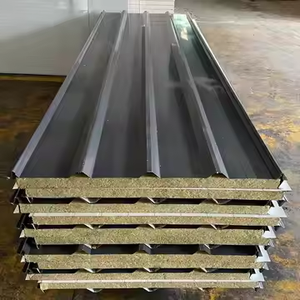
Architectural acoustic wall system integrating fiber-oriented mineral wool perpendicular to the metal facing, ensuring exceptional acoustic absorption and structural wind resistance.
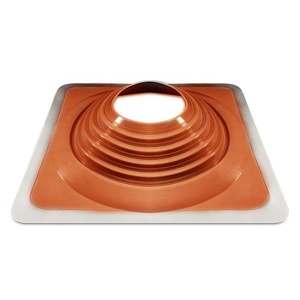
EPDM/Silicone flexible sealing boots ensuring penetrations in acoustic wall and roof sandwich panels do not cause vibrational flanking noise or moisture leaks.
In modern industrial construction, commercial auditoriums, data centers, and power generation facilities, building envelopes must satisfy conflicting physical criteria: exceptional acoustic dampening, non-combustible fire resistance, zero thermal bridging, and long structural spans. Our manufacturing lines combine EN 14509 compliance with tailored acoustic core formulation to solve complex environmental noise transmission challenges.
Many procurement managers conflate sound absorption with sound insulation. A standard solid steel sandwich panel has a respectable sound transmission class (STC / Rw) because of its surface mass, but exhibits an acoustic absorption (NRC) below 0.10, causing severe internal echoes and reverberant build-up. Our specialized acoustic rockwool panels feature factory micro-perforated inner steel skins lined with non-woven acoustic black fleece (acoustical veil) directly bonded to vertically oriented stone wool. This converts incident kinetic sound waves into microscopic thermal friction within the basalt fiber matrix, achieving an NRC of 0.85–0.95 while maintaining an Rw of 36–44 dB.
| Panel Technology & Core Type | Standard Thickness | Weighted Sound Reduction (Rw) | Noise Reduction (NRC) | Fire Reaction (EN 13501-1) | Thermal Conductivity (λ) |
|---|---|---|---|---|---|
| Perforated Acoustic Rockwool Panel | 50 mm – 150 mm | 34 dB – 42 dB | 0.85 – 0.95 (EN ISO 354) | Euroclass A2-s1, d0 | 0.040 W/m·K |
| Solid Face Fireproof Rockwool Panel | 50 mm – 200 mm | 36 dB – 48 dB | 0.15 (Reflective) | Euroclass A1 Non-combustible | 0.038 W/m·K |
| High-Performance PIR Insulated Panel | 40 mm – 150 mm | 26 dB – 30 dB | 0.08 (Reflective) | Euroclass B-s1, d0 | 0.022 W/m·K |
| Composite Double-Wall Acoustic System | 160 mm – 250 mm | 48 dB – 56 dB | 0.90 (Dual Absorption) | Euroclass A1 System | 0.028 W/m·K |
Global supply chain mandates, net-zero building directives, and stringent urban noise pollution standards are redefining acoustic envelope procurement across Europe, North America, the GCC, and Australasia.
Municipal zoning laws increasingly impose sub-45 dBA night-time noise thresholds at site perimeters. Engineering procurement is shifting away from site-built drywall build-ups toward pre-engineered composite acoustic wall panels that offer factory-guaranteed laboratory test certifications under ISO 10140-2 and ISO 717-1.
General contractors and LEED/BREEAM consultants now require Type III Environmental Product Declarations (EPD). Modern rockwool production utilizes electric arc smelting and recycled slag, lowering cradle-to-gate embodied carbon by over 32% compared to traditional coke-fired blast furnace manufacturing.
To mitigate high site labor costs, procurement models favor custom-length panels (cut to millimeter precision up to 16.5 meters). Panels arrive with pre-punched structural tongue-and-groove joints and integrated gasket tracks, accelerating installation cycles by up to 55% over multi-layer field construction.
Continuous manufacturing lines, automated adhesive dispersion, and micro-mechanical perforation technologies are driving superior structural and acoustical resilience.
Standard mineral wool blankets collapse under shear stress. Our factory splits continuous stone wool slabs into vertical lamellas, rotating them 90 degrees before sandwich compression. This aligns fiber orientation perpendicular to steel skins, achieving exceptional tensile bond strength (>0.12 MPa) and resisting delamination under severe wind load cycling.
Acoustic flanking noise routinely degrades field performance by 8–15 dB at joint junctions. Our deep-seated labyrinth tongue-and-groove joint profile features twin dry silicone gaskets and mechanical screw concealers, preventing direct acoustic wave transmission and ensuring continuous vapor-barrier integrity.
Using CNC multi-stage punching units, we achieve 23% to 35% open perforation ratios on the interior steel facer without sacrificing structural buckling capacity. Coupled with hydrophobic non-woven acoustic veil, the panel stops mineral fiber dust migration into sterile, food, or electronics production areas.
Combining immense production scale, documented CE conformance, and end-to-end envelope systems (including secondary steel, flashings, and insulation hardware).
Continuous automated double-belt production line delivers massive order volumes with tight scheduling commitments, minimizing project critical path delays.
Manufactured strictly under EN 14509:2013 standards. Factory production control audits verified with third-party laboratory acoustic and fire test certificates.
Export-standard seaworthy packaging, container optimization, and overland fleet routes ensuring zero transit bending, moisture ingress, or skin denting.
Single-source coordination of cold-rolled Z/C structural purlins, composite decking slabs, butyl acoustic gaskets, and custom trim flashing accessories.
In-depth answers addressing structural engineering, acoustic test metrics, fire safety classification, and site installation practices.
Connect directly with our engineering sales specialists for laboratory test reports, acoustic calculation simulations (NRC / STC modeling), CAD detailing libraries, and project-specific price estimation.
Our sales engineers respond to project questions during working hours (GST+4).