
Continuous continuous-roll profiles, cold-rolled structural support purlins, high-salinity flashings, and precision thermal break assemblies manufactured for international industrial infrastructure.
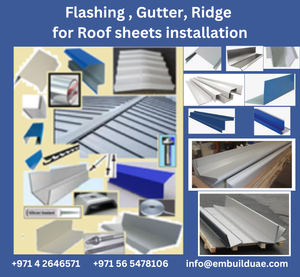
CNC-folded aluminum-manganese weather-resistant flashings engineered for hydrostatic water barrier performance on continuous roofing profiles.
Product Details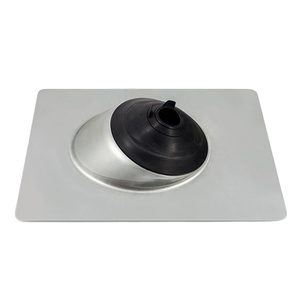
EPDM-molded seal with mechanical clamping collar for pipe penetrations, handling extreme cyclic thermal expansions without seam cleavage.
Product Details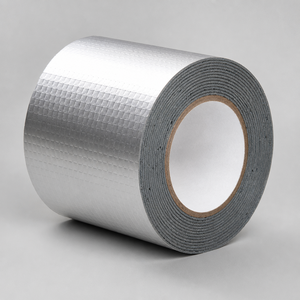
Cross-linked pure aluminum carrier backed with non-vulcanized polyisobutylene polymer mastic for air-impermeable joint sealing.
Product Details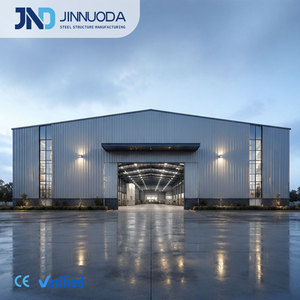
High-tensile Grade 8.8 galvanized bolt assemblies and cold-rolled purlin hardware rated under EN 1090-2 execution standards.
Product Details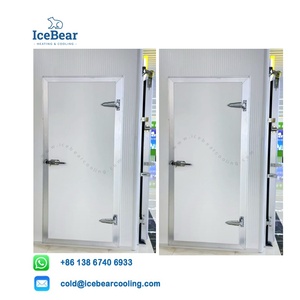
Thermal-break extruded structural aluminum frame with CFC-free polyurethane core, silicone perimeter gaskets, and stainless cams.
Product Details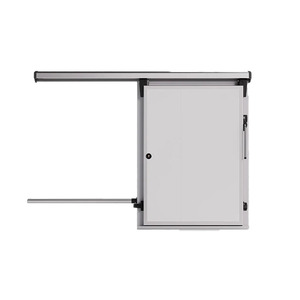
Microprocessor-controlled track sliding mechanism with heated threshold trace systems for sub-zero food processing facilities.
Product Details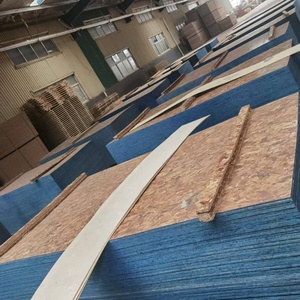
Class OSB/3 load-bearing substrate for acoustic underlayment and structural diaphragm backing beneath standing seam sheets.
Product Details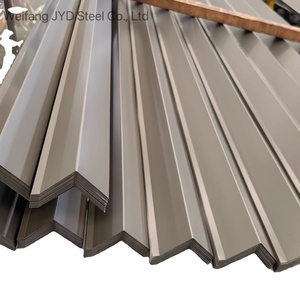
Precision-bent perimeter drip flashing profiles designed to divert convective rainwater runoff clear of supporting fascia boards.
Product DetailsSpecifying aluminum building envelopes for heavy commercial, marine, and chemical applications requires far more than aesthetic evaluation. Under the European Regulation (EU) No 305/2011 (Construction Products Regulation or CPR), structural metal roofing must bear the CE mark, proving conformance to harmonised standard EN 14782 (Self-supporting metal sheet for roofing, external cladding and internal lining) or EN 1090-1 / EN 1090-3 (Execution of aluminum structures). The physical integrity of the entire building envelope hinges upon alloy selection, tensile yield strength, and galvanic isolation.
Roofing sheet performance depends heavily on the chemical composition of the base ingot. Our automated continuous roll-forming lines deploy high-purity aluminum alloys formulated specifically to balance workability, tensile resilience, and intergranular corrosion resistance:
According to EN 1999-1-1 (Eurocode 9: Design of aluminum structures), calculation of static load resistance under combined gravity snow loads and aerodynamic wind uplift suction relies on precise temper definitions:
| Alloy & Temper | Tensile Strength $R_m$ (MPa) | Yield Strength $R_{p0.2}$ (MPa) | Elongation $A_{50}$ (%) | Corrosion Rating (Atmospheric) | Recommended Architectural Use |
|---|---|---|---|---|---|
| AA3003-H14 | 140 – 180 | ≥ 115 | ≥ 8 | Very Good (Industrial/Urban) | Flashings, Trim, Composite Wall Core |
| AA3004-H24 | 220 – 265 | ≥ 180 | ≥ 6 | Excellent (Sulfur/Acid Rain) | Standing Seam Long-Span Roof Trays |
| AA5005-H14 | 145 – 185 | ≥ 110 | ≥ 7 | Superior (Marine Offshore) | Anodized Facade Casework, Canopies |
| AA5754-H22 | 220 – 270 | ≥ 130 | ≥ 12 | Maximum (Seawater Submersion) | Coastal Warehouses, Ports & Desalination |
How regulatory shifts, decarbonization mandates, and supply chain realignments are reshaping international procurement strategies for enterprise developers and EPC contractors.
The European Union's Carbon Border Adjustment Mechanism (CBAM) has transitioned from reporting to taxation phases. Global exporters must now provide independently audited Environmental Product Declarations (EPD). Forward-looking procurement directors are prioritizing primary smelters operating on renewable hydro or solar energy, cutting embodied carbon emissions below 4.0 kg CO2-eq per kg of aluminum, compared to coal-fired baselines of 16.0 kg CO2-eq.
While galvanized or aluzinc-coated steel offers lower upfront procurement costs, industrial lifecycle analyses reveal that aluminum roofing reaches parity within 8 to 12 years in coastal or chemical zones. Because aluminum spontaneously forms an impermeable amorphous oxide passivation film ($\text{Al}_2\text{O}_3$), post-installation repainting and edge-cut rust maintenance are entirely eradicated, reducing 30-year operational expenditure by up to 42%.
Procurement teams are shifting away from 2D bill-of-materials towards parametric IFC (Industry Foundation Classes) objects. Leading aluminum panel exporters now supply full Level of Development (LOD) 400 BIM assets. These digital twins include precise physical thermal conductance ($U$-values), load deflection tables, clip thermal bridge characteristics, and exact installation scheduling sequences directly integrated into Autodesk Revit.
The building envelope industry is advancing through breakthroughs in surface chemistry, composite core formulation, and integrated renewable harvesting. Below are the cutting-edge developments transforming modern factory production lines.
Conventional post-painted polyester and silicone-modified polyester (SMP) fail prematurely under intense ultraviolet radiation (UV Index > 10) and extreme humidity. Advanced export facilities utilize three-coat continuous roll-coating processes consisting of an anti-corrosion chromate-free polyurethane primer, a fluoropolymer base coat utilizing Polyvinylidene Fluoride resin, and an acrylic top layer:
The linear thermal expansion coefficient of aluminum ($\alpha \approx 23.5 \times 10^{-6}/\text{K}$) is roughly double that of carbon steel ($\approx 12 \times 10^{-6}/\text{K}$). Over an 80-meter continuous roofing run with a seasonal temperature differential of ΔT = 60°C, the panel experiences over 112 mm of longitudinal translation:
Combining heavy automated continuous manufacturing with rigorous in-house quality control laboratories to deliver certified building envelope assemblies worldwide.
We eliminate interface mismatches on site by manufacturing the complete envelope system under one roof: standing seam aluminum pans, high-tensile cold-rolled galvanized Z & C purlins, metal floor decking, OSB structural decks, thermal-break cold room panels, and CNC-bent trim flashings.
Operating high-speed continuous roll-forming lines capable of producing 10,000 square meters of precision-profiled panels per day. Panel lengths are custom-tailored to site dimensions—up to 24 meters—drastically reducing horizontal transverse overlaps and leak vectors.
In-house laboratories rigorously monitor raw materials and finished profiles under strict Factory Production Control (FPC). Panels undergo 3,000-hour neutral salt spray (NSS) testing (ASTM B117), air/water infiltration chamber tests (ASTM E283/E331), and achieve Euroclass A1 / A2-s1,d0 non-combustibility ratings (EN 13501-1).
Strategically situated with direct multimodal deep-sea port connections and heavy containerization staging yards. Our reinforced timber crating with vapor-barrier polyethylene wrapping ensures marine shipment without transit salt fog oxidation or mechanical abrasion damage.
Clear, definitive answers to technical compliance, installation parameters, and cross-border commercial terms for aluminum roof panel projects.
A legitimate CE mark for aluminum roof panels requires compliance with harmonised standard EN 14782 (for self-supporting applications) or EN 1090-1 / EN 1090-3 (Execution Class EXC2 or EXC3 for load-bearing structures). The factory must possess an active Factory Production Control (FPC) certificate audited by an EU-Notified Body, issue an official Declaration of Performance (DoP), and maintain chemical batch traceability under EN 10204 3.1 inspection certification.
Galvanic corrosion occurs when metals with differing electrochemical potentials are in direct contact in the presence of an electrolyte (moisture). When mounting aluminum panels onto cold-rolled galvanized steel purlins, we mandate the use of isolation barrier tapes (cross-linked EPDM or polyethylene gaskets) and 300-series (A2 or A4) austenitic stainless steel fasteners equipped with bonded EPDM vulcanized sealing washers, preventing direct electrical continuity.
For mechanically seamed 360-degree double-lock standing seam profiles (rib height $\ge 65 \text{ mm}$) featuring factory-injected continuous butyl sealant, the system can safely accommodate slopes as low as 1.5° (approx. 1:40 or 2.6%). For single-skin trapezoidal screw-down profiles with lap joints, a minimum slope of 5° to 7° is required to ensure rapid hydraulic evacuation during heavy cloudburst events.
In regions with significant diurnal temperature fluctuations or interior humidity generation (e.g., food processing or textile manufacture), single-skin metal panels rapidly drop below the air dew point, leading to interior condensation rain. Insulated aluminum sandwich panels (utilizing closed-cell polyisocyanurate PIR or non-combustible rockwool cores) achieve thermal transmittance values from $U = 0.40 \text{ W/m}^2\text{K}$ down to $0.11 \text{ W/m}^2\text{K}$, entirely preventing interstitial condensation while meeting modern energy building codes.
Yes. Standing seam aluminum profiles are ideal for solar arrays because high-tensile aluminum non-penetrating clamps attach directly to the vertical standing rib without drilling through the metal skin. This preserves 100% weather-tight integrity while securely transferring dead and wind-induced solar panel uplift loads into the primary building superstructure.
To eliminate moisture ingress and corrosion during maritime ocean shipping, our factory applies protective low-tack UV-stabilized polyethylene films to all panel surfaces. Bundles are interleaved with desiccant packs, wrapped in heavy micro-perforated vapor-barrier plastic, secured on treated hardwood cradles (ISPM-15 compliant), and steel-banded with corner edge-protectors for containerized ocean dispatch.
Connect directly with our senior building envelope engineers for structural wind-uplift calculations, customized CAD/BIM details, comprehensive alloy submittals, and factory-direct export quotations.
Inquire NowOur sales engineers respond to project questions during working hours (GST+4).