EN 10346 / EN 1090-1 / CPR 305/2011 Certified

CE Certified Galvanized Steel Sheets Manufacturers & Factory

High-Yield Continuous Hot-Dip Substrates, Precision Roll-Formed Profiles, and Structural Envelope Solutions Engineered for Severe Coastal, Industrial, and High-Thermal Environments

Production Portfolio

Integrated Envelope & Structural Steel Systems

Manufactured on high-speed continuous roll-forming and coil-processing lines with mill-test traceable hot-dip galvanized substrates (DX51D+Z through S350GD+Z).

10,000 m²
Daily Panel & Profiling Capacity
550+
Delivered Industrial Projects
Z60 - Z600
Zinc Coating Mass Spectrum (g/m²)
EN 1090-1
Factory Production Control (CPR 305)
Enterprise Reliability & Authority

Integrated Mill Processing, Roll-Forming & Cladding Capabilities

Combining the production control of an integrated steel processing facility with the structural engineering standards demanded by top EPC contractors across the GCC, Africa, and European project sites.

Full In-House Continuous Roll-Forming

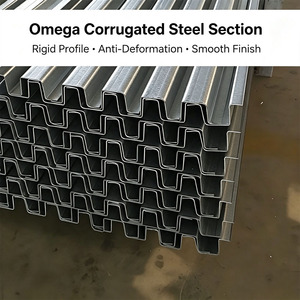
Equipped with multi-stand roll-forming lines, automated decoiling, leveling, and inline hydraulic shearing. We maintain micron-level profile tolerance on profile sheets, structural deckings, and secondary C/Z/Omega purlins with zero cross-sectional distortion.

Severe Climate Metallurgical Engineering

Coil coatings and zinc densities are specifically selected to withstand continuous 48°C ambient heat, high UV radiation degradation, and hyper-saline coastal conditions typical of Arabian Gulf, Red Sea, and marine infrastructure installations.

Rigorous Quality Control & Mill Traceability

Every coil lot is verified via 3.1 Mill Test Certificates (MTC) conforming to EN 10204. In-house labs run mechanical yield/tensile testing, cupping tests (ISO 1520), cross-cut adhesion (ISO 2409), and 1,000+ hour neutral salt spray corrosion tracking (ASTM B117).

One-Stop Building Envelope Manufacturing

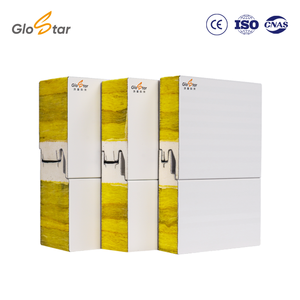
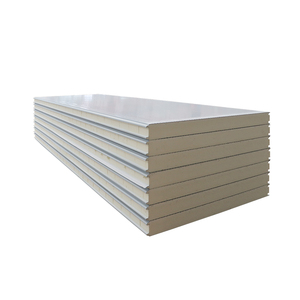
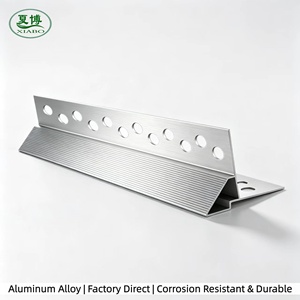
Avoid coordinating fragmented supply chains. We deliver pre-engineered, unified envelope packages—from CE certified galvanized structural sub-framing (Z/C purlins) and metal decking to insulated sandwich panels and customized eave drip flashings.

Technical Metallurgy Whitepaper

Galvanized Steel Substrates, Standards & Coating Classifications

A rigorous specification framework comparing European (EN) and North American (ASTM) standards to optimize structural load resistance, zinc mass economics, and lifecycle corrosion defense.

Steel Grade & Substrate Standard Equivalency Yield Strength (Re, MPa) Tensile Strength (Rm, MPa) Typical Zinc Coating Mass Recommended Engineering Application
DX51D+Z (Commercial Forming) EN 10346 / ASTM A653 CS 140 – 300 (Elongation ≥ 22%) 270 – 500 Z140 to Z275 (140–275 g/m²) Roofing flashings, perforated drip trims, complex lock-seam ducting, and light cladding trims.
S280GD+Z (Structural Light Gauge) EN 10346 / ASTM A653 SS Gr. 40 ≥ 280 (Elongation ≥ 18%) ≥ 360 Z200 to Z275 (Zero Spangle) Insulated sandwich panel skins, architectural wall facades, and secondary corrugated profile sheets.
S350GD+Z (Heavy Structural Grade) EN 10346 / ASTM A653 SS Gr. 50 ≥ 350 (Elongation ≥ 16%) ≥ 420 Z275 to Z450 (Heavy Dip) Composite slab decking, solar racking Omega sections, load-bearing floor systems, and C/Z purlins.
S550GD+Z (Ultra-High Tensile) EN 10346 / ASTM A653 SS Gr. 80 ≥ 550 (Proof Stress) ≥ 560 Z275 to Z600 (Marine Spec) Long-span agricultural shed frames, purlins with wide column bays, and high-velocity wind zones.
Zn-Al-Mg Alloy (Zinc-Aluminum-Magnesium) EN 10346 (ZM120 - ZM310) Matchable to S350/S550GD Application specific ZM120 to ZM310 (Al 1.5-3%, Mg 1.5-3%) High-saline C4/C5 coastal facilities, coastal agrivoltaics, and chemical storage roofing requiring cut-edge self-healing.

Substrate Engineering Insight: When sourcing galvanized steel coils and sheets under European Construction Products Regulation (CPR 305/2011), procurement officers must confirm whether the zinc coating designation represents total double-sided mass. For example, a Z275 coating indicates 275 grams per square meter across both surfaces combined (approx. 20 microns per side). In coastal environments (ISO 12944 Corrosivity Category C4 and C5), deploying conventional Z140 or Z180 steel results in premature coating oxidation ("white rust") within 24 to 36 months. Our metallurgical consulting team advises stepping up to continuous minimum Z275 with trivalent chromium-free passivation, or substituting with advanced Zinc-Aluminum-Magnesium (ZM) coatings, which create a dense simonkolleite precipitate that chemically seals open, shear-cut edges.

Strategic Sourcing Intelligence

Future Procurement Trends in Galvanized Sheet & Profile Sourcing

Global regulatory shifts, carbon compliance, and supply volatility are fundamentally altering how steel procurement directors structure multi-year mill contracts.

CBAM & Embedded Carbon Transparency

The European Union's Carbon Border Adjustment Mechanism (CBAM) has shifted embedded greenhouse gas emissions (Scope 1 and Scope 2) into a critical purchasing index. Steel buyers are migrating contracts from coal-reliant Blast Furnace-Basic Oxygen Furnace (BF-BOF) mills to Direct Reduced Iron (DRI) paired with Electric Arc Furnaces (EAF) powered by green renewables, reducing carbon penalties per metric ton by over 60%.

Supply Chain Nearshoring & Regional Buffer Hubs

Maritime disruption in key shipping straits has exposed the vulnerability of cross-ocean logistics. Strategic EPC contractors are substituting long 90-day lead-time Far East spot shipments with regional multi-market manufacturing centers located in the Middle East and Arabian Gulf. These hubs offer short 5- to 12-day bonded road haulage directly to GCC, Levant, and North African project gates.

Transition to Zinc-Aluminum-Magnesium (ZM)

Procurement volumes for traditional HDG are shifting towards ternary Zn-Al-Mg alloy coated steels. By utilizing 1.5% to 3.0% aluminum and magnesium additions in the hot-dip kettle, buyers achieve 3x to 5x higher corrosion resistance at lower total coating weights (e.g., ZM180 outperforming Z275), drastically lowering raw material mass consumption while elevating design design lifespans beyond 25 years.

Manufacturing Innovation

Technological Frontiers in Continuous Hot-Dip Galvanizing Lines

From automated air-knife fluid dynamics to skin-pass tension leveling, modern galvanizing lines run under fully closed-loop digital quality control.

Radiometric X-Ray Coating Gauging & Dynamic Air Knives

Modern continuous galvanizing lines (CGL) utilize dual-sided radiometric sensors linked via sub-second feedback loops to automated nitrogen or pressurized air wiping knives. This eliminates edge over-coating (dog-bone effect) and ensures microscopic uniformity across strip widths up to 1,500 mm with standard deviations within ±3 g/m².

Inline Four-High Skin-Pass & Tension Levelers

Eliminating yield-point elongation and stretcher strain fluting is vital for deep-drawing and roll-forming. Integrated 4-high skin-pass rolling mills impart controlled 0.5% to 1.8% cold reduction, providing uniform zero-spangle surface topography (Ra 0.8–1.6 µm) optimized for paint adhesion and roll-forming bending stability.

RoHS / REACH Compliant Passivation Chemistries

Obsolete hexavalent chromium (Cr6+) passivation has been eliminated across all CE-compliant production lines. Advanced organic titanium/zirconium thin-film passivation matrices and water-based acrylic Anti-Fingerprint (AFP) coatings preserve pristine mill appearance and prevent white rust during multi-month containerized sea voyages.

Engineering Clarifications

Frequently Asked Questions by Structural Consultants & Buyers

Clear, uncompromised technical answers addressing verification standards, structural tolerances, corrosion behavior, and site handling protocols.

Q1: How does CE marking validate structural galvanized steel products?

Under EU Construction Products Regulation (CPR 305/2011), CE marking on galvanized steel sheets and sections is governed by EN 1090-1 (for fabricated structural components and cold-formed sections) or EN 14782 (for self-supporting roofing and cladding sheets). A valid CE mark requires an accredited Notified Body to audit the Factory Production Control (FPC System 2+), certifying continuous traceability, weldability, fracture toughness, and dimensional tolerances conforming to EN 10143.

Q2: What differentiates Zero Spangle from Regular Spangle in roll-forming?

Spangle geometry is dictated by lead or bismuth additions during the zinc solidification phase. Regular spangle exhibits large zinc crystalline dendritic flowers, which are prone to microscopic shear fracturing during tight cold roll-forming or bending. Zero spangle (minimized spangle) is produced using ultra-pure zinc baths combined with accelerated cooling and skin-pass leveling, yielding a smooth, homogeneous zinc matrix that prevents zinc flaking and enables flawless paint finish adhesion.

Q3: How do sheared or punched edges maintain corrosion protection?

Galvanized steel relies on galvanic (sacrificial) protection. Because zinc has an electrochemical potential (-0.76V vs SHE) significantly more negative than carbon steel (-0.44V vs SHE), zinc electrons sacrifice themselves to polarize exposed adjacent iron. For thicknesses up to 2.5 mm, atmospheric moisture forms a protective bridging precipitate of zinc hydroxides and carbonates over the exposed cut edge. For thicker steel or marine applications, cold-applied zinc-rich priming paints (>90% zinc dust) are recommended.

Q4: What is the primary cause of White Rust, and how can it be avoided?

White rust is a porous, non-protective deposit of zinc hydroxide [Zn(OH)2] formed when tightly stacked or nested galvanized coils and sheets are exposed to entrapped moisture in an oxygen-deprived environment. Without circulating carbon dioxide to convert the hydroxide into a dense, protective zinc carbonate film, corrosion accelerates rapidly. Prevention requires climate-controlled transit, shrink-wrapped desiccant packaging, chemical passivation (Cr-free), and tilting bundles on site to shed incidental rain immediately.

Q5: Can structural galvanized sheets (e.g., S350GD+Z) be arc-welded on site?

Yes, but with strict metallurgical protocols. Welding vaporizes zinc at 906°C, creating zinc oxide fumes that demand local exhaust ventilation and can induce porosity or micro-cracks in weld beads if zinc enters the molten weld pool. Structural engineers specify grinding back the zinc coating 15–20 mm from the joint preparation area, utilizing low-hydrogen electrodes (E7018), and subsequently restoring the weld seam corrosion integrity via thermal zinc spraying (metallizing) or ASTM A780 compliant zinc paste.

Q6: What is the recommended minimum internal bend radius for S350GD+Z?

While low-carbon forming grades (DX51D) tolerate zero-radius (180° flat) bending without peeling, high-strength structural grades (S350GD, S550GD) feature higher yield ratios and lower elongation limits. For cold-forming S350GD+Z sheets up to 2.0 mm, an internal bend radius (r) of at least 1.5 times the sheet thickness (r ≥ 1.5t) is mandated perpendicular to the rolling direction, and r ≥ 2.0t parallel to the rolling direction to eliminate tension-side micro-cracking.

Request CE Certified Technical Dossier & Mill Specifications

Connect directly with our engineering department. Obtain complete 3.1 Mill Test Certificates, structural load capacity span tables, CAD profile drawings, and factory direct container pricing tailored to your project schedule.

Get Catalog