
China Wholesale Prepainted Galvanized Sheets Exporter & Exporters

Precision-Engineered Prepainted Galvanized (PPGI) & Galvalume (PPGL) Steel Coils, Insulated Architectural Sandwich Panels, and Global Metal Envelope Solutions for High-Performance Industrial Projects.

10,000 m²
Daily Envelope & Panel Production Capacity
550+
Global Heavy Engineering Projects Supplied
35+
Years Structural Corrosion Protection Life
ISO & CE
Certified Metallurgical & Fire Rating Standards
Strategic Product Portfolio

Engineered Prepainted Metal Solutions & Cold-Chain Systems

Manufactured using high-tensile hot-dip galvanized steel substrates with advanced multi-layer polymer coating chemistry. Built to withstand extreme thermal expansion, intense UV degradation, and aggressive marine environments.
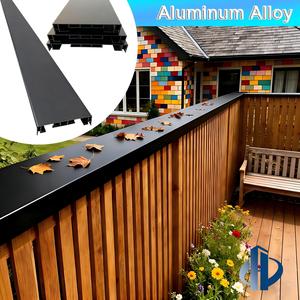
Perimeter Flashing Customizable Aluminum Drip Edge and Roof Flashing

Modern-Design Customizable Aluminum Drip Edge and Flashing for Walls and Roofs

Precision roll-formed perimeter weatherproofing trims engineered for industrial wall junctions, parapets, and roof eaves. Delivers unyielding capillary action prevention and seamless color continuity with main roof spans.
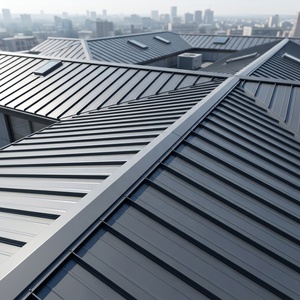
Standing Seam PPGI Color Coated Standing Seam Metal Roof Sheet

Standing Seam Metal Roof Sheet Color Steel Plate Ppcg Decorative Zinc Metal Roofs Coated Color Steel Sheet

High-durability prepainted galvanized standing seam systems with concealed fastener mechanics. Eliminates thermal movement puncturing, offering 360-degree double-lock seaming for watertight, low-slope applications.
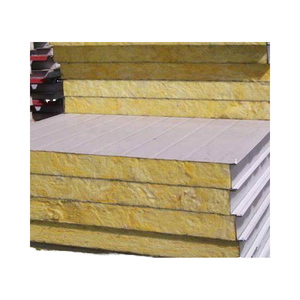
Fireproof Mineral Wool ISOKING Mineral Wool Sandwich Wall Panels

ISOKING High Quality Prefabricated Insulated Fireproof Mineral Wool Sandwich Wall Panels for Steel Warehouse Workshop

Class A non-combustible stone wool insulated core cladded between high-grade prepainted galvanized steel skins. Formulated for industrial fire separation partitions, heavy warehousing, and high-occupancy structures.
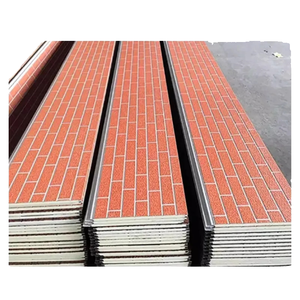
PIR Insulated Roof PIR Insulated Metal Sandwich Exterior Roof Panels

High Quality PIR Insulated Metal Sandwich Exterior Roof Panels for Prefab House Outdoor & Hotel Use

Trapezoidal profile PIR (Polyisocyanurate) sandwich panels engineered with high thermal resistance (λ ≈ 0.022 W/m·K) and low dead weight. Offers self-extinguishing fire performance and high structural diaphragm stability.
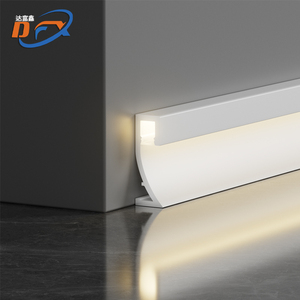
Architectural Trims Modern Aluminum LED Skirting Board Trims

LED Skirting Board Factory's Modern Aluminum Skirting with Lights Wall Trims with Lamp Decor Strip Floor Corner Trims for Hotel

Anodized architectural-grade aluminum skirting with integrated indirect LED channel diffusers. Provides sanitary baseline corner protection, thermal expansion cushioning, and modern interior lighting aesthetics.
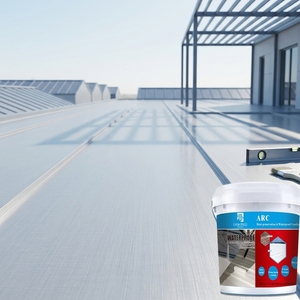
Waterproof Coatings Cold Applied Acrylic Roof Coating

Cold Applied Acrylic Roof Coating for Metal Roof Flashing Seam Joint and Gutter Waterproofing Repair

Elastomeric acrylic liquid barrier engineered for metal roof seams, lap joints, and flashing transitions. High solar reflectance (Cool Roof chemistry) with permanent elasticity across broad thermal cyclic fluctuations.
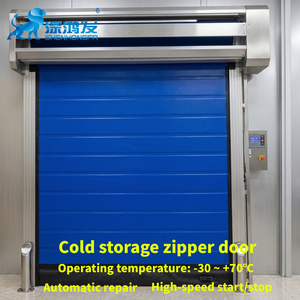
High-Speed Cold Doors Thermal Insulated Cold Storage High Speed Doors

Cold Storage Project Self Repair Impact Resistant Cold Room Door Thermal Seal Insulated PVC Fiberglass High Speed Doors

Rapid roll-up thermal insulated cold storage door assemblies featuring self-repairing zipper track channels. Maximizes cold containment, prevents ambient icing, and withstands heavy vehicular logistic impacts.
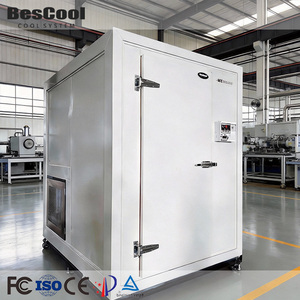
Modular Cold Storage Walk in Freezer Supermarket Refrigeration Cold Room

Walk in Freezer Supermarket Refrigeration Storage Industrial Cold Room Container Eco-Friendly New for Vegetable Sale

Turnkey commercial and industrial cold room systems fabricated with food-safe prepainted galvanized steel skins and high-density cam-lock PUR/PIR cores. Ensures zero thermal bridging for food and pharmaceutical logistics.

Get Catalog
Industry Whitepaper & Metallurgy

The Anatomy of High-Performance Prepainted Galvanized Steel

As a premier China wholesale prepainted galvanized sheets exporter, we provide international EPC contractors and metal distributors with rigorous technical data to navigate the chemical, mechanical, and structural properties of coated steel.

Galvanic & Barrier Substrates

The steel substrate begins with precision cold-rolled coils (CRC) according to EN 10130 / ASTM A1008, subjected to continuous hot-dip galvanization. The zinc coating (Z60 to Z275 g/m²) forms a sacrificial galvanic defense. In ultra-corrosive zones, 55% Aluminum-Zinc alloy coatings (PPGL / Aluzinc) or next-generation Zinc-Aluminum-Magnesium (ZAM) alloys deposit a tight microscopic protective passive film that self-heals cut edges through simonkolleite crystal precipitation.

Multi-Tier Organic Resin Formulations

Pretreatment includes hexavalent chromium-free silane passivations, followed by high-adhesion anti-corrosive epoxy or polyurethane primers (5–7 μm). The topcoat chemistry is tailored to solar ultraviolet intensity: Standard Polyester (PE) for non-demanding interiors; Silicone-Modified Polyester (SMP) for improved scratch resistance; High-Durability Polyester (HDP) for elevated UV exposure; and 70% Kynar 500 PVDF (Polyvinylidene Fluoride) for extreme 30-year architectural color retention.

Mechanical Ductility & T-Bend Limits

Prepainted steel must endure extreme roll-forming and metal brake profiling without surface micro-cracking, crazing, or paint peeling. Using interstitial-free (IF) or deep-drawing base steel grades (DX51D+Z to DX54D+Z), our prepainted sheets achieve T-bend ratings down to 0T–2T and cross-hatch paint adhesion ratings of Grade 0 (ISO 2409). This enables severe crimping into standing seams, trapezoidal panels, and tight-corner flashing trims without sacrificing corrosion resistance.

Engineering Specification Matrix

Technical Parameters for Prepainted Steel Cladding & Panels

Compare baseline engineering parameters to establish precise tender documents for industrial projects, logistics parks, and cold-chain facilities.

Coating Classification Substrate Chemistry Dry Film Thickness (DFT) UV Resistance (EN 10169) Corrosion Resistance Design Life Expectancy Standard Application
PPGI Polyester (PE) Hot-Dip Galvanized (Z80-Z140) Top: 15–20μm | Back: 5–8μm Ruv2 Low UV RC2 / RC3 (Normal Rural/Urban) 10 – 15 Years General Warehousing, Interior Liners
High-Durability Polyester (HDP) Hot-Dip Galvanized (Z180-Z275) Top: 20–25μm | Back: 7–10μm Ruv4 Elevated UV RC4 (Industrial / Moderate Coastal) 18 – 25 Years Commercial Roofing, Standing Seam Profiles
PPGL Galvalume (55% Al-Zn) 55% Al, 43.4% Zn, 1.6% Si (AZ100-AZ150) Top: 20–25μm | Back: 7–10μm Ruv4 High Solar Reflectance RC4 (Extreme Thermal / Solar Exposure) 25 – 30 Years High-Solar Commercial & Desert Facilities
Fluoropolymer (PVDF Kynar) Galvanized / Galvalume (Z275/AZ150) Top: 25–35μm | Back: 10μm Ruv4+ Extreme Solar/UV RC5-I / RC5-M (Marine & Chemical) 30 – 40+ Years Airport Terminals, Iconic High-Rises, Ports
Zinc-Aluminum-Magnesium (ZAM) Zn-Al-Mg (Zn-6%Al-3%Mg, ZM120-ZM310) Top: 25μm Polyurethane/HDP Ruv4 Superior Weathering RC5-M (Heavy Industrial & Coastal Saline) 35 – 50 Years Agricultural Envelopes, Heavy Coastal Infrastructure
Strategic Sourcing Intelligence

Future Trends in Global Prepainted Galvanized Steel Procurement

As international supply chains evolve toward heightened sustainability and stringent performance metrics, steel sourcing demands forward-looking risk mitigation strategies.

Decarbonization & CBAM Compliance

Global procurement teams in the EU, Middle East, and the Americas now factor the Carbon Border Adjustment Mechanism (CBAM) into landed costs. Leading Chinese exporters are actively converting blast furnace (BF-BOF) operations to Electric Arc Furnace (EAF) mini-mills powered by hydrogen reduction and scrap charge. Verifiable Scope 1, 2, and 3 Environmental Product Declarations (EPD) are becoming mandatory procurement prerequisites.

Cool Roof Infrared Reflective Pigments

Thermal mitigation in tropical, desert, and Gulf climates is driving rapid adoption of complex inorganic color pigments (CICPs). These infrared-reflective coatings reflect up to 75% of solar near-infrared (NIR) wavelengths while preserving dark architectural colors. Incorporating prepainted sheets with a Solar Reflectance Index (SRI) > 80 reduces building HVAC loads by up to 26%, directly lowering operational carbon emissions.

Hybrid Supply Chain Distribution Models

To eliminate maritime freight delays, forward-thinking buyers are bypassing spot-market brokers in favor of integrated primary exporters who maintain bonded regional manufacturing and distribution hubs. By blending massive mainland production scale with regional stockpiles in the GCC (Oman, UAE, Saudi Arabia) and Africa, contractors secure customized coil slitting, roll-forming, and rapid job-site replenishment.

Enterprise Manufacturing Superiority

Engineered for Demanding Industrial Envelope Environments

Drawing on world-scale continuous roll-forming lines, automated continuous sandwich panel lamination, and verified export supply chains trusted by major EPC contractors.

Continuous In-House Coil Coating

Full manufacturing control encompassing continuous dual-coating, dual-baking coil lines, tension leveling, and automated thickness scanning for precision tolerance across entire mill batches.

Hot-Climate Engineered Formulations

Paint chemistry and insulation cores explicitly balanced to prevent blistering, chalking, and delamination under intense UV index > 11 and extreme surface temperatures exceeding 80°C.

550+ Delivered Global Projects

Extensive project credentials across the GCC, Africa, Southeast Asia, and Europe for mega-logistics hubs, cold storage distribution centers, and offshore industrial plants.

Total Building Envelope Supply

Single-source supply integration: PPGI/PPGL coils, slit strip, trapezoidal sheets, standing seam profiles, structural purlins (C/Z), PIR/Rockwool panels, and color-matched flashings.

Strategic Procurement Knowledge Base

Frequently Asked Questions for Global Steel Importers

In-depth, technically authoritative answers addressing base metal specifications, quality verification, packaging, logistics, and total life-cycle performance.

Q1 What is the critical distinction between Base Metal Thickness (BMT) and Total Coated Thickness (TCT)?
Base Metal Thickness (BMT) specifies the bare metallic steel core thickness before metallic galvanizing and organic paint applications. Total Coated Thickness (TCT) encompasses BMT plus the zinc/alloy layer and the primer and topcoat dry film thickness. In structural calculations, wind load modeling and structural purlin sizing must strictly reference BMT according to ASTM A653 or EN 10143. Submitting TCT as structural thickness risks code non-compliance and structural under-design.
Q2 How do buyers determine whether to specify PPGI (Galvanized) or PPGL (Galvalume)?
PPGI features a 100% zinc layer offering sacrificial cathodic protection, making it superior in alkaline, ammonia-rich, or heavy agricultural animal husbandry environments. PPGL utilizes a 55% Aluminum, 43.4% Zinc, and 1.6% Silicon alloy. PPGL delivers 2 to 4 times higher barrier corrosion resistance and superior heat reflectivity in high-UV, acid rain, and severe industrial solar environments, but must not come into direct contact with wet concrete, mortar, or bare lead flashings.
Q3 What zinc coating weight is recommended for long-term industrial roofing?
For non-coastal inland urban structures with a 15–20 year life expectancy, a minimum zinc mass of Z140 to Z180 (140–180 g/m² total both sides) is baseline. For harsh industrial zones, coastal perimeters within 5 km of seawater, or high humidity environments, international engineering specifications mandate a minimum of Z275 (275 g/m² / G90) for PPGI, or AZ150 (150 g/m²) for PPGL, under high-durability polyester (HDP) or PVDF topcoats.
Q4 How does paint chalking differ from color fading, and how is each evaluated?
Color fading involves photochemical alteration of organic pigments under UV irradiation, measured as a color variance vector (Delta E, ΔE) using a spectrophotometer (ASTM D2244). Chalking represents resin matrix degradation where binder chemical bonds fracture, releasing unbonded pigment particles as white powder, measured from 1 to 10 via velvet tape pressure tests (ASTM D4214). Specifying PVDF or fluoropolymer coatings guarantees ΔE < 5 and chalking ratings > 8 after 20 years.
Q5 What maritime export packaging standards prevent white rust and transit corrosion?
Coils and sheets crossing oceanic climate zones face severe condensation (sweating). We utilize heavy-gauge export packaging: inside diameter plastic sleeve, high-density polyethylene waterproof inner wrap, corrosion-inhibiting VCI paper, inner steel protective edge rings, galvanized corrugated steel outer circumference wrappers, heavy steel outer edge protectors, and minimum 3 radial plus 3 circumferential high-tensile steel straps, securely lashed on fumigated timber pallets.
Q6 What standard factory quality control checks are performed prior to dispatch?
Every production heat undergoes automated and manual metallurgical testing: Dry Film Thickness (DFT) verification via magnetic induction gauges, gloss angle analysis (60° Gardner), 0T–2T flexibility bending (ASTM D4145), reverse impact resistance (ASTM D2794, > 9J), pencil hardness tests (ASTM D3363, ≥ F/H), MEK (methyl ethyl ketone) solvent double-rub resistance (> 100 rubs), and cross-cut adhesion testing (ASTM D3359 Grade 5B).
Q7 Can prepainted galvanized sheets be formed into standing seam and PIR sandwich panels?
Yes. Our structural coils are chemically engineered for continuous high-speed roll forming lines and continuous PIR/PUR lamination. For standing seam roofs requiring field seaming, deep-drawing soft-temper steel (DX52D to DX54D) is utilized to prevent seam fracturing. For continuous insulated sandwich panels, the unexposed reverse side receives a specialized 5–7 μm high-surface-energy polyurethane-compatible bonding wash primer that maximizes foam core adhesion.
Q8 How does Zinc-Aluminum-Magnesium (ZAM) compare to standard galvanized steel?
ZAM alloy coatings (containing approximately 1.5–3.0% Magnesium and 1.5–6.0% Aluminum) exhibit 5 to 10 times higher corrosion resistance than pure zinc coatings of equivalent thickness. When raw cut edges or scratches are exposed, magnesium ions dissolve and react with atmospheric CO2, forming a dense, self-healing zinc hydroxychloride/simonkolleite barrier that seals exposed steel. This eliminates the need for manual edge painting on punched holes or sheared edges.
Q9 What are the typical Minimum Order Quantities (MOQ) and production lead times?
For standard international RAL color specifications (e.g., RAL 9002, 9003, 9006, 5012, 7016) in standard coil widths (1000 mm, 1200 mm, 1219 mm, 1250 mm), the MOQ is typically 25 metric tons (one full 20ft container). Custom corporate pantone color matching or non-standard substrate thicknesses require an MOQ of 50 metric tons per color. Standard mill manufacturing lead time averages 18 to 28 days from confirmed LC or deposit.
Q10 What documentation is supplied to guarantee import clearance and structural compliance?
Each shipment is accompanied by a certified EN 10204 Type 3.1 Mill Test Certificate (MTC) detailing complete chemical ladle analysis (C, Si, Mn, P, S, Al), mechanical properties (Yield Strength, Tensile Strength, Elongation), coating mass measurements, and paint DFT tests. Additionally, we provide third-party metallurgical assays (SGS/BV), verified Bills of Lading, Certificate of Origin (Form E, CO, or Apostille certification), packing lists, and commercial invoices.

Ready to Engineer Your Next Metal Building Envelope?

Connect directly with our engineering sales specialists for comprehensive technical datasheets, full-scale RAL color charts, mill pricing indexes, and customized logistics schedules.

Get Catalog