Custom OEM Composite Wall Panels Factory & Suppliers

Precision-Engineered Polyurethane (PUR), Polyisocyanurate (PIR), and High-Density Rockwool Structural Composite Envelope Solutions for Global Industrial Infrastructure

10,000 m²
Daily Automated Output
550+
GCC & Global Projects
0.022 W/m·K
Ultra-Low PIR Lambda Value
A1 / B-s1,d0
Standard Fire Classifications
Engineered Envelope Systems

High-Performance Composite Panels & Systems

Integrated architectural building envelopes, high-density insulated partitions, structural cold-chain components, and precision roll-formed architectural fittings.

Procurement Intelligence & Market Dynamics

Future Procurement Trends in Industrial Composite Panels

A strategic breakdown for MEP consultants, facade engineers, and EPC contractors navigating regulatory shifts, life-cycle carbon metrics, and building envelope performance.

1. Shifting Toward Low-GWP & Halogen-Free PIR Chemistry

Global architectural standards are rapidly outlawing high Global Warming Potential hydrofluorocarbons (HFCs). Commercial specifications now enforce 4th-generation polyisocyanurate formulations blown exclusively with high-purity n-pentane or cyclopentane systems.

This molecular shift achieves an initial thermal conductivity (λ) down to 0.020–0.022 W/m·K while complying with strict LEED v4.1 and BREEAM environmental ratings.

  • Zero Ozone Depletion Potential (ODP)
  • Direct reduction in embodied lifecycle carbon
  • Exceptional cell closedness ratio (>95%)

2. Total Envelope Traceability & Life Safety Compliance

Civil defense authorities throughout the GCC, EU, and Australasia are transitioning from small-scale flame tests to full-scale vertical wall envelope burn protocols, including ASTM E84, NFPA 285, and EN 13501-1 classification criteria.

Procurement frameworks now demand batch-level QR tracking directly roll-formed onto the male/female joints of panels, ensuring authentic core density and steel gauge consistency.

  • Mandatory factory audit test reports (FAT)
  • Concealed-fastener systems preventing heat sink
  • FM Global 4880/4881 class-1 approval demands

3. Pre-Fabricated Modular Envelope Systems (DfMA)

High on-site labor overheads and compressed construction schedules have spurred massive adoption of Design for Manufacture and Assembly (DfMA). Turnkey composite wall panels now incorporate integrated electrical conduit raceways and factory-milled corners.

Custom OEM continuous laminators produce single-element panels up to 16.5 meters long, significantly eliminating horizontal joint flashings and reducing building envelope erection times by 40%.

  • Accelerated erection time via tongue-and-groove
  • Elimination of on-site cutting and dust pollution
  • Seamless integration with secondary steel purlins

Engineering Specifications

Comparative Core Performance Matrix

Validate your project parameters against core density, thermal conductivity, combustibility, and optimal application scenarios.

Core Chemistry Standard Density Thermal Conductivity (λ) Combustibility Rating Acoustic Reduction (Rw) Structural Longevity
Rigid PIR Foam 40 – 42 kg/m³ 0.022 W/m·K B-s1, d0 (Self-Extinguishing) ~ 26 – 28 dB 30+ Years (Extreme UV/Heat)
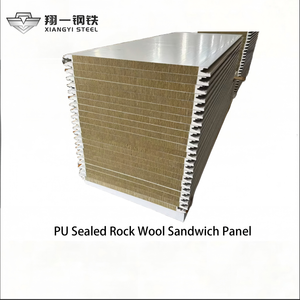
Structural Rockwool 100 – 140 kg/m³ 0.038 – 0.042 W/m·K Class A1 (Non-Combustible) ~ 32 – 35 dB 40+ Years (Incombustible)
Standard PUR Foam 38 – 40 kg/m³ 0.024 W/m·K B2 / B3 (Combustible Core) ~ 25 – 27 dB 25+ Years (Controlled Ambient)
MgSO4 Composite SIP Core dependent 0.030 – 0.035 W/m·K Class A1 Board Facings ~ 34 – 38 dB 35+ Years (Anti-Corrosion)
R&D Roadmap

Continuous Lamination Engineering & Surface Evolution

How state-of-the-art continuous double-belt production machinery and advanced coil metallurgy protect capital asset lifespans in aggressive marine and industrial environments.

High-Pressure Double-Belt Continuous Lines

Discontinuous injection systems result in variable core density and weak spots. Modern OEM factories utilize 36-meter high-pressure continuous double-caterpillar laminators heated via closed-loop oil circuits.

This engineering methodology guarantees an isotropic curing environment, ensuring uniform cellular density throughout the wall panel panel length and complete adhesion between metal skins and structural cores.

  • High peel strength without synthetic adhesive lines
  • Dimensional tolerances restricted to ±1mm
  • Absence of unbonded pockets and thermal leaks

Advanced Metallurgy: Super Polyester, PVDF & Plastisol

Galvanized steel skins exposed to hyper-saline maritime or chemical atmospheres degrade rapidly without targeted barrier coats. Our manufacturing integrates Zincalume (55% Al, 43.4% Zn, 1.6% Si) coated substrates.

External protective paint finishes range from high-durability polyester (HDP) to 70% Kynar 500 polyvinylidene fluoride (PVDF) and thick 200μm Plastisol films, shielding against severe chalking and UV fading.

  • Resistance exceeding 1,500 hours salt spray tests
  • Solar Reflectance Index (SRI) > 78 for roof cooling
  • Food-safe, anti-microbial coatings for cleanrooms

Patented Thermal-Break Joint Geometry

Concealed-fastener architecture incorporates specialized labyrinth male-female interlocking profiles. By embedding EPDM weather gaskets during rolling, thermal convection loops are eliminated.

This airtight, vapour-sealed configuration prevents internal condensation, protects wall panel structural fasteners from galvanic corrosion, and maintains airtight building envelope ratings under dynamic wind loading.

  • ASTM E283 air infiltration compliance
  • ASTM E331 water penetration resistance
  • Interlocking cam-lock options for blast freezers
Enterprise Competitive Advantages

Engineered In-House: The Industrial OEM Advantage

Drawing on an established manufacturing lineage in Muscat, Oman, our operations combine international testing accreditations with reliable regional and global logistics.

Integrated Production Footprint

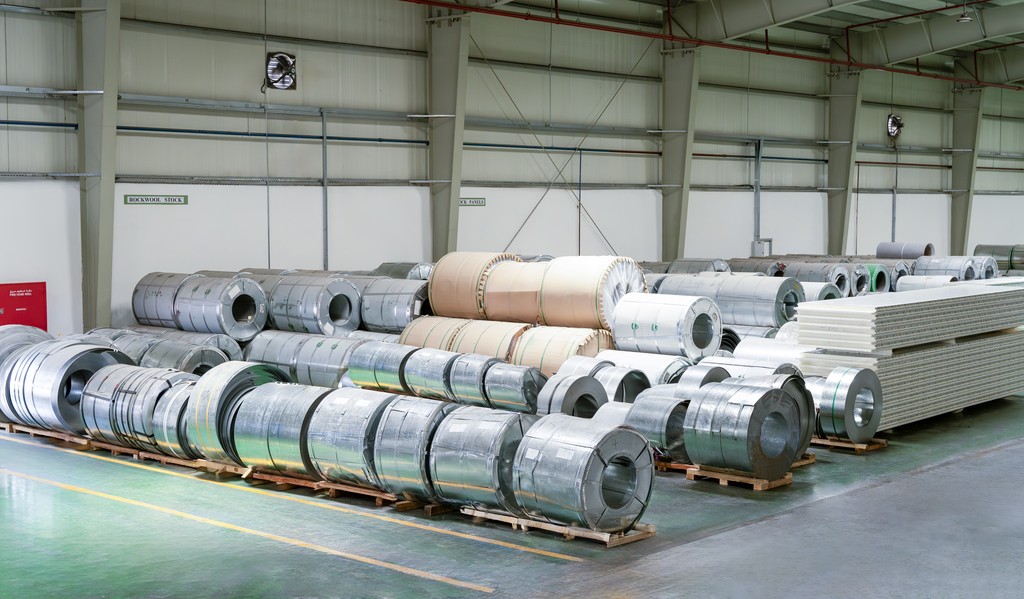
In-house continuous PIR lines, basalt rockwool slab slitting facilities, cold-formed C/Z purlin production, and CNC trim fabrication ensure zero dependency on external sub-fabricators.

Engineered for Desert & Coastal Extremes

Formulated to withstand sustained ambient temperatures above 45°C, severe UV indices, and hyper-saline coastal winds characteristic of the Arabian Gulf, Red Sea, and tropical Africa.

Documented Third-Party Accreditations

All core raw materials, tensile skins, and finished composite panels undergo certified ISO 9001 quality testing, accompanied by full submittal documentation for swift municipal and civil defense approvals.

Turnkey Secondary Steel & Envelope Supply

Procuring contractors cut freight waste by pairing composite wall panels with cold-rolled decking, roof profile sheets, matching structural purlins, and bespoke flashing systems in coordinated dispatches.

Manufacturing Line & Site Gallery

Verified Performance Across Industrial Installations

A glimpse into our advanced continuous double-caterpillar production lines and finished building envelopes across logistics hubs, cold storage facilities, and industrial complexes.

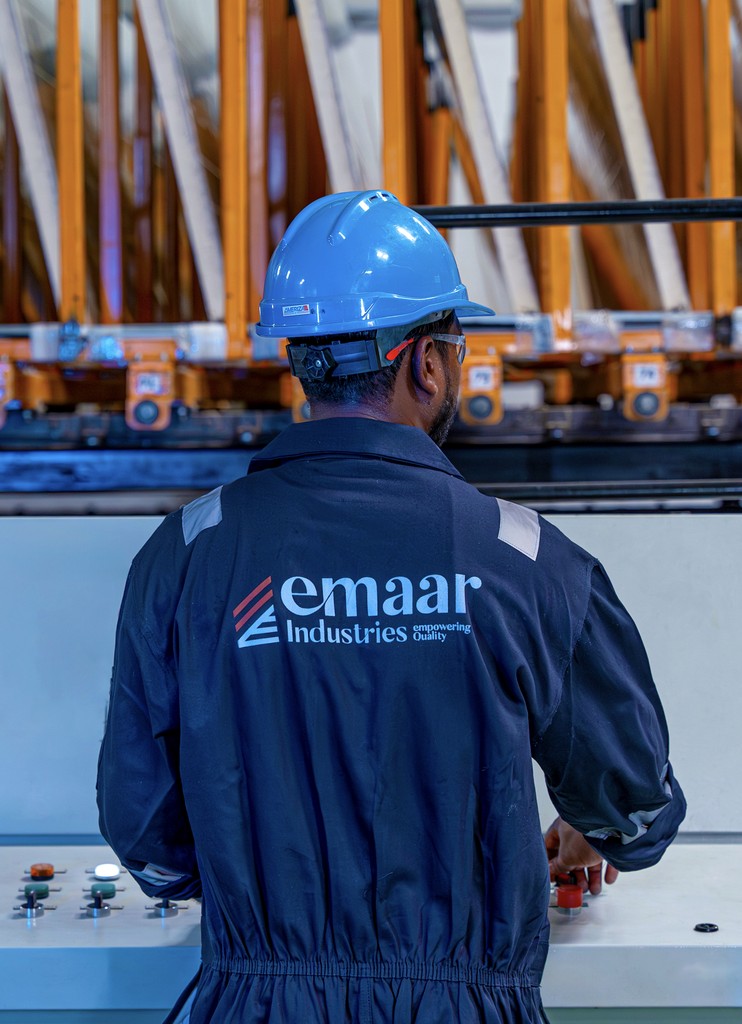
Continuous Automated Composite Panel Manufacturing Line
Muscat Production Hub Automated Double-Belt Lamination Line
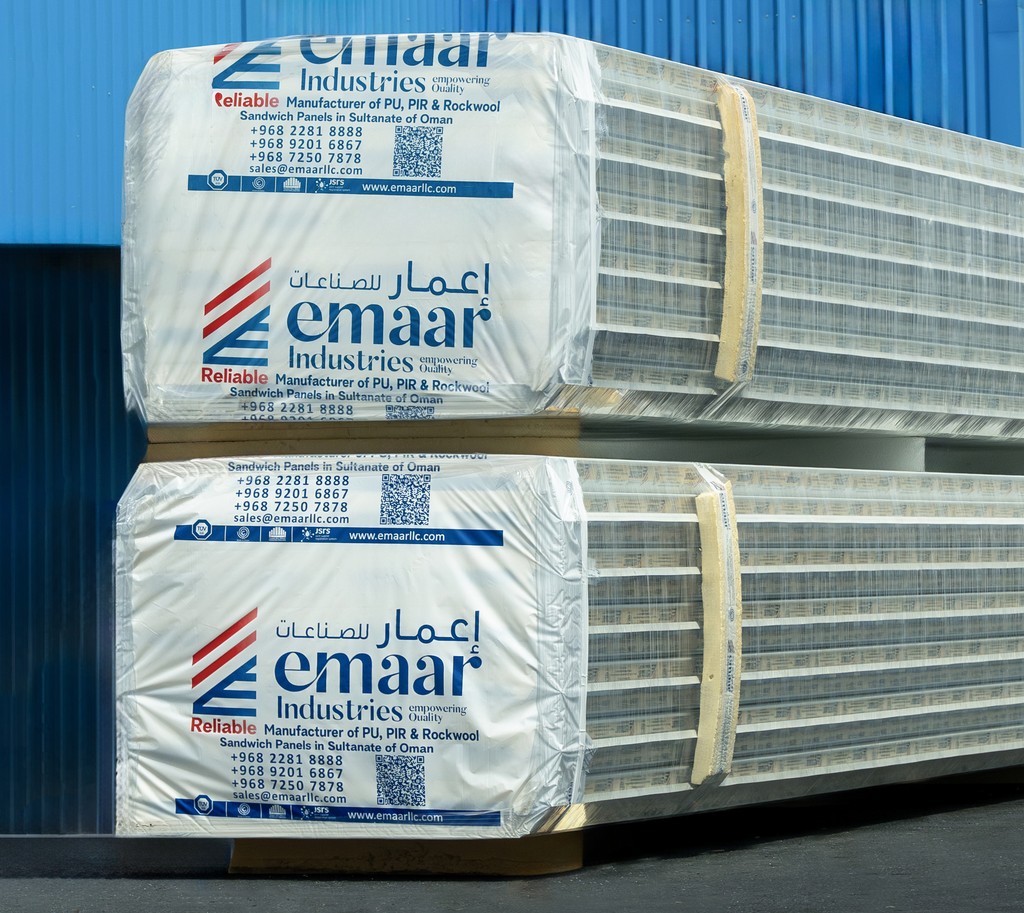
Finished Insulated Sandwich Panels Packed for Shipping
Global Export Dispatch Moisture-Sealed Panel Bundles Ready for Shipping
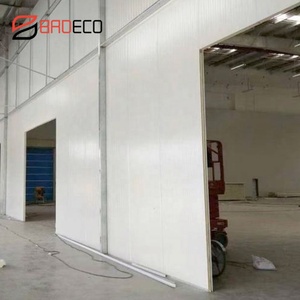
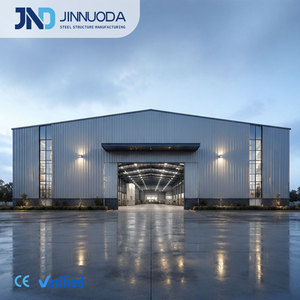
Industrial Facility Cladded with Composite Wall Panels
Logistics Hub High-Bay Warehouse Envelope Installation
Consultant & Buyer Support

Frequently Asked Questions Regarding Custom OEM Composite Panels

Direct technical responses addressing engineering specifications, joint design, fire ratings, surface metallurgy, and global logistics execution.

Q1: How does Polyisocyanurate (PIR) compare to Rockwool for wall cladding?

PIR delivers twice the thermal insulation efficiency of rockwool per millimeter of thickness (thermal conductivity of 0.022 W/m·K vs 0.040 W/m·K), drastically cutting building structural dead-load. However, Rockwool is an inorganic stone fiber classified as strictly non-combustible (Class A1), making it essential for firebreak compartment walls, battery rooms, and heavy petrochemical enclosures.

Q2: Can composite wall panel profiles and skin gauges be customized on an OEM basis?

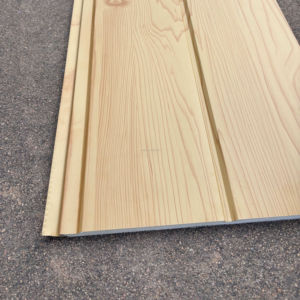
Yes. As an OEM manufacturer, we configure panel length (up to 16.5m), core thickness (50mm to 200mm), steel substrate gauge (0.4mm to 0.8mm), surface ribbing (micro-ribbed, fluted, wave-profile, or flat), and exterior coating formulations (PVDF, HDP, PE, or Plastisol) according to structural engineering drawings.

Q3: How do you prevent interstitial condensation and thermal bridging at joint intersections?

Our panels employ deep male-and-female tongue-and-groove joint profiles with internal concealed fasteners and factory-injected continuous closed-cell expanding gaskets. This forms an unbroken thermal break and continuous vapour barrier, mitigating the dew-point formation common to high-humidity Gulf, African, and tropical marine environments.

Q4: What are the recommended steel skin coatings for coastal and high-salinity zones?

For installations within 3 kilometers of open sea or in heavy industrial parks, standard polyester (PE) coatings are inadequate. We specify hot-dip Zincalume (AZ150) or galvanized (Z275) steel facings treated with minimum 25-micron Kynar 500 PVDF (polyvinylidene fluoride) or 200-micron PVC Plastisol coatings, achieving salt-spray corrosion resistance beyond 1,500 hours.

Q5: What deflection ratios and purlin spans are safe for composite wall installations?

Standard design practice assumes an allowable structural deflection limit of L/200 for external architectural facades. Depending on regional wind load criteria (typically 1.2 to 2.4 kPa) and core thickness (e.g., 75mm to 100mm PIR), secondary steel C/Z purlin spacing ranges between 1.8 meters and 3.2 meters. Complete project-specific wind-load calculations are generated by our technical department.

Q6: How are panels packaged to protect surface finishes during long-distance multimodal export?

Each individual composite panel is masked with a UV-stabilized protective polyethylene film. Panels are stacked with high-density EPS base blocks, bundled inside heavy-gauge polyethylene heat-shrink packaging, and edge-armored with heavy corrugated paperboards to guarantee zero deflection damage during flatbed trucking and containerized ocean transit.

Collaborate With Our Engineering Team

Accelerate Your Industrial Envelope Procurement

Connect with our technical sales engineers to review project specifications, structural wind-load tables, BIM models, and custom OEM manufacturing lead times. We supply comprehensive structural and thermal envelope submittals for rapid client and authority approvals.

Get Catalog