Engineered Cold-Rolled Metal Decking, Architectural Standing Seam Systems, and High-Performance Thermal Envelope Panels for Demanding GCC & Global Climates
10,000 m²
Daily Continuous Panel Output
550+
Major Industrial Projects Delivered
±0.5 mm
Precision Roll-Forming Tolerance
C4 / C5-M
Marine Atmospheric Corrosion Resistance
Precision Manufacturing Portfolio
Architectural Cladding & Structural Insulated Envelope Systems
Every roofing profile, composite panel, and cold-rolled sub-framing member is fabricated on computer-synchronized roll-forming lines. We deliver strict dimensional consistency, thermal performance integrity, and project-specific alloy and finish configurations.
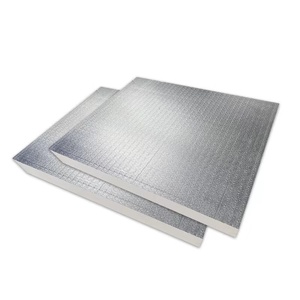
Engineered for cold storage under-slab insulation, high-load freezer sub-floors, and mechanical rooms requiring zero moisture ingress and thermal conductivity as low as 0.020 W/m·K.
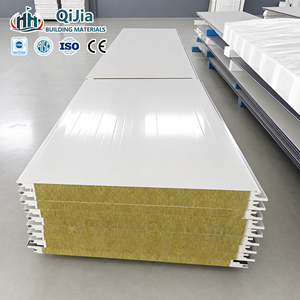
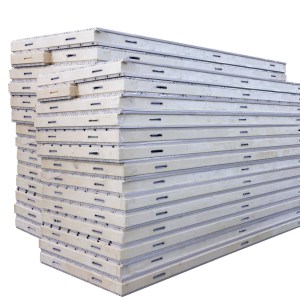
Heavy-duty structural mineral wool composite panels providing up to 240-minute structural fire resistance, acoustic dampening, and superior span capacities across logistics hubs and petrochemical facilities.
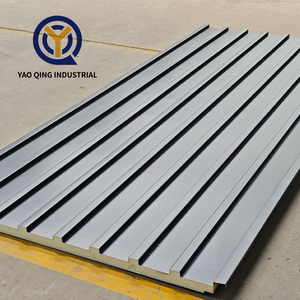
Ultra-lightweight 3000/5000-series marine aluminium standing seam and step-tile profiles. Features multi-layer PVDF/fluorocarbon powder coatings engineered to repel UV degradation in tropical and desert zones.
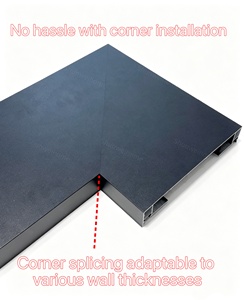
Custom CNC brake-formed flashing, parapet wall copings, drip edges, and architectural Z-closures that guarantee hydrostatic seal integrity along building interfaces and curtain transitions.
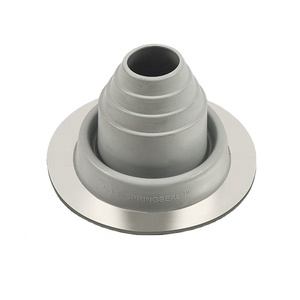
Flexible high-ozone resistant EPDM and silicone pipe boots with bendable aluminium base rings, ensuring thermal pipe penetrations, solar conduit drops, and vent valleys remain leak-proof for decades.
Base Metal Thickness (BMT) vs. Total Coated Thickness (TCT)
A key procurement pitfall in international sheet profiling is ambiguity between BMT and TCT. Structural calculations (yield strength, section modulus, moment of inertia) must rely exclusively on BMT. Our technical datasheets clearly separate the structural steel thickness (e.g., 0.50 mm BMT) from the protective zinc/aluminum coating and topcoat paint film thicknesses (e.g., 0.56 mm TCT), ensuring full structural compliance with consultant engineering criteria.
Coil Coating Performance: PVDF vs. SMP vs. Plastisol
For severe atmospheric conditions (Middle East UV index >11 or marine environments within 1 km of seawater), standard commercial polyesters degrade rapidly. We specify Polyvinylidene Fluoride (PVDF/Kynar 500 70/30) for superior chalking resistance (ΔE < 5 over 20 years) or Silicone Modified Polyester (SMP) for high hardness against wind-borne abrasive sand particles, verified through rigorous ASTM D4214 field tests.
Strategic Supply Chain Trends
Future Procurement Trends in Industrial Envelope Systems
How EPC contractors, building envelope specifiers, and procurement managers are adapting to green building standards, rooftop solar loads, and automated delivery schedules.
BIPV & Solar-Ready Structural Profiling
Procurement is shifting away from standard trapezoidal profiles toward standing seam ribs that allow clamp-based solar panel mounting without through-penetrations. Modern project tenders require roofing profiles with pre-calculated moment capacities to carry supplementary 18–25 kg/m² photovoltaic arrays plus maintenance foot-traffic loads.
Low-Carbon EPD & Green Steel Accounting
Government and institutional tenders increasingly require comprehensive Environmental Product Declarations (EPDs). Global buyers now prioritize suppliers using scrap-based Electric Arc Furnace (EAF) steel coils alongside hydrogen-reduced iron. This reduces embodied carbon from 2.2 kg CO₂/kg to under 0.8 kg CO₂/kg without compromising tensile strength.
Container Cube Optimization & Site Rollforming
Ocean freight rate swings have reshaped export logistics. Forward-looking buyers prioritize profile nests with precise stacking geometries that maximize container weight-to-volume ratios. For single-run spans exceeding 30 meters, international projects now contract mobile on-site rollforming units, eliminating cross-border freight length restrictions.
R&D Engineering Advances
Technological Advancements in Roofing Profile Engineering
Next-generation roll-forming technology addresses thermal oil-canning, seam hydrodynamics, and dynamic micro-movement in extreme temperature environments.
Anti-Capillary Siphon Grooves
Wind-driven rain across low-slope installations can pull moisture into side laps via surface tension. Our cold-rolled profiles feature an automated continuous siphon break groove within the overlapping rib. This interrupts capillary action and preserves hydrostatic resistance even during severe windstorms.
Precision Stiffener Ribs Against Oil-Canning
Wide, flat architectural profile pans are prone to visual waviness (oil-canning) driven by thermal expansion cycles. Modern tooling integrates micro-fluting, striated pan ribs, or pencil swages across wide pans. These subtle profiles relieve internal coil stresses without reducing effective water-shedding volume.
Thermally Slotted Floating Clips
When steel roof sheets exceed 25 meters under 50°C summer-to-winter temperature deltas, thermal expansion can generate shear stress that breaks standard fasteners. Our engineered standing seam assemblies utilize two-piece sliding thermal clips that accommodate up to 60 mm of longitudinal thermal movement while maintaining Class 90 uplift resistance.
Why Partner With Us
Integrated OEM Manufacturing & Global Export Infrastructure
Combining in-house continuous rollforming, structural steel fabrication, and metallurgical testing, we give project teams predictable lead times, transparent material certifications, and end-to-end quality assurance.
In-House Continuous Lines
Equipped with high-speed automated roll-forming and continuous PUR/PIR/Mineral Wool laminating lines yielding up to 10,000 m² per day. This high throughput ensures reliable shipping timelines for large-scale industrial tenders.
GCC, African & Global Presence
Having delivered more than 550 major projects across Oman, the UAE, Saudi Arabia, Qatar, and broader export corridors, our engineering team designs around regional building codes and high-heat, high-salinity field environments.
Certified Chemical & Tensile Testing
Every incoming master steel coil undergoes spectrometer analysis, zinc/galvalume coating weight testing via dry-film gauges, tensile yield verifications, and cross-hatch paint adhesion checks before entering the forming pass.
Custom Roll Tooling & OEM Flexibility
We offer bespoke profile fabrication. Whether matching legacy architectural profiles, adjusting rib step intervals, or running proprietary non-standard widths, our CNC tooling and roll die manufacturing turn designs into production rapidly.
Heavy-Duty Export Packaging
International orders feature inter-sheet protective poly-film interleaving, heavy desiccants, wooden edge skids, and waterproof barrier paper. Bundles are secured with steel bands to survive ocean container transit and rough site handling.
Single-Source Building Envelope
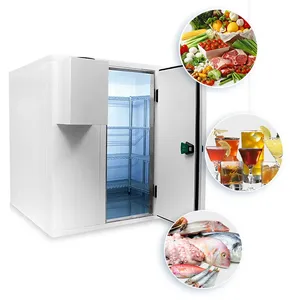
Beyond roof profiles, we supply an integrated building envelope package—including matching flashing trim, structural Z & C purlins, self-drilling fasteners, composite decking, and thermal cold-room sandwich panels from one manufacturing source.
Technical Clarification
Frequently Asked Questions for Project Specifiers & Procurement
Detailed engineering responses to the technical, metallurgic, and logistics questions asked most by consulting engineers, EPC procurement directors, and quantity surveyors.
How do you control and prevent oil-canning in wide-pan metal roofing?
Oil-canning is a visual phenomenon caused by uneven residual stresses in master steel coils, thermal expansion, or sub-framing misalignment. We mitigate this by using tension-leveled prime steel coils, adding micro-rib stiffeners along flat pans, enforcing precise roll-forming speed gradients, and recommending floating concealed clips that allow free longitudinal expansion.
What is the standard tolerance on profile length, width, and squareness?
Our fabrication lines adhere to EN 508-1 and ASTM A924 standards. Profiles cut to custom lengths are held to a tolerance of ±2.0 mm (lengths < 6m) and ±4.0 mm (lengths > 12m). Cover width is held to ±1.5 mm, and camber/edge wave is kept below 1.0 mm per meter of profile run, ensuring clean, straight panel installation on site.
How does your coil coating system stand up to ISO 12944 C5-M marine exposure?
For severe marine or coastal industrial environments (Category C5-M), we apply an aluminum-zinc alloy base coating (AZ150 to AZ200) followed by a high-build polyurethane or 70% fluoropolymer (PVDF) topcoat (minimum 25–35 µm dry film thickness). This finish is rated for over 1,500 hours of continuous ASTM B117 salt spray testing with zero edge peeling or blistering.
Can you provide Mill Test Certificates (MTC) matching EN 10204 3.1?
Yes. Every export order is accompanied by an inspection certificate conforming to EN 10204 Type 3.1. This MTC details heat numbers, full chemical composition (Carbon, Manganese, Phosphorus, Sulfur, Aluminum), verified yield strengths (Rp0.2), ultimate tensile strengths (Rm), total elongation, and specific coating mass per square meter.
What is the maximum single-span sheet length you can safely export?
For standard export shipping containers, the maximum practical sheet length is 11.85 meters (for 40ft High Cube containers) to allow for forklift entry, blocking, and crating. For projects requiring continuous single-run sheets from 15 to 45 meters, we supply flat coil stocks alongside our mobile on-site roll-forming units, run directly at the construction site.
How do you verify wind uplift performance for high-velocity hurricane zones?
Our standing seam and trapezoidal sheet systems are engineered and tested in accordance with ASTM E1592 (Standard Test Method for Structural Performance of Sheet Metal Roof and Siding Systems by Uniform Static Air Pressure Difference) and UL 580 Class 90 standards. This allows our engineering team to provide verified safe load/span tables tailored to project wind pressure specifications.
What fire classifications apply to your composite sandwich panel assemblies?
Our Rockwool mineral wool sandwich panels achieve an A1 non-combustible Euroclass rating and meet ASTM E119 criteria for up to 4 hours of fire resistance. Our Polyisocyanurate (PIR) cores are formulated with self-extinguishing isocyanurate ring chemistries, achieving ASTM E84 Class A flame spread ratings (< 25) with minimal smoke emission.
What are your Minimum Order Quantities (MOQ) and sample lead times?
For standard stock coils (RAL 9002, 9006, 5012, and 0.5mm Galvalume), our standard MOQ is 500 square meters. For custom project paint finishes, special RAL colors, or non-standard substrate thicknesses, our MOQ is typically 1,500 square meters. Pre-production profile cut samples and color chips ship internationally via DHL within 3 to 5 business days.
Partner with an Engineering-Led Roofing & Cladding Manufacturer
Submit your project bill of quantities, architectural span profiles, or custom die configurations. Our technical team delivers structural span calculations, detailed pricing matrices, and export container packing layouts within 24 business hours.