
Precision-profiled architectural eave trims, high-gauge stainless flashings, and integrated structural sandwich panels manufactured in strict compliance with ASTM, EN, and CE commercial standards.
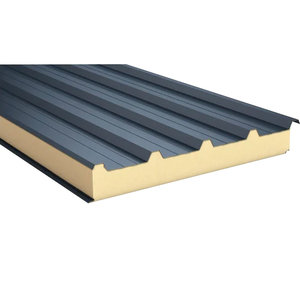
Continuous roll-formed corrugated thermal panels with precision drip overhang provisions, ideal for industrial warehouse envelopes.
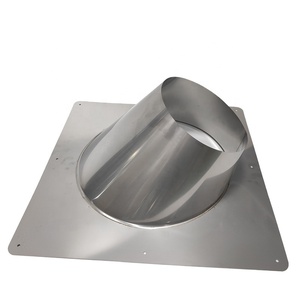
Heavy-gauge SUS304/316 formed penetration flashing engineered with kick-out drip flanges for watertight roof penetrations.
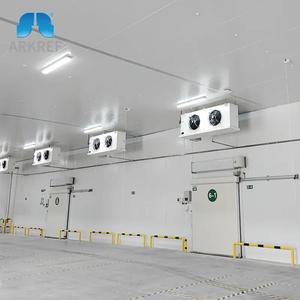
High-density polyurethane tongue-and-groove insulated panels with cam-lock assemblies for blast chillers and food preservation hubs.
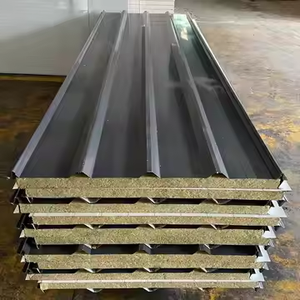
Non-combustible stone wool core with pre-painted steel facings, engineered for fire compartmentation and critical acoustic dampening.
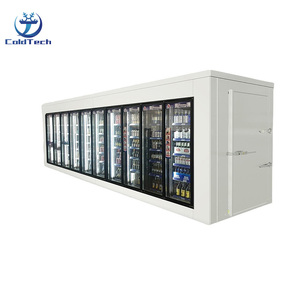
Integrated multi-pane heated glass display rooms with high-efficiency polyurethane insulated framing and condensation drainage flashings.
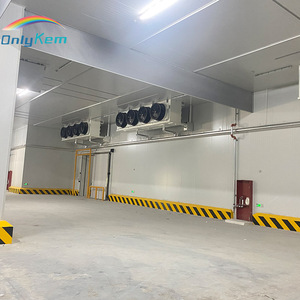
CE, NSF, and ETL certified low-temperature thermal envelopes with antimicrobial joint profiles and water shedding drip details.
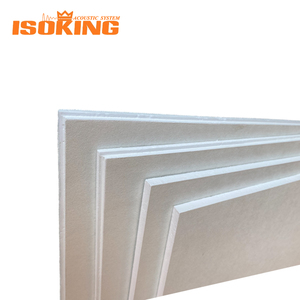
High-density perforated acoustic panels designed for sound attenuation baffles and industrial generator enclosure linings.
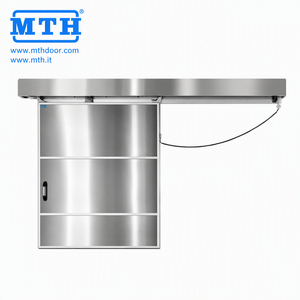
Heavy-duty insulated access doors featuring perimeter heating frames and overhead drip-shedding head flashings to avoid icing.
In modern industrial and commercial architecture, the roof drip edge is not merely an auxiliary trim accessory; it is the fundamental mechanical boundary condition of the entire roofing envelope. Positioned at eaves, gables, and rakes, drip edges dictate how a structural roof terminates, directs surface run-off into gutter channels, and resists catastrophic wind vortex separation. Without a precisely roll-formed drip profile with a clean kick-out hem, capillary surface tension forces wind-driven water directly back under roofing membranes and sandwich panels, triggering fascia rot, sub-sheathing deterioration, and severe thermal insulation degradation.
As a top-tier China manufacturer and global exporter, our production lines bridge the gap between heavy civil metallurgy and precision cold roll-forming. Utilizing automated decoiling, servo-driven multi-station roll-forming lines, and CNC hem bending, we produce drip edge profiles that strictly conform to ANSI/SPRI ES-1 ("Test Standard for Edge Systems Used with Low Slope Roofing Systems") and ASTM A653 / ASTM A792 metallurgic parameters. Our perimeter systems eliminate siphoning, control thermal expansion cycles, and guarantee structural integrity under extreme cyclonic uplift pressures.
Whether providing weather-tight closures for polyurethane (PUR) and polyisocyanurate (PIR) continuous cold chain facilities, or fabricating non-combustible A1-rated rock wool sandwich wall and roof systems, our structural flashings and drip profiles are engineered for harsh climatic exposures—from scorching, high-salinity coastal regions in the GCC to freeze-thaw sub-zero conditions across Northern Europe and the Americas.
Standardized engineering data comparing core substrates, metallic alloy coatings, and structural failure prevention metrics across commercial drip edge profiles.
| Profile / Material Substrate | Yield Strength & Gauge Range | Corrosion Protection / Coating | Wind Uplift Rating | Primary Commercial Use |
|---|---|---|---|---|
| Pre-Painted Galvalume (Aluzinc) ASTM A792 / AZ150 Base |
Yield: ≥ 350 MPa Thickness: 0.45mm – 1.20mm |
AZ150 Metallic Al-Zn + 25μm Fluoropolymer (PVDF / Kynar 500) | UL 580 Class 90 / ANSI/SPRI ES-1 Certified | Commercial pre-engineered steel buildings, logistics hubs, and industrial warehouses. |
| Hot-Dip Galvanized Structural Steel ASTM A653 / G90 (Z275) |
Yield: ≥ 280 – 320 MPa Thickness: 0.50mm – 1.50mm |
275 g/m² Zinc Mass + Super Durable Polyester (SMP / HDP) | FM 1-49 Severe Wind Class Approved | Agricultural complexes, distribution centers, and standard standing seam roofs. |
| Austenitic Stainless Steel AISI 304 / 316 Marine Grade |
Yield: ≥ 205 MPa Thickness: 0.40mm – 1.00mm |
Passivated 2B / BA Finish (Natural passive chromic oxide layer) | Exceeds 210 psf design pressure at perimeter | Chemical processing plants, coastal marine installations, and food cold storage. |
| Structural Architectural Aluminum ASTM B209 / Alloy 3003-H14 |
Yield: ≥ 145 MPa Thickness: 0.70mm – 1.60mm |
Anodized Class I (0.7 mil) or AAMA 2605 70% Kynar 500 PVDF | ANSI/SPRI ES-1 RE-2 & RE-3 Pull-Off Compliant | Coastal luxury commercial resorts, airport terminals, and educational facilities. |
How state-of-the-art China manufacturing is elevating roof edge systems from basic bent metal to aerodynamically balanced building envelope assets.
Traditional brake presses induce micro-fissuring in coil zinc coatings along tight radius bends. Modern Chinese manufacturing leverages continuous 18-to-24 station roll-forming tooling with oil-bath lubricated rollers, maintaining uniform metallurgical temper and eliminating micro-cracking across all hemmed drip kickers.
Long runs of metal eave trim experience substantial linear thermal expansion. Precision inline hydraulic punching dies now integrate pre-slotted fixing apertures. This prevents oil-canning and fastener shear, allowing the drip edge to float smoothly along purlin flanges during acute daily solar heat shifts.
Advanced drip edges incorporate continuous 45-degree capillary breaks and bottom drip hems. By disrupting water's natural surface adhesion at the lower perimeter, run-off is actively thrown away from the fascia timber or metal deck rather than siphoning inward through capillary action.
Navigating environmental accountability, digital project synchronization, and supply chain de-risking over the 2025–2030 economic cycle.
Procurement teams are shifting away from buying raw sheet coils for local site-bending. Purchasing complete prefabricated kits—including custom-cut roof panels, factory-mitered drip edges, internal corner trims, and butyl closures—cuts job site labor overhead by over 38% and avoids field bending inaccuracies.
With the European Carbon Border Adjustment Mechanism (CBAM) and strict global ESG reporting, institutional buyers require transparent mill EPDs (Environmental Product Declarations). Chinese manufacturers are aggressively adopting EAF (Electric Arc Furnace) recycled steel substrates and low-VOC coating resins to satisfy clean-import tariffs.
Gone are generic catalog dimensions. Contractors now transmit IFC and Revit metadata directly into our automated CNC slitting and roll-forming systems. This ensures zero-waste precision-length flashings, pre-drilled fastening layouts, and customized drip edge geometries that integrate seamlessly with complex curtain walls.
Combining multi-regional manufacturing agility, robust raw material reserves, and strict export-grade quality assurance systems.
We maintain permanent rolling inventories of prime G90 galvanized, Aluzinc AZ150, and 304 stainless steel coils, guaranteeing price stability and rapid 10-day turnaround for massive volume orders.
Eliminate supplier misalignments. We produce matching roof sandwich panels, insulated cold storage walls, structural Z/C purlins, floor decking, and all perimeter drip edge flashings from one cohesive factory floor.
Every batch undergoes rigorous quality validation: 1,500+ hour ASTM B117 salt spray tests, cross-hatch coating adhesion checks, Elcometer dry-film gauge validation, and digital bevel angle verification.
Profiles are interleaved with peel-resistant protective films, reinforced with heavy wooden fumigated crates, and wrapped with waterproof barrier paper to ensure zero denting or ocean-freight corrosion during transit.
Detailed, engineer-approved answers regarding specifications, international codes, installation protocols, and containerized logistics.
For commercial and industrial installations subject to high wind pressures, 26-gauge (0.45mm) to 22-gauge (0.75mm) pre-painted Galvalume or G90 steel is standard. For heavy coastal or chemical environments, we recommend 0.8mm to 1.0mm 3003-H14 aluminum or 24-gauge (0.6mm) 304/316 stainless steel to ensure zero deflection and maximum lifespan.
At eave locations, the roof drip edge is installed directly onto the roof deck structure underneath the waterproof underlayment/ice-and-water shield to ensure any water reaching the membrane flows safely over the drip edge. Along the rake/gable edge, the drip edge is installed over the underlayment to seal the edges against wind-driven rain penetration.
Yes. We offer complete custom profiling based on CAD/BIM shop drawings. We adjust vertical face dimensions, kickout projection angles (typically 30° to 45°), deck flange widths, and hem tightness to match specific insulated roof sandwich panel corrugations or standing seam snap-lock designs.
Galvanic incompatibility occurs when dissimilar metals (such as copper against galvanized steel or aluminum against carbon fasteners) touch in the presence of an electrolyte. We provide high-dielectric EPDM barrier strips, factory-applied neoprene gaskets, and color-matched austenitic 300-series stainless fasteners with sealed EPDM washers to isolate dissimilar contact planes.
Our products are tested according to ASTM E1592 (uniform static air pressure difference), ANSI/SPRI ES-1 wind uplift perimeter standards, ASTM B117 salt spray endurance, and CE EN 14509 composite thermal envelope requirements. Mill test certificates (MTC 3.1) and third-party SGS/BV inspection certificates accompany every container export.
For custom-profiled drip edges and flashings, our minimum order quantity (MOQ) is typically 500 to 1,000 linear meters, or combined with sandwich panel orders in mixed 40ft HQ shipping containers. Flashings are tightly nested to maximize container cubic space, achieving up to 12,000 meters per 40HQ container, dramatically reducing per-unit freight costs.
Our sales engineers respond to project questions during working hours (GST+4).