
Our heavy-duty insulated panels, moisture-proof building accessories, and precision-rolled facade systems are manufactured under continuous automated lines to satisfy NCh433 seismic safety and OGUC thermal standards.
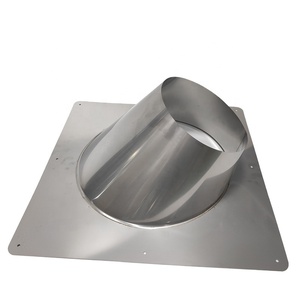
Ultra-durable, weather-sealed stainless steel roof flashing engineered for high thermal expansion, seismic shifts, and coastal moisture protection across Chilean industrial roofs.
Technical Specs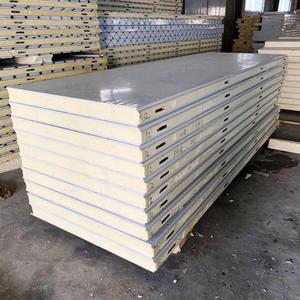
High-density Polyurethane core panels with tongue-and-groove cam-lock design, tailored for rapid installation in agro-industrial cooling and controlled atmosphere facilities.
Technical Specs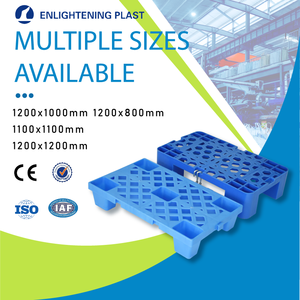
Perforated anti-slip, moisture-proof interlocking floor slats designed for sub-zero salmon processing and fruit distribution cold rooms, ensuring rapid drainage and heavy pallet loading.
Technical Specs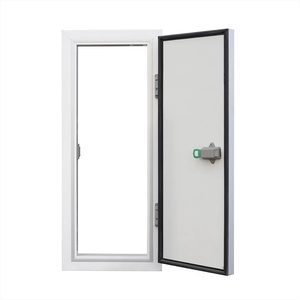
Heavy-duty insulated cold storage hinged doors with integrated perimeter heating cords, stainless hardware, and airtight rubber gaskets for zero condensation in commercial freezers.
Technical Specs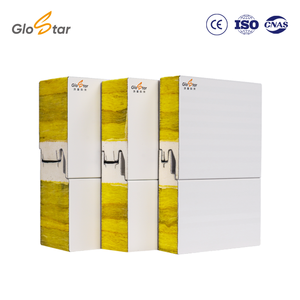
Non-combustible color steel insulated wall and roof cladding panel, engineered for industrial warehouses, shopping malls, and manufacturing plants requiring strict F-60 to F-120 fire compliance.
Technical Specs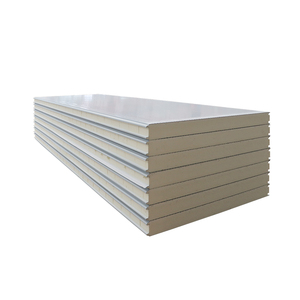
CFC-free rigid polyurethane core cladding with double-sided galvanized prepainted steel skins, offering superior acoustic damping and thermal barrier across Chilean distribution hubs.
Technical Specs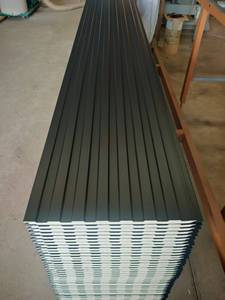
Architectural hidden-fastener polyurethane wall cladding delivering sleek linear aesthetics, micro-ribbed profiles, and zero thermal bridging for modern commercial office facades.
Technical Specs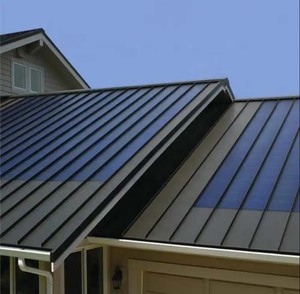
Continuous 360-degree mechanically seamed color-coated metal panels, providing impenetrable waterproofing and structural resistance against heavy rainfall and Patagonian wind gusts.
Technical SpecsChile represents one of the most mechanically and climatically challenging territories on earth for building envelopes. Spanning over 4,300 kilometers from the hyper-arid Atacama Desert in the north down to the sub-Antarctic winds and freezing squalls of the Magellan Region, specifying commercial wall cladding requires rigorous material engineering rather than catalog procurement. General contractors, structural engineering firms, and mining consortiums cannot rely on conventional commercial panels designed for mild continental weather.
As China's premier manufacturer and direct exporter to Chile, our production protocols incorporate the foundational tenets of Chilean design codes, notably NCh433 (Diseño Sísmico de Edificios), NCh2369 (Diseño Sísmico de Estructuras e Instalaciones Industriales), and the strict thermal enclosure guidelines outlined under the OGUC (Ordenanza General de Urbanismo y Construcciones - Artículo 4.1.10). Our panels integrate high-tensile structural steel faces (yielding up to 550 MPa) with elastomeric interlocks and slotted clip configurations, allowing the wall cladding system to absorb dynamic inter-story drift during seismic events without compromising airtight seals or buckling along facade perimeters.
Technical Insight for Chilean Specifiers: Seismic lateral displacement in structural steel frames creates massive shear stress at cladding fastening points. Our Chilean project packages include specially designed sliding fastener brackets and non-rigid tongue-and-groove joint geometries that accommodate seismic building deflections while maintaining full hydrothermal integrity.
Furthermore, thermal performance demands vary drastically by thermal zone (Zona Térmica 1 to 7 per NCh1070). Whether your project is an agro-export cold hub in Region Metropolitana requiring thermal transmittances (U-values) below 0.22 W/m²K or a lithium processing facility in Antofagasta facing extreme diurnal temperature swings (-5°C at night to +38°C midday), our continuous double-belt automated lines inject polyisocyanurate (PIR) and polyurethane (PUR) insulation at densities strictly controlled between 40 to 42 kg/m³. This yields a thermal conductivity ($\lambda$) as low as 0.020 W/m·K, cutting commercial HVAC load by up to 45% compared to site-built assemblies.
A rigorous performance comparison to assist Chilean MEP consultants, architects, and procurement teams in choosing the optimal insulated sandwich core based on fire rating, thermal efficiency, and mechanical resilience.
| Core Insulation Technology | Thermal Conductivity ($\lambda$) | Chilean Fire Class (OGUC) | Seismic Shear Tolerance | Best Suited Chilean Industry |
|---|---|---|---|---|
| Continuous High-Index PIR Polyisocyanurate Foam (PIR B1) |
0.020 – 0.022 W/m·K | F-30 to F-60 / Class B-s1,d0 | Excellent (Rigid Cross-link) | Logistics Parks, Agro-Food Cold Storage, Santiago Distribution Centers |
| High-Density Rockwool Core Basalt Mineral Fiber (100-120 kg/m³) |
0.038 – 0.042 W/m·K | F-90 to F-120 / Class A1 Incombustible | High (Denser structural deadweight) | Mining Extraction Plants (Calama/Antofagasta), Petrochemical, Power Hubs |
| Eco-Friendly PUR Core CFC-Free Polyurethane Foam |
0.022 – 0.024 W/m·K | Class B2 / Self-extinguishing | Excellent Elastic Recovery | Freezer Warehouses, Supermarket Cold Rooms, Modular Camp Housing |
| Structural Glass Wool Core Resin-bonded fiber matrix |
0.034 – 0.038 W/m·K | Incombustible Class A / F-60 | Moderate (Flexible Core) | Acoustic Enclosures, Shopping Centers, Processing Facilities in Valparaíso |
From high-altitude copper mining compounds in the north to aquaculture packing giants in Patagonia, our building envelope systems are custom tailored to localized operational hazards.
Mining complexes located at elevations exceeding 3,000 meters above sea level experience aggressive ultraviolet radiation (UV Index 11+), severe thermal shock cycling, and abrasive dust storms. Our Rockwool and PIR insulated cladding panels are treated with high-build PVDF (Fluorocarbon) coatings (Kynar 500 resin, min. 25μm topcoat) that resist chalking, blistering, and chemical leaching from airborne nitrates and copper smelting fumes.
Chile's world-leading fruit exports (cherries, table grapes, berries) rely on unbroken cold chains and controlled atmosphere (CA) rooms. We supply ultra-tight cam-lock PUR and PIR insulated panels up to 200 mm thick, ensuring zero air leakage ($< 0.1 \text{ m}^3/\text{h}\cdot\text{m}^2$) to preserve nitrogen-rich, oxygen-depleted atmospheres that extend fruit storage life for trans-Pacific shipping to Asia.
Coastal fish processing facilities face continuous high humidity (90%+ RH), constant high-pressure chemical wash-downs, and aggressive marine salinity. We configure sandwich cladding with 304 or 316 grade stainless steel interior skins and Aluzinc (AZ150) exterior substrates with Plastisol or FoodSafe PVC coatings, eliminating edge corrosion and galvanic decay.
Mega distribution centers for retail logistics in Santiago require wide structural spans (up to 4.5m between secondary purlins) to optimize usable interior cubic space. Our high-profile trapezoidal roof panels and concealed-fix decorative wall cladding provide both aesthetic commercial curb appeal and massive structural deflection resistance under load.
Strategic economic and environmental forces currently accelerating the replacement of legacy concrete tilt-up and uninsulated metal sheet facades with engineered Chinese sandwich panels.
With Chile's national commitment toward Net-Zero carbon emissions by 2050, commercial facilities must now obtain verified Energy Rating Certificates. Buildings clad in our high-density PIR continuous panels achieve up to a 60% reduction in thermal transmittance compared to legacy assemblies, drastically cutting lifetime energy footprints.
Following high-profile warehouse fires across industrial corridors in Quilicura and Lampa, Chilean insurance brokers and municipal fire departments (Bomberos) are rejecting standard expanded polystyrene (EPS) cores. Our FM-standard, char-forming PIR and non-combustible A1 Rockwool panels represent the new baseline for industrial insurability.
Under the landmark Free Trade Agreement between Chile and China, our commercial wall cladding and insulated panels enter Chilean ports (San Antonio, Valparaíso, Coronel) with 0% import tariffs under Form F Certificate of Origin documentation, delivering a decisive 15% to 30% total installed cost savings over European and North American competitors.
Combining heavy German-engineered continuous roll-forming lines, verified ISO/ASTM material testing, and seamless Pacific containerized logistics directly to your job site.
Operating dual high-speed continuous automation lines running up to 12 meters per minute, allowing us to manufacture 50,000 m² commercial project orders in under one week, ensuring zero construction timeline delays.
Complete project submittal packages provided in English and Spanish, including ASTM E84 Class A flame spread reports, thermal impedance certifications, and structural load span tables ready for Chilean ITO and municipal review.
Established direct Pacific freight allocations from Shanghai, Ningbo, and Qingdao directly to Valparaíso and San Antonio (transit time approx. 28-35 days). Specialized export sea-worthy wood crate packing prevents panel surface scuffing.
We do not supply loose panels alone. We provide a single-source integrated envelope: primary cladding, cold storage insulated doors, floor splicing slats, C/Z purlins, customized flashing trims, and EPDM structural fixings in one shipment.
Straightforward technical and commercial answers addressing common engineering queries from Chilean builders, EPC developers, and direct importers.
Connect directly with our senior facade and sandwich panel technical engineering team. We calculate exact static load tables, thermal U-values, container stuffing plans, and deliver competitive CIF Valparaíso/San Antonio factory-direct quotations.
Our sales engineers respond to project questions during working hours (GST+4).