
Manufactured under strict ISO 9001 and ISO 14001 automated continuous processing lines, fully configurable for North American building codes and architectural loading criteria.
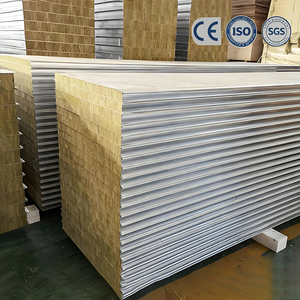
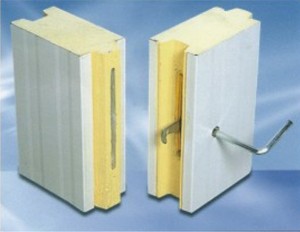
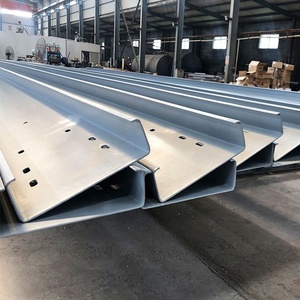
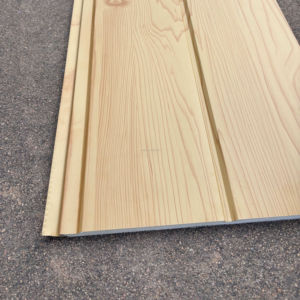
In modern North American non-residential construction, the insulated metal panel (IMP) sector has experienced a profound shift. Stricter revisions to the International Building Code (IBC 2021/2024), evolving ASHRAE 90.1 energy performance standards, and heightened scrutiny from commercial property insurers (such as FM Global) have combined to make non-combustibility a baseline mandate rather than an optional specification upgrade. While polymeric core insulations like standard Polyurethane (PUR) and Polyisocyanurate (PIR) provide impressive initial thermal resistivity per inch, rockwool (stone mineral wool) sandwich panels stand alone as the definitive solution when zero flame propagation, structural acoustic damping, and extreme fire division endurance are strictly required.
American general contractors, pre-engineered metal building (PEMB) developers, and industrial procurement managers frequently encounter severe domestic market bottlenecks: domestic IMP lead times spanning 26 to 44 weeks, aggressive domestic pricing structures, and regional raw material allocations. As China's leading rockwool insulated panel manufacturing authority, our automated production facilities bridge this gap. We produce engineered building assemblies engineered to American ASTM and NFPA performance criteria, offering high continuous automated volume, custom cut-to-length engineering, and standardized containerized export packaging that reduces overall building envelope schedules by up to 40%.
A data-driven appraisal for structural engineers, project specifiers, and thermal modeling consultants under U.S. climate condition assessments.
| Performance Parameter | High-Density Rockwool Core | Modified PIR (Polyisocyanurate) | Standard PUR (Polyurethane) | Expanded Polystyrene (EPS) |
|---|---|---|---|---|
| Core Fire Reaction | Non-Combustible (Euroclass A1 / ASTM E136) | Combustible, Char-Forming (Class B1 / B2) | Combustible (Class B2 / B3) | Highly Combustible, Melts & Drips |
| Fire Endurance (ASTM E119 / UL 263) | Up to 240 Minutes (1 to 4 Hours Rated) | Typically 30 to 60 Minutes (with shields) | Non-Rated Fire Barrier | Zero Fire Barrier Integrity |
| Surface Burning (ASTM E84) | Flame Spread: 0-5 | Smoke Dev: 0-10 | Flame Spread: ≤25 | Smoke Dev: ≤450 | Flame Spread: >25 | Smoke Dev: >450 | Flame Spread: ≥25 | Heavy Smoke Yield |
| Thermal Conductivity (λ) | 0.038 – 0.042 W/m·K (R-3.8 to R-4.2 / inch) | 0.020 – 0.024 W/m·K (R-6.5 to R-7.2 / inch) | 0.024 – 0.028 W/m·K (R-5.8 to R-6.2 / inch) | 0.036 – 0.040 W/m·K (R-3.6 to R-4.0 / inch) |
| Acoustic Isolation (STC Rating) | STC 32 to 44 dB (Perforated NRC up to 0.85) | STC 23 to 26 dB (Acoustically Transparent) | STC 22 to 25 dB | STC 20 to 24 dB (Poor Sound Attenuation) |
| Fiber Orientation & Bonding | 90° Vertically Sliced Basalt, High Shear | Closed-Cell Microcellular Rigid Polymer | Rigid Expanded Polyurethane Foam | Fused Beaded Cellular Matrix |
| Water Absorption & Vapor Diffusion | Hydrophobic Treatment <1.0 kg/m²; Vapor Permeable | Hydrophobic Closed Cell (>90%) | Closed Cell Foam Matrix | Susceptible to Inter-Bead Saturation |
| Ideal U.S. Applications | Data Centers, Battery Storage, Petrochem, IBC Separations | Commercial Cold Storage, Distribution Warehouses | Standard Walk-In Chillers, Small Coolers | Low-Cost Agricultural Enclosures Only |
How specialized rockwool sandwich panels solve regional climate challenges, structural mandates, and safety codes across the United States.
Driven by the AI infrastructure boom in Northern Virginia, Texas, and Oregon, mission-critical server facilities and lithium-ion battery containment units require zero-tolerance fire containment. Our 120–150mm rockwool core panels provide certified 2-hour and 3-hour fire partition walls that prevent cascading thermal runaway events, fully satisfying local AHJ (Authority Having Jurisdiction) safety mandates.
From meat packing facilities in the Midwest to cold logistics hubs in California's Central Valley, food safety compliance requires wash-down grade envelopes. We combine structural rockwool core slabs with food-safe plastisol or anti-microbial PVDF coated steel facers. When manufactured with specialized PUR side-tongue seals, our panels prevent vapor infiltration while meeting stringent USDA and FDA sanitary mandates.
Industrial refineries along the Texas and Louisiana Gulf Coast operate under severe explosion, intense fire, and high-salinity ambient threats. Rockwool insulated panels deliver vital blast-deflection elasticity, non-combustible structural backing, and heavy acoustic absorption to mitigate industrial machinery decibel levels, safeguarding on-site refinery operators and surrounding ecosystems.
Under modern NFPA 13 sprinkler guidelines and high-cube racking standards, large logistics centers require passive perimeter fire separation. Our non-combustible rockwool envelope panels stop exterior fire jump between closely zoned multi-tenant logistics parks, lowering annual commercial insurance underwriter premiums across major U.S. commercial distribution hubs.
Rapid deployment mega-projects (such as electric vehicle battery assembly plants in the Sunbelt) rely heavily on industrialized off-site prefabrication. We pre-engineer rockwool panels with micro-ribbed or architectural flat exterior skins, delivering finished, load-bearing exterior facades that can be hoisted and locked into primary structural steel at rates surpassing 800 square meters per working shift.
Turbine rooms, generator test facilities, and high-frequency production workshops in populated suburban zones face strict EPA environmental noise compliance. Our micro-perforated internal liner rockwool sandwich systems act as broad-spectrum sound attenuators, trapping high-amplitude acoustic reverberations within the mineral matrix and achieving noise reduction coefficients (NRC) up to 0.85.
The United States building regulatory environment is undergoing the most stringent architectural energy and life-safety upgrades in four decades. Understanding these regulatory shifts is essential for U.S. project executives seeking to future-proof their building investments:
1. Strict Continuous Insulation (c.i.) Requirements: The widespread adoption of ASHRAE 90.1 (2019/2022 editions) across states like California (Title 24), New York, and Washington mandates continuous thermal insulation barriers that eliminate thermal bridging at purlin and girt connections. Rockwool composite sandwich panels provide a continuous, high-performance thermal blanket without thermal breaks, satisfying prescriptive whole-wall U-factor criteria across all eight U.S. Climate Zones.
2. NFPA 285 Multi-Story Fire Propagation Scrutiny: Following major global facade safety incidents, city building officials rigorously enforce NFPA 285 flammability standards for exterior wall assemblies containing combustible components. Because basalt rockwool is naturally non-combustible with a melting point exceeding 1,800°F (1,000°C), our panels simplify the architectural approval process by eliminating complex secondary fire-stop barriers within exterior cavity designs.
3. Embodied Carbon & Life Cycle Assessment (LCA): Under federal initiatives and the Inflation Reduction Act (IRA), commercial buildings competing for LEED Platinum or green bond financing prioritize materials with low lifecycle global warming potential (GWP). Our manufacturing utilizes electric-furnace basalt smelting, closed-loop process water reclamation, and fully recyclable steel skins, providing third-party verified Environmental Product Declarations (EPDs) ready for U.S. green building audits.
Continuous automation, advanced metallurgy, and strict quality control guarantee repeatable precision from raw coil to final on-site installation.
Equipped with 42-meter high-precision double-belt laminating presses, automated rockwool fiber slicing, 90-degree fiber inversion, and staggered interlocking positioning that yields exceptional perpendicular tensile bond strength.
Every production batch undergoes strict laboratory verification: ASTM E84 flame spread and smoke development, ASTM E119 structural fire resistance, ASTM C518 thermal transmission, and ASTM D1623 flatwise tensile adhesion checks.
To eliminate rockwool's natural hygroscopic vulnerability, our automated line injects high-density PUR/PIR closed-cell foam along the longitudinal interlocking joints. This system provides an impermeable vapor seal while maintaining a 100% non-combustible core.
Specialized marine container stuffing protocols ensure panels arrive without edge crush or cosmetic abrasions. Stacked with water-resistant plastic wrapping, corner guards, desiccants, and heavy steel bottom runners for rapid offloading at U.S. ports.
Comprehensive technical guidance covering tariffs, engineering conversions, joint details, lead times, and on-site handling.
Our sales engineers respond to project questions during working hours (GST+4).