
From high-load XPS sub-slab insulation blocks to hygienic aluminum-faced PU sandwich panels, explore our export-grade systems optimized for Norwegian climate extremes.
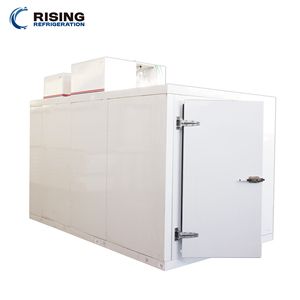
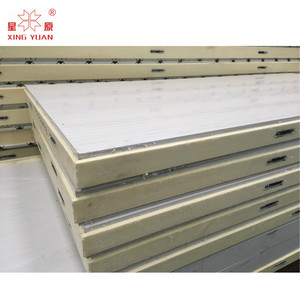
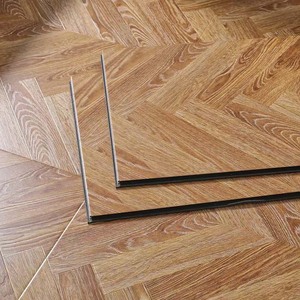
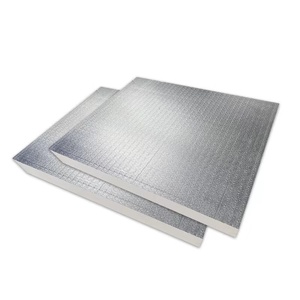
A rigorous examination of subterranean freeze-thaw cycles, moisture vapor diffusion reversal, and TEK17 compliance in Scandinavian thermal envelope design.
In Norwegian industrial facilities, designing an insulated floor for deep-chill (-18°C to -28°C) and blast-freezing (-35°C to -40°C) operations involves vastly greater structural and thermodynamic complexity than wall or ceiling envelopes. Unlike ambient building foundations, a sub-zero floor slab creates an artificial, permanent thermal sink. Over continuous multi-year operational cycles, heat is inexorably drawn out of the sub-base earth. Without scientifically verified insulation thickness, impermeable continuous vapor barriers, and active subfloor warming mechanisms, the 0°C isotherm inevitably migrates deep into the underlying bedrock or moraine soil.
The subsequent crystallization of subterranean pore water creates hydraulic pressure capable of lifting heavy reinforced concrete floors—a catastrophic failure mechanism known throughout the Nordic cold-chain sector as frost heave (telehiv). As a premier direct manufacturer and global exporter, our floor panel systems and heavy-load extruded polystyrene (XPS) sub-slab formulations are calculated specifically to meet Norwegian Building Authority (Direktoratet for byggkvalitet - DiBK) TEK17 regulations, ensuring structural floor longevity across harsh environments from Rogaland to Finnmark.
Detailed analysis of vapor barrier reversal, dynamic forklift wheel deflection, and thermal bridge elimination.
In typical heated Norwegian buildings, vapor pressure drives moisture outward. In commercial cold rooms and freezers, this vector completely reverses: external ambient air at +20°C and 80% RH exerts massive vapor drive (over 1,800 Pa) inward toward the cold chamber (-25°C, ~150 Pa).
Standard moisture membranes inevitably degrade under this continuous delta. Our floor systems utilize 0.8mm to 1.2mm continuous hot-dip galvanized or stainless steel sub-skins coupled with overlapping butyl-mastic seals, achieving a water vapor permeability rating approaching absolute zero (sd > 1,500m).
Logistics hubs in Oslo and Bergen utilize automated reach trucks, counterbalanced forklifts, and AGVs carrying pallets up to 1,500 kg. Standard building insulation experiences catastrophic cyclic cell fatigue and progressive floor deflection under narrow poly-wheel tire contacts exceeding 4.0 N/mm².
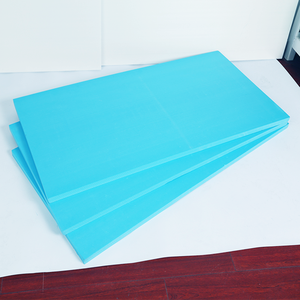
We manufacture high-density expanded polyurethane (PUR) and extruded polystyrene (XPS) with compressive strengths calibrated from 300 kPa to 700 kPa at 10% deformation, strictly testing for long-term creep under EN 1606 standards to guarantee zero sub-floor settlement across 25+ years.
Severe frost lines frequently develop at the perimeter where vertical wall sandwich panels meet the structural base. If the cold room floor lacks thermal continuity with the wall insulation core, high heat loss generates permanent frost rims, ice accumulation, and hazardous slip surfaces.
Our proprietary recessed floor cam-lock joinery and high-density PVC thermal break profiles fully decouple the structural concrete from internal floor skins, assuring compliance with NS-EN ISO 10211 linear thermal bridge criteria (Ψ ≤ 0.01 W/m·K).
Select the optimal core density, fire reaction rating, and compressive capacity for your Norwegian facility profile.
| Insulation Core Type | Nominal Density | Thermal Cond. (λ) | Compressive Strength | Reaction to Fire (EN 13501) | Best Fit Application |
|---|---|---|---|---|---|
| High-Load XPS Sub-Slab | 38 - 48 kg/m³ | 0.033 W/m·K | 350 - 700 kPa | Euroclass E / Bfl-s1 (under slab) | Heavy automated high-bay warehouses, forklift logistics hubs in Greater Oslo. |
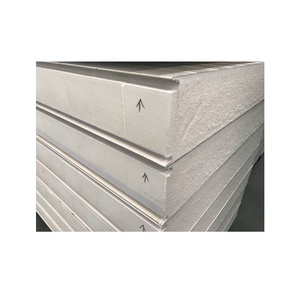
| High-Density Rigid PIR | 42 - 45 kg/m³ | 0.021 - 0.023 W/m·K | 220 - 280 kPa | Euroclass B-s1, d0 | Direct cam-lock walk-in panels, blast freezers, pharmaceutical cold stores. |
| Phenolic Foam (PF) Board | 50 - 60 kg/m³ | 0.020 W/m·K | 180 - 220 kPa | Euroclass B-s1, d0 (Low Smoke) | High fire-risk sorting ante-rooms, food prep floors requiring minimal ceiling drop. |
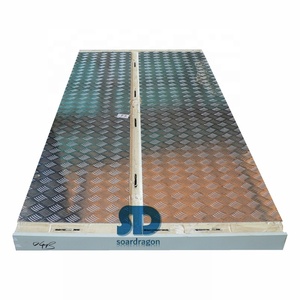
| Marine Chequered PU Panels | 42 kg/m³ Core | 0.022 W/m·K | 200 kPa (surface plate load 15kN) | Euroclass C-s2, d0 / Bfl-s1 | Pelagic fishery docks, salmon harvesting walk-in freezers, coastal vessels. |
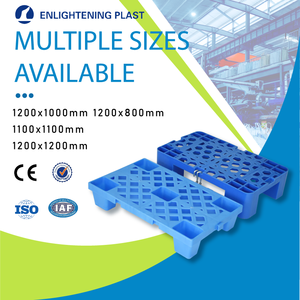
| Perforated Modular PP Slats | 910 kg/m³ (Polymer) | Non-insulating drainage | Static load > 3,500 kg/m² | HB Fire Rated Polypropylene | Seafood processing wash-down zones, air-circulation floors for blast freezing. |
*All test metrics correspond to accredited third-party testing in accordance with ISO 844 (compressive properties), EN 12667 (thermal resistance), and EN 13501-1 (fire classifications).
Purpose-built engineering adapted to regional industry demands across Norway's distinct maritime and continental zones.
Key Locations: Ålesund, Frøya, Bodø, Tromsø, Hitra
Norway is the global leader in salmonid aquaculture and pelagic fishery exports. Processing environments in Western and Northern Norway face constant exposure to salt-laden wash-water, fish blood, organic fats, and aggressive foaming sanitizers (containing sodium hypochlorite and peracetic acid).
Key Locations: Vestby, Gardermoen, Berger, Trondheim
Centralized retail and third-party logistics (3PL) operators in the greater Viken and Oslo corridors maintain high-density automated pallet racking reaching up to 32 meters. Floor foundations must resist intense static post loadings exceeding 120 kN per rack baseplate.
Key Locations: Jæren, Trøndelag, Gudbrandsdalen
Norwegian agricultural centers require strictly regulated ripening and curing chambers where lactic acid, brine, and high relative humidity (up to 95% RH) challenge panel integrity.
Key Locations: Tromsø, Longyearbyen, Ny-Ålesund
In extreme arctic settings with ambient ground permafrost, standard construction techniques fail. Ultra-low temperature (-40°C to -80°C) cryogenic storage demands maximum thermal resistance and zero thermal bridging to avoid melting underlying permafrost lenses.
Adapting your building specifications to Enova energy grants, F-gas transitions, and rigorous carbon accounting.
Norway's governmental agency Enova SF provides substantial capital subsidies for industrial facilities achieving energy performance 20% to 30% beyond standard TEK17 benchmarks. Floor heat transfer represents between 15% and 22% of total operational compressor load in freezers.
By deploying our 160mm to 200mm high-density PIR continuous floor slabs with certified λ-values of 0.021 W/m·K, facility developers achieve floor U-values as low as 0.098 W/m²K, unlocking vital Enova project financing.
Norway aggressively implements the EU F-gas phase-down, driving nationwide adoption of transcritical CO2 (R744) refrigeration. Transcritical CO2 systems operate at exceptionally high heat rejection temperatures on the high-pressure gas cooler side.
Modern Norwegian engineering leverages this surplus heat by routing waste heat through closed-circuit subfloor glycol loops at +5°C to +8°C beneath our XPS insulation layers. Our thermal modeling ensures optimal insulation thickness to prevent freezing sub-soils while maximizing heat sink efficiency.
Major Norwegian real estate institutional investors require BREEAM-NOR v6.0 environmental certification for new logistics centers. Material transparency and Environmental Product Declarations (EPD) are mandatory for tender submittals.
We supply verified third-party verified EPDs according to ISO 14025 and EN 15804 for our PIR and XPS floor panels. Our foam formulation uses zero-ODP and ultra-low GWP hydrofluoroolefin (HFO) blowing agents, contributing directly to Materials Category Mat 01 credits.
Authoritative answers addressing building codes, shipping logistics to Norwegian ports, and installation best practices.
Under Norwegian TEK17 (Byggteknisk forskrift § 14-2), cold storage rooms operating at standard chiller temperatures (+2°C to +4°C) generally mandate an overall U-value ≤ 0.15 W/m²K, which corresponds to 100mm–120mm of rigid PIR core insulation. For commercial low-temperature freezers (-20°C to -28°C), the recommended engineering benchmark is U ≤ 0.11 W/m²K, requiring a minimum of 150mm to 200mm of high-density PIR or 180mm to 220mm of high-load XPS. For blast freezers operating down to -40°C, a dual-layer staggered installation of 240mm total thickness is typically specified to eliminate thermal bridging and limit heat influx.
Frost heave occurs when ground water beneath a sub-zero freezer freezes into ice lenses, expanding by ~9% in volume and exerting upwards hydraulic thrust on the slab. In Norwegian projects, we advocate a multi-barrier defense: (1) Excavating non-frost-susceptible crushed rock base (pukk/grus) down to bedrock or well-drained levels; (2) Installing an active subfloor heating system—either electric trace heating cables in plastic conduit or a closed-loop hydronic glycol pipe grid utilizing waste heat from the refrigeration compressor's desuperheater; (3) Laying a continuous 300–700 kPa compressive XPS insulation blanket above the heated zone; and (4) Installing a high-density, double-welded polyolefin vapor barrier.
Our PIR cold room floor and wall panels are certified to Euroclass B-s1, d0 under NS-EN 13501-1, denoting very limited fire contribution, lowest-category smoke emission (s1), and no burning droplets (d0). For sub-slab structural applications, our XPS core boards achieve Euroclass E or Bfl-s1 when encapsulated under reinforced concrete wearing slabs, meeting the fire containment and compartmentation requirements established by the Norwegian Fire Protection Association (Brannvernforeningen) and local municipality fire marshals.
Yes. We manufacture two distinct systems based on traffic typology: For direct walk-in operations with hand pallet trucks up to 1,500 kg total gross weight, our prefabricated floor panels incorporate a 12mm–18mm WBP marine-grade birch plywood spreader core sandwiched beneath a 3.0mm 5-bar slip-resistant checkered aluminum or 1.5mm 304 stainless steel surface plate. For heavy industrial warehouses utilizing 3-wheel to 4-wheel electric forklifts (gross axle loads up to 60 kN), we supply heavy-density XPS insulation blocks (compressive strengths of 400, 500, or 700 kPa at 10% deformation according to EN 826), designed to sit beneath a cast-in-place fiber-reinforced structural concrete wearing slab (påstøp).
We manage comprehensive international export logistics directly into key Norwegian maritime hubs including Oslo Port (Sjursøya), Bergen (Skoltegrunnskaien), Ålesund, Trondheim, and Tromsø. Cargo is packed in seaworthy, high-cube 40ft containers or specialized break-bulk vessels with edge-protection cushions, water-tight polyethylene wrapping, and desiccants to resist condensation during Arctic transit. We provide all export documentation, including EUR.1 or commercial invoices with preferential origin statements, allowing seamless customs clearance through the Norwegian Customs Directorate (Tolletaten). Deliveries can be structured on CIF, DAP, or DDP Incoterms directly to your staging yard.
Completely. Floors within Norwegian salmon slaughterhouses (lakseslakteri) and whitefish handling hubs are exposed to alkaline cleaners, organic sanitizers, and hyper-saline brine. Our specialized floor panels utilize acid-resistant AISI 316 stainless steel or marine-grade anodized aluminum (AlMg3 alloy), fused with polyurethane adhesive under high-pressure press conditions. Joint seams are permanently sealed with food-safe MS polymer sealants resistant to fungal growth, meeting both Mattilsynet and EU Regulation (EC) No 852/2004 food contact safety standards.
Global production volume, strict ISO certified quality assurance, and project-specific technical tailoring.
Continuous twin-belt foaming lines provide immense daily volume, assuring on-time delivery for multi-thousand square meter logistic distribution center tenders.
Strict quality control from raw MDI/polyol formulation inspection to finished dimensional tolerance verification (±0.5mm) under accredited international standards.
We do not push fixed catalog sizes. Panel thicknesses (50mm–250mm), cladding alloys, cam-lock positions, and core densities are manufactured precisely to your project drawings.
Extensive international experience supplying harsh-environment facilities across coastal, desert, and arctic regions with proven multi-decade durability records.
Submit your architectural layout, operational temperature profiles, forklift wheel axle data, and port of destination. Our technical sales engineering department provides structural load calculations, thermal U-value modeling, and a CIF/DAP quotation within 24 hours.
Our sales engineers respond to project questions during working hours (GST+4).