
Direct factory manufacturing of modular cold rooms, deep-freeze doors, high-density PIR/PUR panels, and structural floor systems specifically designed for German food distribution hubs and maritime port facilities.
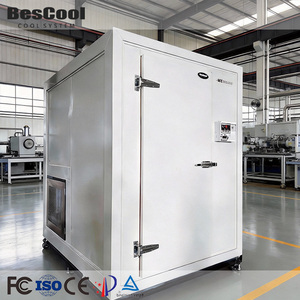
High-efficiency cam-lock polyurethane panels for vegetable, dairy, and meat distribution with precision temperature management down to -25°C.
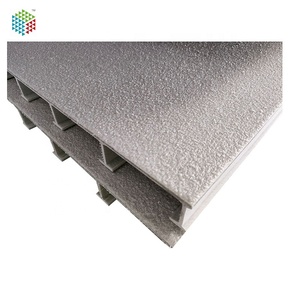
Corrosion-proof fiber reinforced polymer decking, optimal for wet food processing areas, loading docks, and high-salinity Elbe riverside facilities.
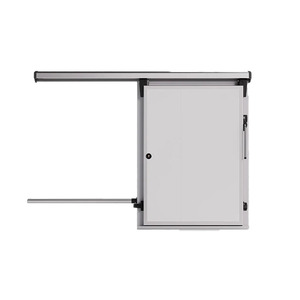
Automated electric sliding freezer door with integral perimeter trace heating, reducing heat ingress in high-frequency Hamburg logistics hubs.
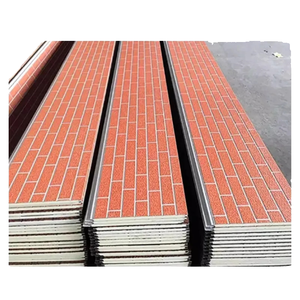
Trapezoidal crown profile with polyisocyanurate core. Engineered for massive industrial roofs requiring high load-bearing capacity and solar PV integration.
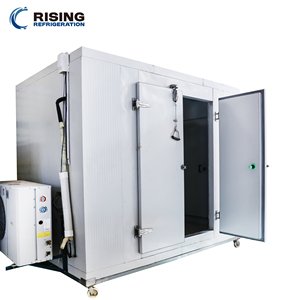
FM-certified insulated panels providing verified fire-resistance and stringent joint thermal barrier isolation for reduced industrial insurance premiums.
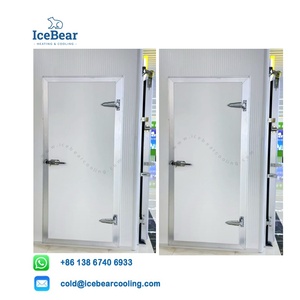
Lightweight, impact-absorbing aluminum hinged doors engineered for local reefer delivery fleets and intermodal container transshipment.
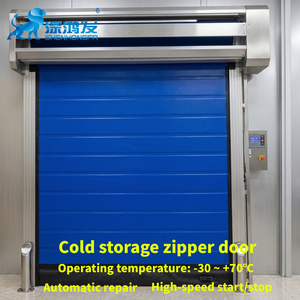
Rapid vertical roll-up insulated doors for high-throughput forklift corridors. Features automated zip re-insertion and superior air boundary containment.
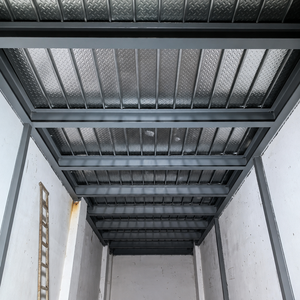
High-yield galvanized profile decking eliminating timber formwork in multi-tier cold store construction and mezzanine refrigeration machinery platforms.
As the third-largest container port in Europe and Germany’s primary gateway for temperature-sensitive perishable imports, Hamburg occupies a unique geographic and climatic position. Cold storage facilities constructed across the Port of Hamburg (Hafen Hamburg), Altenwerder, Waltershof, Billbrook, and the extended metropolitan region face a harsh maritime microclimate governed by the tidal Elbe River and the North Sea weather systems. This environment subjects building envelopes to relentless relative humidity (averaging 75% to 85% year-round), severe saline atmospheric corrosion (C4 to C5-M classification), and abrupt thermal transitions.
In cold storage and blast-freezing installations operating between -5°C and -35°C, the vapour pressure differential ($ΔP_v$) between the humid external maritime atmosphere and the sub-zero internal environment can exceed 2.5 kPa. Under such continuous vapour drive, even microscopic discontinuities in panel tongue-and-groove joints will induce moisture penetration, leading to interstitial ice formation, accelerated delamination, and catastrophic thermal degradation. Standard commercial sandwich panels fail prematurely in this corridor unless specifically configured with closed-cell polyisocyanurate (PIR) cores, labyrinthine joint profiles, and marine-grade coil coatings.
| Insulation Thickness | PIR U-Value (W/m²·K) | PUR U-Value (W/m²·K) | Rockwool U-Value (W/m²·K) | Recommended Hamburg Application Scenario |
|---|---|---|---|---|
| 100 mm | 0.21 | 0.24 | 0.38 | Refrigerated Loading Docks, Ambient Prep Rooms (+8°C to +14°C) |
| 120 mm | 0.18 | 0.20 | 0.32 | Medium Chiller Rooms, Supermarket Cold Logistics (0°C to +4°C) |
| 150 mm | 0.14 | 0.16 | 0.26 | Commercial Deep-Freeze Storage, Fish/Meat Buffer Hubs (-18°C to -22°C) |
| 180 mm | 0.12 | 0.13 | 0.22 | High-Throughput Distribution Cold Stores (GEG KfW-40 Standards) |
| 200 mm | 0.11 | 0.12 | 0.20 | Automated High-Bay Deep Freezers, Blast Freezing Units (-28°C to -35°C) |
Under the revised German Gebäudeenergiegesetz (GEG), industrial cold logistics operators in Northern Germany are subject to stringent overall primary energy consumption thresholds. Selecting a PIR core with a verified aged thermal conductivity of $λ = 0.022\text{ W/m}\cdot\text{K}$ reduces overall building transmission losses by up to 45% compared to conventional expanded polystyrene (EPS) and saves up to 18% in total structural wall thickness relative to standard polyurethane (PUR). This volumetric optimization directly translates into higher cubic pallet storage density in expensive logistics zones adjacent to the Hamburg container terminals.
From reefer container devanning at Altenwerder to automated pharma cold storage at Hamburg Airport, our sandwich panel systems address distinct local infrastructural challenges.
Facilities located in Waltershof, Altenwerder, and Steinwerder handle massive volumes of imported bananas, tropical fruits, and frozen seafood. Our 150mm to 200mm PIR panels provide the continuous structural envelope required for cross-docking bays, where high-speed roll-up doors cycle hundreds of times daily.
In industrial hubs like Billbrook, Moorfleet, and Neuhof, land value necessitates high-bay automated racking cold stores up to 35 meters in height. We manufacture single-piece continuous wall panels up to 16.5 meters long, significantly eliminating horizontal joint vulnerabilities and enabling rapid rack-supported cladding installation.
North Sea fish processing plants require aggressive sanitization using pressurized alkaline and acidic cleaning agents. Our food-grade insulated panels feature 150µm FoodSafe PVC coatings or stainless steel (AISI 304 / 316) skins with non-toxic joint compounds compliant with strict EU regulation (EC) No 852/2004.
Around Hamburg-Fuhlsbüttel and Norderstedt, pharmaceutical distribution demands validated temperature stability between +2°C to +8°C and ultra-cold storage at -80°C. Our tight tongue-and-groove joint geometry ensures Class 4 airtightness according to EN 12207, eliminating room-to-room thermal divergence.
With Hamburg mandating photovoltaic systems on newly renovated and newly constructed industrial roofs, our high-strength PIR trapezoidal roof panels combine structural spanning capability up to 3.5m between purlins with tested clip-fixing compatibility for solar photovoltaic panel arrays.
To comply with local Hamburg fire protection authorities (Feuerwehr Hamburg) and VdS insurance guidelines, large logistics properties require internal firewalls. Our Rockwool mineral wool panels deliver up to 240 minutes (EI 240) of non-combustible protection while preserving insulation continuity.
Regulatory shifts, sustainability obligations, and supply chain resilience are reshaping cold room procurement across the metropolitan region of Hamburg.
Thermal specifications have tightened significantly. German general contractors no longer accept panels with high blowing-agent emissions. Our panels utilize zero-ODP, low-GWP pentane blowing technology, satisfying both DGNB Gold and BREEAM Excellent environmental scoring metrics.
Property underwriters across Germany, including Allianz and FM Global, enforce strict reaction-to-fire standards. PUR panels are increasingly superseded by PIR formulation (PIR Class 1) achieving B-s1, d0 classification under DIN EN 13501-1, which effectively prevents flame spread and noxious smoke generation.
Due to limited greenfield sites in the Port of Hamburg area, contractors heavily rely on retrofitting older masonry and steel warehouses. Modular cam-lock cold storage sandwich panels allow rapid room-in-room installations without modifying historical load-bearing envelopes.
High European domestic producer backlogs have shifted German procurement towards direct factory ocean shipping. Delivering flat-packed, seaworthy containerized panels directly into HHLA container terminals (CTA / CTB) reduces lead times and regional transit costs.
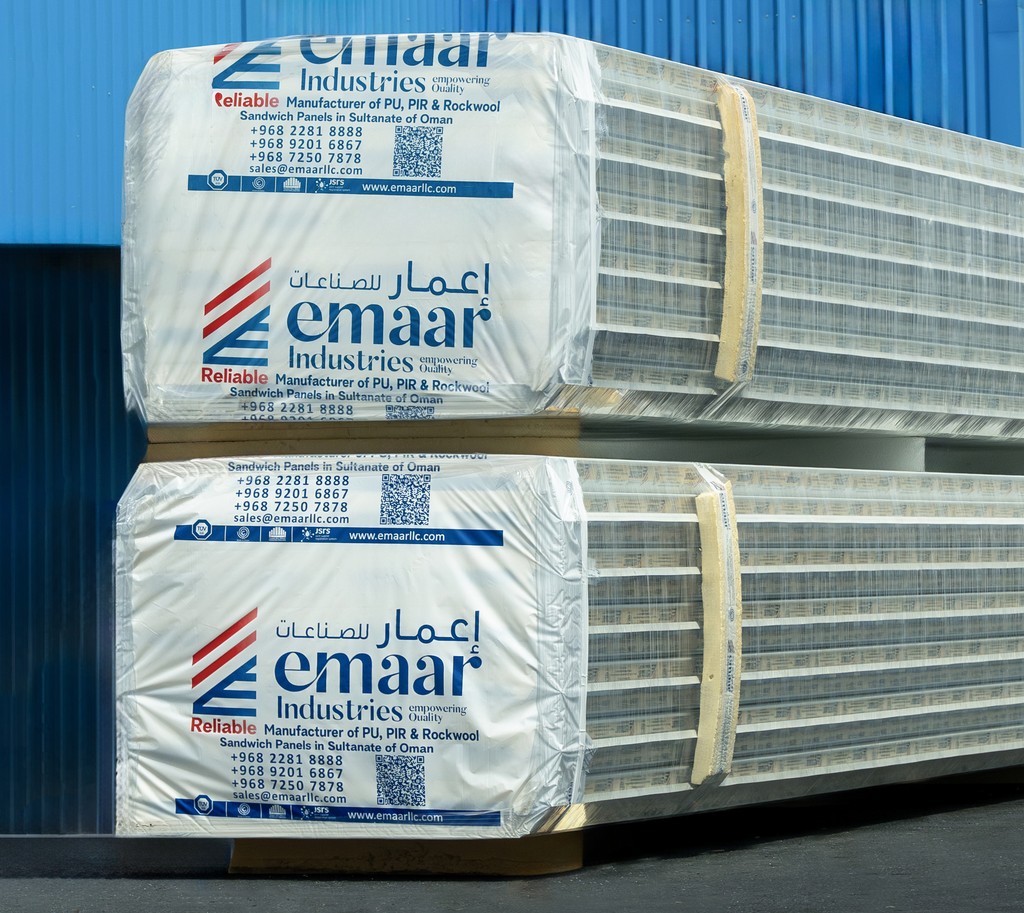
Leveraging over 550 completed projects globally, our production infrastructure delivers customized high-performance sandwich panels and cold-rolled secondary steel components directly to European project sites.
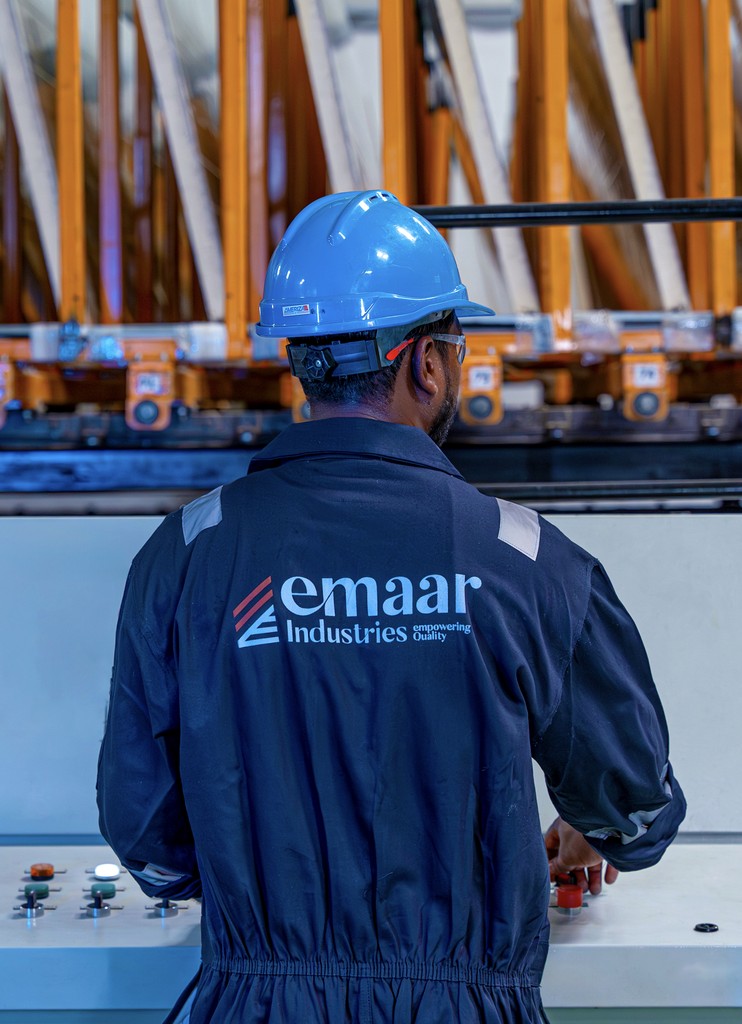
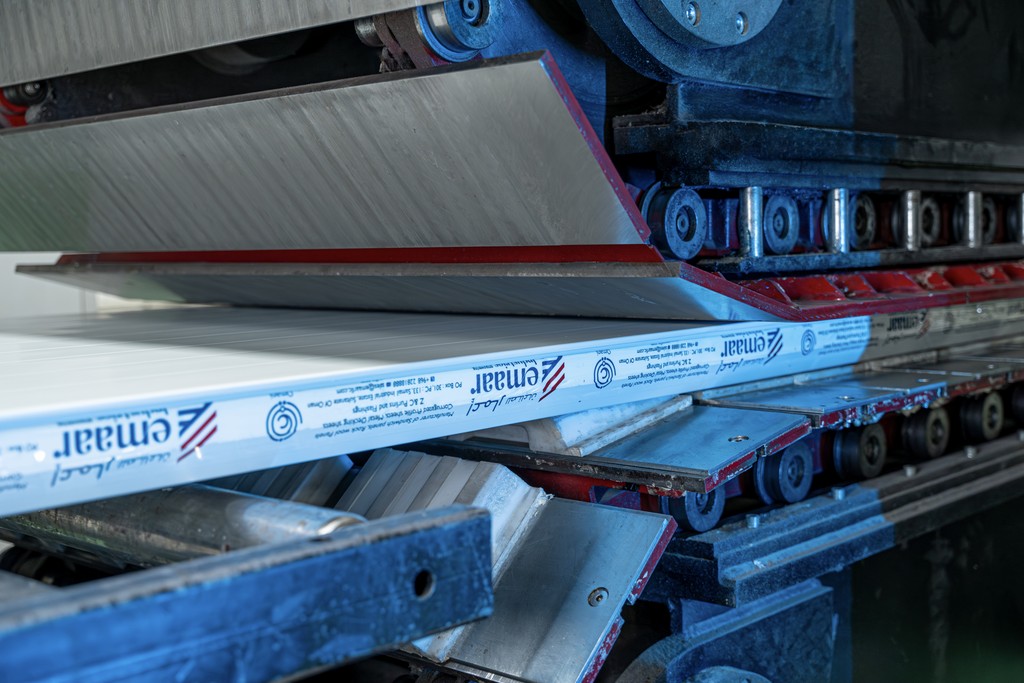
Our modern high-speed continuous foaming lines allow precise density regulation, homogeneous foam expansion, and flawless steel skin bonding. We fulfill major logistics projects requiring 50,000+ m² without batch-to-batch variation.
We formulate our polyisocyanurate cores with a high isocyanate index (>250), ensuring superior carbonization and fire insulation. Non-combustible bio-soluble stone wool cores are integrated on the same advanced lines.
In addition to insulated envelope panels, our factory roll-forms heavy-gauge galvanized steel composite floor decking, Z-purlins, and C-sections. This guarantees complete dimensional alignment and single-source structural compatibility.
Direct technical responses addressing German building regulations, maritime corrosion prevention, static certifications, and logistics coordination.
Share your structural drawings, thermal targets (U-value/temperature), and site specifications with our engineering team. We deliver complete static calculations, panel layouts, and direct containerized freight quotes for Hamburg and European destinations.
Send an InquiryOur sales engineers respond to project questions during working hours (GST+4).