1 / 5

| Uniform Load | |||||
| Span mm | 750 | 1000 | 1250 | 1500 | 1750 |
| Deflection = L/200 | 3.75 | 5.00 | 6.25 | 7.50 | 8.75 |
| Load kg/m2 | 4200 | 1800 | 920 | 510 | 320 |
| Concentrated Line Load | |||||
| Span mm | 750 | 1000 | 1250 | 1500 | 1750 |
| Deflection = L/200 | 3.75 | 5.00 | 6.25 | 7.50 | 8.75 |
| Load kg/m2 | 1000 | 550 | 350 | 250 | 180 |
| Note: The above data has been calculated from measurements made of the full section modulus - EN 13706, Annex D. | |||||
Maximum structural capacity is made possible with unique continuous fiber reinforcements that deliver performance metrics superior to those of other composite products on the market.
An FRP deck is 80 percent lighter than a reinforced-concrete structure. FRP’s weight reduction reduces strain on the bridge’s structure and makes installation easy, fast, and affordable.
FRP can be engineered with ideal structural properties to handle almost any load.
FRP Decking is suitable as a cooling tower floor, for walkways, pedestrian bridge decks and odour control covers or to keep out water penetration in potable and waste water treatment units.
FRP Decking can be used in a number of other applications where its strength, light weight and easy of joining, no theft value, provide important benefits to our final clients.
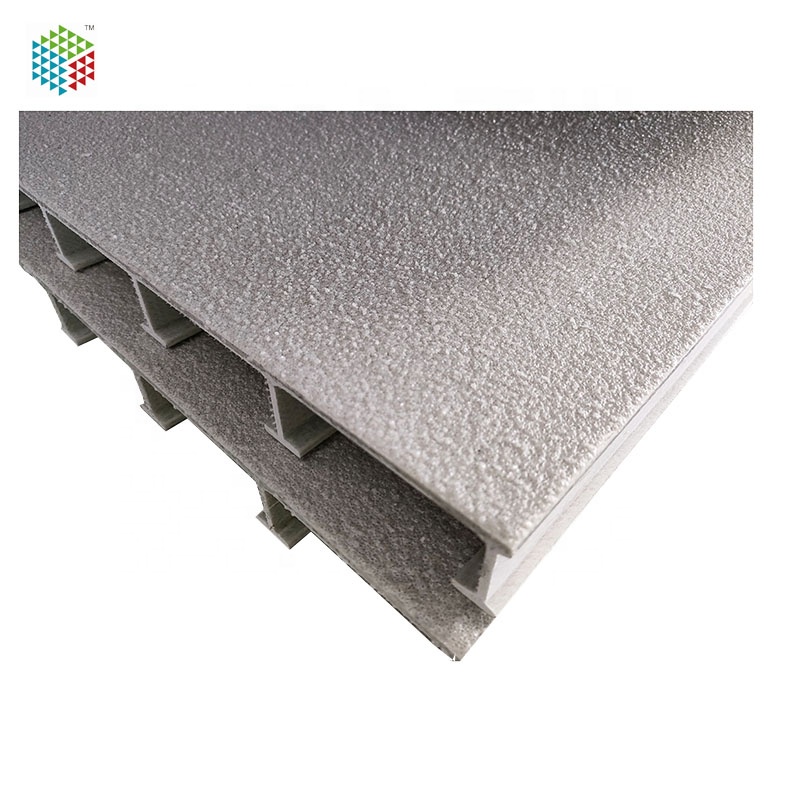
Surface treatment: smooth or gritted.
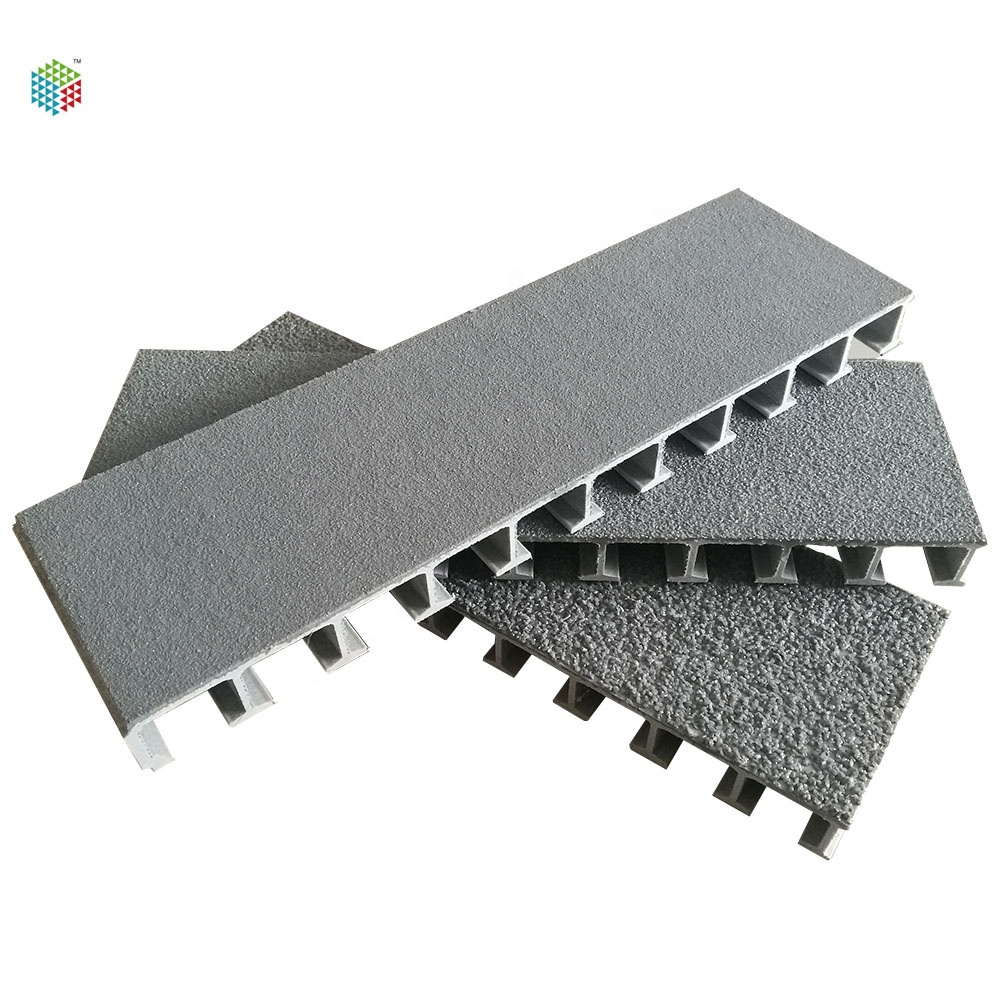
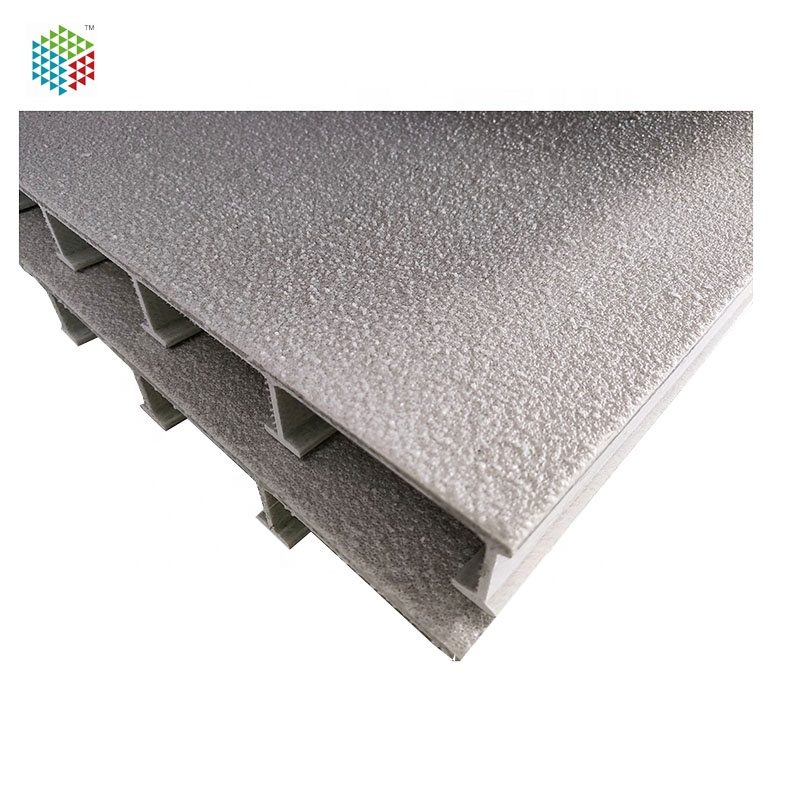
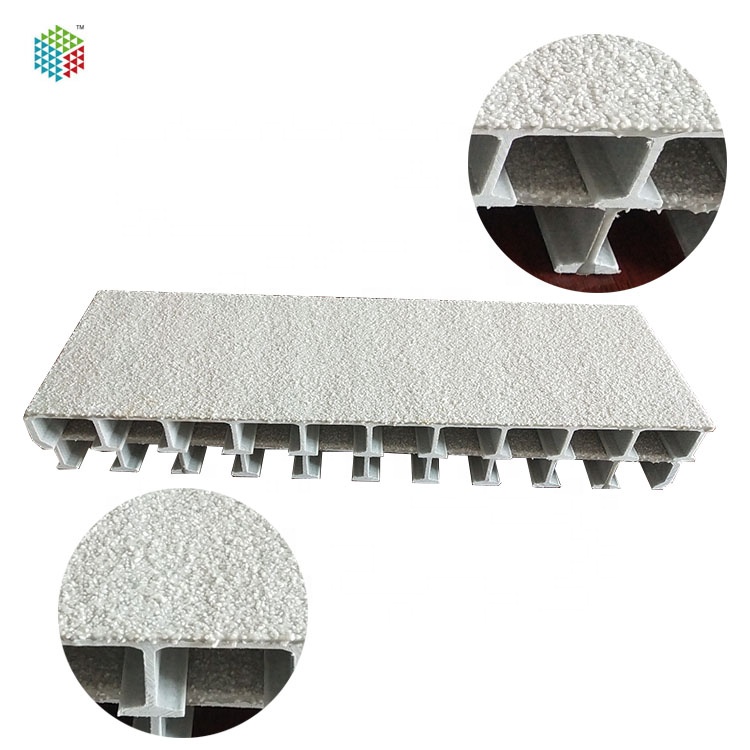
Gritted surface mainly have three types: fine grit,medium grit,coarse grit, please see the picture as below:
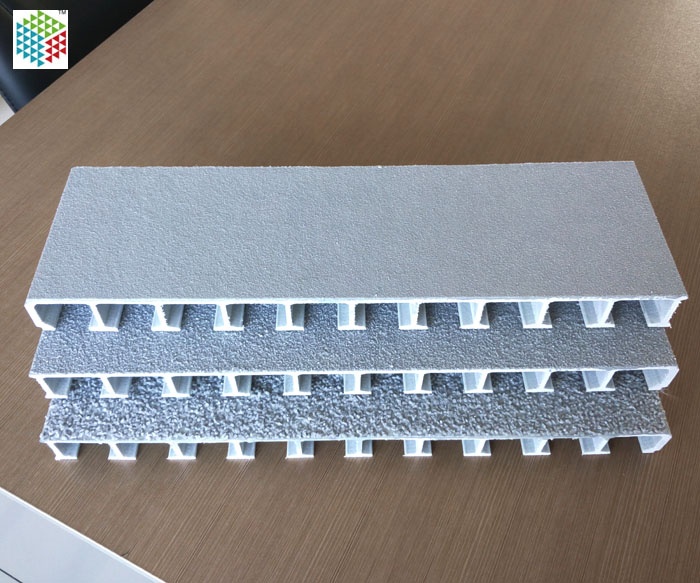
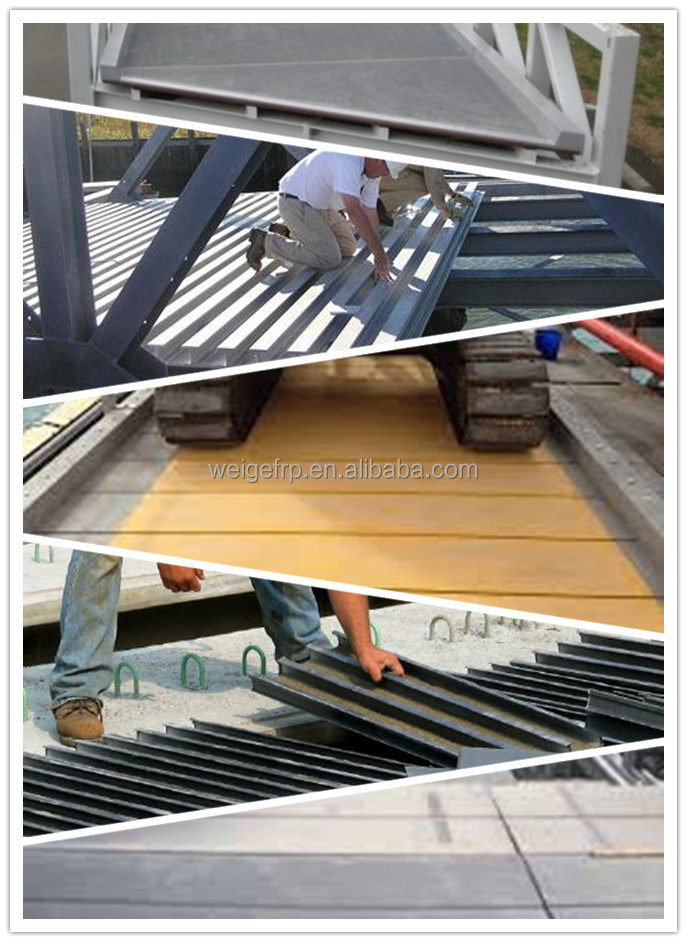
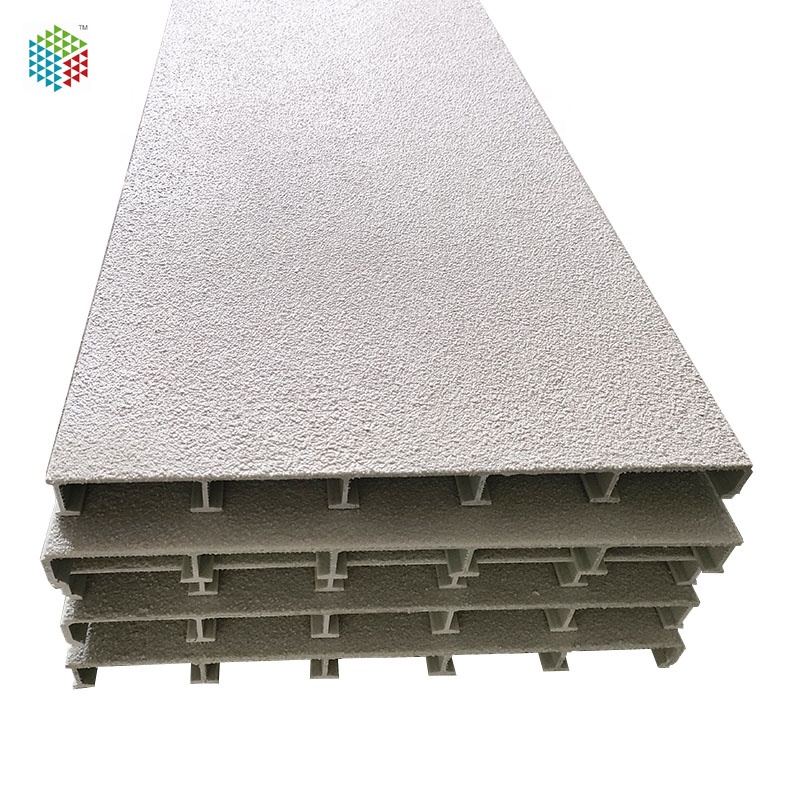
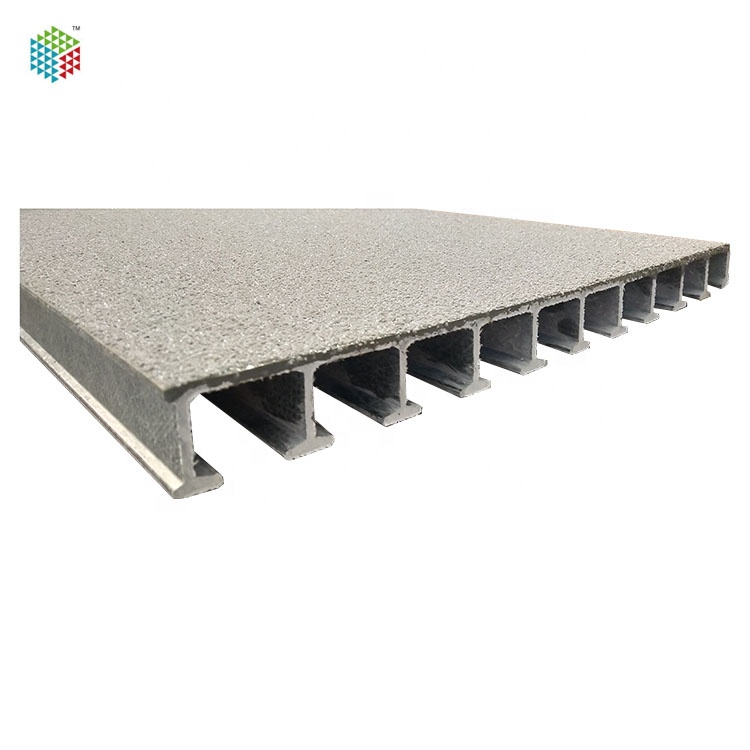
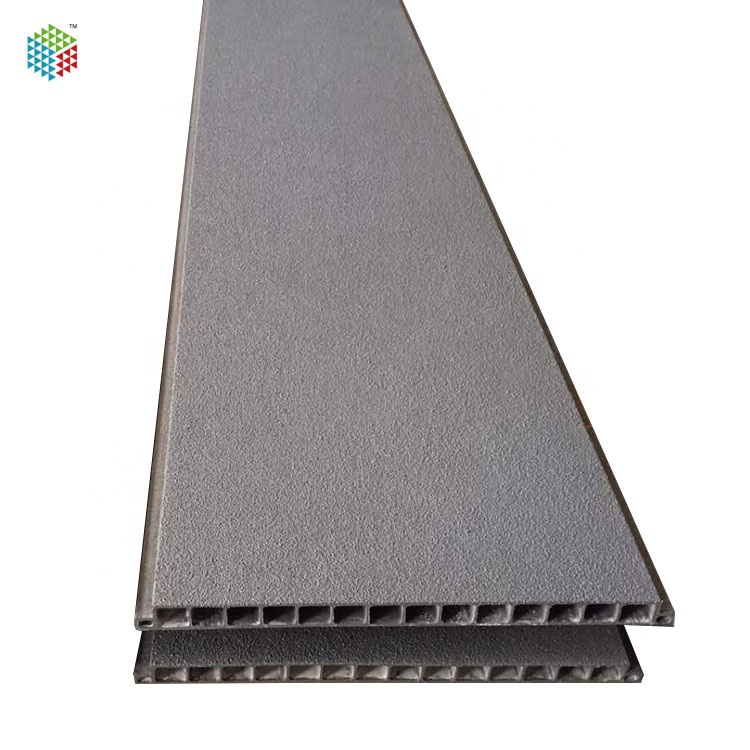
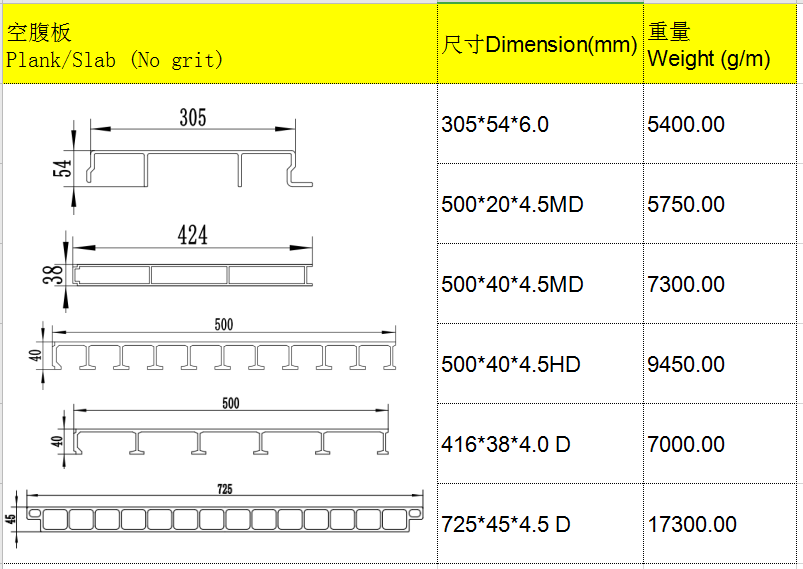
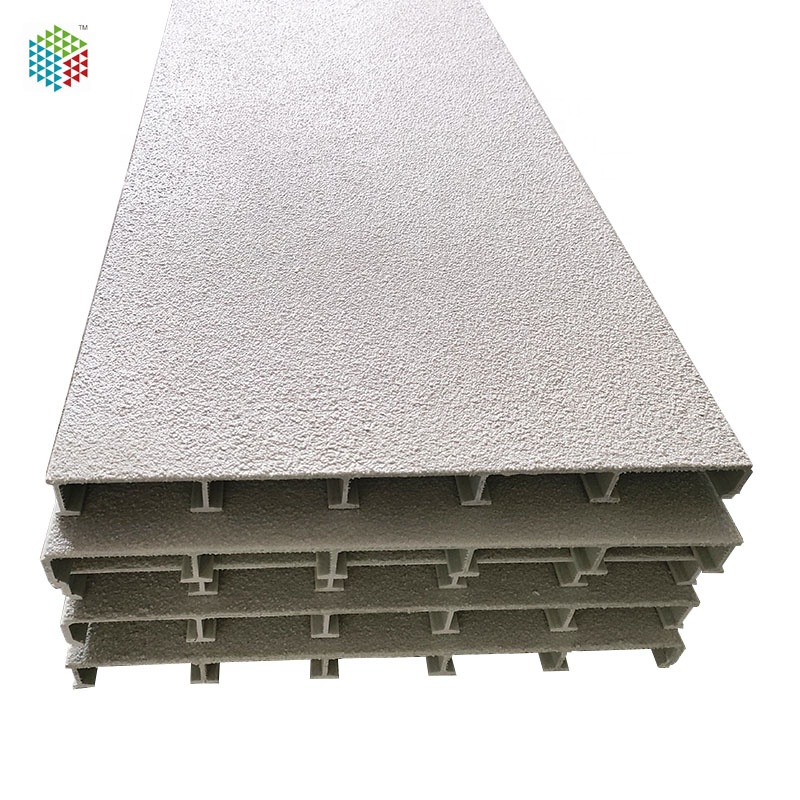
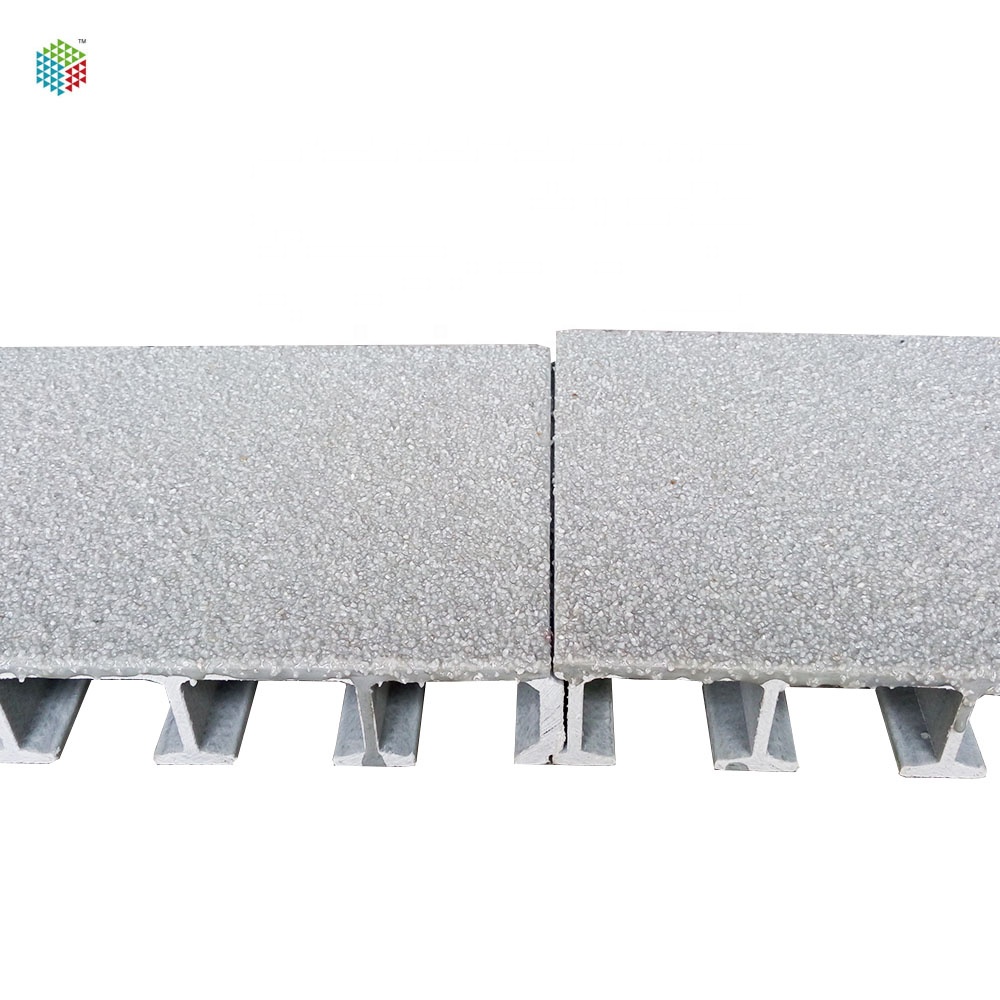
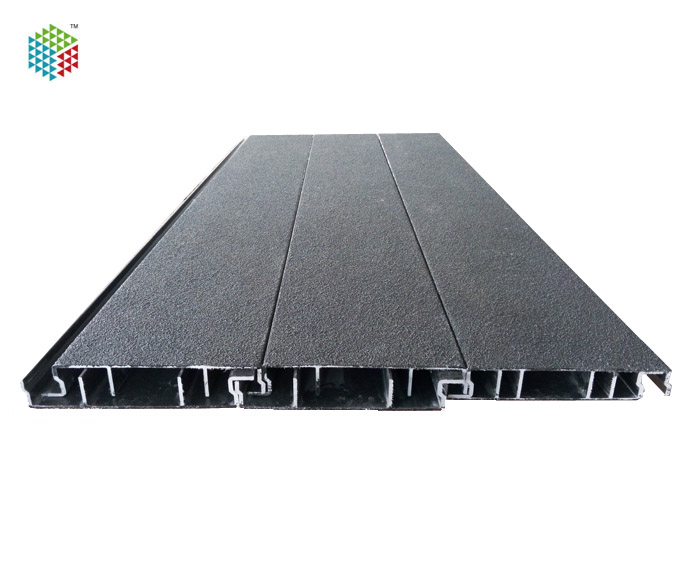
The FRP deck is a one-piece pultruded profile measuring 500mm in overall width and 40mm in thickness. It features a continuous tongue and groove joint running along the length of the plank, ensuring a firm, seamless, and sealable connection between panels.
It spans 1.5m under a design load of 5kN/m² with a deflection limit of L/200. It meets all regulatory criteria of BS 4592-4 (Industrial type flooring Part 5: Solid plates in GRP) and BS EN ISO 14122 part 2 (Safety of machinery - Permanent means of access to machinery), with calculations derived from EN 13706, Annex D.
FRP decking is approximately 80 percent lighter than reinforced-concrete structures. This substantial weight reduction decreases dead loads on supporting infrastructure, simplifies on-site handling, eliminates heavy machinery requirements, and dramatically speeds up installation.
The deck boards are available in either smooth or anti-slip gritted surface finishes. Gritted surfaces are categorized into three textures depending on application needs: fine grit, medium grit, and coarse grit.
It is widely used for cooling tower flooring, industrial walkways, pedestrian bridges, odor control covers, and for containment against water penetration in potable water and wastewater treatment facilities.
Beyond its high structural capacity and non-corrosive properties, FRP materials have no scrap or theft value compared to steel and aluminum, significantly lowering the risk of vandalism and structural tampering in open outdoor installations.
Our sales engineers respond to project questions during working hours (GST+4).