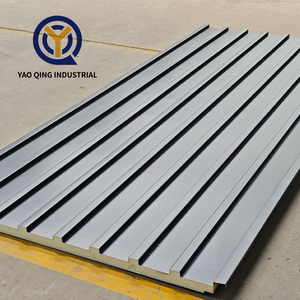
YAOQING Modern Aluminum Alloy Panels Powder Coating Heat Insulation
High-grade decorative architectural aluminum façade siding with PVDF/powder fluoropolymer finishes, delivering thermal dissipation and corrosion defense in high-UV regions.

Engineered for Argentine meteorological extremes: from the subtropical humidity of the Pampas grain hubs to the arid, high-wind gust plateaus of Neuquén and Patagonia.
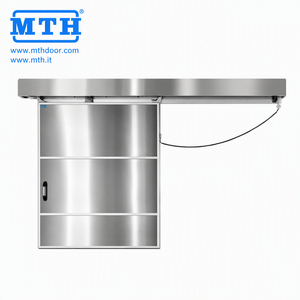
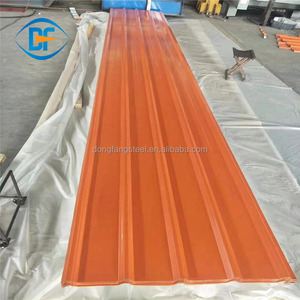
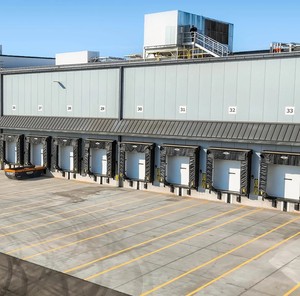
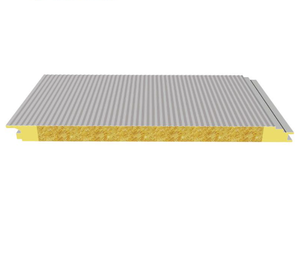
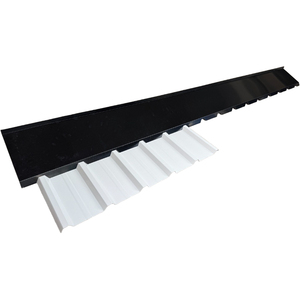
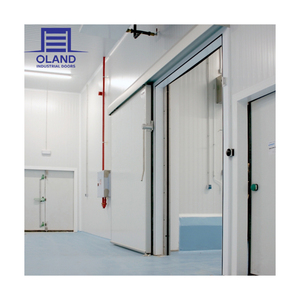
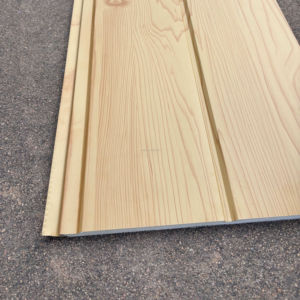
Argentina encompasses four distinct climate zones governed by IRAM 11603. Our continuous insulated cladding panels and structural metal facades are tailored to specific regional conditions.
The Paraná River export terminals (Puerto General San Martín, Timbúes, San Lorenzo) require exterior wall cladding resilient to heavy airborne dust from grain processing, fertilizer vapors, and river humidity. Our Z275 prepainted galvanized and Galvalume steel systems prevent chalking, rust creep, and cyclic thermal expansion across massive storage facilities.
Grain Warehouses & Silo ShedsIndustrial installations throughout Añelo, Neuquén, and Comodoro Rivadavia confront gust velocities exceeding 120 km/h under CIRSOC 102 wind load standards. Our high-shear structural tongue-and-groove PIR panels and cold-rolled C/Z purlin substructures resist cyclic fatigue and wind suction while preventing internal conditioned air leakage.
Mining & Hydrocarbon CampsAs Argentina’s urban grocery logistics scale to meet temperature-controlled supply chain demands, meatpacking frigoríficos and cold storage hubs must eliminate thermal bridges. Our PIR core panels with food-safe plastisol coatings and SUS304 airtight automated door systems ensure compliant hygienic envelopes under SENASA supervision.
Food-Safe & Refrigerated Logistical ParksBalancing thermal conductivity, fire behavior, and structural load demands under Argentina’s IRAM building envelope energy rating standards.
| Insulation Core Type | Thermal Conductivity (λ) | IRAM 11910 / ASTM Fire Rating | Structural Weight Index | Optimal Argentine Regional Use |
|---|---|---|---|---|
| PIR (Polyisocyanurate) | 0.020 - 0.022 W/m·K | Class B-s1, d0 / Flame-retardant charring | Lightweight (38-42 kg/m³) | Refrigerated facilities in CABA, large distribution centers in Rosario and Córdoba. |
| PUR (Polyurethane) | 0.024 - 0.026 W/m·K | Class B3 / Standard self-extinguishing | Lightweight (38-40 kg/m³) | Cost-effective agro-sheds and non-rated standard commercial warehousing. |
| Basalt Rock Wool | 0.038 - 0.042 W/m·K | Class A1 / Non-combustible (up to 120 min) | Medium-Heavy (100-120 kg/m³) | Refineries, power stations, chemical hubs, acoustic partitions in urban commercial buildings. |
| Aluminum Façade Siding | Thermal barrier backing | Surface flame spread index 0 | Ultra-lightweight | Modern commercial frontages, corporate dealerships, and regional administration centers. |
Key economic and regulatory dynamics influencing construction decisions from Buenos Aires to Mendoza.
With national energy subsidies evolving in Argentina, heating and industrial HVAC operational expenses have multiplied. Specifiers are shifting away from uninsulated single-skin sheets toward 50mm to 100mm PIR insulated sandwich cladding to lower kilowatt consumption and preserve internal environments.
Argentine beef, citrus, wine, and dairy exporters facing audits from the EU, USDA, and China require strict sanitary interior and exterior surfaces. Cladding systems with anti-microbial coatings, food-grade polyester primers, and seamless washable joints are replacing conventional masonry walls.
Given financial macro-volatility, industrial contractors prioritize reducing build cycle times to mitigate inflation exposure. Prefabricated interlocking composite cladding cut to precision lengths allows envelopes of 10,000 m² to be installed in weeks instead of months, reducing on-site labor overhead.
Combining world-class high-speed continuous foaming automation with project-specific structural flexibility.
Automated high-precision computerized dosage lines guarantee core density consistency, eliminating voids, thermal pockets, and structural delamination risks.
Reinforced maritime bundle strapping, heavy polyethylene wrap, and edge protective angles safeguard panel coatings and tongue-and-groove profiles on transit to Buenos Aires and Zárate.
Coil coatings tested against ASTM B117 salt spray, ASTM G154 accelerated weathering, and solar reflectance indices (SRI) to resist solar UV degradation.
Our technical team converts project blueprints into optimal panel cut lists, flashing junction layouts, and structural load recommendations to reduce site scrap.
Addressing structural, regulatory, financial, and logistical queries raised by Argentine architectural studios and contractors.
Our technical office calculates panel thickness, skin gauge (0.4mm to 0.7mm steel), and purlin span capacity based on local CIRSOC 102 wind maps. For high-velocity wind zones like Patagonia, we provide reinforced through-fix and concealed fastener profiles with high-bearing load distributions.
We provide full commercial documentation tailored to Argentine foreign trade requirements, including detailed commercial invoices, packing lists with net/gross weights per bundle, ocean bills of lading (B/L), certificates of origin, and mill test certificates (MTC) proving steel substrate and core specifications.
PIR delivers a thermal conductivity (λ) of ~0.022 W/m·K compared to EPS at ~0.038 W/m·K. This means a 50mm PIR panel achieves equal or superior thermal efficiency to an 80mm-90mm EPS panel, reducing building footprint and dead load. Crucially, PIR forms an insulating protective carbonaceous char under fire rather than melting.
Yes. Along with main wall cladding panels, we manufacture prepainted galvanized and Galvalume ridge caps, corners, base drip angles, parapet copings, and gutter systems formed from identical coil batches, ensuring exact color matching and uniform weathering across the facade.
For standard inland warehousing, our 25-micron Silicon Modified Polyester (SMP) or High-Durability Polyester (HDP) coatings provide robust scratch and UV protection. For facilities with corrosive vapors or saline conditions near the Paraná River or oceanic ports, we supply PVDF or Plastisol coatings.
Standard manufacturing time is 15 to 25 days depending on panel specifications and total square meters. For ocean freight, panels are stacked in protective nested bundles, enabling 40ft HQ containers to hold between 650 m² and 1,200 m² of panels depending on panel thickness (50mm vs. 150mm).
Connect with our technical facade and insulated panel engineers for thermal calculations, load span recommendations, sample requests, and competitive international CIF freight quotations.
Our sales engineers respond to project questions during working hours (GST+4).