Engineered Building Envelopes & Thermal Enclosure Solutions
Explore our certified portfolio of fire-safe composite cladding, cold chain panels, and engineered structural systems deployed across international logistics hubs and manufacturing zones.
Waterproof Tech
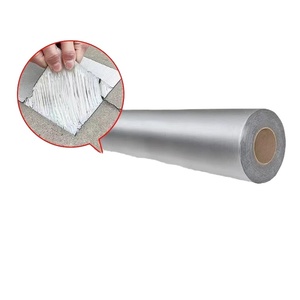
JLY Self-adhesive Butyl Aluminum Foil UV Resistant Waterproof Flashing Tape
Engineered sealing tape with supreme adhesion and heat resistance, essential for airtight building envelopes and exterior waterproofing.
View Technical Specs →
Cold Chain
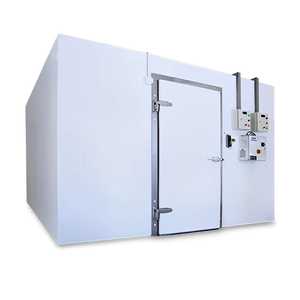
Modular Industrial Cold Storage Room with Integrated Refrigerating Equipment
Precision cam-lock PIR/PUR thermal enclosures designed for temperature-controlled seafood, agricultural, and frozen logistics.
View Technical Specs →
High R-Value
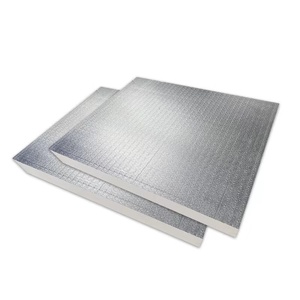
Aluminum Foil Phenolic Foam High-Efficiency Floor Insulation Boards
Low-smoke, non-toxic phenolic foam insulation core delivering superior compressive strength and optimal thermal stability for heavy sub-floors.
View Technical Specs →
Fire Rated A1
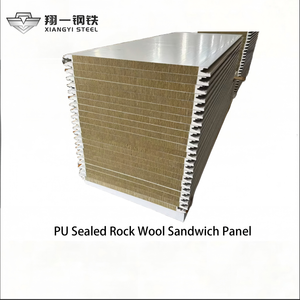
Structural Rockwool Acoustic & Fire Rated Insulation Cladding Panels
Non-combustible stone wool core providing up to 4 hours fire integrity, sound dampening, and rigorous compliance with global fire safety protocols.
View Technical Specs →
Display Systems
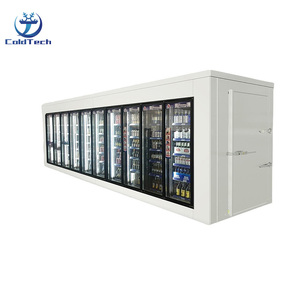
Commercial Grade Walk-in Glass Door Display Cooler with LED Arrays
Anti-condensation thermal multi-pane glass systems integrated into insulated modular frames for retail supermarkets and central distribution.
View Technical Specs →
Hygienic 304 SS
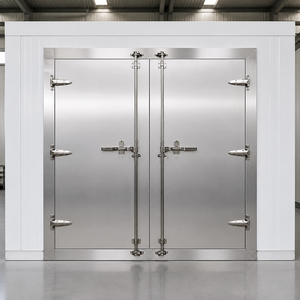
CRYOMAX Heavy-Duty SUS304 Stainless Steel Cold Storage Hinged Doors
Corrosion-proof double-gasketed industrial cold room doors equipped with integrated heating wires and ergonomic escape safety mechanisms.
View Technical Specs →
Structural Deck
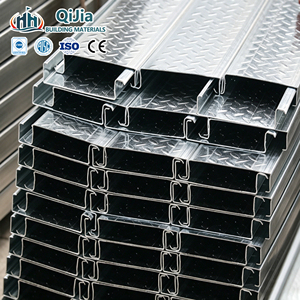
Galvanized High-Tensile Corrugated Composite Steel Floor Decking Panels
High shear capacity roll-formed steel deck functioning as permanent formwork and lateral diaphragms in multi-story steel frame facilities.
View Technical Specs →
Renewable Ready
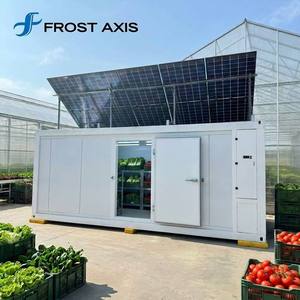
Off-Grid Solar Powered Cold Storage Room with Sanyo/Copeland Systems
Energy-resilient temperature control system pairing high-density PIR thermal panels with high-efficiency photovoltaic integration.
View Technical Specs →
10,000 m²
Daily Continuous Panel Capacity
550+
Global Infrastructure Deliveries
4 Hours
Certified Structural Fire Resistance
0.020 W/m·K
Ultra-Low Thermal Conductivity PIR Core
Comprehensive Engineering Guide: Navigating Structural Fire Resistance & Building Standards for the Japanese Industrial Sector
Japan presents one of the world's most demanding regulatory environments for external architectural claddings, industrial walls, and refrigerated storage warehouses. Navigating the intersection of the Japanese Building Standards Act (Kenchiku Kijun-hō / 建築基準法), stringent seismic shear demands, and severe maritime coastal atmosphere requires specialized material formulations. For global general contractors, Nikken Sekkei-level design firms, and EPC conglomerates managing port facilities in Yokohama, cold-storage logistics along Tokyo Bay, or pharmaceutical plants in Osaka, selecting an export manufacturing partner equipped with documented fire certifications is paramount.
Under the Japanese Ministry of Land, Infrastructure, Transport and Tourism (MLIT / 国土交通省), structural panel cores are categorized into rigorous combustibility tiers: Non-combustible materials (不燃材料, Funen Zairyou - Article 2, Item 9), Semi-non-combustible materials (準不燃材料, Jun-funen Zairyou), and Fire-retardant materials (難燃材料, Nannen Zairyou). Meeting these mandates requires high-density volcanic rockwool (mineral wool with basalt stone fibers oriented perpendicular to surface facings) or advanced polyisocyanurate (PIR) chemistry exhibiting self-extinguishing polyisocyanurate trimer ring molecular stabilization.
Material Science & Structural Comparative Analysis
When selecting sandwich panels destined for modern high-bay automated warehouses (AS/RS) or cleanroom facilities in seismic zones, structural engineers evaluate core performance along three critical vectors: thermal barrier capability (lambda value λ), behavior under direct flash-over flame exposures exceeding 1,000°C, and transverse shear resistance under seismic racking deformations.
- Structural Rockwool Cores (100–140 kg/m³ density): Sourced from natural basalt rocks, rockwool panels are inherently non-combustible with melting points beyond 1,150°C. They release zero toxic cyanogen gases and provide structural partition integrity for up to 240 minutes. They serve as ideal fire-barrier compartment walls adjacent to automated equipment, high-voltage battery charging rooms, and chemical handling corridors.
- Advanced Cyclopentane-Blown PIR Formulations: Delivering lambda values as low as 0.020 to 0.022 W/m·K, PIR provides double the thermal insulation efficiency per millimeter compared to fibrous cores. When subjected to open flames, modern pentane-blown PIR forms a dense carbonaceous surface char layer, preventing fire propagation while maintaining envelope airtightness.
- Sub-Zero Cold Chain Polyurethane (PUR): High-density rigid foam (38–42 kg/m³) tailored for frozen logistic centers (-25°C to -40°C) with tongue-and-groove cam-lock joints that mitigate water vapor transmission, preventing catastrophic sub-skin frost formation common in humid coastal regions.
Seismic Lateral Joint Design & Coastal Corrosion Engineering
Unlike standard static industrial builds across continental Europe or the Middle East, structural envelope components serving Japan must absorb cyclical lateral inter-story drift during seismic tremors without seam rupture. Our fire-rated sandwich panel manufacturing utilizes deep interlocking tongue-and-groove joints integrated with concealed fixing clips and resilient EPDM/butyl elastomeric gaskets. This flexibility allows thermal expansion and horizontal structural sway during earthquakes, preventing cladding shear failures and loss of fire seal integrity.
Furthermore, industrial installations along Japan's coastal belt (such as Tokyo Bay, Kobe Port, and Nagoya) endure persistent salt spray, industrial sulfur dioxide (SO₂), and high ambient humidity. To guarantee a 25-to-30-year operational design life, panels are coated with Polyvinylidene Fluoride (PVDF / Kynar 500), Super Polyester (SP), or 55% Aluminum-Zinc alloy coated steel (Galvalume / ZAM steel sheet), achieving superior salt spray resistance exceeding 1,500 hours in accordance with JIS Z 2371 testing procedures.
Engineered Applications Across Japanese Industrial Sectors
From next-generation temperature-controlled cold chains to high-density cleanroom facilities, our panel envelopes satisfy stringent operational metrics.
Tokyo Bay Cold Chain & Port Hubs
Ultra-thick PIR and phenolic floor systems configured for -30°C seafood, meat, and dry-ice vaccine distribution depots. Designed with impervious thermal breaks that mitigate coastal condensation and eradicate parasitic thermal transfer.
Semiconductor Cleanrooms & Gigafactories
Class 1 to 10,000 certified non-outgassing partitions. Smooth SUS304 or anti-static coated facings paired with rockwool cores isolate acoustic resonance from HVAC machinery while providing essential fire containment around high-temperature furnaces.
High-Hazard Battery & Chemical Storage
Non-combustible compartmentation built with 150mm–200mm structural rockwool panels. Engineered to withstand intense localized deflagrations, assuring structural stability for four hours while minimizing thermal transmission to adjacent warehouse bays.
Procurement & Development Trends in the Japanese Industrial Real Estate Sector
The logistics real estate market across Japan is undergoing a generational shift driven by three primary forces: rapid expansion of multi-tenant automated fulfillment centers, aggressive national decarbonization policies aiming for net-zero energy facilities (ZEB - Net Zero Energy Buildings), and heightened cold chain resiliency in the wake of climate variations.
1. The Drive Toward ZEB (Net Zero Energy Buildings) Standard Cladding: Architectural developers like Prologis Japan, GLP Japan, and Mitsui Fudosan increasingly enforce strict U-value thresholds on external wall envelopes. Conventional uninsulated sheet metal is being displaced by 75mm–100mm PIR panels, achieving envelope U-values under 0.22 W/m²·K. This substantially decreases refrigeration and HVAC power consumption, directly supporting corporate ESG compliance and qualifying developments for government green construction subsidies.
2. Automation & Robotic AS/RS Fire Compartment Separation: Automated Storage and Retrieval Systems (AS/RS) pack extreme combustible density into high-ceiling facilities. Japanese municipal fire authorities (Shobōsho / 消防署) enforce localized fire compartmentalization to restrict fires to single structural bays. The demand for lightweight, high-span vertical rockwool sandwich panels that install rapidly without on-site wet masonry works has risen by over 35% year-over-year.
3. Supply Chain Near-Shoring & Diversified Global Sourcing: To hedge against domestic manufacturing backlogs and rising local steel costs, major general contractors (Taisei, Shimizu, Obayashi, Kajima) are partnering with certified overseas manufacturers capable of delivering factory-direct, millimeter-accurate customized panel lengths with traceable material test reports (MTRs) and mill sheets.
Why Global Contractors Partner with Our Manufacturing Hub
Leveraging state-of-the-art continuous panel production lines, extensive engineering documentation, and verified logistics networks to supply top-tier projects globally.
High-Throughput Continuous Production
Our automated continuous manufacturing lines achieve up to 10,000 m² of daily output. Precision roll-forming and high-pressure chemical dosing guarantee uniform core density, impeccable adhesion, and zero internal voiding.
One-Source Envelope Systems
Beyond panels, we manufacture complementary structural secondary steel including cold-rolled galvanized Z & C purlins, metal decking profiles, butyl waterproof flashings, and insulated access doors for a single-source envelope solution.
Export Precision & Sea-Freight Packaging
Every shipment is packaged with heavy-duty protective films, wooden dunnage, reinforced edge protectors, and desiccants to prevent transit corrosion during ocean transport to major ports like Tokyo, Yokohama, Osaka, and Kobe.
Procurement & Technical FAQ for the Japan Market
Direct technical answers addressing regulatory compliance, customs submittals, testing verification, and installation engineering.
Q1: Can your panels be submitted for Japanese MLIT fire certification approval?
Yes. Our non-combustible rockwool panels and flame-retardant PIR systems are backed by ISO 9001 quality manufacturing records, heat release testing reports (comparable to ISO 5660 cone calorimeter standards), and complete raw material Mill Sheets. We provide detailed factory production control (FPC) data necessary for consultant submittals and local Japanese municipal fire authority evaluations.
Q2: How do your panels accommodate seismic horizontal displacement?
Our wall cladding designs feature precision-engineered concealed fixing profiles and slotted clip brackets that enable sliding displacement under lateral cyclic racking. Joint gaps filled with high-grade butyl tape and specialized non-hardening structural mastic absorb building story drift without fracturing steel skins or disengaging the fire barrier.
Q3: What surface coating is recommended for marine environments like Yokohama Port?
For installations situated within 3 kilometers of coastal waters, we configure panels with high-durability 55% Al-Zn alloy coated steel (Galvalume) coated with a 25-micron Kynar 500 PVDF or high-build polyfluorocarbon system. This architecture ensures high resistance against chloride attack, ultraviolet chalking, and industrial sulfur dioxide exposure.
Q4: Can custom panel thicknesses and lengths be supplied to match Japanese modular grids?
Absolutely. While our standard effective widths are 1000mm and 1150mm, core thicknesses can be precisely tailored from 50mm up to 200mm. Panels are custom-cut on automated flying shear lines up to 15 meters in length to seamlessly align with standard Japanese architectural structural bay modules (such as 3.6m, 6.0m, and 7.2m grid spacings).
Q5: What are the lead times and shipping logistics to Japan?
Production cycles typically range from 14 to 21 days depending on total square meters and custom steel coating specifications. Sea-freight transit times to major Japanese container terminals (Tokyo, Yokohama, Nagoya, Osaka, Kobe) are scheduled with tier-1 global maritime carriers, ensuring reliable delivery sequencing directly to construction staging hubs.
Q6: Do you provide secondary structural components and flashing trims?
Yes, we operate an integrated roll-forming division producing high-tensile galvanized cold-rolled Z and C purlins, metal floor decking sheets, and precision CNC-folded flashings. Supplying an integrated envelope system guarantees thermal expansion compatibility, uniform color matching, and airtight seals.
Plan Your Next Project with International Cladding Specialists
Connect directly with our engineering team for comprehensive technical datasheets, CAD joint details, project cost estimations, and custom sample dispatches for testing and design approvals.
