
Explore our precision-manufactured building envelope solutions, thermal insulation composite panels, specialized cold chain doors, and secondary structural components designed for turnkey industrial procurement.
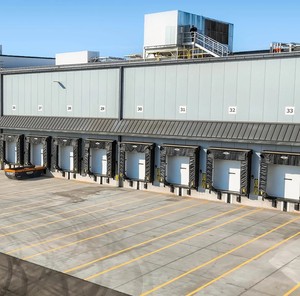
High-load insulated structural wall and roof assemblies engineered for fresh produce, pharmaceutical cold hubs, and automated refrigerated distribution.
View Technical Details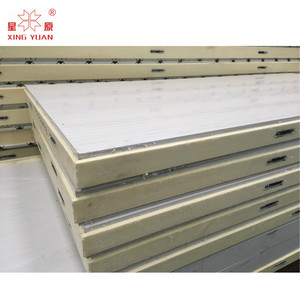
Precision cam-lock tongue-and-groove jointed panels for cold storage enclosures, food preparation facilities, and heavy-duty floor applications.
View Technical Details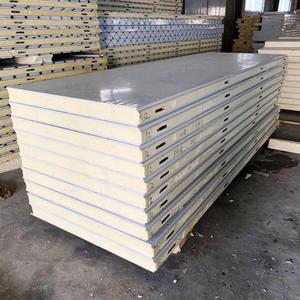
High-density expanded rigid foam cores designed for strict thermal retention, hygienic washdowns, and international commercial building codes.
View Technical Details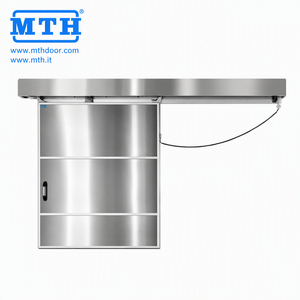
Heavy-duty cold room sliding entrance with perimeter heating trace wires to prevent frost formation in severe negative-temperature zones.
View Technical Details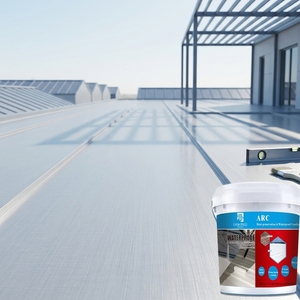
Seamless elastomeric membrane coating engineered to seal metal roof flashings, longitudinal lap joints, and perimeter box gutters against water ingress.
View Technical Details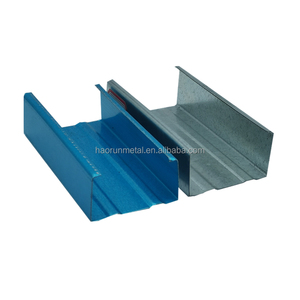
Roll-formed high-tensile galvanized C and Z purlins tailored for secondary roof framing and exterior wall facade support spans.
View Technical Details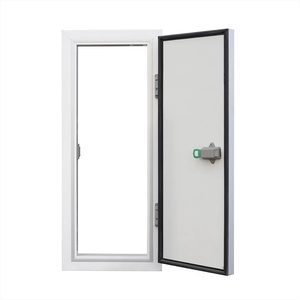
Flush-fit thermal swing doors built with extruded aluminum frames, airtight EPDM rubber gaskets, and heavy commercial internal hardware.
View Technical Details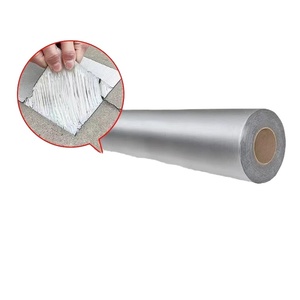
Puncture-resistant butyl tape for instant vapour and water barrier reinforcement across sandwich panel joints, ridge caps, and parapet transitions.
View Technical DetailsA detailed technical evaluation of glass fiber composite sandwich panels (pannelli sandwich in lana di vetro) for architects, structural engineers, and Italian general contractors.
The metropolitan area of Milan and the broader Lombardy region represent one of Europe's densest and most technologically exacting industrial corridors. Industrial envelope specifications in this territory demand an uncompromising balance of Euroclass A1/A2 reaction-to-fire ratings, strict thermal compliance with Italian Climate Zone E (Zona Climatica E) mandates, and superior acoustic decoupling. Glass wool sandwich panels produced on automated continuous laminating lines provide the structural, acoustic, and thermal answers to these complex engineering matrices.
Unlike standard polyurethane (PUR) or polyisocyanurate (PIR) cores, glass wool (lana di vetro) is manufactured from spun biosoluble inorganic glass fibers bonded with thermosetting resins. When engineered into sandwich panel cores, the fibers are reoriented perpendicular to the steel facings via automated lamella-splitting machinery. This perpendicular fiber alignment dramatically increases compressive strength and shear modulus, transforming flexible mineral batting into a rigid, self-supporting structural composite capable of spanning extensive purlin gaps across logistics facilities, pharmaceutical cleanrooms, and commercial complexes.
For specifiers in Lombardy, glass wool offers an undeniable thermodynamic advantage over stone rockwool: significantly lower bulk density (typically 50–65 kg/m³ versus 100–120 kg/m³ for equivalent stone wool) combined with an exceptional thermal conductivity of λ = 0.034 to 0.036 W/m·K. This lower dead weight reduces structural dead loads on primary steel portal frames—a critical efficiency metric under Italy's stringent seismic structural design codes (NTC 2018 - Norme Tecniche per le Costruzioni).
| Insulation Core Type | Thermal Conductivity (λ) | Standard Density | Fire Reaction (EN 13501-1) | Acoustic Decoupling (Rw) | Primary Use Cases in Northern Italy |
|---|---|---|---|---|---|
| High-Density Glass Wool | 0.034 – 0.036 W/m·K | 50 – 65 kg/m³ | Euroclass A2-s1, d0 (Non-Combustible) | 31 – 35 dB (Solid) / up to 46 dB (Perforated) | Logistics parks, urban data centers, manufacturing halls near residential zones |
| Stone Mineral Wool (Rockwool) | 0.039 – 0.042 W/m·K | 100 – 120 kg/m³ | Euroclass A1 / A2-s1, d0 | 30 – 34 dB | Heavy foundry enclosures, high-temperature furnace barriers, strict EI120 firewalls |
| Polyisocyanurate (PIR) | 0.020 – 0.023 W/m·K | 38 – 42 kg/m³ | Euroclass B-s1, d0 / B-s2, d0 | 24 – 27 dB | Temperature-controlled deep cold storage, chillers, controlled atmosphere storage |
| Polyurethane (PUR) | 0.024 – 0.028 W/m·K | 36 – 40 kg/m³ | Euroclass B-s3, d0 / C-s3, d0 | 23 – 26 dB | General agricultural storage, secondary utility sheds, standard low-rise cladding |
The tortuous open-pore microstructure of biosoluble glass fibers dissipates airborne sound energy into heat. When paired with perforated interior liner steel facings, our glass wool sandwich panels achieve a Noise Reduction Coefficient (NRC) up to 0.85, providing immediate compliance with Milan's urban noise pollution ordinances (D.P.C.M. 05/12/1997).
Classified strictly as Euroclass A2-s1,d0 in accordance with EN 13501-1. The mineral glass core does not propagate fire, generates zero flaming droplets (d0), and emits practically no toxic smoke (s1)—a non-negotiable criterion under the Italian Fire Code (Codice di Prevenzione Incendi - D.M. 03/08/2015).
In response to Italy’s mandatory CAM (Criteri Ambientali Minimi) for public infrastructure and private LEED/BREEAM projects, our glass wool cores incorporate up to 60% recycled cullet glass. Each export batch is documented with third-party verified Environmental Product Declarations (EPD).
Understanding the regulatory, climatic, and industrial topology of Northern Italy is essential for successful building envelope deployment.
Lombardy is recognized as the economic powerhouse of Italy, home to Europe's most critical multimodal logistics platforms, chemical and pharmaceutical manufacturing parks, and dense urban redevelopments. Constructing in this territory involves strict regulatory compliance. Milan is situated in Italian Climate Zone E (Zona Climatica E), requiring stringent baseline building envelope thermal transmittance values: exterior wall U-values must not exceed 0.22–0.26 W/m²K, while roof assemblies must satisfy U ≤ 0.20–0.22 W/m²K.
Furthermore, the industrial atmosphere of the Po Valley (Pianura Padana) experiences high ambient humidity in winter, elevated summer temperatures, and localized micro-particulate atmospheric corrosion. To guarantee a 30+ year lifespan without surface blistering or corrosion, our export panels feature hot-dip galvanized steel skins (Z275 zinc coating mass or Zn-Al-Mg alloy) coated with 25-micron high-durability polyester (HDP), polyurethane-polyamide (PUR-PA), or 50-micron PVDF resin finishes.
In intermodal junctions such as Segrate, Pioltello, and Carpiano, high-bay automated warehouses require continuous long-span fire-safe wall panels that minimize perimeter insurance premiums while optimizing thermal envelopes.
Facilities across Monza Brianza and the Milan Innovation District utilize smooth-faced, chemical-resistant glass wool panels to maintain ISO class cleanroom partitions with zero organic vapor outgassing.
Adaptive reuse and urban regeneration projects around Milan's Scalo Farini and Porta Romana require lightweight, high sound-transmission-loss cladding to isolate HVAC plant rooms and commercial retail spaces.
Cold chain air cargo storage centers require thermal integration between glass wool perimeter fire-rated facades and internal PIR/PU insulated cold room partitions with heavy-duty automated doors.
Direct manufacturing sovereignty, certified European compliance, and an optimized supply chain connecting our continuous production lines directly to the Port of Genoa and Milan intermodal terminals.
Every square meter of sandwich panel exported to the European Union complies strictly with harmonized European standard EN 14509 (Self-supporting double skin metal faced insulating panels). Complete factory production control (FPC) records, initial type testing (ITT) dossiers, and Declarations of Performance (DoP) are supplied with every shipment for seamless approval by Italian building inspectors (Genio Civile).
We engineer packaging specifically for open-top or high-cube containerized sea freight, utilizing moisture-barrier polyethylene wrap, edge-protection timber spacers, and vacuum packing. Goods route via regular Mediterranean maritime lanes directly into the Port of Genoa (Genova Pra') or La Spezia, moving effortlessly via bonded customs transit directly to Milan's dry ports (Interporto di Rivalta Scrivia / Busto Arsizio).
Procurement teams bypass intermediary fragmentation. Alongside glass wool and PIR sandwich panels, our facilities produce custom cold-rolled C and Z secondary purlins, composite decking slabs, colour-matched architectural flashing profiles, industrial freezer doors, and elastomeric weatherproofing tapes, ensuring single-source engineering accountability.
Direct engineering and commercial answers addressing Italian building codes, structural calculations, thermal transmittances, and cross-border project delivery.
Our sales engineers respond to project questions during working hours (GST+4).