
Pre-engineered components manufactured under strict ISO 9001:2015 protocols to accompany your cold-formed purlin shipments.
A rigorous examination of section profile efficiency, flexural-torsional buckling mitigation, and metallurgical corrosion resistance under extreme climatic stress.
Structural engineering in the Republic of the Philippines demands uncompromising adherence to the National Structural Code of the Philippines (NSCP 2015, 7th Edition), particularly Chapter 5 (Structural Steel) and Section 505, which governs cold-formed steel structural members. In coastal corridors across Luzon, the Visayas, and Northern Mindanao, wind load designs frequently encounter ultimate basic wind speeds (V_ult) ranging between 250 km/h and 315 km/h (Wind Zones 1 and 2). This induces severe cyclical uplift forces that penalize overweight hot-rolled framing while demanding exceptional strength-to-weight ratios from cold-formed C and Z purlins.
As an audited OEM/ODM manufacturer, our continuous CNC cold roll-forming production lines process certified structural coils conforming strictly to ASTM A653 / A653M, ASTM A1063, JIS G3302, and PNS 67 (Philippine National Standard). Utilizing high-yield cold-rolled steel coils with tensile grades ranging from Grade 50 (345 MPa) up to high-tensile G450 (450 MPa) and G550 (550 MPa), our cold-formed profiles provide optimal flexural capacity while eliminating up to 42% of unnecessary deadweight compared to conventional hot-rolled channels or low-grade angle irons.
| Steel Substrate Grade | Min. Yield Strength (Fy) | Min. Tensile Strength (Fu) | Standard Protective Coating | Atmospheric Durability (ISO 9223) | Typical PEB Application in PH |
|---|---|---|---|---|---|
| Commercial Grade (G300) | 300 MPa (43.5 ksi) | 440 MPa (63.8 ksi) | Z180 (180 g/m² Zinc) | Category C2 (Inland Low Humidity) | Interior partition framing, residential trusses |
| Structural Grade (G450) | 450 MPa (65.2 ksi) | 480 MPa (69.6 ksi) | Z275 (275 g/m² Zinc) | Category C3 / C4 (Industrial / Moderate Marine) | Standard PEB roof purlins, girts, eave struts |
| High-Tensile (G550) | 550 MPa (79.8 ksi) | 570 MPa (82.7 ksi) | AZ150 (Aluzinc 150 g/m²) | Category C4 / C5 (Severe Marine, Coastal Port) | Long-span continuous lapped Z-purlins, heavy solar roofs |
| Marine Severe (G450-HDG) | 450 MPa (65.2 ksi) | 480 MPa (69.6 ksi) | Z350 - Z450 (350-450 g/m²) | Category C5-M (Shoreline Chemical & Marine) | Fertilizer storage, coastal cold chains, agro-industrial sheds |
Selecting the optimal profile geometry is critical to avoiding localized crippling, lateral-torsional buckling (LTB), and distorsional buckling under suction forces.
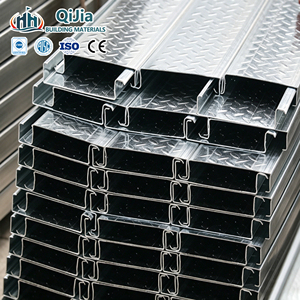
Cold-Formed Z Purlins: Characterized by asymmetric flanges with distinct top and bottom lip angles, our Z-sections are engineered specifically for continuous multispan purlin configurations. By nesting identical profiles back-to-back at interior rafter supports (with standard lap lengths between 10% and 15% of the bay distance), structural engineers develop full negative bending moment resistance over the supports. This dual-thickness overlapping effectively doubles the section modulus (Z_eff) where bending stresses peak, enabling structural spans from 6.0 meters up to 10.5 meters without excessive mid-span deflection.
Cold-Formed C Purlins: Designed with symmetrical channels and return lips, C-sections deliver predictable axial compression and single-span flexural values. They serve as the industry standard for wall girts, door headers, window framing, gable end posts, and floor mezzanine joists. In single-bay arrangements or where continuous lapping is restricted by architectural clearances, C-sections facilitate straightforward direct-bolting connections to structural steel rafters via welded purlin cleats.
The Philippine tropical maritime environment is notorious among corrosion engineers. High ambient temperatures (averaging 28°C to 34°C), sustained relative humidity frequently surpassing 85%, and airborne sea-salt aerosols carried inland by the Northeast (Amihan) and Southwest (Habagat) monsoons create an aggressive electrolytic cell on steel surfaces.
Standard zinc coatings (such as electro-galvanized or Z120 mill coatings) deteriorate rapidly within 24 to 36 months in coastal locations like Batangas, Cebu, Subic, or Cagayan de Oro, resulting in severe volumetric red rust and cross-sectional thinning. To prevent structural failure, our manufacturing facility produces purlins with heavy-gauge protective barriers:
• Hot-Dip Galvanized Z275 (275 g/m² total both sides): Delivers comprehensive sacrificial galvanic protection. Even when field drilling or shear-punching exposes bare steel edges, the surrounding zinc matrix oxidizes sacrificially into a insoluble barrier layer of zinc hydroxycarbonate, sealing micro-fractures.
• 55% Aluminum-Zinc Alloy AZ150 (Galvalume): Offers superior barrier resistance against high-temperature oxidation and acid rain condensates. The aluminum microscopic dendritic network shields the steel core, providing up to 4 to 6 times the service lifespan of traditional galvanized steel in non-alkaline environments.
How our custom OEM/ODM cold-formed steel sections solve unique environmental challenges from Bataan to Davao.
Large-scale e-commerce logistics centers in Laguna, Cavite, and Pampanga demand column-free clear spans of 30 to 60 meters. Our nested continuous Z-purlins optimize purlin spacing to 1.5m, supporting long-run corrugated metal roofing and suspended fire sprinkler systems without sagging or torsional distortion.
With the rapid adoption of solar net-metering across commercial buildings in Metro Manila and Cebu, roofs must support an added dead load of 15-20 kg/m² plus intense localized vortex wind suction on module arrays. We engineer high-strength G550 purlins with custom flange widths to accept specialized aluminum solar rail clamps without drilling.
Intensive broiler farm complexes in Bulacan, Batangas, and Bukidnon experience extreme interior atmospheric degradation driven by evaporated uric acid, ammonia fumes, and high-pressure steam washdowns. We provide specialized heavy galvanized (Z350+) and duplex coated purlins to stop early corrosion above animal pens.
Facilities situated in General Santos, Navotas, or Iloilo combine harsh outdoor maritime salinity with indoor sub-zero temperatures (-25°C to -40°C). Our cold-formed sections support heavy insulated PIR ceiling panels while maintaining structural ductility without cold-temperature embrittlement.
Compliant with DPWH standard specifications for typhoon shelters in Eastern Samar and Bicol, our heavy-gauge C/Z systems integrate CNC slotted holes for heavy sag rods (12mm to 16mm diameter) and diagonal lateral bridging, preventing roof detachment under catastrophic Category 5 gusts.
In space-constrained urban environments like Taguig and Pasig, structural steel fabricators use our cold-formed C-sections alongside composite galvanized metal decking to construct lightweight multi-tier intermediate floors, decreasing foundation piling loads in soft alluvial soils.
Analysis for procurement directors, quantity surveyors, and structural design consultants.
Historically, structural steel contractors in the Philippines relied heavily on imported hot-rolled commercial channels (such as traditional UPN or standard Japanese JIS channels) as roof purlins. However, surging global steel commodity prices and logistics container freight rates have rendered hot-rolled profiles financially uncompetitive. Modern structural engineering offices in Metro Manila have overhauled their standard typical drawings to specify cold-formed high-tensile Z and C purlins (Fy = 450 MPa).
Because cold-formed members concentrate steel thickness directly along the structural perimeters where bending and torsional resistance are physically required, contractors achieve a 35% to 45% reduction in total steel tonnage. On an average 10,000 square meter logistics warehouse, this shift saves between 40 to 65 metric tons of structural framing steel while significantly reducing dead-load stresses on main portal columns, anchor bolts, and foundation grade beams.
With the full implementation of the Philippine Green Building Code (PD 1096 Referral Code) and green rating frameworks like BERDE and LEED, building owners face strict thermal efficiency thresholds (Envelope Overall Thermal Transfer Value - OTTV). Purlin design directly impacts thermal bridging between the exterior metal cladding and the interior air-conditioned volume. Our OEM/ODM factory supplies pre-punched thermal break spacer clips and cold-formed profiles engineered to accommodate thick PIR/Rockwool sandwich roof panels, lowering facility cooling loads by up to 28% in hot, humid provinces.
Under Philippine Department of Labor and Employment (DOLE-OSH) safety guidelines and tight urban building schedules, general contractors are aggressively minimizing on-site cutting, burning, and manual stick-welding at elevated purlin levels. The current standard is 100% factory pre-engineered purlin fabrication.
Our manufacturing line features integrated multi-axis inline CNC punch presses. Purlins are dispatched to Manila, Batangas, or Cebu ports pre-punched with exact round holes, slotted bolt holes for thermal expansion, and sag-rod perforations matching your structural shop drawings. On site, erectors bolt members directly to rafter cleats using high-strength Grade 8.8 bolts, cutting erection times by over 50% while completely eliminating hazardous elevated welding.
Practical answers addressing customs regulations, engineering codes, logistics, and quality assurance.
Combining massive production output with strict metallurgical control and export handling expertise.
Our sales engineers respond to project questions during working hours (GST+4).