
Manufactured on high-speed continuous foaming and precision cold-roll lines, our pre-engineered sandwich panels, purlins, and flashings comply strictly with European harmonized norms (EN 14509) and Swiss construction standards.
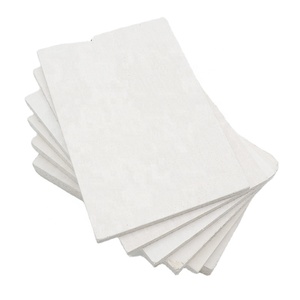
Class A1 non-combustible core configuration formulated for high-density fire compartment barriers and commercial deck assemblies requiring maximum acoustic isolation.
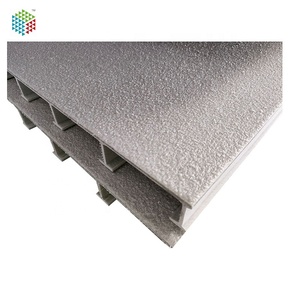
Fiberglass-reinforced polymer composite decking designed for weather-exposed alpine boardwalks, roof plant access ways, and aggressive industrial rooftop platforms.
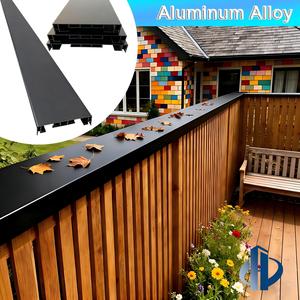
CNC-bent architectural aluminum drip edge profiles, ridge caps, and parapet closures tailored to prevent capillary snow-melt infiltration along Swiss roof edges.
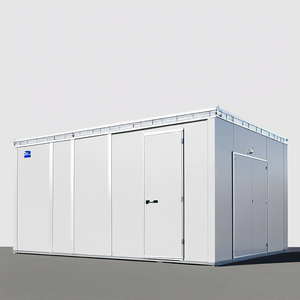
Ultra-dense polyisocyanurate and polyurethane insulated envelope structures up to 200 mm core thickness engineered for sub-zero food logistics hubs in Swiss freight nodes.
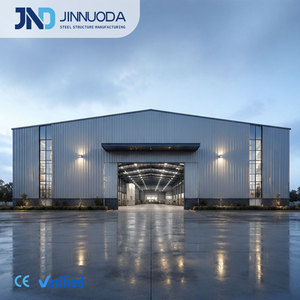
Galvanized cold-formed Z and C purlin structural sub-framing certified under EN 1090 to sustain severe high-altitude alpine snow drifts and wind forces.
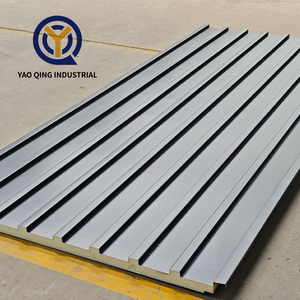
Lightweight architectural alloy-skinned thermal roofing panels featuring premium PVDF coating for luxury chalets, residential villas, and light commercial envelopes.
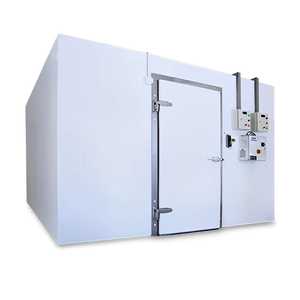
Modular tongue-and-groove jointed panels engineered with continuous vapor-tight sealing for refrigerated pharmaceuticals and food preservation facilities.
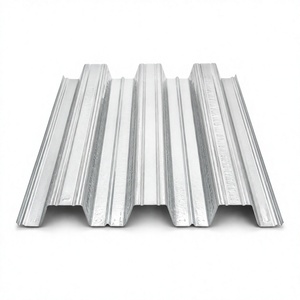
High-load profiled corrugated steel deck providing immediate work diaphragm integrity and primary sub-base support for composite built-up insulated roof zones.
Get custom span calculations, cantonal VKF fire certifications, and direct CIF Basel/Rotterdam pricing.
A rigorous examination of thermal performance, condensation prevention under SIA 180, and heavy snow load resistance dictated by SIA 261.
In the Swiss building sector, specifying roof envelope systems is dominated by two decisive factors: strict energy consumption laws governed by the Cantonal Energy Directors' Conference (MuKEn 2014/2025) and harsh physical actions caused by topography, elevation, and freeze-thaw cycles. Roof sandwich panels featuring a Polyisocyanurate (PIR) rigid foam core have evolved beyond simple cladding materials; they are now primary high-performance thermal diaphragms capable of satisfying Minergie, Minergie-P, and Swiss Federal Net-Zero 2050 targets.
Unlike standard Expanded Polystyrene (EPS) or Mineral Wool systems, pentane-blown polyisocyanurate offers an extremely low thermal conductivity index (λ ≈ 0.020 to 0.022 W/m·K). This molecular density enables structural engineers and architects (Generalplaner) across Zurich, Bern, Basel, and Vaud to achieve high building envelope performance ($U \le 0.12\text{ W/m}^2\text{K}$) with 40% less thickness than traditional mineral fiber assemblies. Reducing panel thickness lowers dead loads on primary steel and glulam timber frames, cuts transport weight through alpine corridors, and maximizes internal clearance inside automated warehouses.
| Panel Nominal Thickness (mm) | Overall U-Value (W/m²·K) [EN ISO 6946] | Permissible Purlin Span (L/200, 3.0 kN/m² Snow Load) | Acoustic Reduction Rw (dB) | VKF Fire Reaction [EN 13501-1] | Recommended Swiss Application |
|---|---|---|---|---|---|
| 60 mm | 0.34 | 1.85 m | 25 (-1; -3) | B-s2, d0 (RF3) | Secondary Agricultural Sheds / Unheated Facilities (Mittelland) |
| 80 mm | 0.26 | 2.25 m | 25 (-1; -3) | B-s1, d0 (RF2) | Standard Industrial Workshops (Zurich / Aargau) |
| 100 mm | 0.21 | 2.60 m | 26 (-2; -3) | B-s1, d0 (RF2) | Standard MuKEn Compliant Warehouses & Depots |
| 120 mm | 0.17 | 2.95 m | 26 (-2; -4) | B-s1, d0 (RF2) | Minergie Standard Commercial & Logistics Hubs |
| 160 mm | 0.13 | 3.40 m | 27 (-2; -4) | B-s1, d0 (RF2) | Minergie-P / High Alpine Altitude (>1000m) Freezers & Data Centers |
From central distribution hubs on the Swiss Plateau to specialized chemical facilities along the Rhine, our PIR panels deliver targeted performance.
Distribution facilities in Egerkingen, Olten, and the Gotthard transit axis require large structural spans and uninterrupted operation under extreme snow build-up.
Cleanroom-adjacent facilities across the Basel-Landschaft biotech cluster and the Jura watchmaking corridor demand stable internal temperatures with no particulate shed.
Agricultural cooperatives (Fenaco / Landi) across the Mittelland require roofing materials that resist biogenic ammonia, high humidity, and intensive cleaning.
Intermodal chilled warehouses in Geneva and Basel depend on our 160 mm to 200 mm high-density PIR panels to maintain sub-zero stability and eliminate condensation.
Three core regulatory shifts are transforming how commercial and industrial building envelopes are designed and built across Swiss cantons.
Under revised Swiss energy legislation and cantonal standards, new buildings with roof areas over 300 m² must install photovoltaic systems. Our PIR roof sandwich panels feature reinforced outer skins (up to 0.75 mm steel) and raised trapezoidal ribs designed for non-penetrating solar clamp fixtures. This setup protects the core water barrier while safely transferring dead and dynamic wind-uplift loads directly into the roof structure.
Cantons are updating thermal efficiency baselines, requiring major retrofits and new builds to achieve envelope ratings near Passivhaus standards ($U \le 0.12 - 0.14\text{ W/m}^2\text{K}$). Specifiers can no longer rely on single-skin sheets or poorly insulated composite panels. Closed-cell PIR foam offers a space-efficient solution, providing target thermal resistance without bulky builds or complicated multi-layer site work.
Swiss fire safety directives enforce strict regulations for industrial buildings. Our next-generation PIR formulations form a protective carbonaceous char when exposed to flames, preventing melt dripping and fire spread. Reaching reaction-to-fire class B-s1, d0 (classified as RF2 – low fire contribution), our panels meet the fire separation and compartmentalization criteria demanded by Swiss municipal authorities.
Our direct export model links Swiss general contractors and steel builders with large-scale industrial manufacturing, backed by full quality documentation.
Dual automated continuous double-belt lines guarantee fast turnaround on large volume orders, keeping projects on schedule across Swiss sites.
Automated continuous multi-axis cutting and roll-forming ensure exact panel squareness, providing tight joints, rapid installation, and reliable airtightness.
Proven track record supplying complex industrial envelopes, temperature-controlled facilities, and infrastructure developments across overseas markets.
Every shipment comes with complete Declarations of Performance (DoP), raw material mill test certificates, and factory production control testing records.
Direct, detailed answers to technical and logistical questions commonly raised by Swiss engineers, spenglers, and commercial procurement heads.
Yes. Our PIR cores are formulated with high-grade isocyanurate ring structures that achieve Euroclass B-s1, d0 according to EN 13501-1. Under Swiss Fire Protection Regulations (Brandschutzvorschriften BSV) published by VKF, this classification qualifies as RF2 (faible contribution au feu / geringer Brandbeitrag), which is the standard benchmark for industrial and commercial roofing across cantonal jurisdictions.
SIA 180 demands zero interstitial condensation within the building envelope. Our panels feature an impermeable factory-applied metal skin (0.5 mm to 0.7 mm zinc/aluzinc coated steel) and a continuous tongue-and-groove joint profile fitted with co-extruded EPDM gaskets. This creates a complete vapor-tight seal when joined on-site, removing the need for external vapor membranes under standard building humidity classes.
Yes. For regions in Valais, Uri, or Graubünden requiring snow load capacities ($s_k \ge 5.0\text{ kN/m}^2$), we specify a 0.6 mm or 0.75 mm exterior steel skin with a 40 mm high crown profile. Combined with a rigid 40 kg/m³ PIR foam core, this geometry delivers high moment capacity and shear resistance, allowing safe purlin spans up to 2.2–2.8 meters without exceeding the SIA deflection limit of L/200.
Shipments to Switzerland are processed via standard customs protocols (Federal Office for Customs and Border Security – BAZG). We deliver under DDP (Delivered Duty Paid) or DAP terms directly to Swiss job sites or transshipment yards in Basel, Zurich, and Aarau. Consignments include formal EUR.1 origin documentation, full commercial declarations, and are billed under normal Swiss VAT (8.1%) procedures.
Our standard external finish uses a 25-micron high-durability polyester (HDP) system over a Z275 galvanized or AZ150 zinc-aluminum substrate (suitable for Corrosivity Class C3). For severe conditions—such as chemical environments, alpine highway salt-spray zones, or agricultural roofs subject to ammonia—we supply 50-micron Polyurethane Polyamide (PUR-PA) or PVDF coatings meeting Corrosivity Classes C4 and C5-M.
Yes. The trapezoidal ribs on our roof panels are designed for structural short-rail or clamp-based PV bracket systems. By securing directly into the steel upper skin using approved EPDM-backed self-drilling fasteners, solar installers can mount PV modules without piercing the primary PIR thermal barrier or compromising roof waterproofing integrity.
Standard transport trailers accommodate lengths up to 13.6 meters without special permitting. For large clear-span warehouses or sports arenas, we manufacture and ship continuous panel lengths up to 18 to 22 meters. Transport of these oversized panels is coordinated using extendable trailers in full compliance with Swiss cantonal heavy-transport and bridge passage regulations.
Every project delivery includes a comprehensive technical submittal package: CE marking under EN 14509, Factory Production Control (FPC) audit reports, static load-span capacity tables, reaction-to-fire classifications from accredited notified test bodies, and raw coil mill certificates showing chemical composition and zinc coating weight.
Connect with our technical engineering desk for detailed U-value assessments, customized CAD flashing details, and firm CIF delivery timelines.
Our sales engineers respond to project questions during working hours (GST+4).