
Direct supply from continuous automated roll-forming lines. Every unit is manufactured with tight tolerance control and paired with certified weather-barrier membranes and structural cold room envelope systems.
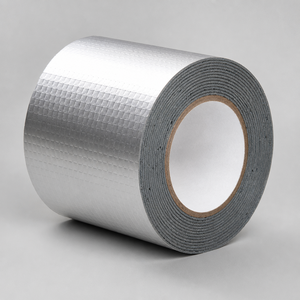
Self-adhering butyl rubber composite with puncture-resistant aluminum foil backing. Engineered for airtight seam sealing and deck expansion joint waterproofing across extreme Canadian thermal cycles (-40°C to +90°C).
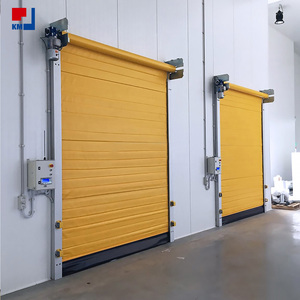
Heavy-duty AISI 304 stainless steel surface with CFC-free injected polyurethane insulation core (42 kg/m³ density). Integrated perimeter heating cables prevent thermal bridging and frost accumulation in cold logistics hubs.
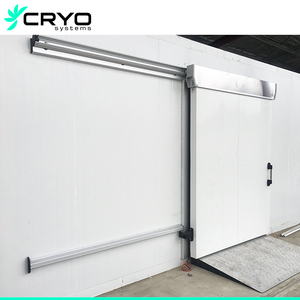
Airtight sliding door assemblies with heavy-duty drop-track hardware. Delivers rapid smooth travel, airtight compression seals, and robust impact resistance for high-traffic food distribution and pharmaceutical facilities.
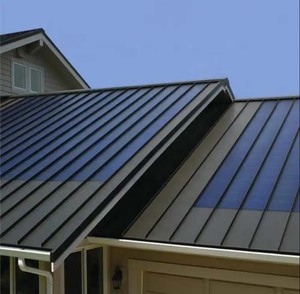
Architectural mechanical-lock standing seam profiles with concealed clip fixings. Engineered to accommodate continuous thermal expansion while offering superior uplift resistance under heavy Canadian mountain snow and coastal wind loads.
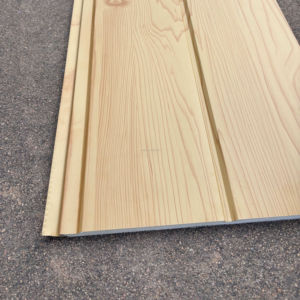
Continuous closed-cell polyurethane insulated sandwich siding featuring high R-value thermal performance, embossed anti-scratch outer finishes, and precision tongue-and-groove jointing that eliminates thermal bridging.
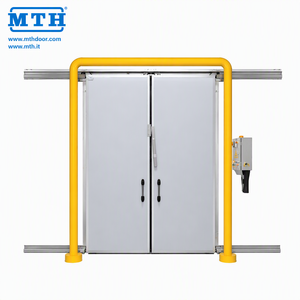
Patented low-friction track guide system with emergency interior release lever. High-density PIR insulation core and heavy gasket compression ensure reliable airtight operation in sub-zero freezers down to -35°C.
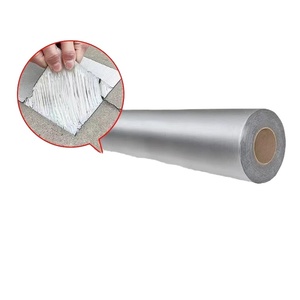
UV-stabilized cross-laminated pure aluminum barrier film bonded with vulcanized synthetic butyl adhesive. Ideal for sealing side-lap seams of metal decking, floor slab perimeters, and parapet penetrations.
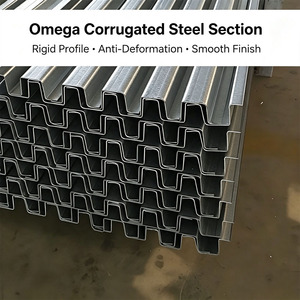
Roll-formed continuous hat/omega channels with high-strength structural zinc alloy coating (Z275/G90). Delivers an exceptional strength-to-weight ratio for mezzanine framing, floor joist bracing, and solar rooftop mounting.
Across Canadian commercial high-rises, institutional complexes, and expansive industrial fulfillment centers, cold-formed galvanized composite floor decking acts as both a safe construction platform during wet cast-in-place concrete placement and the definitive tensile reinforcement during the structure's service lifespan. Choosing a premier Chinese manufacturer with mature export experience requires rigorous alignment with the National Building Code of Canada (NBCC) and CSA S136 (North American Specification for the Design of Cold-Formed Steel Structural Members), alongside the technical parameters formulated by the Canadian Sheet Steel Building Institute (CSSBI 10M & 12M).
In composite slab design, horizontal mechanical interlocking between hardened concrete and the steel profile flutes is paramount. Premium floor decking profiles feature engineered, high-relief embossments rolled directly into the vertical flute webs. These precision indentations govern the longitudinal shear-bond resistance, strictly preventing delamination when subjected to cyclical live loadings, dynamic mechanical vibrations, and heavy localized forklift or rack wheel loads. By transitioning from traditional timber shuttering to permanent galvanized floor deck systems, Canadian general contractors achieve reductions of up to 35% in on-site construction schedules while drastically minimizing structural dead loads.
Corrosion mitigation is equally critical given Canada's severe seasonal humidity, freeze-thaw transitions, and interior condensation profiles. Sourcing decking compliant with ASTM A653 / A653M Structural Steel (SS) Grade 33 to 50 with certified Z275 (G90 minimum 275 g/m² total both sides) hot-dip zinc coating ensures cathodic sacrificial protection throughout the building's 50+ year design life. For non-composite roof deck and dry floor assemblies where secondary architectural ceilings are installed, customized zinc coatings and chemical passivation treatments are engineered to suppress zinc hydroxide white oxidation (wet storage stain) during cross-Pacific ocean transit.
From high-seismic zones on the Pacific Rim to extreme sub-zero permafrost and agricultural hubs, our roll-formed composite steel systems fulfill province-specific performance criteria.
Utilized in tandem with slender cast steel structural frames to deliver low-profile 2.0-inch and 3.0-inch composite slabs. Enhances Sound Transmission Class (STC > 55) and Impact Insulation Class (IIC) acoustic isolation between high-density dwelling units while providing 2-hour UL/ULC fire-resistance ratings without spray fireproofing.
Engineered for high-volume automated distribution centers. Deep-flute decking profiles support long unshored spans up to 4.2 meters during construction, reducing secondary structural joist weights and accommodating automated guided vehicle (AGV) floor wheel loads without surface micro-cracking.
In British Columbia's Cascadia subduction zone, floor deck acts as a rigid horizontal shear diaphragm transferring lateral earthquake forces directly into the Seismic Force Resisting System (SFRS). High-density puddle welds or Hilti powder-actuated fasteners ensure maximum in-plane shear capacity.
Integrated assemblies combining galvanized composite floor decks with high-density polyurethane cold storage floor insulation and butyl flashing barriers. Prevents ground sub-slab frost heave and vapor condensation inside blast freezers operating continuously at -30°C.
Precision roll-formed geometries matching metric architectural designs and imperial structural decking standards commonly specified across Canadian engineering tenders.
| Profile Designation | Rib Depth (mm / in) | Cover Width (mm) | Base Thickness (mm / Ga) | Yield Strength (Fy) | Zinc Coating Standard | Primary Canadian Structural Use |
|---|---|---|---|---|---|---|
| CD-2.0 Composite | 51 mm (2.0") | 915 mm (36") | 0.76 – 1.21 mm (22 – 18 Ga) | 230 – 345 MPa | Z275 / G90 Hot-Dip | Commercial office towers, light multi-family slabs, intermediate mezzanines |
| CD-3.0 Composite | 76 mm (3.0") | 915 mm (36") | 0.91 – 1.52 mm (20 – 16 Ga) | 275 – 380 MPa | Z275 / G90 Hot-Dip | Industrial heavy manufacturing, distribution center floors, unshored spans |
| FD-1.5 Form Deck | 38 mm (1.5") | 915 mm (36") | 0.76 – 0.91 mm (22 – 20 Ga) | 230 – 275 MPa | Z180 – Z275 | Permanent non-composite steel shuttering, stair landings, utility trenches |
| RD-1.5 Wide Rib (Type B) | 38 mm (1.5") | 915 mm (36") | 0.76 – 1.21 mm (22 – 18 Ga) | 230 – 345 MPa | Z275 or Galvalume AZ150 | Insulated low-slope roof envelopes, heavy snow drift load distribution |
| Custom Omega Purlin | 30 – 60 mm | Customized Web | 1.20 – 2.50 mm (16 – 12 Ga) | 345 – 450 MPa | Hot-Dip Galvanized Z275 | Solar farm roof anchoring, secondary structural girts, cold facade framing |
Technological advancement and low-carbon policies reshaping how general contractors, structural specifiers, and fabricators procure imported steel products.
To reduce embodied carbon, Canadian builders across Ontario and Quebec are combining cross-laminated timber (CLT) with lightweight galvanized steel decking and thin concrete acoustic toppings. The cold-formed steel deck distributes point stresses, provides embedded shear transfer, and acts as a dry construction diaphragm.
With Canada's aggressive carbon pricing and zero-carbon building frameworks (LEED v4.1 and CaGBC Zero Carbon Building Standard), procurement teams demand full Type III Environmental Product Declarations (EPDs). Our mills utilize Electric Arc Furnace (EAF) steel with up to 75% recycled scrap content to lower Global Warming Potential (GWP).
Canadian winter construction leaves no tolerance for on-site deck torching or manual field-notching in sub-zero environments. Our automated manufacturing utilizes CNC roll-forming driven directly by Tekla and Revit model files, producing pre-cut custom bundle lengths with factory-punched service openings and marked erection tags.
Securing high-grade steel from an overseas supplier requires absolute confidence in quality control, dimensional stability, material tractability, and shipping protection. Our state-of-the-art facility pairs European automated roll-forming technologies with comprehensive mill laboratory testing:
10,000 m² daily capacity ensures rapid turnarounds for multi-thousand square meter commercial floor schedules. Fully automated decoiling, servo roll-forming, and flying hydraulic shears eliminate profile twist and camber.
Every steel master coil is tracked with full chemical and mechanical certification in accordance with EN 10204 Type 3.1. Standard physical testing validates yield stress, elongation, and zinc coating mass adherence.
To combat marine condensation across trans-Pacific voyages, deck bundles are interlocked with waterproof synthetic film, desiccant sachets, heavy edge protectors, and robust steel channel banding on fumigated skids.
One-stop supply encompassing pour stops, end closures, side lap screws, rubber cell closures, shear stud connectors, flashings, and self-adhesive butyl vapor barriers—eliminating multi-vendor coordination bottlenecks.
Direct technical answers addressing structural certification, Canadian customs border compliance, marine moisture control, and cold-weather slab placement.
Our floor decking profiles are designed and roll-formed in strict adherence to CSA S136 (North American Specification for the Design of Cold-Formed Steel Structural Members) and the design guides published by the Canadian Sheet Steel Building Institute (CSSBI). Each profile geometry undergoes extensive mechanical section property calculations (moment of inertia Ix, section modulus Sx, and web crippling resistance) calculated using effective design width criteria. Independent ISO 17025 accredited laboratory testing confirms tensile strength, elongation, and embossment shear-bond values matching requirements for municipal engineering submittals across British Columbia, Alberta, Ontario, and Quebec.
For permanent composite floor decks in climate-controlled interior occupancies, Z275 (G90)—specifying a minimum of 275 g/m² (0.90 oz/ft²) total triple-spot coating weight on both sides—is the Canadian industry standard. In coastal locations such as Metro Vancouver, Victoria, and Atlantic Canada, or in parkades and unconditioned industrial zones subject to high ambient humidity and de-icing salt tracking, specifying Z275 is strictly mandatory to prevent micro-pitting under concrete. Lighter coatings such as Z180 (G60) should only be utilized in non-composite secondary forms where dry interior ceilings protect the underside.
Cold-formed floor decking imported into Canada falls under HS Tariff Heading 7216 or 7308 depending on specific fabrication attributes. Importers must review regulations enforced by the Canada Border Services Agency (CBSA) under the Special Import Measures Act (SIMA) regarding corrosion-resistant flat-rolled steel products. Our dedicated logistics export team works closely with Canadian customs brokers to ensure accurate documentation, proper certificate of origin disclosures, HS code classification, and compliance with all current trade remedy provisions, ensuring seamless customs clearance at the Port of Vancouver, Prince Rupert, or Montreal.
White rust is a chemical reaction that occurs when fresh zinc coatings are deprived of free-flowing oxygen while exposed to moisture. We mitigate this through four synchronized protection layers: (1) Application of environmentally safe, hexavalent-chromium-free passivation baths and surface oiling; (2) Controlled temperature bundling within humidity-regulated factory staging areas; (3) Heavy-duty multi-layer waterproof plastic and paper wrap around every bundle with internal vapor corrosion inhibitor (VCI) packets; and (4) Stowing containers below deck away from salty sea spray and temperature extremes during trans-Pacific transit.
Unshored spans are dictated by the profile depth, base metal thickness (gauge), concrete unit weight (normal weight 2400 kg/m³ vs. lightweight 1850 kg/m³), and the total slab depth. A 2.0-inch (51 mm) deck at 0.91 mm (20 Ga) typically supports an unshored span of up to 2.4 to 2.8 meters during concrete casting under CSSBI guidelines. A 3.0-inch (76 mm) deep flute profile in 1.21 mm (18 Ga) can extend unshored spans beyond 3.8 meters. Exceeding these limits without temporary shoring induces excessive mid-span deflection and wet concrete ponding that compromises slab leveling.
Yes. Complete system delivery is our operational baseline. We engineer and fabricate precision-formed galvanized sheet steel pour stops (brake-formed to match total slab thicknesses from 100mm to 250mm), z-closures, flute cell closures, side-lap stitch screws, and weld-through shear studs (headed concrete anchors per AWS D1.1 / CSA W59 standards). Supplying all components in matching steel grade and coating thickness prevents electrolytic corrosion and avoids costly on-site fabrication delays.
Production cycles for typical multi-container project volumes (5,000 to 25,000 m²) run approximately 10 to 18 days from shop drawing sign-off and coil allocation. Ocean freight transit from major Chinese deep-water ports (Ningbo, Shanghai, or Qingdao) to the Port of Vancouver or Prince Rupert averages 14 to 20 days. Connecting via intermodal rail to distribution centers in Calgary, Edmonton, Toronto, or Montreal takes an additional 5 to 9 days. In total, procurement cycles average 5 to 7 weeks door-to-jobsite—significantly undercutting domestic mill rolling backlogs.
Our sales engineers respond to project questions during working hours (GST+4).