
A rigorous metallurgical, structural, and procurement whitepaper analyzing the vital role of roll-formed metal ridge flashings across Nigeria's dynamic climatic and commercial corridors.
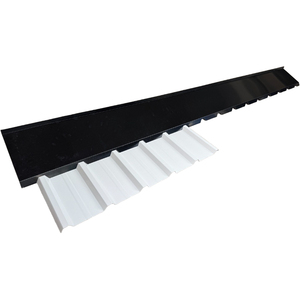
As a premier direct-manufacturing facility in China partnering with engineering conglomerates, steel stockholders, and general contractors throughout Nigeria (from the bustling Lekki Free Trade Zone and Ikeja industrial districts in Lagos to the manufacturing plants of Ogun State, Port Harcourt, and the northern trade hubs of Kano and Kaduna), our production infrastructure operates at the cutting edge of cold-roll forming and metallurgical coating technology. We design and fabricate custom-profiled ridge cap flashings, roll-top circular ridge caps, vented apex profiles, and heavy-duty gable flashing accessories engineered specifically to withstand West African atmospheric classifications (C1 through C5-M).
From saline coastal spray in the south to the extreme diurnal thermal shocks of the northern Sahel, one single flashing specification cannot satisfy Nigeria's broad geographical envelope challenges.
Encompassing Apapa, Lekki, Victoria Island, Port Harcourt, Warri, and Calabar. Characterized by constant relative humidity above 85% and high chloride airborne particulate concentrations (ISO 9223 Category C4/C5). We engineer continuous Galvalume (Al-Zn) 55% Aluminum substrates with AZ150 zinc-aluminum coatings or high-zinc (Z275) steel, topped with 25-micron PVDF (Polyvinylidene Fluoride) fluorocarbon paint systems. This barrier prevents premature red rust along sheared edges and under-lap seams.
Regions suffering heavy monsoon downpours exceeding 2,500mm annually with high humidity and prolonged fungal/microbial growth. Conventional flat-wing flashings suffer severe capillary back-siphonage. Our factory manufactures wider-girth (450mm to 600mm) ridge caps featuring engineered capillary breaks, reverse drip hems, and factory-notched rib closures that nest directly into trapezoidal profiles, ensuring absolute water-tightness under torrential precipitation.
Subjected to scorching ambient temperatures reaching 44°C, extreme UV radiation indices (UV 11+), and drastic diurnal temperature shifts (ΔT > 30°C daily between midday heat and cold Harmattan nights). These intense thermal cycles induce massive thermal expansion and contraction along steel roof lengths. We supply silicone-modified polyester (SMP) and Super Polyester coatings with high Solar Reflectance Index (SRI > 78), combined with slotted mechanical connection designs that eliminate fastener shear and sheet buckling.
Fertilizer handling plants, grain storage facilities, poultry housing in Oyo and Ogun, and processing mills in the Middle Belt emit high levels of ambient ammonia, nitrates, and acidic condensation. Standard galvanized layers degrade rapidly in these conditions. Our specialized chemically inert resin coatings and double-sided prepainted AZ150 substrates provide impervious chemical barriers against corrosive internal vapor condensation gathering at roof peaks.
Precise metallurgical data comparing raw material grades, coating masses, mechanical yield ratings, and expected performance life under tropical operational conditions.
| Profile Specification | Base Metal Substrate | Coating Weight Class | Paint System Thickness | Yield Strength (MPa) | Target Lifespan |
|---|---|---|---|---|---|
| Heavy Roll-Top Ridge Cap Circular Peak 75-100mm |
Al-Zn Galvalume (ASTM A792M) | AZ150 (150 g/m² dual side) | Top: 20µm PVDF + 5µm Primer Back: 7µm Epoxy Service Coat |
G300 – G550 (High Tensile) | 35 – 50 Years |
| Pre-Bent V-Profile Flashing Standard 120°-150° Bend |
Hot-Dip Galvanized (ASTM A653) | Z275 (275 g/m² Pure Zinc) | Top: 20µm SMP (Silicone Modified) Back: 8µm Polyester Primer |
G300 Structural Grade | 25 – 35 Years |
| Profile-Notched Custom Flashing CNC Factory Computer Cut |
55% Al-Zn Coated Steel (EN 10346) | AZ120 / AZ150 Coating | Top: 25µm HDP (High Durability) Back: 10µm Anti-corrosion Backer |
G350 Grade | 30 – 45 Years |
| Vented Ridge Flashing System With Micro-Mesh Screen |
Prepainted Galvalume (JIS G3322) | AZ150 High-Corrosion Class | Top: 20µm PVDF / Fluoropolymer Back: 10µm Conductive Primer |
G300 Structural Grade | 40+ Years |
| Gable / Barge Board Trim Perimeter Edge Protector |
Galvanized / Al-Zn Steel Sheet | Z180 – Z275 / AZ150 | Top: 18-20µm Regular Polyester (PE) Back: 5µm Primer |
G300 – G350 Grade | 20 – 30 Years |
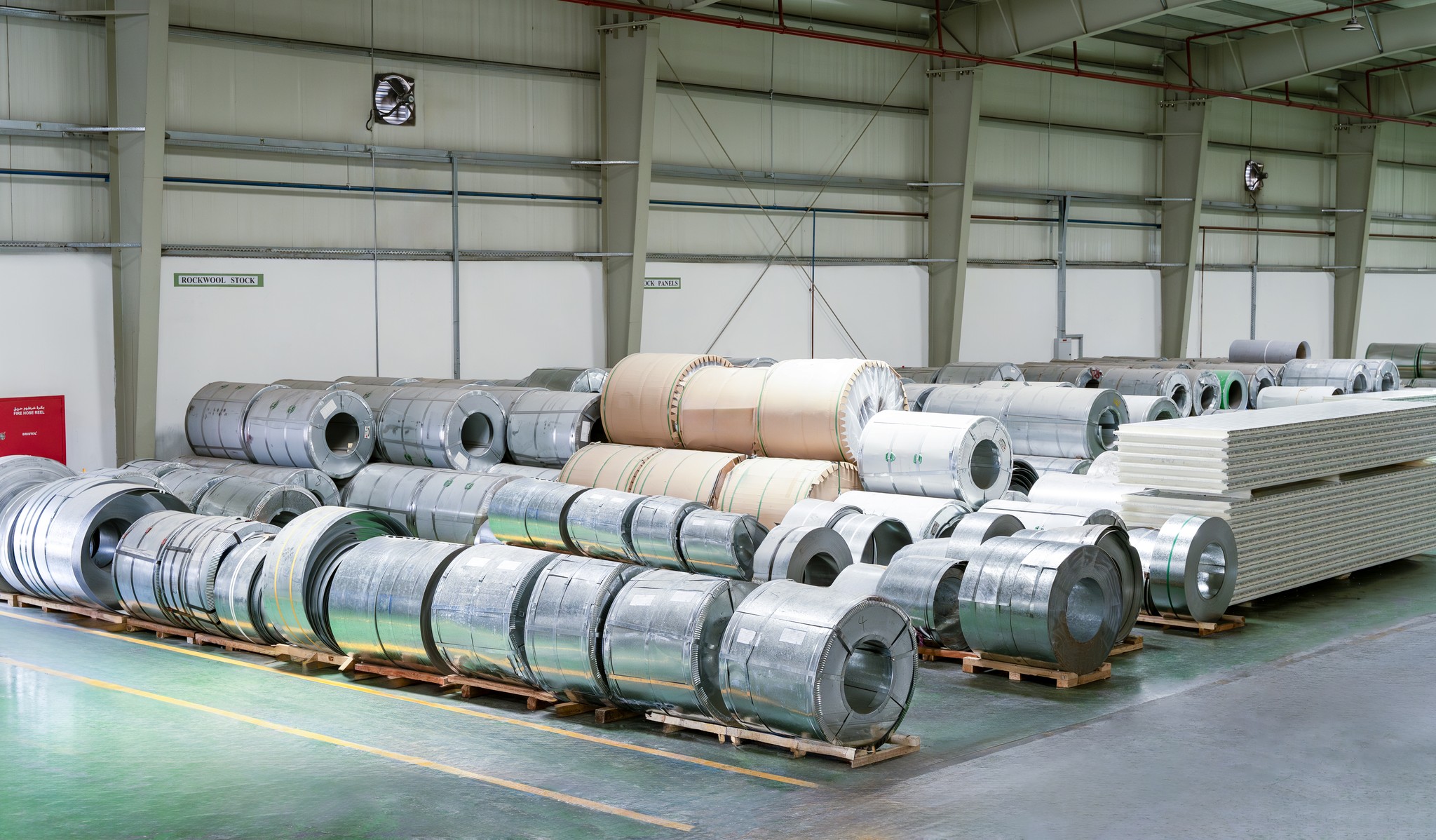
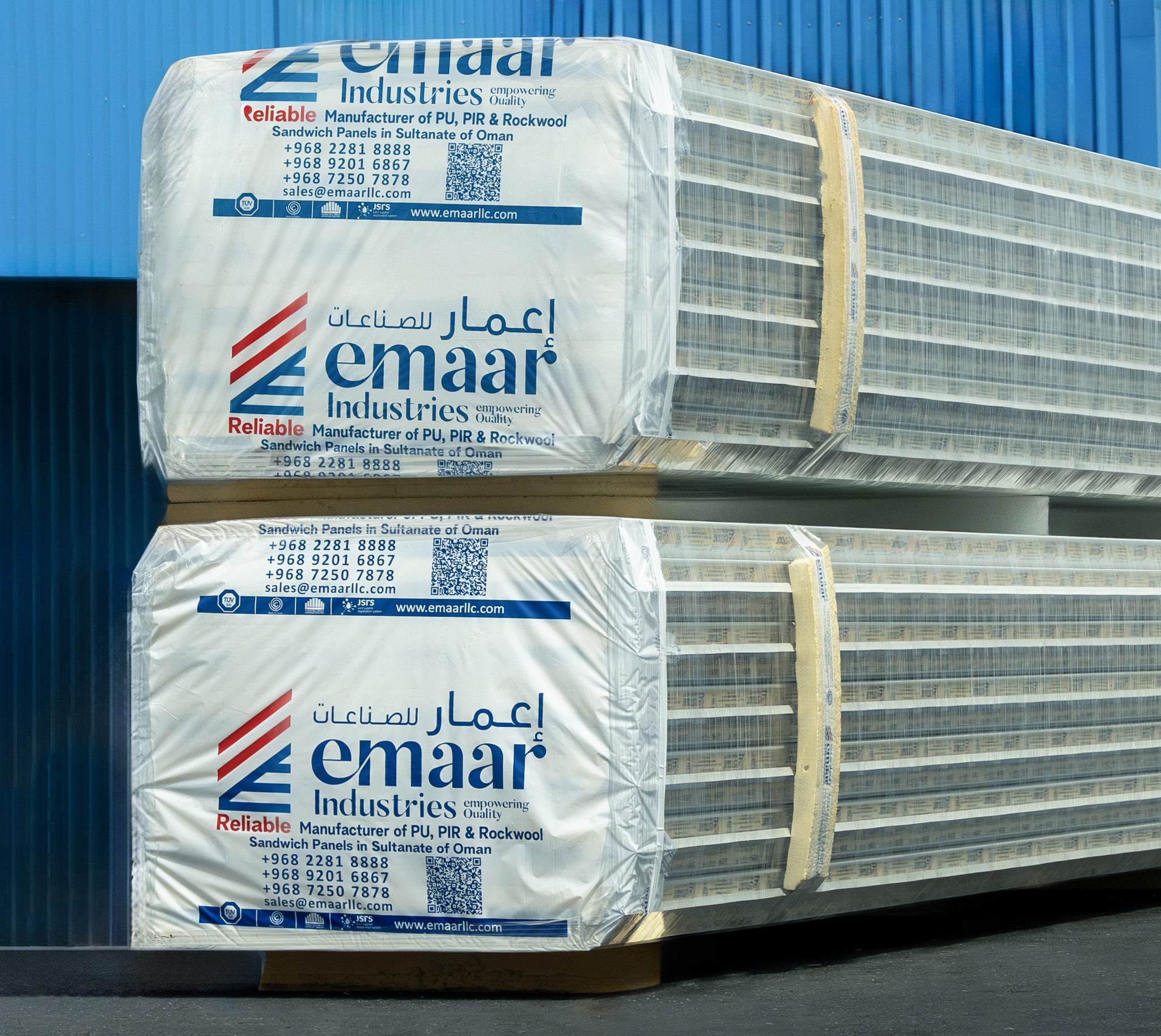
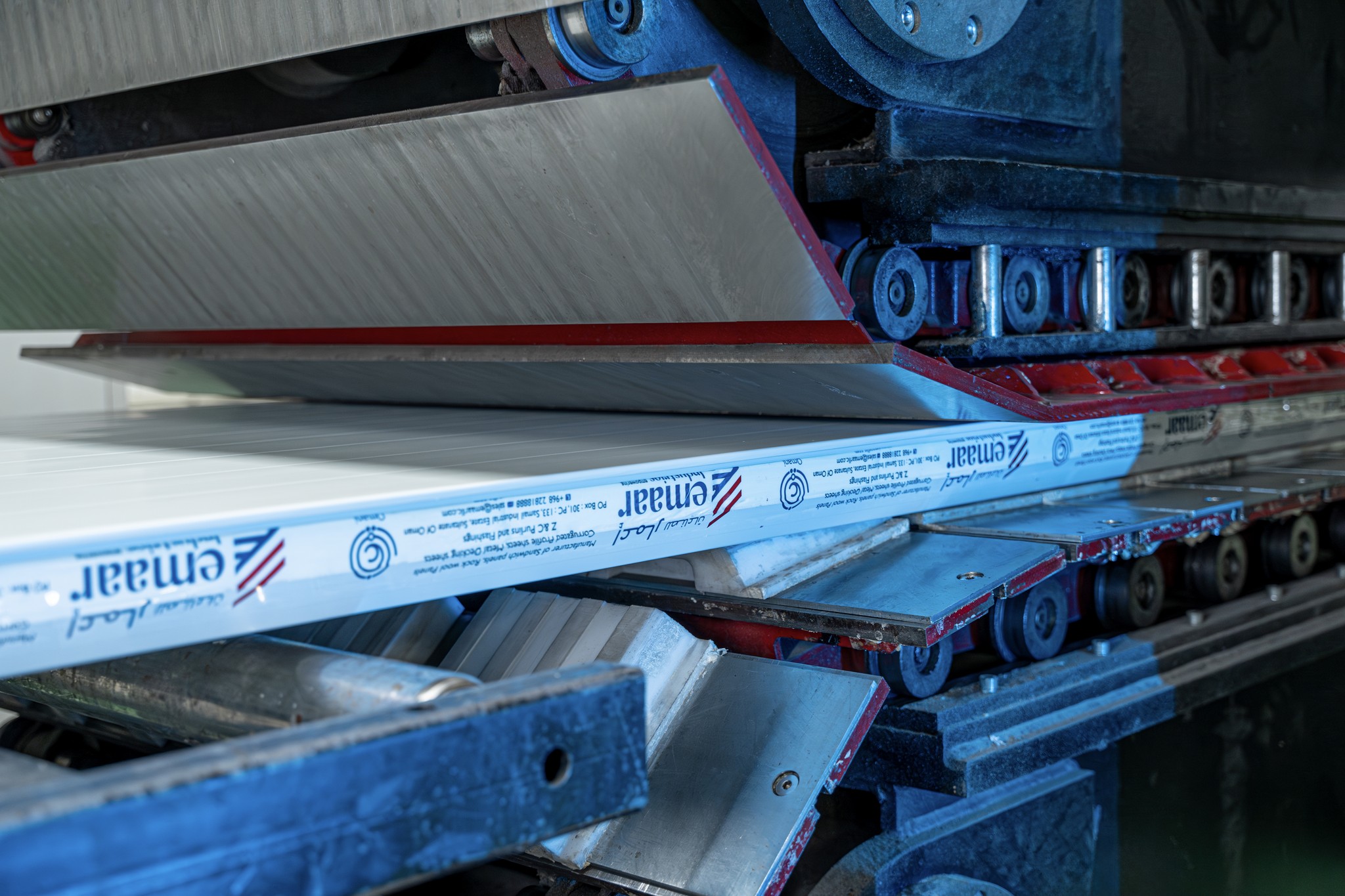
A view into our high-capacity production facilities, CNC multi-station folding lines, and crating processes that support massive infrastructure supply across Africa.
How the expansion of agro-allied industries, special economic zones, and strict SON standards are revolutionizing building envelope specifications across West Africa.
The construction landscape in Nigeria is undergoing a massive structural shift away from fragile asbestos sheeting and uncertified short-span aluminum roofing. Key institutional drivers are establishing modern engineering parameters for both residential projects and massive industrial complexes:
With massive investments centered around the Lekki Deep Sea Port, Dangote Petrochemical Zone, Sagamu industrial cluster, and regional dry ports in Kano, multinational firms demand fast-track Pre-Engineered Building (PEB) systems. These structures span clear distances of 30 to 60 meters, requiring precision-folded ridge caps that accommodate substantial structural deflection without unseating fasteners or leaking under torrential rainfall.
The Standards Organisation of Nigeria (SON) has drastically tightened market surveillance under the SONCAP regime. Sub-standard coils of 0.15mm–0.22mm that rust within 18 months are actively targeted. Discerning Nigerian architectural consultants and structural engineers now mandate Mill Test Certificates (MTC) proving ASTM A792 compliance and minimum 0.45mm–0.55mm BMT for all public works, commercial malls, and agro-processing facilities.
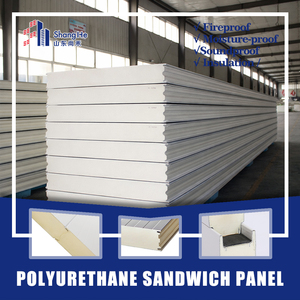
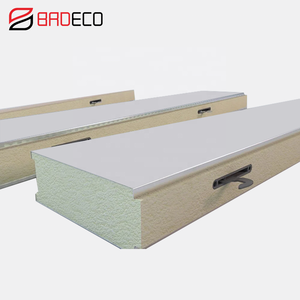
With electrical power tariffs rising and reliance on industrial diesel generators across Nigerian factories, thermal envelope design has become a primary operational cost factor. Modern architects specify ventilated ridge flashing systems integrated with PU/PIR sandwich panels. These systems expel hot air accumulating beneath the ceiling apex via natural thermal convection, lowering indoor temperatures by 4°C to 7°C.
Combining primary coil procurement leverage, state-of-the-art cold-rolling machinery, and comprehensive export logistics to ensure timely, flawless delivery to Nigerian ports.
Our expansive industrial facility operates automated continuous roll-forming lines and CNC bending stations capable of processing heavy-gauge coils up to 1.2mm thickness. Our 10,000 m² daily capacity ensures rapid turnaround for major projects, eliminating project timeline delays and avoiding liquidated damages on fast-track commercial developments.
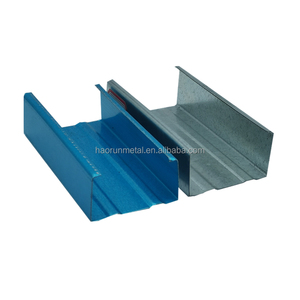
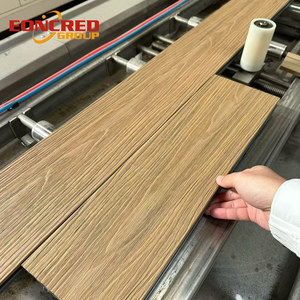
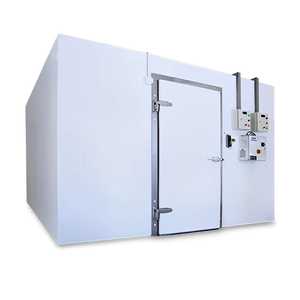
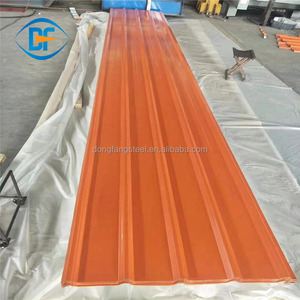
As a single-source manufacturing powerhouse, we do not simply supply flashings in isolation. We manufacture the complete building envelope: C and Z purlins, insulated PIR/PUR roof and wall panels, corrugated steel sheets, composite decking, and complete cold-room hardware. This ensures seamless profile integration, uniform color matching, and consistent metallurgical longevity across all building components.
Containerized shipments passing through Apapa or Tin Can Island often experience extended dwell times and humid tropical handling. Every bundle of our ridge cap flashing is protected with high-density UV-inhibited PE protective film, interleaved with moisture-absorbing desiccants, corners fortified with heavy galvanized protector angles, and banded inside fumigated wooden crates to prevent maritime corrosion and transit deformation.
Raw steel coils sourced exclusively from tier-1 global steel mills undergo rigorous in-house metallurgical verification. We perform T-bend tests (0T to 2T without micro-cracking), cross-hatch paint adhesion checks (ASTM D3359), MEK solvent rubs, and 1,000-hour neutral salt spray tests (ASTM B117) to guarantee that materials deployed along Nigerian coasts resist blistering and delamination.
Our dedicated African trade documentation department manages all regulatory clearance requirements. We facilitate Product Certificates (PC1, PC2) and assist authorized Nigerian dealer banks with SONCAP Certificate (SC) processing, Pre-Arrival Assessment Report (PAAR) documentation, Clean Inspection Reports, and Bill of Lading consignments for hassle-free port clearance.
Standard off-the-shelf trims rarely align with bespoke architectural configurations. We manufacture custom roof flashings tailored to exact roof pitches (from flat 3° slopes to steep 45° pitches), varied girths (300mm to 1200mm), and distinct bend profiles, including integrated bird-stops and customized ventilation louvers.
Actionable, transparent answers resolving key commercial, customs, metallurgical, and structural questions raised by Nigerian procurement teams and engineers.
We manage end-to-end certification requirements for importation into Nigeria. Our factory holds valid ISO 9001:2015 accreditation, allowing us to rapidly process Product Certificates (PC Route A, B, or C depending on importer frequency) through accredited testing bodies such as CCIC, SGS, or Intertek. We furnish complete commercial invoices, packing lists with net/gross weights, certificates of origin, and laboratory test reports required by your clearing agent to secure the SONCAP Certificate (SC) and open Form M on the Nigeria Single Window Trade Portal.
For coastal projects situated within 15 km of the Atlantic shoreline (Lagos Island, Lekki, Epe, Badagry, Port Harcourt, Warri), we strongly recommend Galvalume substrates (AZ150) coated with PVDF fluorocarbon paint (minimum 70% Kynar 500 resin, 25µm total film). PVDF offers extraordinary resistance to chloride attack and chalking. For inland zones like Abuja, Kano, and Enugu, Silicone-Modified Polyester (SMP) or Super Durable Polyester (HDP) offers exceptional UV durability and color retention at a significantly more competitive cost.
We stamp our products with traceable batch codes and transparently clarify Base Metal Thickness (BMT) versus Total Coated Thickness (TCT) on every contract. For instance, a 0.50mm BMT Galvalume sheet with an AZ150 coating and 25µm paint finish delivers a finished TCT of approximately 0.55mm. We invite your third-party inspection agency (e.g., SGS, Bureau Veritas) to inspect coil stocks using digital micrometers and magnetic coating gauges at our factory prior to container packing.
Yes. Packing nested ridge caps inside shipping containers alongside heavy secondary steel like C-channels, Z-purlins, or flat-pack insulated sandwich panels is one of the most cost-effective methods for Nigerian importers. By stacking and nesting our hemmed ridge caps into compact bundles and nesting them within hollow profile sections or along container sidewalls, we maximize container weight and cubic volume, drastically lowering per-ton sea-freight overhead at Lagos or Onne ports.
Understanding FX liquidity challenges in Nigeria, we accommodate multiple international trade instruments. We accept irrevocable, confirmed Letters of Credit (LC at sight) opened through reputable international tier-1 banks. We also support direct Telegraphic Transfers (T/T with standard commercial deposit balances) in USD, EUR, or Chinese Yuan (CNY / RMB), which many Nigerian traders find advantageous for circumventing lengthy foreign-exchange waiting lists.
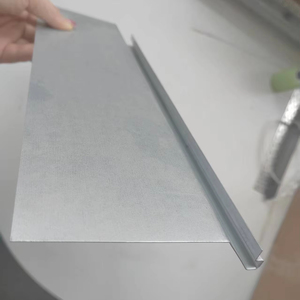
Standard flat sheet metal edges suffer from surface tension that draws standing moisture upward between overlapping sheets against gravity. Our ridge cap flashings feature an automated 180-degree hemmed return along every longitudinal edge. This structural hem creates a permanent 3mm–5mm capillary break that physically prevents water siphoning. Furthermore, we provide optional precision-matched closed-cell EPDM/polyethylene profiled foam filler strips that mirror the corrugations of your roof sheets, blocking wind-driven rain completely.
For standard stocked color configurations (Traffic White RAL 9002, Sea Blue RAL 5002, Moss Green RAL 6005, Anthracite Grey RAL 7016, and Brick Red RAL 3009) with AZ150 Galvalume substrate, our MOQ starts at just 500 linear meters. Production turnaround for full 20ft or 40ft container loads is typically completed within 10 to 15 working days from technical drawing sign-off and deposit receipt.
Yes. A completely weatherproof building envelope requires harmonious engineering across every termination point. Along with ridge caps, we manufacture matching gable trims, parapet wall cap flashings, valley gutters, corner eaves flashing, door header trims, and customized base drip flashing profiles fabricated from the exact same paint and metal master coil lot to ensure 100% color consistency and unified lifespan.
Consult with our structural engineering team today to review your project drawings, request custom bending cross-sections, obtain certified SONCAP documentation, and download our complete building envelope technical catalog.
Our sales engineers respond to project questions during working hours (GST+4).