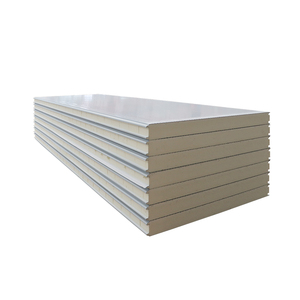
Eco-friendly cyclopentane-blown rigid polyurethane and polyisocyanurate panels engineered with continuous tongue-and-groove cam-lock joints to eliminate air infiltration under Manila’s severe vapor pressure.
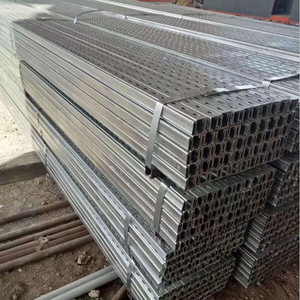
High-tensile galvanized C-channel mounting rails designed to overlay rooftop photovoltaic arrays directly over cold storage roofs, reducing Meralco peak-hour utility loads by up to 35%.
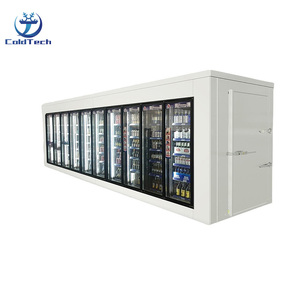
Heated condensation-free glass door assemblies designed for retail supermarkets and pastry commissaries, featuring zero-fogging technology during rainy monsoon conditions.
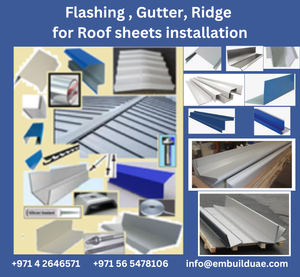
Precision-bent structural flashings, coving trims, and gable flashings designed to seal panel transitions and maintain hygienic non-dirt-trapping corners according to NMIS/FDA food safety mandates.
Class A Non-CombustibleFire Rating: up to 180 min100-120 kg/m³
Structural stone-wool insulated panels engineered for plant firewalls, refrigeration mechanical rooms, and high-density commercial kitchens requiring strict Bureau of Fire Protection compliance.
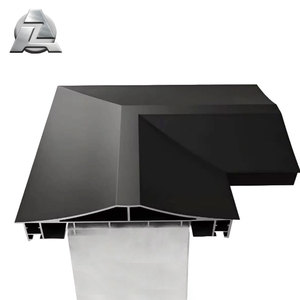
Heavy-duty aluminum parapet cappings and exterior roof edge flashing profiles engineered to withstand coastal salt air in Manila Bay and prevent tropical rain ingress across cold storage roofs.
Engineering Walk In Coolers for Tropical Maritime Climates: The Manila Protocol
Designing, specifying, and manufacturing commercial and industrial walk-in coolers in Metro Manila presents thermodynamic, electrical, and structural challenges that overseas catalogue suppliers routinely fail to evaluate. The Philippine capital experiences a tropical rainforest climate characterized by elevated dry-bulb temperatures ranging between 32°C and 38°C combined with persistent relative humidity (RH) oscillating between 75% and 95% during monsoon periods. This severe ambient profile generates extreme psychrometric vapor drive pressure across insulated building envelopes.
The Psychrometric Dew Point Reality in Metro Manila
At an ambient summer design point of 35°C dry bulb and 85% relative humidity, the outdoor dew point reaches an astounding 32.1°C with a water vapor partial pressure exceeding 4.7 kPa. When maintaining an internal cold room setpoint of +2°C to +4°C (chilled) or -18°C to -22°C (frozen), the vapor pressure differential across the panel skin exceeds 4.0 kPa. Without continuous cam-locked tongue-and-groove lamination, closed-cell PIR foam (>95% closed-cell content), and non-hardening butyl vapor barriers, moisture vapor penetrates the core, leading to instant icing, core delamination, and catastrophic thermal degradation.
Thermal bridging in tropical walk-in coolers does not simply cause modest energy inefficiencies; in high-humidity markets like Manila, thermal bridges immediately reach dew point, producing persistent exterior condensation, bacterial mold blooms, structural corrosion of purlins, and slip hazards for warehouse personnel. Standard overseas cold rooms often rely on continuous through-metal fasteners or uninsulated floor joints that create thermal conduits from the external concrete slab into the refrigerated zone.
To eliminate this, our walk-in cooler envelopes utilize high-density polyurethane thermal breaks, insulated floor panels with high-load extruded polystyrene (XPS) sub-screed underlayments, and anti-condensation heater matrices embedded within door frames. In calculating overall heat transmission coefficients (U-values), our engineering team utilizes finite element thermal modeling to ensure surface temperatures on external panel skins remain within 1.2°C of ambient dry-bulb conditions:
Storage Type
Internal Temp Range
Recommended Core & Thickness
Calculated U-Value
Energy Savings vs. Standard PUR
Vegetable & Beverage Chiller
+8°C to +12°C
75 mm PIR Core (42 kg/m³)
0.28 W/m²·K
14% Meralco Power Reduction
Meat & Dairy Walk In Cooler
+0°C to +4°C
100 mm PIR Core (42 kg/m³)
0.21 W/m²·K
19% Meralco Power Reduction
Commercial Freezer Room
-18°C to -22°C
150 mm High-Performance PIR
0.14 W/m²·K
27% Meralco Power Reduction
Industrial Blast Freezer
-35°C to -40°C
200 mm High-Performance PIR
0.10 W/m²·K
34% Meralco Power Reduction
2. The Meralco Tariff Factor: Operational Economics (OPEX)
Commercial electricity rates within the Manila Electric Company (Meralco) distribution network are consistently among the highest in the ASEAN region, oscillating between PHP 10.50 and PHP 13.50 per kilowatt-hour ($0.19 to $0.24/kWh) for intermediate commercial and industrial connections. In an industrial cold room operating 24 hours a day, 365 days a year, the initial capital expenditure (CAPEX) for panels, refrigeration condensing units, and doors represents merely 12% to 15% of the system's total 10-year Life Cycle Cost (LCC); electrical consumption accounts for over 75%.
By investing in high-density PIR continuous-line sandwich panels featuring an initial thermal conductivity of λ = 0.020 W/m·K (retaining ≤0.022 W/m·K over a 25-year service life due to microcellular gas entrapment), local operators reduce compressor runtime by 22% to 31%. For a 100-square-meter commercial walk-in cooler in Pasig or Quezon City, this translates to annual utility cost savings exceeding PHP 280,000, achieving complete capital payback on premium thermal insulation within 14 months of commissioning.
3. Electrical Grid Synchronization: The Philippine 220V/60Hz Standard
A fatal pitfall for procurement managers sourcing refrigeration equipment from European or mainland Asian suppliers is frequency mismatch. The Philippine national grid operates on 220 Volts, 60 Hertz (single-phase 220V or three-phase 220V/380V/440V configurations). Equipment built for 50Hz electrical networks experiences a 20% increase in rotational motor speed when operated on 60Hz power if compressors are not re-rated. This results in excessive heat buildup within motor windings, chronic high-discharge pressure trips, lubrication breakdown, and premature compressor seizure within months.
Every commercial walk-in cooler, condensing package, and evaporator system supplied by our engineering facilities is calibrated specifically for 220V/60Hz or 440V/60Hz configurations. We select Copeland Scroll, Bitzer Semi-Hermetic, or Danfoss compressors configured with 60Hz-rated motors, ensuring high volumetric efficiency, lower sound attenuation, and full compatibility with local sub-panel switchgear.
Regional Implementation Matrix
Localized Application Scenarios Across Metro Manila & Greater Luzon
Engineered cold storage architectures customized to meet the regulatory, hygiene, and logistical demands of the Philippines' major industrial corridors.
Central Commissaries & Quick Service Restaurants (QSR)
Serving central catering kitchens and franchised fast-food commissaries located in Valenzuela, Caloocan, and Pasig. Environments feature high staff foot traffic, rigorous daily chemical washdowns, and continuous stock turnover. Built with antibacterial PVDF or food-safe Plastisol-coated steel skins with integrated coving flashings to maintain strict NMIS sanitary certification.
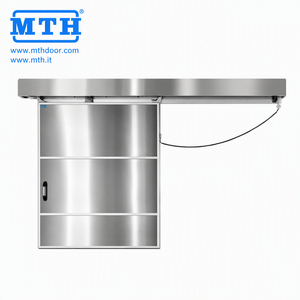
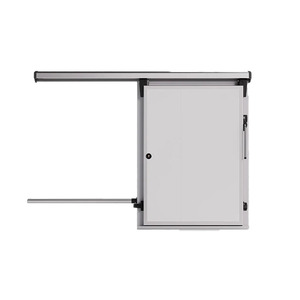
Marine harvest processing requires extreme corrosion resistance due to hyper-saline ambient air and daily ice contact. Our cold rooms integrate SUS304 or marine-grade 5052 aluminum panels combined with epoxy-coated evaporators and heavy-duty manual sliding doors with 316 stainless steel tracks that resist corrosive degradation over decades.
Target Zones: Navotas Fish Port Complex, Malabon, Manila Harbor
Biopharmaceutical Storage & Vaccine Distribution
Engineered for third-party logistics (3PL) providers and pharmaceutical distributors complying with Philippine FDA Administrative Order No. 2013-0027 (Good Distribution Practices). Features dual redundant refrigeration loops (N+1), automatic emergency switchover, and precision PLC data loggers maintaining ±0.5°C tolerance between +2°C and +8°C.
Target Zones: Paranaque, Muntinlupa, Clark Freeport, Biñan (Laguna)
Supermarket Chains & Modern Retail Cold Rooms
Modular walk-in coolers equipped with heated glass doors for front-of-house beverage, dairy, and meat merchandising in high-density malls across Metro Manila. Incorporates high-efficiency LED illumination, anti-fog triple-glazed argon layers, and rear-loading gravity feed shelving that reduces replenishment labor while eliminating air loss.
Target Zones: Quezon City, Makati, BGC, Alabang, Mandaluyong
Meat Processing & Poultry Abattoir Facilities
Built to comply with the National Meat Inspection Service (NMIS) Class AAA export and domestic processing guidelines. Non-toxic, seamless polyurethane joints prevent blood and organic fluid accumulation. Stainless steel crash rails protect panels from pallet truck impacts, while drop-down motorized doors retain low ambient temperatures during offloading.
Target Zones: Bulacan corridor, Cavite Export Processing Zone (CEPZ)
High-volume post-harvest precooling facilities designed for highland vegetable and tropical fruit preservation prior to Metro Manila market distribution. Designed with high-airflow evaporators to rapidly pull down field heat from mangoes, onions, and highland greens without desiccation or moisture loss.
Key regulatory movements, environmental mandates, and infrastructure investments reshaping temperature-controlled logistics throughout the country.
01. CCAP 5-Year National Roadmap
The Cold Chain Association of the Philippines (CCAP) along with the Board of Investments (BOI) has mandated expanding national cold storage capacity by over 10% annually to eliminate 30% post-harvest spoilage rates. Facilities adopting energy-efficient PIR insulated envelopes receive income tax holidays (ITH) and duty-free equipment importation incentives, accelerating the shift toward modern thermal envelope technology.
02. Rooftop Solar PV & Hybrid Microgrids
Due to high daytime utility pricing from Meralco, cold storage operators in Caloocan, Cavite, and Laguna are pairing refrigerated warehouse roofs with high-density photovoltaic arrays. Our factory-engineered steel C-channel and Z-purlin secondary framing systems distribute solar dead-loads without penetrating insulated sandwich panel vapor seals, unlocking net-metering benefits.
03. Low-GWP Refrigerant Transition
Under the Kigali Amendment and the Philippine Ozone Desk (DENR-EMB) phaseout schedules for HCFCs and high-GWP HFCs (such as R404A), modern cold rooms are shifting rapidly to low-GWP refrigerants including R448A, R449A, R290 (propane for self-contained commercial units), and trans-critical CO2 systems. Our evaporators and expansion valves are built and tested for these higher operating pressures.
04. Extreme Typhoon Wind Load Engineering
The Philippines experiences an average of twenty typhoons annually, with PAGASA recording Category 5 super-typhoon gusts exceeding 250 km/h in Greater Luzon. Our cold storage roof structures and external wall panels are certified to resist extreme uplift pressures using heavy-duty concealed saddle fasteners, cold-formed purlins, and reinforced structural flashings.
05. Shift to Fire-Resistant PIR & Rockwool
Under the revised Fire Code of the Philippines (RA 9514), insurance underwriters (including FM Global and local underwriters) increasingly refuse standard EPS (expanded polystyrene) due to extreme combustibility and toxic smoke. Modern industrial cold stores exclusively specify B1 fire-rated PIR or non-combustible Rockwool panels with certified fire endurance limits.
06. Automation & Smart IoT Telemetry
Manila’s high logistical traffic makes remote cold room monitoring critical. Facilities are integrating cloud-based PLC systems with real-time temperature tracking, door-open alert sensors, and remote defrost optimization, allowing quality assurance managers to audit cold chain integrity from mobile platforms.
Procurement Knowledge Base
Frequently Asked Questions for Sourcing Walk In Coolers in Manila
Technical, logistical, and regulatory answers for MEP engineers, cold storage contractors, and procurement managers in the Philippines.
FAQ 01What panel thickness and core material are recommended for a commercial walk-in cooler in Manila?
For walk-in chillers operating between +0°C and +4°C under Metro Manila’s high ambient humidity, we recommend 100 mm continuous PIR (Polyisocyanurate) sandwich panels with a nominal core density of 42 kg/m³. While 75 mm can theoretically satisfy thermal transfer limits in climate-controlled indoor buildings, 100 mm provides a crucial safety margin against exterior panel skin condensation when ambient humidity spikes above 90% during the monsoon season. For freezers operating at -18°C to -22°C, 150 mm PIR is the standard specification.
FAQ 02How do you resolve sweating (condensation) on cold room walls and doors in the Philippines?
Condensation occurs whenever the surface temperature of the panel or door frame drops below the ambient psychrometric dew point (often 29°C to 32°C in Manila). We prevent sweating through a three-pronged approach: First, by utilizing high-insulation PIR cores that keep external surface temperatures elevated within 1°C of ambient. Second, by installing concealed frame heater cables (around the perimeter of sliding and swing doors) to keep metal contact points dry. Third, by utilizing triple-pane argon-filled heated glass displays for commercial applications, ensuring complete surface clarity without fogging.
FAQ 03Are your condensing units and electrical motors compatible with the Philippine electrical grid?
Yes, 100%. We design and configure all electrical components, compressors, evaporator blower fans, and control panels strictly for the Philippine power standard: 220V / 60Hz single phase, or 220V/380V/440V 60Hz three phase. We never ship standard European 50Hz equipment, which overspeeds, overheats, and burns out prematurely on the local 60Hz frequency. Full schematic wiring diagrams matching local PEZA or municipal building permit requirements are provided with every system.
FAQ 04Do your insulated panels meet the Fire Code of the Philippines (RA 9514)?
Yes. Our PIR sandwich panels achieve a Class B1 flame-retardant rating (tested in accordance with DIN 4102 and ASTM E84 / UL 723 standards) with an index of flame spread <25 and smoke developed <450. Under extreme heat, PIR forms a protective surface char layer that prevents flame spread and self-extinguishes when the heat source is removed. For fire separation walls, plant rooms, and hazardous cargo zones, we supply non-combustible Rockwool core panels with certified 1-to-3-hour fire ratings satisfying the Bureau of Fire Protection (BFP) and PEZA industrial park guidelines.
FAQ 05What floor construction is needed for a walk-in freezer vs. a walk-in cooler?
For above-freezing walk-in coolers (+2°C to +8°C) installed on a ground-floor slab inside an air-conditioned commissary, an insulated floor is sometimes omitted if thermal losses into the slab are acceptable. However, in Manila, an uninsulated floor on bare ground will cause soil condensation and thermal leakage. For all freezers (-18°C or below), an insulated floor is mandatory. We provide either modular 100-150 mm stainless steel/aluminum checker plate insulated floor panels for pedestrian foot traffic, or high-density XPS sub-floor insulation boards with vapor barriers and an under-floor ventilation/heating grid for heavy forklift-loaded concrete topping slabs to eliminate sub-soil frost heave.
FAQ 06How do your cold storage envelopes comply with NMIS and Philippine FDA food safety standards?
Our cold storage wall and ceiling systems use non-toxic, anti-microbial coatings (such as Food-Grade Plastisol or PVDF pre-painted galvanized steel) that withstand aggressive chemical detergents. We provide pre-formed internal aluminum or PVC concave cove trims for all wall-to-wall and wall-to-floor junctions, eliminating 90-degree dirt-trapping angles in accordance with National Meat Inspection Service (NMIS) Class AA/AAA sanitary processing standards and FDA cGMP audits.
FAQ 07What are the shipping lead times, customs clearance terms, and port destinations for Manila orders?
We regularly ship modular cold room kits, panels, doors, and secondary framing directly to the Port of Manila (Manila International Container Terminal - MICT / South Harbor) as well as the Port of Batangas for Southern Luzon projects. Ocean transit typically takes 10 to 18 days depending on the shipping route. We supply complete commercial documentation (Clean Bill of Lading, Certificate of Origin Form E or general CO, Commercial Invoice, Packing List, and Mill Test Certificates) for rapid Bureau of Customs (BOC) release.
FAQ 08Can panels be customized to fit irregular or low-ceiling structural layouts in historic Manila buildings?
Yes. Because we operate flexible continuous and discontinuous automated panel lines, we manufacture modular panels cut to exact project shop drawing dimensions (lengths from 1.5 meters up to 12.0 meters, widths standardized at 960mm to 1180mm). We can accommodate structural columns, step-downs, low mezzanine clearances, and pre-punched pipe penetrations without on-site cutting that compromises core integrity.
Manufacturing Capabilities
Why General Contractors & Cold Storage Developers Choose Our Group
Single-source manufacturing responsibility covering thermal insulation, cold room doors, structural secondary steel, and rooftop solar substructures.
Continuous Automation Lines
Continuous double-belt high-pressure laminating machinery ensuring uniform 42 kg/m³ PIR density with zero core air voids, consistent adhesion, and precise cam-lock alignment.
Certified Thermal Envelope Quality
Quality management operating under ISO 9001:2015 certification. Panel performance verified by comprehensive ASTM, BS, and DIN flammability and thermal conductivity testing.
One-Source Building Envelope
Eliminate multi-vendor coordination conflicts. We supply insulated wall/roof panels, cold storage sliding doors, structural Z & C purlins, metal decking, and color-matched flashings in one package.
Direct Shipping to Manila & Subic
Optimized container loading plans that prevent edge damage during ocean transit. Fast container booking with prioritized discharge at MICT, South Harbor, and Subic Bay.
Plan Your Cold Storage Facility with Our Engineering Team
Submit your architectural blueprints, temperature targets, or facility dimensions. Our technical sales engineers will calculate thermal heat load requirements, recommend optimal PIR/PUR thicknesses, and deliver a comprehensive factory quotation tailored for the Philippine market.