
Explore precision cold-rolled profiles, insulated floor panels, and heavy-gauge structural assemblies manufactured to rigorous international building codes and certified standards.
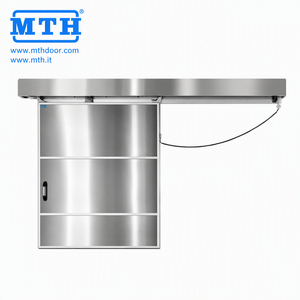
High-integrity thermal barrier sliding access door with heated perimeter threshold frames engineered to eliminate thermal bridging in sub-zero freezer cold envelopes.
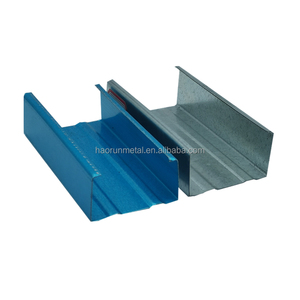
Galvanized high-yield C-purlins custom rolled up to 6m lengths, configured for roof truss rafters, floor secondary framing, and diaphragm support.
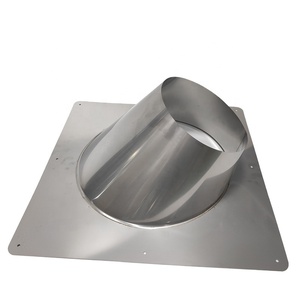
Engineered architectural flashing assemblies designed to guarantee airtight, water-impermeable joint sealing around roof penetrations and floor deck perimeters.
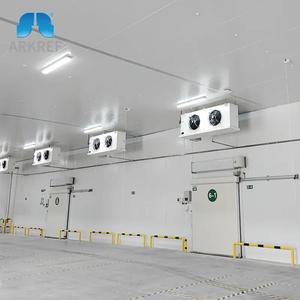
Polyurethane foam injected sandwich envelope panels offering superior thermal conductivity values of λ=0.022 W/m·K for climate-controlled logistics hubs.
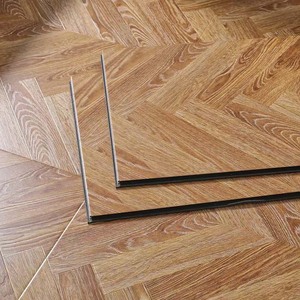
Heavy-wear AC5 rated multi-layer architectural flooring system engineered for thermal preservation, fire mitigation, and dynamic foot-traffic resilience.
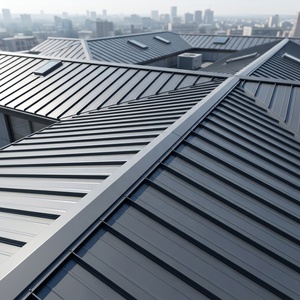
Concealed-fastener structural standing seam metal sheets roll-formed from premium Aluzinc and galvanized coils for industrial weather barrier systems.
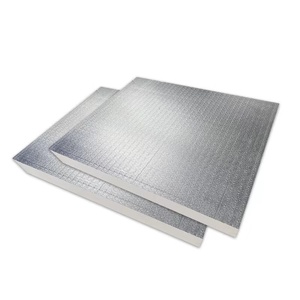
Closed-cell phenolic foam (PF) insulated sub-slab insulation boards, reinforced with reflective dual aluminum facings for high compressive floor loadings.
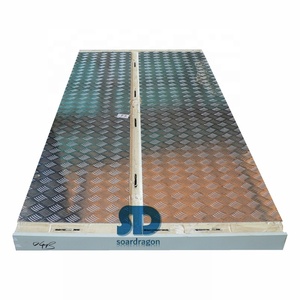
100mm ultra-rigid polyurethane floor panel faced with embossed five-bar checkered aluminum plate, engineered for heavy dynamic pallet truck operation.
In modern multi-tier commercial, industrial, and high-rise structural designs, composite galvanized steel floor decking serves as both a high-efficiency tensile reinforcement member and permanent working formwork. Sourcing from a CE certified galvanized floor deck manufacturer ensures complete regulatory harmonization under EN 1993-1-3 (Design of cold-formed thin gauge members and sheeting), EN 1994-1-1 (Design of composite steel and concrete structures), and factory production control certification pursuant to EN 1090-1 (Execution of steel structures and aluminium structures).
Under CE Marking criteria, compliance is not merely a branding exercise; it requires rigorous, documented factory production testing covering mechanical yield limits, zinc coating mass adhesion, weldability, and composite action interaction values. The composite slab action is activated when liquid concrete is poured directly onto the profiled metal deck. Upon curing, mechanical interlocking mechanisms—specifically cold-rolled chevron embossments, dovetail indentations, and re-entrant flutes—resist longitudinal shear stresses across the steel-concrete boundary layer.
The structural longevity and load-bearing integrity of profiled metal decks depend squarely on incoming hot-dip coated flat steel coils conforming to EN 10346. High-performance projects specify structural steel grades such as S350GD+Z275 or S450GD+ZM310 (Zinc-Aluminium-Magnesium alloy). The nominal 275 g/m² zinc total double-side coating mass (equivalent to approximately 20 microns per surface) guarantees sacrificial galvanic protection against aggressive ambient relative humidities during construction staging, prior to full building enclosure.
Moreover, modern cold-rolling lines must maintain microscopic profile tolerances. Variations in rib height, flute crest radius, and embossment depth alter the moment of inertia ($I_{eff}$) and effective section modulus ($Z_{eff}$) across both sagging and hogging bending zones. High-speed roll-formers operating with servo-calibrated stands prevent residual internal stresses and micro-cracking across deep trough radii, ensuring zero failure during thru-deck automated shear stud fusion welding (EN ISO 13918).
| Profile Designation | Base Thickness (mm) | Structural Substrate Grade | Yield Strength ($f_{yb}$) | Section Modulus ($Z_{eff}$) | Unpropped Max Span (m) | Fire Resistance Rating |
|---|---|---|---|---|---|---|
| FD-51 Re-entrant Dovetail | 0.80 – 1.20 | EN 10346 S350GD+Z275 | 350 MPa | 22.4 cm³/m | 3.20 m (Single) | REI 60 to REI 120 |
| FD-60 Open Trapezoidal | 0.75 – 1.25 | EN 10346 S350GD+Z275 | 350 MPa | 28.6 cm³/m | 3.80 m (Continuous) | REI 90 to REI 120 |
| FD-75 Deep Rib Trough | 0.90 – 1.50 | EN 10346 S450GD+ZM250 | 450 MPa | 41.2 cm³/m | 4.50 m (Multi-span) | REI 120 to REI 180 |
| FD-80 Long-Span Heavy | 1.00 – 1.50 | EN 10346 S450GD+Z350 | 450 MPa | 48.5 cm³/m | 5.20 m (Continuous) | REI 120 to REI 180 |
Beyond gravity dead load and live load resistance, composite floor decks perform an indispensable function as rigid horizontal diaphragms under wind shear, seismic ground acceleration, and lateral column buckling scenarios. When correctly connected to perimeter primary steel beams via arc spot puddle welds, cartridge-fired mechanical powder-actuated fasteners, or welded headed shear studs, the composite deck transfers lateral floor forces across cross-bracing cores and shear walls without requiring secondary diagonal bracing.
Combining high-capacity multi-stand roll-forming lines, automated decoiling, and full CE/ISO certified traceability to deliver flawless structural profiles across global supply corridors.
Continuous industrial cold-roll lines capable of producing in excess of 10,000 square metres daily of galvanized floor decks, structural purlins (C/Z profiles), and insulated envelope systems from our primary manufacturing base in Muscat, Oman.
Complete Factory Production Control (FPC) verified by European Notified Bodies, ensuring strict dimensional tolerances (EN 1090-2), mechanical coupon tensile testing, coating thickness verification, and fully documented Declaration of Performance (DoP).
State-of-the-art flying hydraulic shears allow millimetre-precise cut-to-length profiles up to 14.5 metres, reducing on-site job cutting, scrap steel loss, and structural lap joints, delivering significant procurement and erection cost reductions.
Coating selections tailored specifically for high humidity, intense solar UV radiation, and severe marine salinity (C4/C5 corrosion categories under ISO 12944), supported by robust export crating and sea freight moisture protection.
The global construction steel sector is undergoing rapid transformation, steered by aggressive decarbonization benchmarks, automated structural design pipelines, and shifting regional supply chains. Structural engineers, project developers, and procurement managers must adapt to five dominant procurement trends defining the next half-decade:
Tier-1 EPC contractors now actively mandate Environmental Product Declarations (EPD) under EN 15804. Galvanized coil substrates produced via Electric Arc Furnace (EAF) utilizing up to 90% recycled scrap yield an embodied carbon footprint below 0.6 tCO₂e per tonne of hot-rolled strip, compared to ~2.2 tCO₂e via traditional Blast Furnace (BF-BOF) metallurgy. Procurement criteria increasingly weigh GWP (Global Warming Potential) alongside price per metric tonne.
While standard Z275 hot-dip zinc has dominated for decades, high-spec procurement tenders are switching to ZM alloys (e.g., ZM250 / ZM310 with 3% Magnesium and 3.5% Aluminium). ZM coatings deliver over three times the atmospheric corrosion barrier of pure zinc at lower nominal coating weights and demonstrate an innovative "self-healing" cut-edge passivation effect, preventing premature edge rust at drilled holes and slab penetrations.
Procurement protocols have moved away from aggregate area ($m^2$) requests. Progressive manufacturers accept native Tekla Structures or Autodesk Revit IFC files at Level of Detail (LOD) 400. Automated roll-formers import exact bill-of-material schedules, pre-marking slab locations, bundle identities, and cut lengths, enabling synchronized just-in-time (JIT) crane hook deliveries straight from the truck bed to designated floor bays.
To combat global logistics shipping costs and decrease building dead load, leading structural designers are adopting high-tensile substrates. Replacing traditional S280GD or S350GD grades with S450GD enables reductions in base metal sheet thickness from 1.20mm to 0.90mm while preserving identical ultimate moment capacities and wet concrete deflection resistance ($L/180$), lowering overall steel raw tonnage by up to 20%.
How ongoing R&D in sheet geometry, acoustic dampening, and embedded construction sensor arrays are reshaping structural deck performance.
Next-generation decking profiles abandon uniform indentation bars in favor of non-linear finite element modeled (FEA) chevron dimples. This geometry maximizes longitudinal mechanical interlock without inducing stress concentrations that compromise the tensile yield capacity across high-moment continuous mid-spans.
Integration of factory-laminated or trough-mounted fiber Bragg grating (FBG) optical sensors allows permanent structural health monitoring (SHM). Real-time telemetry detects concrete cure hydration temperatures, post-tension shrinkage stresses, and dynamic vibration resonances throughout the 60+ year service life of the building.
Deep profile decking systems (210mm to 225mm rib depths) engineered to sit on the widened bottom flanges of asymmetric structural steel beams (ASB). This creates an ultra-shallow composite floor with a total structural depth under 300mm, delivering massive reductions in building cladding area, vertical MEP riser length, and foundation mass.
Comprehensive engineering guidance addressing Eurocode submittals, construction stage shoring limits, fire resistance verification, and export logistics.
CE marking on galvanized floor decking requires a Factory Production Control (FPC) audit certificate issued by an accredited European Notified Body under EN 1090-1 (Execution Class EXC1 to EXC3). Manufacturers must supply a formal Declaration of Performance (DoP) referencing mechanical yield limits ($f_y$), ultimate tensile strength ($R_m$), elongation at fracture ($A_{80}$), minimum zinc coating mass (e.g., Z275 certified under EN 10346), dimensional tolerances under EN 1090-2, and third-party verified longitudinal shear capacity parameters ($m$ and $k$ or $\tau_{u,Rd}$) evaluated through destructive slab bending tests in accordance with EN 1994-1-1 Annex B.
During Phase 1 (the construction phase prior to concrete curing), the bare steel profile must support its own self-weight, the wet weight of fresh concrete, and construction live loads (typically 1.5 kN/m² or 0.75 kN/m² combined load pursuant to Eurocode 3 Part 1-3). The deflection under wet concrete weight must not exceed the Eurocode limit of $L/180$ or 20mm (whichever is less) to avoid concrete ponding accumulation. If the calculated deflection exceeds this value, intermediate temporary shoring (propping) is mandatory. Deep-trough profiles (e.g., FD-75 and FD-80) feature elevated second moments of area ($I_{eff}$), enabling unpropped clear spans of 4.0m to 5.0m, dramatically cutting temporary scaffold labor costs.
Yes. Under EN 1994-1-2 (Structural fire design of composite slabs), the steel deck acts as tensile reinforcement only during ambient conditions. Under fire exposure (ISO 834 standard fire curve), the exposed bottom flange of thin-gauge steel sheet rapidly exceeds 500°C, losing its tensile yield capacity. To achieve an REI 90 or REI 120 fire rating without passive spray coatings, bar reinforcement (rebar) is installed within each deck trough trough with minimum axis distance ($u$) cover, combined with top anti-crack mesh (e.g., A142 to A393 fabric). The slab thickness is specified to guarantee the insulation criterion ($I$), preventing unexposed surface temperatures from exceeding a 140°C average rise.
Headed shear studs (typically 19mm diameter) welded through galvanized floor decking directly to underlying structural steel beam flanges require drawn-arc stud welding guns with ceramic ferrules. The zinc coating mass on the floor deck must not exceed 275 g/m² (Z275); excessively thick zinc coatings vaporize during the electrical arc cycle, producing zinc oxide gas pockets and porosity in the weld collar. Top beam flanges must be unpainted and free of scale, rust, or moisture. Automated welding current must be calibrated (approx. 1800 to 2200 Amps for 0.8 to 1.2 seconds) to guarantee complete fusion into the beam parent steel.
Re-entrant (dovetail) profiles (such as FD-51) feature narrow throat openings at the top of the rib that mechanically lock the concrete block into the steel sheet, preventing any vertical separation (debonding) under high cyclic or concentrated loads. Dovetail profiles offer an exceptionally clean, flat-like aesthetic ceiling appearance and allow easy suspension of MEP service ducts using wedge nut brackets inserted into the dovetail channel. Conversely, open trapezoidal profiles (FD-60, FD-75) offer significantly higher structural stiffness per unit steel mass, allowing much longer unpropped spans and reduced overall slab concrete volumes.
Zinc-Aluminium-Magnesium alloy coatings (e.g., ZM250 or ZM310 conforming to EN 10346) incorporate 1.5% to 3.0% magnesium and 1.5% to 3.5% aluminium. In industrial plants, coastal zones, chemical processing units, or cold storage facilities with persistent condensation, ZM coatings provide up to four times greater resistance to red rust corrosion than conventional pure zinc (Z275). Furthermore, when decks are cut on-site, the magnesium ions form a dense, protective hydroxide-carbonate mineral film that migrates over exposed steel cut edges, passivating the bare substrate and preventing lateral undercut corrosion.
Wet storage stain (white rust) occurs when closely nested galvanized sheets are exposed to trapped moisture in an oxygen-deprived environment. To prevent zinc oxidation during ocean transit and site storage, bundles are wrapped in VCI (Vapor Corrosion Inhibitor) waterproof paper with heavy-duty perimeter timber runners. On-site, bundles must be stored elevated above wet ground on timber skids with a slight longitudinal slope (minimum 5%) to encourage rainwater run-off. Bundles must never be left wrapped in impermeable plastic tarpaulins in direct sunlight, which induces high condensation cycles.
In modern multi-storey steel-framed offices, low-frequency floor vibrations caused by footstep pacing can cause serviceability failures. Under SCI P354 (Design of floors for vibration), composite slabs are analyzed for natural fundamental frequencies (typically targeting $f_0 > 4.5 \text{ Hz}$) and response factors ($R$). Mitigating vibration entails increasing the composite concrete slab thickness, selecting high-yield decking with higher transform composite flexural rigidity ($EI$), or providing continuous two-span composite framing configurations to significantly enhance dynamic modal damping ratios.
Yes, provided an engineered sub-floor thermal break is integrated. In refrigerated logistics centers, the composite steel deck acts as the structural suspended mezzanine or load-bearing base slab. Direct contact between refrigerated internal environments and structural floor decks must be isolated using high-compressive-strength rigid under-slab insulation boards (such as Phenolic PF foam or rigid high-density PIR/PUR panels) combined with vapor-impermeable dual aluminum foils and sealed joints, preventing sub-slab frost heave and interstitial dew-point condensation.
Every commercial production order is accompanied by an inspection certificate according to EN 10204 Type 3.1. This dossier includes the primary steel mill heat number chemical melt analysis (%C, %Mn, %Si, %P, %S, %Al), actual mechanical tensile coupon test certificates ($R_e$, $R_m$, $A_{80}$), electromagnetic zinc coating thickness gauge reports, full dimensional cross-section audit records, CE Declaration of Performance (DoP), and third-party laboratory composite shear test compliance verification.
Whether you are engineering a multi-storey commercial composite high-rise, an advanced cold-storage logistics facility, or an industrial warehousing complex, our Muscat manufacturing facility provides unmatched production agility, verified Eurocode design calculations, and regional delivery across the GCC, Africa, and global export markets.
Contact UsOur sales engineers respond to project questions during working hours (GST+4).